标签: Africa

非洲

  • Gunmen kill at least 13 people in northern Nigeria, police say

    Gunmen kill at least 13 people in northern Nigeria, police say

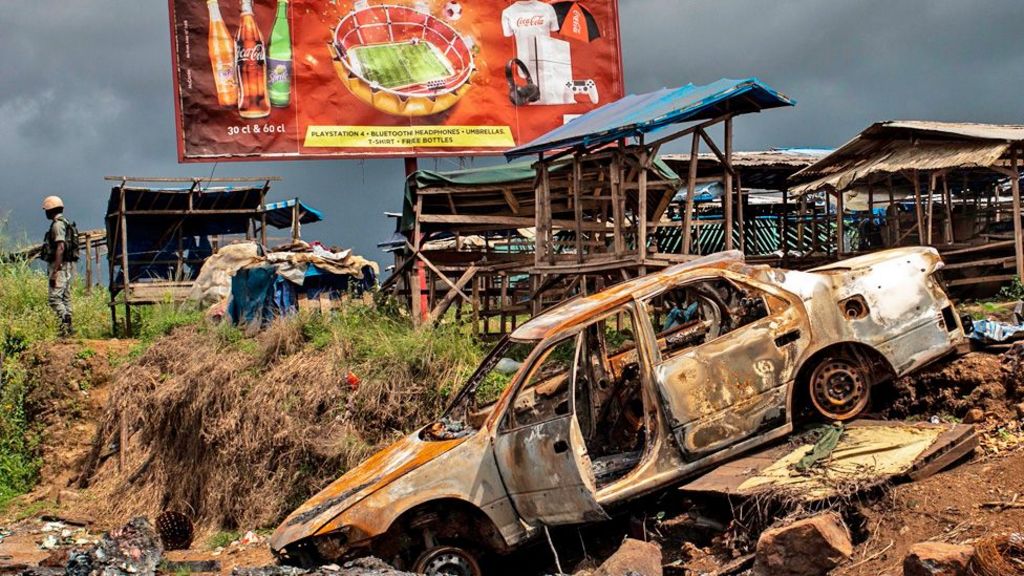
    ABUJA, Nigeria — Nigeria’s escalating security crisis manifested in renewed violence this week as separate militant attacks across northern regions resulted in significant casualties, according to official statements released Wednesday.

    In northwestern Katsina state, armed assailants wielding dangerous weapons unleashed sporadic gunfire in Doma village within the Faskari area on Tuesday, killing at least 13 civilians. Police spokesman Abubakar Sadiq Aliyu confirmed authorities have launched comprehensive investigations to determine the circumstances and identify perpetrators.

    Simultaneously, north-central Kwara state witnessed devastating violence when armed militants struck Woro and Nuku communities. Governor AbdulRahman AbdulRazaq characterized the assault as a “cowardly expression of frustration by terrorist cells” retaliating against ongoing counterterrorism operations. While official casualty figures remain pending, local media reports indicate the death toll exceeds 30 victims. State police authorities have not yet issued formal statements regarding the Kwara incident.

    This surge in violence occurs amid Nigeria’s multifaceted security emergency, combining persistent Islamic militant insurgencies in northeast territories with rampant kidnapping epidemics across northwestern and north-central regions. The pattern continued last week when extremist factions killed 36 individuals in coordinated assaults on a construction site and military installation in northeastern Nigeria.

    International response to the crisis has intensified, with U.S. Africa Command deploying a specialized military advisory team to Nigeria this week. This development follows December’s American airstrikes against Islamic State-affiliated cells operating within Nigerian territory. The security collaboration unfolds against a complex diplomatic backdrop, including previous tensions between the nations regarding religious protection policies.

  • Dubai: Atif Aslam to perform at Coca-Cola Arena in April

    Dubai: Atif Aslam to perform at Coca-Cola Arena in April

    Dubai prepares to welcome global music sensation Atif Aslam for his sixth consecutive annual performance at the Coca-Cola Arena on April 19, 2026. The Pakistani singing icon returns to the Emirates with promises of an enhanced production featuring a more immersive auditory and visual experience than previous editions.

    The 2026 concert will feature a redesigned venue layout with two distinct sections: a golden circle arrangement and standing floor area, allowing dedicated fans closer proximity to the performer. This strategic staging aims to create heightened intimacy between the artist and audience during the musical journey.

    Event organizers Blu Blood Entertainment, led by founders Osman Osman and Shaaista Khan Osman, emphasized Dubai’s transformation into a premier destination for world-class live performances. “The extraordinary crowd energy in Dubai consistently validates why this city represents the ultimate stage for productions of this caliber,” they stated, noting Aslam’s exceptional ability to forge emotional connections with diverse audiences.

    The performance will showcase Aslam’s extensive discography spanning multiple genres and languages, including chart-topping favorites such as ‘Pehli Nazar Mein,’ ‘Tajdar-e-Haram,’ ‘Jeena Jeena,’ ‘Dil Diyan Gallan,’ and ‘Aadat.’ The production is presented by Peace Homes Development with official support from Dubai Calendar.

    Tickets for the highly anticipated event are currently available for purchase through district.ae, with expectations of strong demand from the singer’s substantial Middle Eastern fanbase.

  • ‘Notorious Tanzanian drug trafficker’ arrested during raid in Zambia

    ‘Notorious Tanzanian drug trafficker’ arrested during raid in Zambia

    Zambian law enforcement authorities have apprehended a high-profile Tanzanian narcotics trafficker in a significant intelligence-driven operation targeting transnational drug networks. Ahmed Muharram, identified as a notorious kingpin long monitored by the Drug Enforcement Commission (DEC), was captured in Lusaka alongside multiple accomplices.

    The coordinated raids, executed on Tuesday, yielded substantial drug seizures including 1,380.8 kilograms of high-grade cannabis discovered in multiple locations. Authorities revealed that 221.2kg was initially found concealed within a commercial vehicle in the Lilayi district, with an additional 1,159.6kg uncovered during a subsequent search of Muharram’s residential property in the same area.

    In parallel operations, DEC officers arrested several other suspects involved in sophisticated trafficking schemes. These included a Zambian national apprehended with 55 boxes of codeine-based cough syrup, two additional Zambians transporting cannabis in their vehicle, and two Burundian nationals caught at the Chirundu border crossing with drugs hidden in innovative concealment methods. The contraband was discovered inside spare tire compartments, gas compressors, and mixed with household substances like sugar, salt, and paint within sealed containers.

    DEC officials emphasized that Muharram’s arrest represents a major breakthrough in combating organized drug trafficking in the region. The suspect, who has remained silent since his detention, faces serious charges under Zambian narcotics legislation that prohibits possession, trafficking, and use of dangerous drugs including cannabis. Penalties upon conviction may include substantial fines or imprisonment.

    The commission reaffirmed its commitment to preventing Zambia from being utilized either as a transit corridor or destination for international drug trafficking operations. All detained suspects remain in lawful custody awaiting formal court proceedings.

  • Thousands of Venezuelans march to demand Maduro’s release

    Thousands of Venezuelans march to demand Maduro’s release

    Caracas witnessed massive demonstrations on Tuesday as thousands of Venezuelans mobilized in support of ousted leader Nicolás Maduro, exactly one month after his dramatic capture by U.S. forces. The government-organized protest saw public sector workers and loyalists marching through the capital, brandishing photographs of both Maduro and his wife Cilia Flores—both currently detained facing narcotics charges in New York.

    The atmosphere crackled with anti-American sentiment as protesters, many draped in the signature red of the Chavista movement, chanted “Venezuela needs Nicolás” and waved national flags. The demonstration stretched several city blocks, accompanied by music-blaring trucks that amplified the crowd’s energy.

    Nicolás Maduro Guerra, the former leader’s son and a National Assembly deputy, addressed the gathering with fiery rhetoric: “These people are not American. We have achieved a profound anti-imperialist consciousness.”

    The protests unfold against a complex political backdrop where interim President Delcy Rodríguez navigates competing pressures. While maintaining diplomatic channels with Washington—evidenced by the recent arrival of U.S. envoy Laura Dogu—Rodríguez must also preserve support from Maduro loyalists within her government.

    In a significant policy shift, the interim administration has begun releasing political prisoners and opening Venezuela’s nationalized oil industry to private investment. Rodríguez confirmed having “frank conversations” with U.S. officials regarding a three-phase transition plan aiming for a “prosperous and democratic Venezuela.”

    Parallel demonstrations occurred as hundreds of students and relatives of political prisoners marched demanding expedited approval of Rodríguez’s promised amnesty law. Opposition deputy Stalin González expressed hope that the legislation, potentially debated Thursday, might “open the door to reconciliation, coexistence, peace and democracy.”

    The day’s events highlight Venezuela’s deep political divisions, with pro-Maduro factions chanting “Freedom is in the streets and no one can stop it!” while opposition groups call for new elections following Maduro’s ouster.

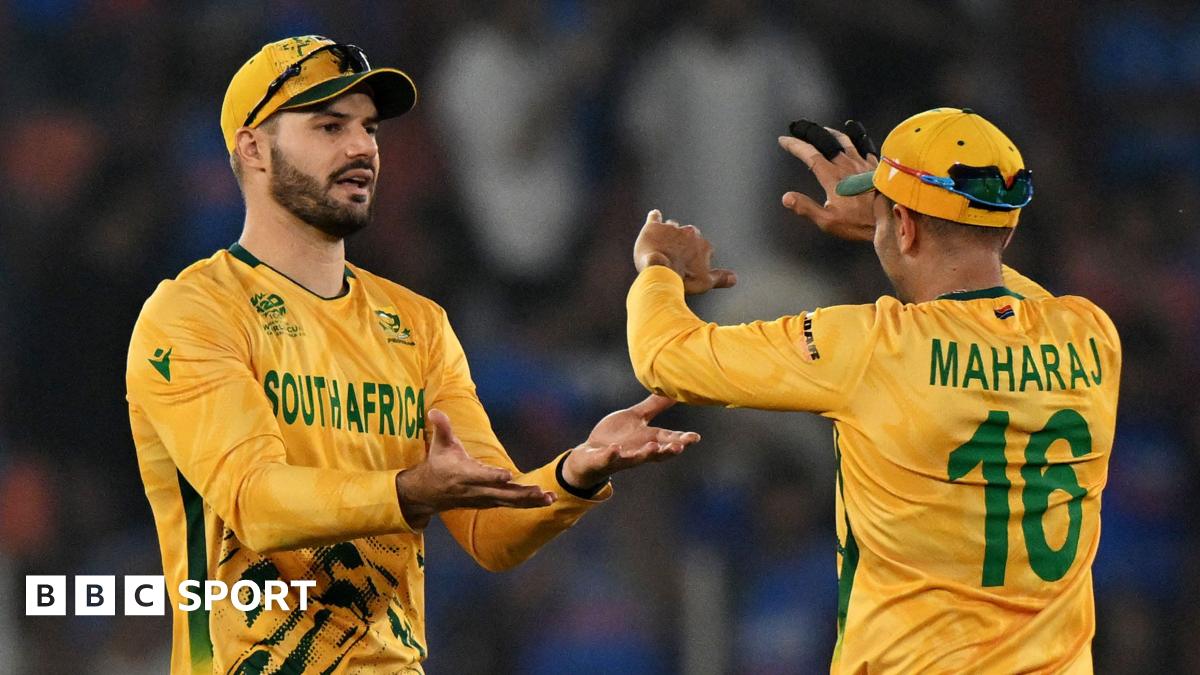
  • Leader of South Africa’s second largest party will not seek re-election

    Leader of South Africa’s second largest party will not seek re-election

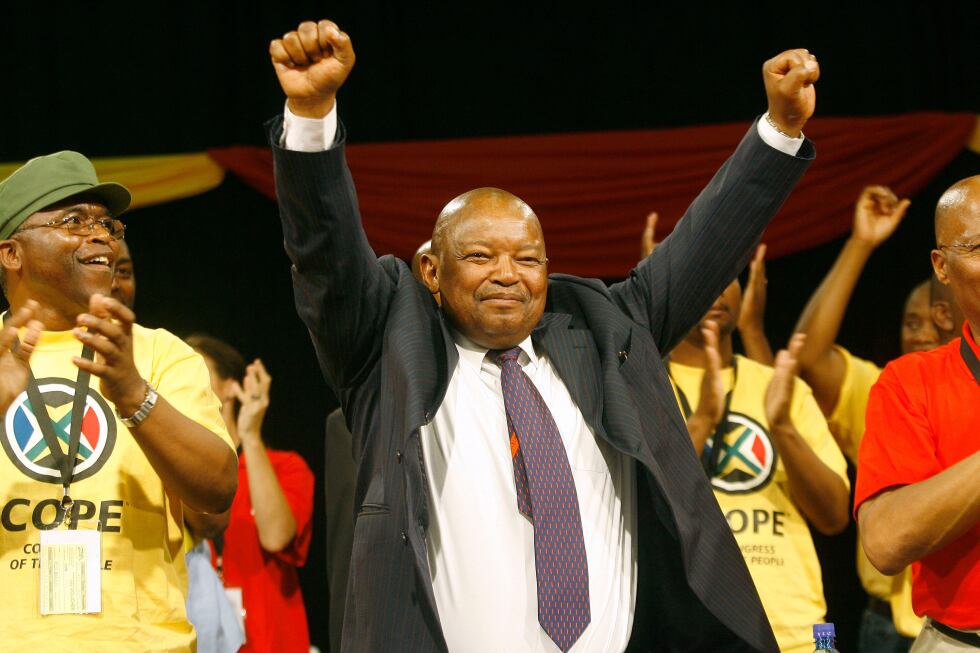
    South Africa’s political landscape faces potential disruption following Democratic Alliance (DA) leader John Steenhuisen’s announcement that he will not seek re-election as party leader in April. The move creates uncertainty for the coalition government formed between the DA and African National Congress (ANC) in 2024.

    Steenhuisen, who has led the pro-business DA since 2019 and currently serves as Agriculture Minister in President Cyril Ramaphosa’s administration, surprised observers by withdrawing from the leadership race. The 49-year-old politician cited his need to focus exclusively on combating South Africa’s most severe foot and mouth disease outbreak as his primary reason for stepping aside.

    The development comes amid reports that several controversies had undermined Steenhuisen’s position within the party. His departure from leadership contention occurs at a critical juncture for South Africa’s unusual governing arrangement, which saw the DA join forces with its historic rival ANC after the latter lost its parliamentary majority for the first time since the end of apartheid.

    The Democratic Alliance, as South Africa’s second-largest political party, plays a crucial role in maintaining the stability of the current coalition government. Steenhuisen’s decision not to pursue another term raises questions about the future direction of both the party and its commitment to the coalition agreement.

  • The US and UN launch a humanitarian fund with $700 million for war-ravaged Sudan

    The US and UN launch a humanitarian fund with $700 million for war-ravaged Sudan

    In a coordinated international response to Sudan’s escalating humanitarian catastrophe, the United States and United Nations have jointly established a new Sudan Humanitarian Fund with initial contributions totaling $700 million. The United Arab Emirates pledged $500 million while the United States committed $200 million toward the initiative, drawing from a $2 billion global humanitarian assistance fund established late last year.

    The fundraising event, co-hosted in Washington by U.N. humanitarian chief Tom Fletcher and U.S. senior adviser for Arab and African affairs Massad Boulos, aimed to galvanize global support for Sudan’s war-ravaged population. Saudi Arabia and several other nations indicated they would make additional pledges, though specific amounts remain undisclosed.

    Fletcher, who heads the U.N. Office for the Coordination of Humanitarian Affairs (OCHA), emphasized the urgency of the situation, setting the beginning of Ramadan on February 17 as a target date for demonstrating tangible progress. “Today we are signaling that the international community will work together to bring this suffering to an end,” Fletcher stated during the event.

    The humanitarian crisis stems from the ongoing power struggle between Sudan’s military and the Rapid Support Forces paramilitary group, which has plunged the nation into conflict since 2023. UN estimates indicate at least 40,000 fatalities, though actual numbers are believed to be significantly higher.

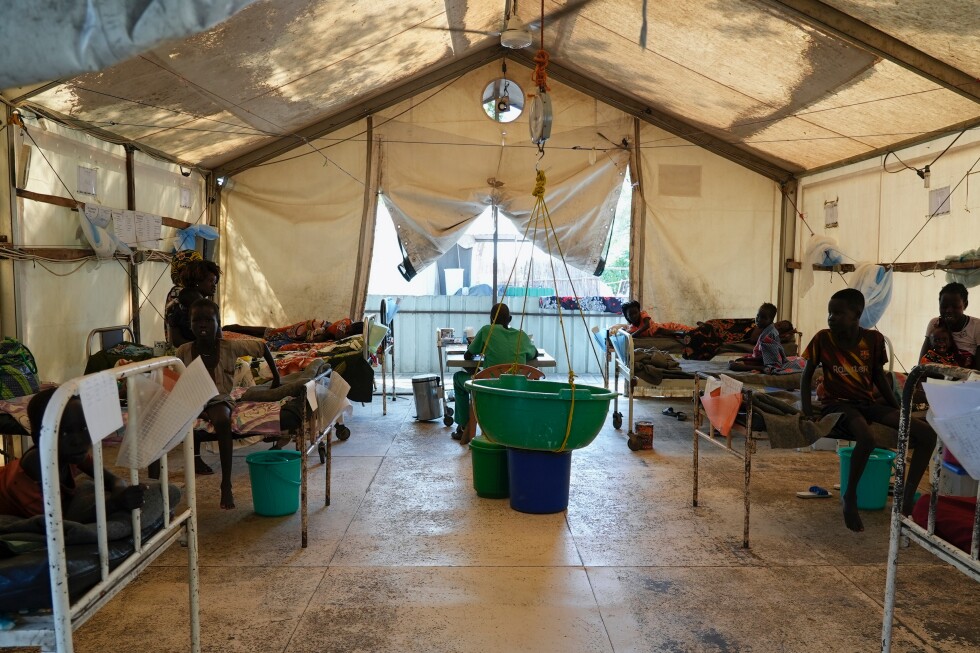
    This conflict has created the world’s largest displacement crisis, forcing over 14 million people from their homes and triggering famine declarations across multiple regions. Recent fighting has concentrated in the Kordofan regions following the RSF’s capture of el-Fasher, one of the military’s last strongholds in Darfur.

    In a concerning development, the RSF launched a drone attack on Tuesday that struck a medical center in Kadugli, killing 15 people including seven children according to the Sudan Doctors Network. This occurred despite the military’s recent gains in breaking the RSF’s siege of Kadugli and reopening a crucial supply route to the neighboring town of Dilling.

    Boulos revealed that the U.S. has presented a “comprehensive proposal” for a humanitarian truce that could be finalized within weeks, offering potential relief to millions facing starvation and violence.

  • Kenya unveils tax breaks for EV parts and charging stations to speed up shift to electrics

    Kenya unveils tax breaks for EV parts and charging stations to speed up shift to electrics

    NAIROBI, Kenya — The Kenyan government has unveiled comprehensive tax incentives as part of its newly launched National Electric Mobility Policy, aiming to dramatically accelerate the adoption of electric vehicles across the nation. The strategic measures include exemptions for value-added taxes and excise duties on EV components beginning this July, followed by a reduction in stamp taxes for charging stations in 2027.

    Transport Cabinet Secretary Davis Chirchir emphasized that electric mobility represents a critical pillar in Kenya’s broader climate strategy. “This transition is fundamental to reducing greenhouse gas emissions, decreasing our dependency on imported fossil fuels, and stimulating economic growth through domestic manufacturing and employment opportunities,” Chirchir stated.

    Kenya’s commitment to electric transportation builds upon previous initiatives, including zero value-added tax on electric buses, bicycles, motorcycles, and lithium-ion batteries. The government has set an ambitious target of deploying 3,000 electric vehicles within its ministries by the end of next year.

    This policy shift aligns with Kenya’s Paris Agreement pledge to cut greenhouse gas emissions by 32% before 2030. With transportation accounting for a substantial portion of carbon emissions, electrification has been identified as essential for meeting climate objectives.

    The market response has been remarkably positive, with registered electric vehicles skyrocketing from just 796 in 2022 to 24,754 in 2025—primarily driven by electric motorcycles, buses, and commercial fleet vehicles. Projections indicate that electric vehicle sales could equal those of traditional gasoline and diesel vehicles by 2042, signaling a profound transformation in Kenya’s transportation landscape.

    Mohammed Daghar, Principal Secretary for Transport, characterized the policy as “laying the foundation for a cleaner, more efficient, and sustainable transport system that fully aligns with our climate commitments.”

    While Kenya emerges as a regional leader in electric mobility, the transition presents fiscal challenges. The government anticipates a potential $693 million shortfall in fuel tax revenues by 2043—critical funding currently dedicated to road maintenance and transportation services. Authorities are exploring alternative revenue mechanisms, including road-use charges and electricity-based levies connected to charging stations.

    Across Africa, electric mobility policies continue to evolve, with Rwanda and Egypt implementing various fiscal incentives to encourage EV adoption. Most initiatives currently focus on electric buses and two-wheelers, incorporating tax exemptions for EV imports and investments in charging infrastructure.

  • New Indian budget proposals enhance NRI investment limits, offer tax exemptions for foreign firms

    New Indian budget proposals enhance NRI investment limits, offer tax exemptions for foreign firms

    In a landmark budgetary move, India has implemented transformative fiscal policies designed to position itself as a global investment hub while aggressively expanding its digital infrastructure capabilities. The 2026 budget proposals introduce unprecedented incentives for non-resident Indians (NRIs), overseas citizens of Indian origin, and foreign corporations seeking investment opportunities in the world’s fastest-growing major economy.

    Significant enhancements to the portfolio investment scheme now permit individual NRI investors to increase their equity holdings in listed Indian companies from 5% to 10%, while the aggregate investment ceiling for all NRIs and persons of Indian origin has been substantially raised from 10% to 24%. The government has simultaneously streamlined property transaction procedures, eliminating the cumbersome tax account number requirement in favor of simplified permanent account number documentation when non-residents sell immovable assets to Indian residents.

    Perhaps the most revolutionary measure involves a comprehensive 21-year tax exemption for foreign companies utilizing Indian data center services for global operations. This complete profit tax waiver, extending through 2047, is complemented by safe harbor provisions that establish 15% of gross receipts as deemed taxable income for Indian entities providing data services to related foreign corporations. Additionally, foreign technicians and experts working under notified schemes will enjoy complete exemption from Indian taxation on foreign income for five years, regardless of residential status under domestic tax laws.

    The digital infrastructure expansion strategy reveals ambitious targets to increase India’s data center capacity from the current 1.5 GW to 14 GW by 2035. Major technology conglomerates including Microsoft, Amazon, Google, and Meta have committed approximately $67.5 billion in combined investments toward AI-driven projects and data center development over the next five years. Hyderabad has emerged as the fastest-growing hub, offering operational costs at less than half of American electricity rates while maintaining multiple energy source connectivity.

    The hospitality sector simultaneously receives substantial stimulus through tax deductions for capital expenditures under Section 46 of the Income Tax Act, 2025. Pre-operative expenses for new hotel developments can now be deducted in the financial year when operations commence, with several state governments offering additional fiscal concessions to boost tourism employment opportunities. This comprehensive economic strategy aligns with projections that India’s digital economy will constitute 20% of GDP by 2030, supported by anticipated 7% annual GDP growth and expansion of the middle class by 400 million people within 15 years.

  • UAE pledges $500 million for Sudan aid; efforts ongoing for Ramadan truce

    UAE pledges $500 million for Sudan aid; efforts ongoing for Ramadan truce

    In a major humanitarian commitment, the United Arab Emirates has pledged $500 million to United Nations aid operations in Sudan during a high-level donor conference in Washington. The announcement comes alongside intensified diplomatic efforts to broker a temporary ceasefire before the commencement of Ramadan later this month.

    UAE State Minister Lana Nusseibeh, addressing the conference, emphasized her nation’s desire to see an immediate cessation of hostilities. The Gulf state has consistently condemned violations by all warring factions and advocates for the establishment of an independent, civilian-led government in Khartoum.

    The devastating conflict has precipitated one of the world’s most severe humanitarian catastrophes, resulting in tens of thousands of fatalities, the displacement of millions, and widespread famine across the vast African nation. Recent combat has intensified across multiple fronts, including southern Kordofan where military engagements continue unabated.

    US Special Envoy for Africa Massad Boulos revealed that Washington anticipates total new funding pledges to reach approximately $1.5 billion, including an additional $200 million commitment from the United States. Boulos acknowledged disappointing progress since former President Trump’s November commitment to intervene following a request from Saudi Crown Prince Mohammed bin Salman.

    Diplomatic channels remain active through the ‘Quad’ grouping comprising officials from the US, UAE, Egypt, and Saudi Arabia. This coalition has developed a peace proposal that has gained acceptance among these mediating nations, though the warring Sudanese factions have yet to agree to either a temporary truce or the comprehensive peace plan. Boulos expressed hope that the proposal would eventually be presented to the UN Security Council and Trump’s Board of Peace for international endorsement.

  • Indian expat bags Dh20 million in Big Ticket Abu Dhabi live draw

    Indian expat bags Dh20 million in Big Ticket Abu Dhabi live draw

    In a life-changing moment during Big Ticket Abu Dhabi’s February 3 live draw, Shanthanu Shettigar, an Indian expatriate residing in Oman, became the latest multi-millionaire after securing the Dh20 million grand prize. The 33-year-old retail professional from Karnataka, who has been participating in the raffle since 2021, purchased his winning ticket (number 305810) on January 20 in partnership with a single friend, meaning each will receive Dh10 million.

    During the emotional live announcement, Shettigar expressed utter disbelief, stating: ‘Oh my God, seriously?.. Thank you!’ The shop-in-charge, who has lived in Oman for eight years, described being completely surprised by the win. ‘I knew the live draw was taking place tonight, but I never imagined my name would be announced. When I realized it was real, I was honestly speechless.’

    The February draw created additional wealth across the region, awarding five consolation prizes of Dh1 million each to participants from India, Sri Lanka, and Bangladesh. Notably, Jency Ruba and Desan Kunshu (both residing in India), Santosh Kumar (Abu Dhabi), Dulan Mayura (Dubai), and Mohammed Abu Syed (Al Ain) joined the millionaire ranks.

    In secondary prizes, Shahin Miah, a Bangladeshi house driver from Sharjah, won a BMW X5 vehicle, while four participants from India and Bangladesh secured up to Dh150,000 in the Big Win contest. Kaushik Udeshi and Mohammed Touidul each claimed Dh150,000, with Udeshi planning a Vietnam trip and Touidul celebrating with friend Irfan’s assistance. Diana Princee, the only female contestant, won Dh150,000 with her husband’s remote guidance and intends to travel with her son.

    The event was attended by January’s Dh30 million winner, Dubai-based Filipino expat Anna Lee Gayongan, who helped select the new grand prize winner. Big Ticket has announced a Dh15 million jackpot for February’s draw, scheduled for March 3, with additional weekly e-draws offering Dh50,000 prizes throughout the month.