标签: Africa

非洲

  • Kenya to host intl investment conference on indigenous knowledge

    Kenya to host intl investment conference on indigenous knowledge

    Kenya is poised to host its inaugural International Investment Conference and Trade Fair on Indigenous Knowledge Intellectual Assets this April in Murang’a County. This groundbreaking initiative represents a strategic effort to transform documented traditional knowledge into viable market innovations by creating crucial connections between local communities and global investors.

    The conference will serve as a platform to showcase Kenya’s rich indigenous intellectual assets and their potential to drive inclusive socio-economic transformation. Participants from 13 pilot counties, including micro, small and medium enterprises alongside community-based asset owners, will present their innovations to potential investors for product development and commercial exploitation.

    Exhibitions will feature diverse traditional technologies, medicinal products, cultural foods, and creative arts. Stephen Munania, Deputy Governor of Murang’a County, emphasized during the media launch that the conference would catalyze industry development across multiple sectors including tourism, publishing, storytelling, medicine, and arts crafts.

    “The sacred sites where our ancestors worshipped remain meaningless unless their stories are properly narrated. We must preserve the narratives of our communities’ origins and historical inter-tribal interactions,” Munania stated, highlighting the challenge of converting indigenous knowledge into sustainable investments, employment opportunities, and value chains.

    Mary Gikungu, Director-General of the National Museums of Kenya, revealed that the indigenous knowledge documentation and digitization project aligns with the Protection of Traditional Knowledge and Cultural Expressions Act 2016. The initiative ultimately aims to cover all 47 Kenyan counties through phased implementation.

    The National Museums of Kenya has implemented comprehensive research and intellectual property policies to safeguard market-ready innovations derived from documented indigenous knowledge. “We are actively engaging potential investors whose participation is essential for transforming heritage-based enterprise concepts into tangible realities,” Gikungu confirmed.

    Edwin Abonyo, Board Chair of the National Museums of Kenya, emphasized the project’s objective to leverage the country’s previously underutilized heritage and traditional knowledge resources, with current operations spanning 13 counties and plans for nationwide expansion.

  • Is your child tired? What UAE experts say about co-curricular activities

    Is your child tired? What UAE experts say about co-curricular activities

    Across the United Arab Emirates, a growing educational concern is emerging as children transition directly from classroom instruction to a relentless cycle of co-curricular engagements. This phenomenon sees students rushing to tennis practices, music lessons, swimming sessions, and language classes with minimal downtime in between.

    Educational institutions frequently promote these supplemental activities, whether included in standard tuition fees or offered as premium additions, while many parents independently arrange external programs. The central debate has evolved beyond questioning the value of such engagements to examining whether contemporary schedules adequately preserve essential childhood experiences—including unstructured rest, creative imagination, and spontaneous play.

    Parental perspectives vary significantly regarding activity management. Dubai resident Arijit Nandi advocates for his 9-year-old son’s intensive regimen—featuring pre-dawn tennis, midweek swimming, weekend guitar, and additional academic coaching—as a purposeful strategy for energy channeling and digital detoxification. He emphasizes his child’s genuine enjoyment and regular fatigue assessments.

    Conversely, Japanese expatriate Kenji Takahashi adopts a more measured approach for his 10-year-old daughter, balancing piano, karate, and art with protected downtime for bicycle riding and social play. His philosophy centers on energy guidance rather than control, ensuring activities serve developmental purpose rather than mere scheduling saturation.

    Educational specialists identify concerning trends beneath these well-intentioned arrangements. Girish Hemnani, a Dubai-based life coach, observes that families and institutions are unconsciously perpetuating a productivity race that creates an ‘illusion of productivity’ while depriving children of neurological development opportunities. He explains that boredom activates the brain’s Default Mode Network, which facilitates imagination and self-reflection—processes compromised by constant scheduling.

    Research indicates that free play fundamentally develops executive functioning, including planning capabilities, self-regulation, and initiative-taking. Hemnani further warns that overscheduled children risk losing spontaneity and personal agency, particularly when parents normalize ‘hustle culture’ due to their own professional pressures and digital consumption habits.

    School leadership is responding to these concerns with revised approaches. Natalia Svetenok, Principal of Woodlem British School in Ajman, states unequivocally that ‘a tired child cannot thrive,’ advocating for activities that generate joy rather than pressure. Similarly, The Aquila School’s Principal Wayne Howsen emphasizes that co-curricular activities must stem from genuine student interest rather than functioning as extended childcare, noting that choice-driven participation builds teamwork, problem-solving, and multilingual skills more effectively.

    The emerging consensus among UAE educators and parents suggests a paradigm shift toward balanced scheduling that honors both structured development and essential childhood experiences.

  • Melania Trump documentary not showing in South African cinemas

    Melania Trump documentary not showing in South African cinemas

    South African cinema chains have withdrawn from screening the controversial documentary ‘Melania’ about US First Lady Melania Trump, citing unspecified “recent developments” and the “current climate” in bilateral relations. Filmfinity, the leading distributor in southern Africa, informed theater operators not to list the film despite its global release scheduled for Friday.

    The documentary, which chronicles Melania Trump’s activities during the 20 days preceding her husband’s second inauguration in January 2023, had received substantial backing from Amazon. The streaming giant reportedly invested $35 million in marketing and approximately $40 million for distribution rights.

    Neither Ster Kinekor nor Nu Metro, South Africa’s primary cinema chains, are promoting the film on their platforms. Ster Kinekor’s promotional page remains inaccessible, while Nu Metro’s website lists no showtimes despite previously featuring the documentary on social media.

    This development occurs against the backdrop of significantly deteriorated US-South Africa relations over the past year. Tensions escalated following former President Donald Trump’s promotion of the widely disputed ‘white genocide’ theory concerning South Africa’s Afrikaner community. Additional friction points include Trump’s imposition of high tariffs on South African exports, reduction of aid programs, and disagreements over South Africa’s International Court of Justice case against Israel regarding Gaza operations.

    The BBC’s attempts to obtain clarification from Filmfinity regarding their specific concerns remain unanswered, leaving the precise motivations behind the cancellation unclear.

  • Africa has the worst road safety record in the world. Here’s what to know

    Africa has the worst road safety record in the world. Here’s what to know

    Africa continues to grapple with the world’s most severe road safety crisis, as highlighted by recent tragic incidents including a collision involving former heavyweight boxing champion Anthony Joshua in Nigeria and multiple minibus accidents in South Africa that claimed at least 25 lives. These events underscore a systemic problem across the continent, where road fatality rates dramatically outpace global averages despite Africa accounting for merely 3% of the world’s vehicles.

    According to the United Nations Economic Commission for Africa, the continent experiences 26 road deaths per 100,000 people—significantly higher than the global average of approximately 18 and more than double Europe’s rate of fewer than 10 fatalities. This translates to over 300,000 annual road crash fatalities, with the World Health Organization reporting increasing numbers despite global improvements.

    The unique dynamics of African road usage contribute substantially to this crisis. With limited personal vehicle ownership due to economic constraints, roads become chaotic landscapes where pedestrians, bicycles, motorcycles, cars, buses, and trucks compete for space without adequate infrastructure. Approximately 40% of African road deaths involve pedestrians—twice the global average—reaching nearly 50% in some nations.

    A 2024 WHO analysis reveals that few African countries have developed transportation systems accommodating these diverse travel modes. Inadequate public transit forces millions to rely on overloaded minibuses and motorcycle taxis, often operating without proper safety standards. South Africa exemplifies this challenge, where minibus taxis transport over 10 million daily commuters despite ongoing regulatory struggles regarding driver licensing, vehicle roadworthiness, and traffic law enforcement.

    Compounding these issues are generally weak traffic law enforcement and substandard road infrastructure safety ratings, with only a minimal percentage of Africa’s road network meeting acceptable quality standards. The December-January holiday period proves particularly lethal, as demonstrated by South Africa’s reported 1,427 road deaths during a recent 42-day span, averaging over 30 daily fatalities despite having one of the continent’s more developed road systems.

  • French energy giant TotalEnergies resumes Mozambique $20 billion project as insurgency slows

    French energy giant TotalEnergies resumes Mozambique $20 billion project as insurgency slows

    French energy conglomerate TotalEnergies has officially recommenced operations on its monumental $20 billion liquefied natural gas (LNG) initiative in northern Mozambique’s Cabo Delgado province. The project, which represents one of Africa’s most substantial energy investments, had been suspended since April 2021 due to escalating insurgent violence that resulted in thousands of fatalities and displaced over one million residents.

    At a ceremony attended by Mozambican President Daniel Chapo at the Afungi project site, TotalEnergies CEO Patrick Pouyanné declared the formal conclusion of force majeure status and announced anticipated initial gas deliveries for 2029. The company projects a significant acceleration of operational activities throughout the coming months.

    The security situation that previously jeopardized the project has substantially improved through coordinated military interventions. Mozambique secured support from the Southern African Development Community (SADC) coalition forces and Rwandan defense personnel. While SADC troops completed their mandate and withdrew earlier this year, Rwandan security forces maintain their presence, contributing to stabilized conditions despite occasional isolated clashes.

    President Chapo, elected in 2024 with commitments to economic revitalization and enhanced national security, characterized the project’s revival as transformative for regional perception. He emphasized that operational resumption demonstrates Cabo Delgado’s recovery beyond security challenges and represents a crucial advancement in national economic strategy.

    The LNG development is projected to generate substantial governmental revenue through Mozambique’s minority stake, with additional investment participation from India, Japan, and Thailand. TotalEnergies anticipates employing over 4,000 workers, with 80% representing Mozambican nationals receiving specialized vocational training in technical fields including electrical systems and carpentry.

    Concurrently, TotalEnergies has pledged humanitarian assistance following catastrophic flooding that claimed approximately 300 lives across Mozambique, South Africa, and Zimbabwe earlier this month, according to United Nations assessments.

  • Arijit Singh’s exit is not the end of an era, says Shreya Ghosal

    Arijit Singh’s exit is not the end of an era, says Shreya Ghosal

    The Indian music industry was stirred this week by playback singing phenomenon Arijit Singh’s announcement of his departure from professional singing commitments. His decision, shared via Instagram, resonated deeply with millions who have considered his voice the defining soundtrack of contemporary Bollywood narratives, accompanying countless moments of romance, heartbreak, and daily life.

    Rather than viewing this as a conclusion, celebrated collaborator and fellow singing icon Shreya Ghoshal framed the move as the commencement of an exciting new artistic phase. Responding directly to Singh’s post, Ghoshal expressed profound enthusiasm for the future creations of whom she described as a ‘genius.’ Her commentary rejected the notion that this departure signifies an endpoint, emphasizing that an artist of Singh’s extraordinary caliber transcends conventional boundaries and predefined formulas. She extended support for his journey toward even greater creative heights.

    Singh’s initial statement conveyed gratitude toward his global audience for their sustained affection throughout his career. He formally declared his intention to cease accepting new playback singing projects, characterizing his journey as ‘wonderful’ while signaling a definitive shift in his professional focus.

    The artist first entered the public consciousness through the 2005 reality competition ‘Fame Gurukul,’ later achieving mainstream recognition with his 2011 debut in ‘Murder 2.’ His status was cemented by the monumental success of ‘Tum Hi Ho’ from the 2013 film ‘Aashiqui 2,’ which propelled him to household name status and was followed by a prolific output of chart-topping hits.

  • Champions League: Madrid miss automatic qualification on frenetic group-stage finale

    Champions League: Madrid miss automatic qualification on frenetic group-stage finale

    In a stunning conclusion to the Champions League group stage, Real Madrid’s campaign unraveled dramatically with a 4-2 defeat against Benfica in Lisbon, denying them automatic qualification for the knockout rounds. Despite taking an early lead through Kylian Mbappé, the Spanish giants collapsed in the closing moments as José Mourinho’s Benfica staged a remarkable comeback.

    The match reached its climax in the 98th minute when Benfica goalkeeper Anatoliy Trubin scored an unprecedented header, securing his team’s fourth goal and propelling the Portuguese side into the playoffs on goal difference. Real’s disastrous evening was compounded by two stoppage-time red cards shown to Raul Asencio and Rodrygo.

    Meanwhile, defending champions Paris Saint-Germain also dropped out of the top eight after being held to a 1-1 draw by Newcastle United at home. Both teams now face the uncertainty of the playoff round despite beginning the final matchday in automatic qualification positions.

    Liverpool concluded their group campaign emphatically with a 6-0 demolition of Qarabag, featuring braces from Alexis Mac Allister and Mohamed Salah. Barcelona orchestrated a impressive recovery from ninth position, overcoming Copenhagen 4-1 with goals from Robert Lewandowski, Lamine Yamal, Raphinha, and Marcus Rashford.

    Manchester City secured their progression with a 2-0 victory over Galatasaray, climbing from eleventh to eighth position. Arsenal achieved historic distinction by becoming the first club to complete the new 36-team group format with a perfect record, defeating Kairat Almaty 3-2.

    The expanded Champions League format maintained suspense until the final seconds of the eighth round, with only four clubs definitively eliminated before the last matchday. The playoffs will feature prominent clubs including Real Madrid, Juventus, and Inter Milan, who must navigate two-legged ties to reach the last sixteen.

  • Gulf Crypto 2.0: How the GCC is shaping the future of digital asset regulation

    Gulf Crypto 2.0: How the GCC is shaping the future of digital asset regulation

    The Gulf Cooperation Council (GCC) is fundamentally transforming its approach to digital assets, evolving from speculative trading environments toward sophisticated regulatory frameworks designed for institutional capital. This strategic pivot positions the region as a global leader in crypto governance rather than merely a market for retail trading activity.

    Regional transaction data underscores this transformation’s timing. According to Chainalysis, Middle East and North Africa crypto flows achieved unprecedented monthly volumes in late 2024, exceeding $60 billion in December alone. This substantial activity compelled GCC nations to choose between tolerating unregulated growth or establishing professionalized markets—with the UAE and Bahrain leading the professionalization charge.

    Dubai’s Virtual Assets Regulatory Authority (VARA) exemplifies this new approach through comprehensive activity-based regulation. Rather than operating as a conventional crypto regulator, VARA functions as a market architect—establishing precise conditions for operational licensing, permitted activities, and firm behavior across supervision and enforcement domains. Two critical innovations distinguish VARA’s framework: comprehensive activity-based regulation matching large financial centers’ supervisory standards, and stringent marketing controls implemented in October 2024 to mitigate consumer risks associated with aggressive promotion.

    Bahrain complements Dubai’s scale with regulatory agility through its Central Bank (CBB) Regulatory Sandbox. This controlled environment enables fintech firms to test innovative solutions with defined oversight, creating a pipeline from experimentation to full licensing. Bahrain’s early adoption of formal crypto regulations in 2019 established the nation as a testbed jurisdiction where new models can be trialed, supervised, and scaled responsibly.

    The GCC’s regulatory advancement extends beyond exchange operations to encompass tokenization infrastructure and stablecoin frameworks. Abu Dhabi Global Market’s Financial Services Regulatory Authority finalized governance for Fiat-Referenced Tokens effective January 2026, while Qatar Financial Centre established legal recognition for digital assets including tokenization protocols and smart contracts in 2024.

    This collective regulatory development transforms the Gulf into what industry observers term a ‘crypto governance laboratory’—multiple jurisdictions developing parallel frameworks with complementary strengths. Dubai emphasizes supervisory depth, Bahrain accelerates controlled innovation, ADGM develops institutional structures, and Qatar codifies tokenization frameworks. Even Oman has moved to formalize supervision through VASP registration requirements.

    The fundamental shift involves recasting digital assets from speculative instruments to regulated financial infrastructure. This institutional framing attracts deeper capital pools—asset managers, corporate treasuries, and family offices—whose risk committees prioritize policy clarity over market excitement. While challenges remain regarding cross-jurisdictional coordination and enforcement consistency, the GCC’s unmistakable direction toward regulated digital asset infrastructure positions the region as a emerging global benchmark for institutional crypto adoption.

  • Flights to northern Ethiopia cancelled as fears mount of renewed conflict

    Flights to northern Ethiopia cancelled as fears mount of renewed conflict

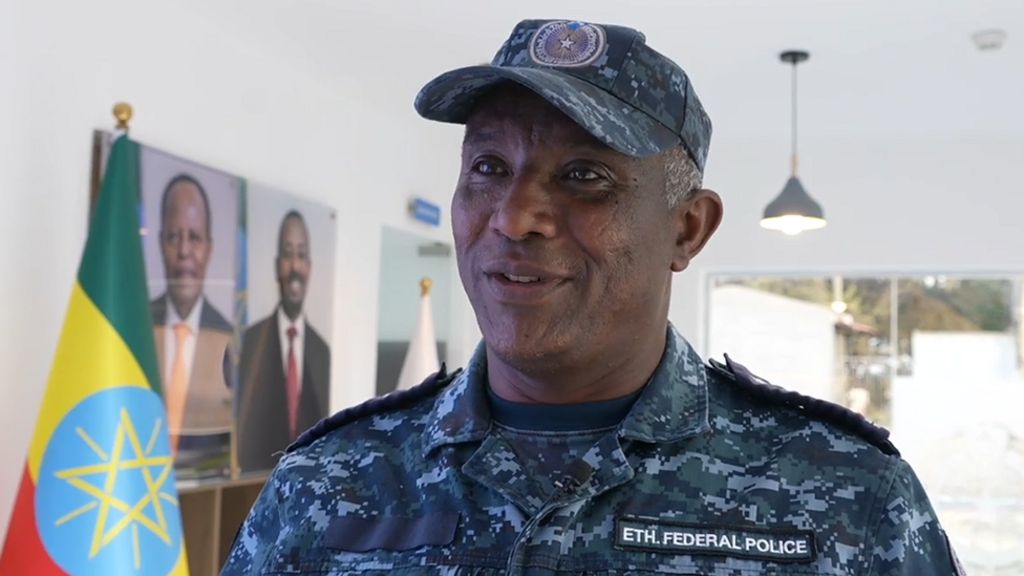
    Ethiopian Airlines has abruptly suspended all passenger flights between Addis Ababa and cities in the northern Tigray region, citing “unplanned circumstances” in text messages to passengers. The suspension comes amid growing concerns about a potential return to conflict, with reports emerging of military clashes in contested territories.

    Airport staff in Mekelle, Tigray’s main city, confirmed the flight cancellations after receiving instructions not to report for work. The airline and Ethiopian government have remained silent beyond the initial cancellation notice, offering no further explanation for the sudden suspension of air services.

    The development occurs against a backdrop of deteriorating relations between the federal government and the Tigray People’s Liberation Front (TPLF), with the 2022 Pretoria Peace Agreement showing signs of unraveling. Tensions have escalated particularly around disputed territories in western Tigray, where forces from the neighboring Amhara region maintain control over fertile lands claimed by both regions.

    Recent reports indicate clashes between federal forces and Tigrayan fighters in Mai Degusha, a contested area within Tselemti district. Additional military movements have been observed in southern Tigray, raising alarms about potential renewed hostilities.

    The situation is further complicated by the upcoming June elections, from which the TPLF has been excluded following the revocation of its political license. The party, which previously dominated Ethiopian politics for two decades, has experienced internal factionalization, adding complexity to an already volatile political landscape.

    While air travel remains suspended, ground transportation via buses continues to operate between Addis Ababa and Tigray, though these services may face disruptions following the flight suspensions. The African Union, which brokered the original peace agreement, has not yet commented on the latest developments.

    The Tigray conflict, which resulted in an estimated 600,000 fatalities and widespread human rights abuses, had previously displaced approximately one million people from western Tigray. These individuals remain in makeshift camps throughout the region, with their voting status in any potential referendum uncertain.

  • 11 dead in South Africa minibus and truck collision days after similar crash killed 14 children

    11 dead in South Africa minibus and truck collision days after similar crash killed 14 children

    South African authorities are confronting a severe road safety emergency following another catastrophic collision that resulted in multiple fatalities. On Thursday, a head-on impact between a minibus taxi and a truck near Durban in KwaZulu-Natal province claimed at least 11 lives, including one schoolchild, with several others sustaining critical injuries.

    According to provincial transport official Siboniso Duma, preliminary investigations suggest the truck driver attempted an illegal U-turn, leading to the direct collision. Garrith Jamieson of ALS Paramedics confirmed the devastating toll, noting that the minibus driver remained trapped within the wreckage during rescue operations.

    This tragedy occurs barely a week after another horrific crash involving a school transport minibus and truck near Johannesburg killed 14 children on January 19. The 22-year-old minibus driver from that incident faces upgraded murder charges after prosecutors alleged reckless overtaking maneuvers caused the fatal collision.

    Transport Minister Barbara Creecy has expressed profound concern over the escalating pattern of public transportation fatalities. She has mandated the Road Traffic Management Corporation to collaborate with local authorities and deliver a preliminary investigation report within 48 hours.

    Minibus taxis serve as primary transportation for approximately 70% of South African commuters. The nation’s road safety challenges reflect broader continental issues, with Africa experiencing disproportionately high traffic fatality rates despite minimal vehicle ownership. According to UN data, the continent records 26.6 road deaths per 100,000 people—significantly exceeding the global average of 18—accounting for approximately 300,000 annual fatalities despite representing only 3% of the world’s vehicle population.