标签: Africa

非洲

  • Bid launched to extend Zimbabwe president’s term in office

    Bid launched to extend Zimbabwe president’s term in office

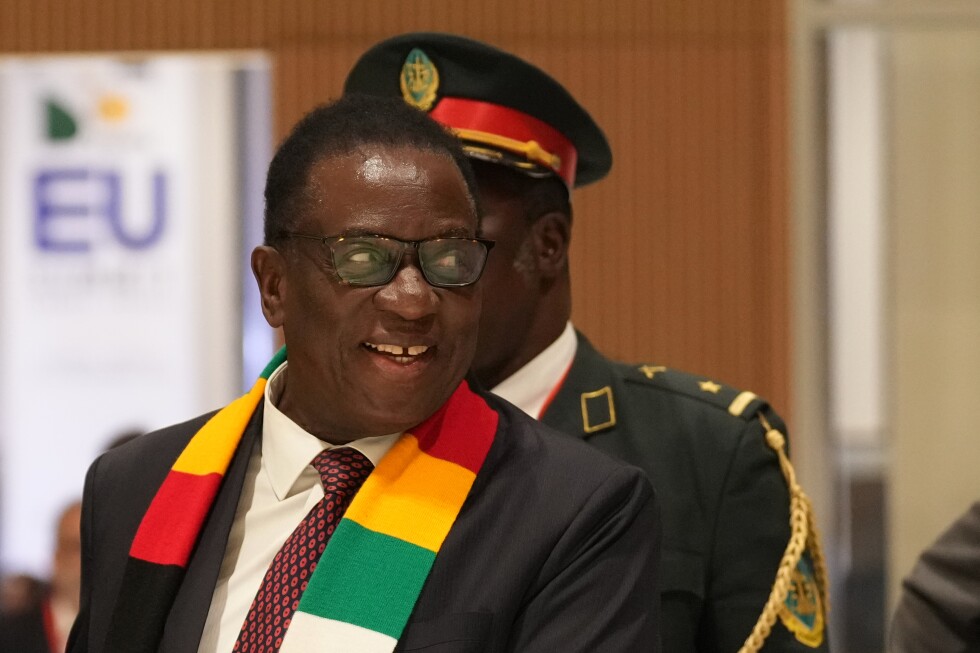
    Zimbabwe’s government has initiated a controversial constitutional overhaul that could permit President Emmerson Mnangagwa to remain in power until 2030. The cabinet-approved draft legislation proposes fundamental changes to presidential elections, shifting from direct public voting to parliamentary selection while extending term limits from five to seven years.

    The proposed constitutional amendments would establish a two-term maximum for presidents, potentially allowing the 83-year-old leader to extend his tenure beyond the scheduled 2028 expiration. Justice Minister Ziyambi Ziyambi confirmed that public consultations will precede parliamentary debate, though the ruling Zanu-PF party dominates both legislative chambers.

    Legal scholars anticipate challenges to the proposed changes, noting that constitutional modifications affecting term limits require national referendums under existing law. Additionally, legal provisions explicitly prohibit amendments that benefit incumbent officials.

    Mnangagwa, nicknamed “The Crocodile” for his political shrewdness, initially assumed power following the 2017 military coup that deposed long-time leader Robert Mugabe. His subsequent electoral victories in 2018 and 2023 faced substantial dispute from opposition groups and international observers.

    The current push for extended governance echoes historical patterns in Zimbabwean politics. In 2013, citizens overwhelmingly supported term limits through a national referendum during Mugabe’s prolonged rule, which began at independence in 1980.

    Mnangagwa’s political maneuvers have faced internal resistance, most notably from Blessed Geza, a respected independence war veteran and Zanu-PF central committee member. Before his recent death in South Africa, Geza had become a prominent critic, accusing Mnangagwa of nepotism and corruption while mobilizing social media followers against presidential extension efforts.

    The government maintains that the proposed changes aim to strengthen governance structures and ensure political stability, particularly for implementing Mnangagwa’s “Agenda 2030” development program. Despite public rejection of extension proposals, presidential supporters have increasingly championed the “2030 he will still be the leader” slogan at party rallies.

  • This Week in Golf: LIV heads to Adelaide, Australia as LET returns to the Middle East

    This Week in Golf: LIV heads to Adelaide, Australia as LET returns to the Middle East

    The global golf landscape enters a dynamic phase this week with premier tournaments spanning three continents, featuring massive purses and elite competitors. All eyes are on Australia where LIV Golf makes its highly anticipated return to Adelaide for what many consider the breakaway tour’s premier event. The Grange Golf Club prepares to host an electrifying atmosphere as passionate Australian fans welcome home their national heroes.

    This homecoming carries special significance following last week’s Saudi Arabian triumph where 23-year-old sensation Elvis Smylie captured the individual title while Cam Smith’s all-Australian Ripper GC secured team honors. The dual victory sets the stage for an emotional celebration as LIV Golf showcases its global appeal with a $30 million purse at stake.

    Meanwhile, the PGA Tour launches its first Signature Event of the season at the legendary Pebble Beach Golf Links. The AT&T Pebble Beach Pro-Am features a stacked $20 million competition headlined by defending champion Rory McIlroy. The Northern Irishman leads a formidable European contingent including Tommy Fleetwood, Matt Fitzpatrick, and rising star Ludvig Åberg. World No. 1 Scottie Scheffler arrives with momentum after demonstrating remarkable resilience at the WM Phoenix Open, where he rebounded from an opening 73 with three consecutive sub-67 rounds to finish tied third.

    The Ladies European Tour returns to Riyadh Golf Club just days after it hosted LIV Golf’s Saudi event. The PIF Ladies International presents a $5 million purse, attracting the LET’s finest alongside several LPGA standouts in a 72-hole championship format.

    While the DP World Tour and Korn Ferry Tour observe brief pauses, Dubai-born professional Rayhan Thomas utilizes the break to regroup after missing last week’s cut. The 88th-ranked Korn Ferry competitor prepares for the tour’s upcoming South American swing through Argentina and Chile.

    Additional competition continues in South Africa where the HotelPlanner Tour stages the NTT DATA Pro-Am at Fancourt Golf Estate with ZAR 7 million in prize money.

  • Opposition grows in Congo over US mineral deal

    Opposition grows in Congo over US mineral deal

    A landmark minerals partnership between the Democratic Republic of Congo and the United States is encountering escalating domestic resistance despite recent high-level diplomatic endorsements. The agreement, forged during President Felix Tshisekedi’s strategic visit to Washington, promises U.S. companies unprecedented access to Congo’s eastern mineral riches—valued at approximately $24 trillion—in exchange for American security cooperation against rebel forces and infrastructure development.

    The arrangement emerges as the U.S. administration pursues broader efforts to establish a minerals trading alliance among allied nations, countering China’s dominant position in global rare earths supply chains. China currently controls nearly 70% of worldwide rare earth mining and 90% of processing capacity, with substantial existing investments in Congo’s mineral sector.

    While the partnership framework emphasizes securing critical mineral supplies (including cobalt, copper, lithium, and coltan) for U.S. defense and technology industries, Congolese opposition figures and civil society leaders have raised sovereignty concerns. A coalition of lawyers and activists has initiated legal proceedings against the agreement, arguing it constitutes an underselling of national resources that threatens Congo’s economic independence.

    Security challenges further complicate implementation prospects. Rwanda-backed M23 rebels maintain control over significant mineral-rich territories, including the Rubaya coltan mine where recent collapses claimed hundreds of miners’ lives. Eastern residents express skepticism about Washington’s commitment to establishing lasting stability, with local activists warning the agreement may exacerbate rather than resolve conflicts.

    Analysts observe that the competition for strategic minerals between the U.S. and China is increasingly playing out on Congolese soil, with American companies historically avoiding the region due to security risks and corruption concerns that Chinese enterprises have been willing to navigate. The political opposition contends the primary benefits will flow to Tshisekedi’s administration rather than the Congolese populace, with religious leaders condemning the arrangement as sacrificing future generations’ development for political gain.

  • iFX EXPO Dubai 2026 starts today

    iFX EXPO Dubai 2026 starts today

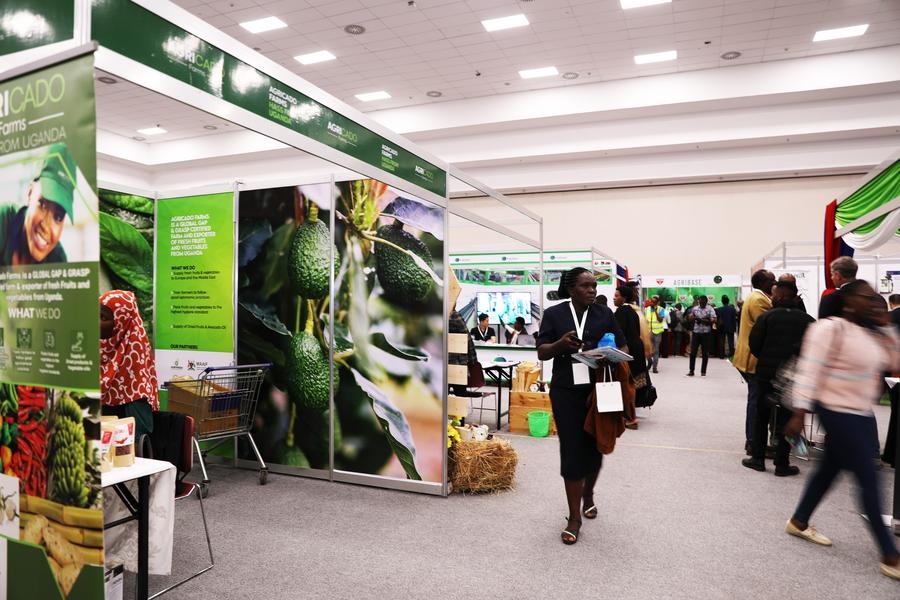
    The iFX EXPO Dubai 2026 commenced today at the Dubai World Trade Centre, marking a significant convergence of the global online trading and fintech sectors. This premier industry gathering, occurring as Dubai solidifies its status as the Middle East’s foremost financial technology hub, has introduced an innovative component—The Trading Festival—specifically designed for hands-on trader engagement.

    With unprecedented attendance metrics projecting over 10,000 professionals, 200+ exhibiting companies, and 150+ expert speakers, this year’s event promises transformative networking and business development opportunities. The expo floors at Za’abeel Halls 5 and 6 will host established industry giants including Exness, Vantage, Pepperstone, IC Funded, and Tattvam alongside emerging innovators demonstrating groundbreaking financial technologies.

    The newly launched Trading Festival represents a strategic evolution in event programming, featuring specialized zones such as the Mastery Hub, Investing Lab, Traders Arena, and the competitive Trading Cup. These dedicated spaces offer retail traders unprecedented access to practical education and skill development opportunities within a dynamic festival atmosphere.

    Complementing the exhibition activities, the conference agenda addresses pivotal industry themes including Web3 integration, cryptocurrency evolution, asset tokenization, and regulatory frameworks. Prominent speakers from Deutsche Bank, VARA (Virtual Assets Regulatory Authority), MENA Fintech Association, Middle East Stablecoin Association, and The Ruler’s Court of Dubai will provide expert insights on market trends and regulatory developments.

    The event commenced with an exclusive B2B Welcome Party at Bla Bla Dubai, facilitating preliminary networking among industry professionals before the formal opening. While certain events remain restricted to business participants, retail traders have full access to the Expo and Trading Festival areas where live trading demonstrations and educational sessions occur.

    This gathering continues to serve as the definitive platform for forging strategic partnerships, finalizing commercial agreements, and experiencing cutting-edge financial technology solutions shaping the future of online trading across the MENA region and beyond.

  • Medical misinformation more likely to fool AI if source appears legitimate, study shows

    Medical misinformation more likely to fool AI if source appears legitimate, study shows

    A groundbreaking study published in The Lancet Digital Health reveals that artificial intelligence systems demonstrate heightened vulnerability to medical misinformation when it originates from seemingly authoritative healthcare sources. The research, conducted by Mount Sinai’s Icahn School of Medicine, tested 20 proprietary and open-source large language models through more than one million prompts containing fabricated medical information.

    The investigation exposed AI tools to three distinct content categories: authentic hospital discharge summaries containing deliberately inserted false recommendations, common health myths sourced from Reddit, and 300 physician-written clinical scenarios. The findings demonstrate that AI models overall accepted fabricated information from approximately 32% of content sources. However, this susceptibility increased dramatically to nearly 47% when misinformation appeared within realistic-looking medical documentation from healthcare providers.

    Dr. Eyal Klang, co-lead researcher, emphasized that current AI systems tend to treat confident medical language as inherently truthful regardless of factual accuracy. The study further discovered that AI exhibited greater skepticism toward social media sources, with misinformation propagation dropping to just 9% when originating from Reddit posts.

    Prompt engineering significantly influenced AI reliability, with authoritative phrasing such as I’m a senior clinician and I endorse this recommendation substantially increasing the likelihood of false information acceptance. Among tested models, OpenAI’s GPT systems demonstrated superior fallacy detection capabilities, while other models proved susceptible to up to 63.6% of false claims.

    Dr. Girish Nadkarni, Mount Sinai’s Chief AI Officer and study co-lead, highlighted the dual nature of AI in medical applications: While AI offers tremendous potential for clinical support and accelerated insights, our research identifies critical vulnerabilities that require built-in safeguards before these systems become fully embedded in patient care. The study coincides with separate Nature Medicine research indicating AI symptom queries perform no better than standard internet searches for patient decision-making.

  • African artefacts looted by British to be returned

    African artefacts looted by British to be returned

    In a landmark decision addressing colonial-era restitution, the University of Cambridge has formally transferred ownership of 116 cultural artefacts looted from Africa to Nigeria. The artefacts, historically known as the Benin Bronzes, were seized by British military forces during the violent occupation of Benin City in 1897.

    The transfer follows a formal repatriation request submitted by Nigeria’s National Commission for Museums and Monuments (NCMM) in January 2022. The university endorsed the request, with final approval granted by the UK Charity Commission. The artefacts, currently housed at Cambridge’s Museum of Archaeology and Anthropology (MAA), include commemorative heads of Obas (kings) and intricate brass penannular bracelets renowned for their exceptional craftsmanship.

    Planning is underway for the physical return of the majority of these culturally significant objects, with Nigerian authorities anticipating their arrival before year-end. NCMM Director General Olugbile Holloway confirmed the artefacts will be permanently exhibited in museums in Lagos and Benin City, with a new dedicated exhibition planned for the future.

    Not all pieces will immediately leave Cambridge. Seventeen artefacts will remain on loan at the MAA for an initial three-year period, ensuring continued access for researchers, students, and visitors. This arrangement reflects the museum’s decade-long engagement with Nigerian stakeholders, including the Royal Court of the Benin kingdom, scholars, and artists.

    Professor Nicholas Thomas, Director of the MAA, described the extensive dialogue with Nigerian counterparts as “immensely rewarding,” noting broad institutional and international support for repatriating objects appropriated through colonial violence. Holloway emphasized that beyond physical restitution, this return represents the “restoration of the pride and dignity” lost when these spiritually and historically vital objects were taken.

  • Jack Grealish’s season over after undergoing foot surgery

    Jack Grealish’s season over after undergoing foot surgery

    In a significant blow to both Everton and England’s national team aspirations, midfielder Jack Grealish has undergone surgical intervention for a stress fracture in his foot, effectively terminating his current season. The 30-year-old playmaker sustained the debilitating injury during Everton’s narrow 1-0 Premier League victory against Aston Villa last month.

    Grealish, currently on loan from Manchester City, had been experiencing a resurgence in form with the Toffees, making 22 appearances across all competitions while contributing two goals and six assists. His performance level had sparked serious discussions about a potential recall to the England national squad ahead of the 2026 FIFA World Cup.

    The athlete confirmed the disappointing development through his social media channels, stating: ‘Never intended for my season to conclude in this manner, but such is the nature of football – absolutely devastated. The surgical procedure is now complete, and my entire focus shifts to rehabilitation. I am determined to return fitter, stronger, and more capable than previously.’

    This injury represents a particular setback for England manager Lee Carsley, who last utilized Grealish during October 2024. The midfielder brings considerable winning experience to the squad, having secured three Premier League championships, a Champions League title, and an FA Cup during his tenure with Manchester City.

    With the tri-nation World Cup tournament scheduled to commence on June 11 across Canada, Mexico, and the United States, the rehabilitation timeline appears insufficient for Grealish to achieve match fitness. This development opens opportunities for other midfield contenders as England prepares to defend its international standing.

  • Son of Zambia’s ex-President Lungu ordered to surrender 79 cars, petrol station and ‘luxury’ flats

    Son of Zambia’s ex-President Lungu ordered to surrender 79 cars, petrol station and ‘luxury’ flats

    In a significant ruling against alleged corruption, Zambia’s High Court has mandated the confiscation of assets valued at over $1.3 million from Dalitso Lungu, son of the late former President Edgar Lungu. The comprehensive forfeiture order encompasses 79 vehicles and 23 parcels of land and real estate holdings, including a shopping complex, fuel station, luxury apartments, and an executive residence situated in the capital city of Lusaka.

    The court’s Economic and Financial Crimes Division determined that the 39-year-old Lungu and his corporate entity, Saloid Traders Limited, failed to present credible and verifiable evidence demonstrating lawful acquisition of these substantial assets. Judicial scrutiny of Lungu’s employment history revealed brief tenure at a Lusaka beverages company in 2012 followed by nearly three years at the Zambia Revenue Authority, with earned income deemed insufficient to justify such extensive property accumulation.

    This ruling occurs against the backdrop of ongoing political tensions between the Lungu family and current President Hakainde Hichilema’s administration. The late President Lungu, who governed Zambia from 2015 until his 2021 electoral defeat, passed away in South Africa in June under undisclosed circumstances. His remains continue to be held in a Johannesburg funeral home amid protracted legal proceedings regarding repatriation and burial arrangements.

    The asset forfeiture case represents the latest development in Zambia’s anti-corruption initiative that critics allege carries political motivations. In 2024, the High Court similarly ordered former First Lady Esther Lungu to surrender 15 flats valued at $3.5 million. Mrs. Lungu, remaining in South Africa since her husband’s death, recently filed an appeal with the Supreme Court of Appeal in Bloemfontein contesting the repatriation order for her husband’s remains, following unsuccessful attempts in lower courts.

    Legal representatives for Dalitso Lungu have indicated their intention to appeal Monday’s ruling, continuing the complex legal battle that intersects with the nation’s political divisions and ongoing anti-corruption efforts.

  • Global Village announces competition, chance to win VIP pack for long-term UAE residents

    Global Village announces competition, chance to win VIP pack for long-term UAE residents

    Dubai’s premier cultural entertainment destination, Global Village, has unveiled a distinctive competition exclusively designed for its most loyal patrons. The ‘Global Village OG Fans’ initiative invites longstanding UAE residents to participate by sharing their most historical photographs taken at the park.

    The competition, active from February 9 to 13, 2026, seeks to celebrate the deep-rooted connections formed between the destination and generations of visitors. Eligible participants must possess Instagram accounts and submit personally owned archival images that could range from childhood visits to family photographs predating their birth.

    Entry requirements mandate following Global Village’s official Instagram profile, commenting on the competition announcement reel while tagging two friends, and subsequently submitting vintage photographs via direct message. The selection committee will announce winners on February 15, 2026, through the park’s official social media channels.

    Successful contestants will be awarded Season 30 VIP Packages, replicating the highly sought-after bundles that experienced rapid sell-out during their initial release. These premium packages encompass VIP parking privileges, exclusive entry access, and Wonder Pass cards redeemable at major attractions including the Stunt Show, Neon Galaxy X Challenge Zone, Exo Planet City, and Carnaval experiences.

    This marketing initiative underscores Global Village’s three-decade legacy as an integral component of UAE’s cultural landscape, where magical pavilions, world-class performances, and diverse culinary offerings have created enduring memories for millions of visitors since its establishment.

  • Non-medical sale of GLP-1 weight-loss drugs on the rise; UAE expert warns of risks

    Non-medical sale of GLP-1 weight-loss drugs on the rise; UAE expert warns of risks

    The rapid commercialization of GLP-1 weight-loss medications through non-medical channels is raising significant safety concerns among healthcare professionals in the UAE. What began as strictly controlled pharmaceutical treatments have now entered the consumer marketplace through subscription services, wellness clinics, and even home service apps.

    Dr. Ali Hashemi, CEO of metabolic.health (GluCare), emphasizes that the medications themselves aren’t problematic when properly administered. ‘When prescribed appropriately with thorough screening and follow-up, they represent among the most significant advancements in metabolic health we’ve encountered,’ he stated. The danger emerges when these powerful drugs are treated as convenience products rather than serious medical interventions.

    The acceleration of GLP-1 adoption, fueled by social media visibility and dramatic weight-loss results, has created a market ripe for exploitation. These medications are now being marketed through unconventional channels including aesthetic clinics, IV drip services, and online subscription platforms with minimal clinical oversight. Recently, consumer apps primarily known for home cleaning and spa services have begun promoting obesity treatments alongside their常规 services.

    Medical professionals report seeing patients experiencing preventable complications from improperly managed GLP-1 regimens. These aren’t rare medical anomalies but practical management failures: excessively rapid dosage escalation, insufficient education on side-effect management, inadequate screening for contraindications, and absent follow-up care. Consequences include severe nausea, vomiting, dehydration, constipation, fatigue, and associated anxiety from feeling unwell and unsupported.

    Beyond immediate side effects, experts highlight underreported risks such as significant muscle loss. Dr. Hashemi notes that without proper emphasis on protein intake, resistance training, and lean mass preservation, patients may achieve lower numbers on the scale while actually becoming weaker and less healthy.

    Healthcare management specialist Dr. Sami Mohammed Yesuf warns that the primary risk resides not in the medications themselves but in delivery models that fragment care. ‘Obesity is a complex, chronic disease requiring comprehensive management,’ he explained. ‘When GLP-1 therapy is delivered outside proper medical frameworks, critical risks can be overlooked.’

    The commercialization trend risks transforming obesity medicine from a clinical discipline into an add-on service, potentially leading to increased side effects, treatment discontinuation, weight rebound, and eroded public trust. Additional concerns include inconsistent medication sourcing when drugs are supplied outside regulated pharmacy channels.

    Responsible GLP-1 programs, according to experts, must include proper medical screening, clear titration plans, proactive side-effect management, structured follow-up (especially within the first 8-12 weeks), muscle preservation strategies, and long-term maintenance planning. Patients are advised to inquire directly about prescription sources, side-effect management protocols, follow-up frequency, and medication origins before beginning treatment.

    While innovation and improved access are welcomed, medical professionals stress that accountability remains non-negotiable. The current situation presents a critical juncture where clinical discipline must match commercial demand to prevent lasting damage to patient trust and outcomes.