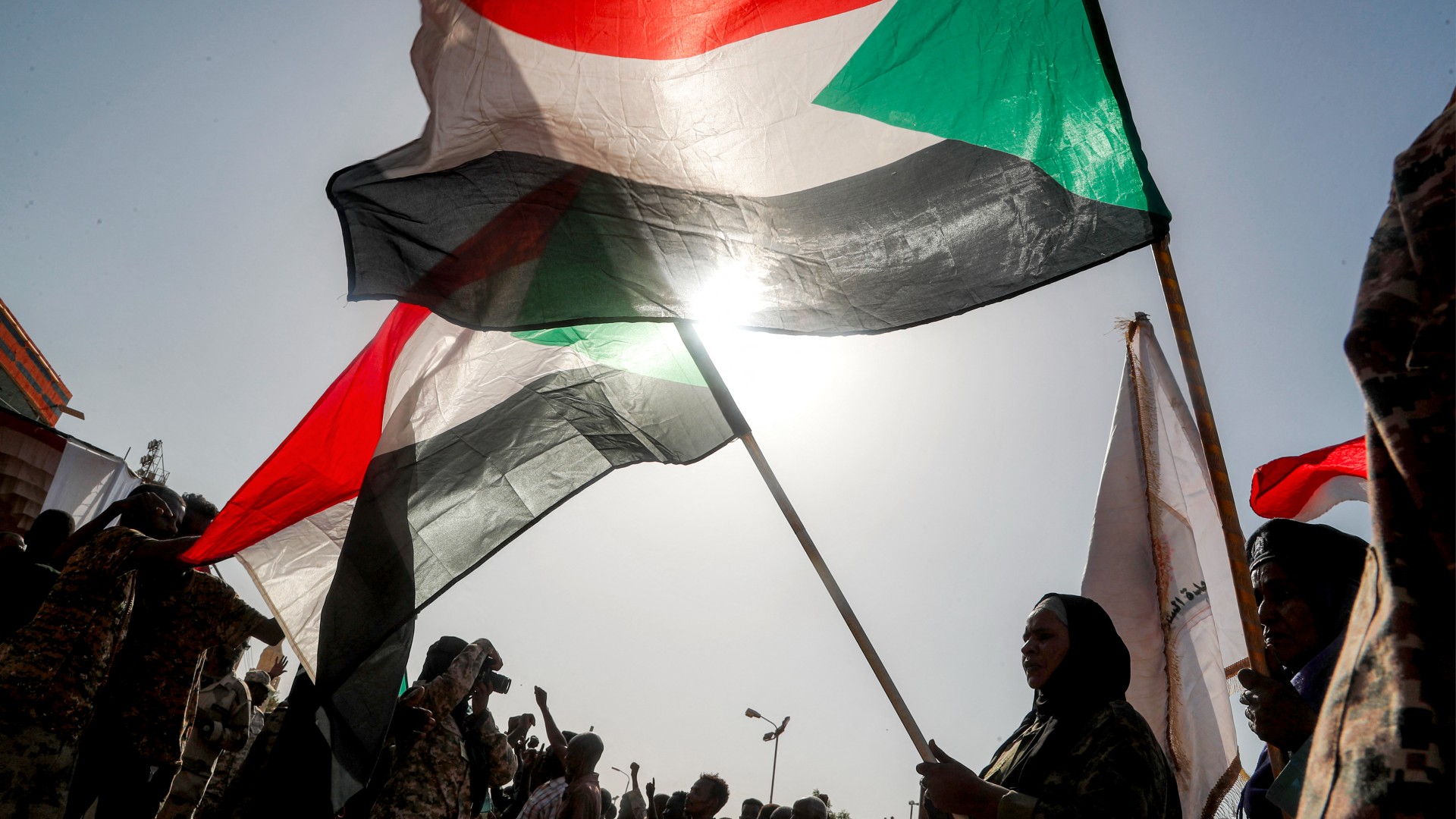
Two and a half years into Sudan’s brutal civil conflict between the Sudanese Armed Forces (SAF) and the Rapid Support Forces (RSF), civilian communities across the country have been left with no choice but to take up arms to defend their homes, families and lives. As fighting shifts to the resource-rich Kordofan region south of Darfur, this pattern of civilian mobilisation has repeated – drawing in pro-democracy activists, former regime opponents, and ordinary people united by the shared threat of RSF violence, even as political divisions over the movement persist.
This wave of civilian self-defence is not a new development. From the earliest months of the war, which broke out in April 2023, communities have risen up to repel RSF incursions when central military defences failed. In summer 2023, Masalit fighters in Darfur’s al-Geneina launched a counteroffensive against advancing RSF and allied militias that were rampaging through the city. Villages in al-Jazira state, south of Khartoum, fought off invading RSF fighters even as surrounding neighbourhoods and towns fell. Most infamously, residents of el-Fasher – the besieged capital of North Darfur – helped hold RSF forces at bay for more than 550 days, until defensive lines collapsed in October 2025, leading to a massacre that killed an estimated 60,000 people.
Today, the epicentre of the conflict has moved south to Kordofan, and civilians here too have joined the fight. Most have aligned with Popular Resistance units, organised to fight alongside the SAF. The Popular Resistance was formally established by SAF chief General Abdel Fattah al-Burhan in June 2023, with the military providing tens of thousands of civilian volunteers with weapons and basic combat training. Its ranks include a diverse cross-section of Sudanese society, even counting pro-democracy revolutionaries who once opposed Burhan and his military government.
But the movement has not escaped political controversy. Sumood, a bloc of civilian political parties led by former Sudanese prime minister Abdalla Hamdok, argues that the Popular Resistance is dominated by religious conservatives who seek to use the movement as a vehicle to restore political figures from the authoritarian regime of former president Omar al-Bashir to power.
For civilians on the frontlines in North Kordofan, however, politics have been set aside in the face of existential violence. Mustafa Karam al-Din, a pharmacist from the strategic city of Bara, joined the Popular Resistance under SAF command after RSF fighters killed his brother and ransacked his family home in 2024. “They raided our house, killing my brother and others in my neighbourhood, so I had no option other than taking up weapons to protect myself and my family and neighbours,” Karam al-Din explained in an interview with Middle East Eye in el-Obeid, capital of North Kordofan. “The RSF was very brutal with everybody when they entered the city. That wasn’t just against armed people but against all citizens, including the civilians.”
According to Karam al-Din, the RSF launched a campaign of collective revenge when it recaptured Bara in 2024, after the SAF briefly seized control of the city and residents celebrated the RSF’s expulsion. “They had videos and lists of some people, including the agents of the Popular Resistance,” he said. For civilian communities across Bara and wider Kordofan, this brutality made clear that self-defence was a necessity. “They entered police stations and weapons stores and took up weapons. They also got others from the SAF. Then the Popular Resistance was organised, including in Bara, el-Obeid and other areas in Kordofan,” Karam al-Din added.
Bara has been one of the hardest-hit areas in the latest phase of the war, changing hands between the SAF and RSF multiple times over the past three years due to its position along Kordofan’s critical Export Road. Since July 2025, the city has been held by the SAF. “Since October last year we have been fighting with the SAF against the RSF until we liberated our city, and I’m very proud of that,” Karam al-Din said.
Karam al-Din frames the conflict not just as a domestic civil war, but as a fight against foreign intervention: the RSF has been widely backed by the United Arab Emirates, which has continued to supply the paramilitary with weapons and foreign mercenaries despite global condemnation and widespread accusations of RSF war crimes, including genocide in Darfur – a charge already formally leveled by the U.S. government and multiple leading human rights organisations. “This conflict has become a war against the UAE’s foreign invasion, which is using the RSF as a tool,” said Karam al-Din, who now mans frontline checkpoints. He added that SAF forces recovering Bara found evidence of UAE-origin weapons and supplies in captured RSF positions, and that resistance fighters have arrested foreign mercenaries from Colombia, South Sudan and other countries fighting alongside the RSF in towns including Um Syala and Gabrat al-Shiekh.
Godat Abdul Hadi, a senior Popular Resistance leader, told MEE that the organisation now runs military training programs for hundreds of young people displaced from Bara to el-Obeid. “The Popular Resistance in el-Obeid, Bara and other areas began at the start of the war and even before the SAF officially declared and expanded it under SAF command,” he explained. “The number was initially small, but it has hugely increased in response to the RSF invasion of the majority of North and West Kordofan and with the widespread atrocities it committed.”
Not all civilian activists in Kordofan have embraced armed resistance alongside the SAF, however. Mohammed Adam, a pro-democracy activist and member of the Resistance Committees network that led the 2019 revolution that ousted Bashir, long questioned whether aligning with the military was the right response to RSF aggression. When the RSF overran Bara in October 2024, Adam was sheltering a group of armed young resistance fighters in his home, and faced immediate danger when the paramilitary advanced.
“I can never forget that day. Some of the armed youths were with me in my house, and they were unable to join their units because of intensive RSF fire. So, we lay under beds for hours, and when the crossfire stopped, we realised the SAF had been defeated and RSF fighters were starting to attack civilians,” Adam recalled. The group quickly hid all weapons and military uniforms, and Adam provided civilian clothes for the fighters before they attempted to flee. Even after RSF fighters entered the home, accused the group of being associates of the former “deep state” and searched the property, they did not discover the hidden arms, allowing Adam and the fighters to escape that night to el-Obeid.
Looking back on the chaos, Adam described scenes of widespread carnage: dozens of civilian bodies left in the streets, with wounded and displaced residents relying on help from nearby village communities for basic food, water and emergency medical care. He recalled a particularly brutal incident that turned even hesitant residents in Bara completely against the RSF: paramilitary fighters killed a local neighbour, then opened fire on his funeral the same day, killing dozens more unarmed civilians for no reason.
Critics within Kordofan’s pro-democracy movement share the concern that the Popular Resistance has been co-opted by allies of the old Bashir regime. One anonymous Resistance Committees activist from Bara told MEE that former regime associates are leading the Popular Resistance in the region to pave the way for an authoritarian comeback. “Former regime associates are leading the so-called Popular Resistance in Bara and other places in order to pave the way for the old regime to exploit the war and return to power,” the activist said. “This war has to be stopped by all means and concessions. It destroyed the country and enabled the old regime to come back through the SAF.”
Even Adam, who has reservations about aligning with Burhan’s military, acknowledges that ordinary civilians have no other viable option to protect themselves from RSF brutality. “The RSF has attacked everybody: civilians or military, young or old, men or women. They take revenge on everybody in Bara,” he said. “Those who took up weapons in self-defence were our brothers, cousins and neighbours. Any previous political disagreements are not an issue at the moment. Let me tell you: I prefer not to carry weapons under the SAF, but I can’t tell those who have been attacked and humiliated by the RSF not to defend themselves by all means.”