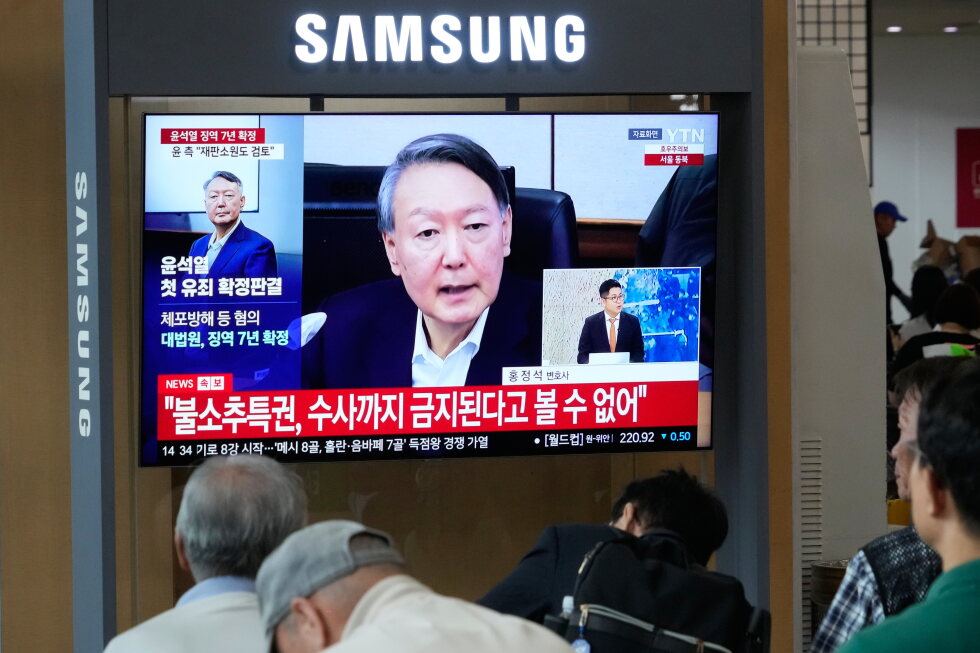
South Korea’s top judicial body has finalized a seven-year prison sentence for former President Yoon Suk Yeol, marking the first of his multiple criminal cases tied to his controversial 2024 martial law declaration to reach the nation’s highest court. In a ruling delivered Thursday, the Supreme Court upheld an April conviction issued by the Seoul High Court, which found Yoon guilty of three distinct violations of law arising from his short-lived emergency declaration.
The charges center on Yoon’s actions in the hours before and after his December 3, 2024, martial law proclamation. Court documents confirm Yoon unlawfully violated the deliberation rights of Cabinet members required to weigh in on such a historic emergency measure. Multiple witnesses, including then-Prime Minister Han Duck-soo, have testified that Yoon gathered 11 officials at his office late that night only to unilaterally announce his already final decision, rather than open the matter for discussion. Nine additional Cabinet members were either never called to the meeting or notified too late to participate, stripping them of their legal right to contribute to the decision-making process.
Further, Yoon was found to have falsified the official martial law proclamation to cover up the failure to follow required consultation procedures, then destroyed the altered document after the fact. The court also upheld the conviction that Yoon deployed presidential security personnel to illegally block law enforcement officers from carrying out an arrest warrant issued in the weeks following his impeachment.
Yoon’s declaration of martial law lasted barely a few hours before legislators overcame a cordon of armed soldiers and police blocking entry to the National Assembly, holding an emergency vote to overturn the decree that forced Yoon’s Cabinet to formally withdraw the measure. The sudden political upheaval threw South Korea into a period of national crisis, grinding partisan politics to a halt, pausing high-level diplomatic engagement, and triggering volatility in domestic financial markets. Yoon was removed from office by the Constitutional Court in April 2025, which ruled his martial order lacked any legal foundation and violated required procedural rules — a finding that aligned closely with Thursday’s Supreme Court decision. The crisis resolved only after liberal opposition leader Lee Jae Myung won a snap presidential election the following June.
The former president remains in pre-trial detention and did not appear in court for the final ruling. His legal team released a statement after the decision, expressing deep disappointment with the outcome. The team argued that Supreme Court justices had closed the case without conducting an adequate, thorough review of the evidence.
This conviction is only one of multiple pending legal matters facing Yoon. He is currently appealing a life sentence handed down on the most serious charge against him: rebellion related to the martial law declaration. A separate appeal is also pending for a 30-year prison sentence stemming from accusations that he ordered military drone flights into North Korean airspace in 2024 to intentionally escalate cross-border tensions, with the goal of creating a pretext to impose martial law at home. Yoon’s defense has countered that the drone operations were a legitimate defensive response to thousands of trash-carrying balloons launched by North Korea into South Korean territory.