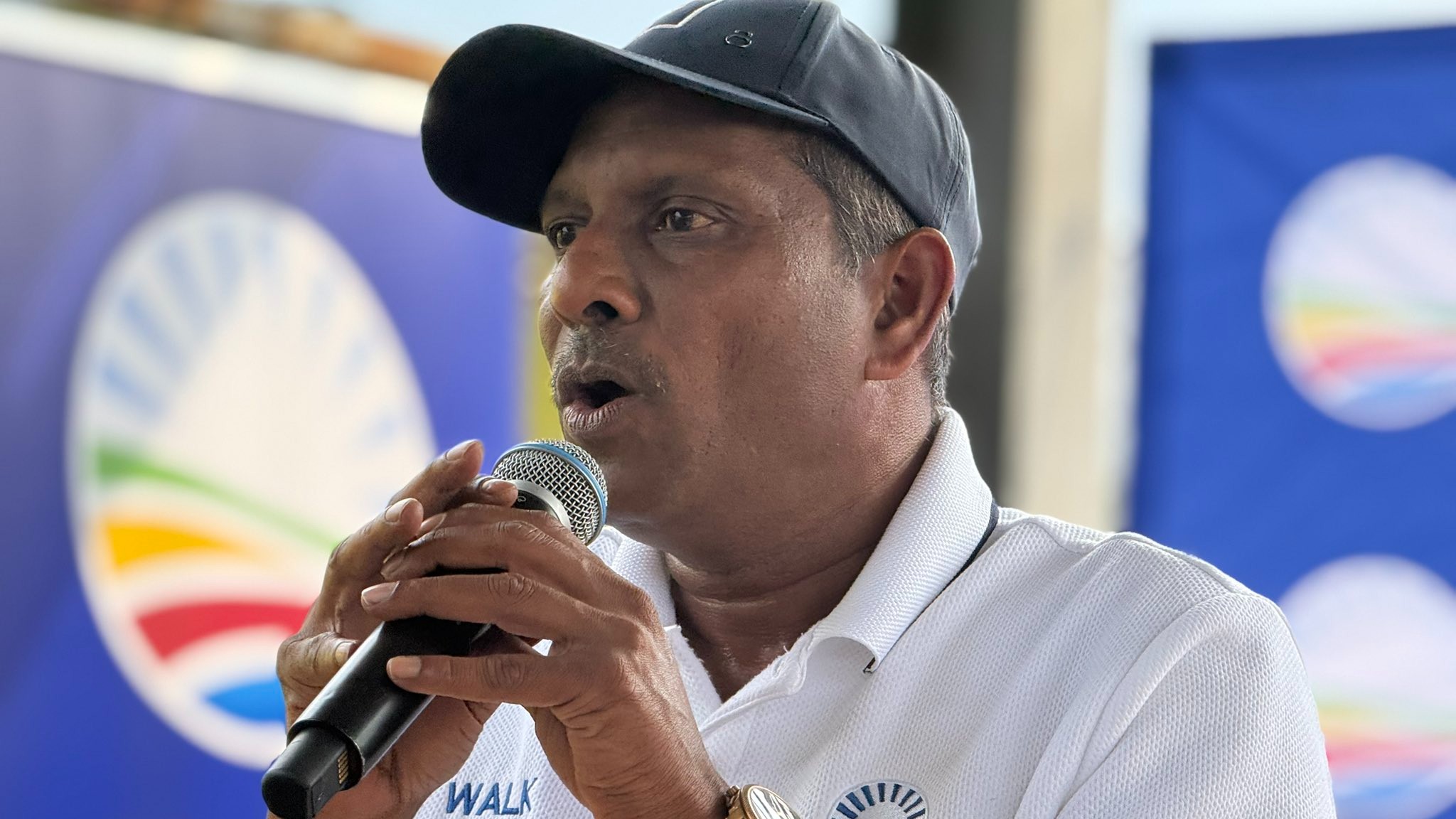
A leading mayoral hopeful for Durban’s eThekwini municipality has ignited a firestorm of public condemnation and widespread mockery after publicly stating he would roll out the welcome mat for Israeli Prime Minister Benjamin Netanyahu, provided such a visit delivered tangible benefits to the coastal city’s residents. Haniff Hoosen, the mayoral nominee for South Africa’s main opposition Democratic Alliance (DA), made the controversial remarks during a recent televised mayoral debate, with local media outlets circulating footage of the exchange across digital platforms in recent days.
When directly posed with the question of whether he would formally receive Netanyahu if the Israeli leader traveled to eThekwini, 54-year-old Hoosen did not hesitate to defend the hypothetical gesture. “Why shouldn’t I if he comes to visit the city?” he responded, doubling down by adding, “If there is a benefit for the people of the city through that visit, I will certainly do it.” Hoosen went on to frame his position as part of a pragmatic governance approach, noting that Durban is currently “falling apart” and that his top priority as mayor would be reversing the city’s declining living standards for all its residents.
The context of Hoosen’s comments, however, makes his stance deeply contentious: Netanyahu is currently the subject of an active International Criminal Court (ICC) arrest warrant issued in November 2024, accused of perpetrating war crimes and crimes against humanity in the Gaza Strip. Independent monitoring groups confirm over 250,000 Palestinians have been killed or wounded amid the ongoing genocide in Gaza. As a signatory to the Rome Statute that established the ICC, South Africa is legally obligated to cooperate with the court’s arrest orders, creating a direct conflict with Hoosen’s stated openness to hosting the indicted leader.
The timing of the candidate’s remarks amplifies the public backlash: they emerged exactly two weeks after Durban-born international human rights icon Navi Pillay was awarded the 2025 Nobel Peace Prize for her decades of work upholding global legal standards. Pillay most recently led the United Nations Independent International Commission of Inquiry on the Occupied Palestinian Territory, which formally concluded in 2025 that Israel had committed acts of genocide in Gaza. While South Africa’s national government issued a full public statement congratulating Pillay on her historic award, the Democratic Alliance, Hoosen’s party, has to date released no official comment recognizing the local figure’s achievement.
Pillay’s Nobel win itself has already sparked fierce pushback from the South African Zionist Federation and other local pro-Israel advocacy groups. One South African political commentator currently residing in Israel went so far as to dismiss the award as “a stain on the rule of international law and justice.”
When confronted by reporters after the mayoral debate to clarify his remarks, Hoosen refused to backtrack, reaffirming his position unapologetically. “I speak the truth all the time, and people will know what they can expect from me,” he told press, adding, “What I will not do is tell people one thing and do something completely different.”
Hoosen’s willingness to host Netanyahu stands in stark contrast to the South African national government’s ongoing high-profile case at the International Court of Justice (ICJ), where it is leading global efforts to secure accountability for alleged Israeli human rights violations in Gaza. The controversy unfolds in the lead-up to South Africa’s national local government elections scheduled for November 4, where control of the eThekwini municipality is a fiercely contested prize. Voters across the city have expressed widespread, long-running frustration over systemic crises including persistent water shortages, raw sewage spills, soaring violent crime, and crumbling public infrastructure, a situation that has recently spurred a surge in targeted attacks on Black African foreign nationals. Just days before the debate, local law enforcement confirmed that a mob of nearly 50 people had killed a Black African migrant in central Durban, highlighting the city’s spiraling public safety challenges.
South Africa: Durban mayoral candidate says he would welcome Netanyahu despite ICC warrant