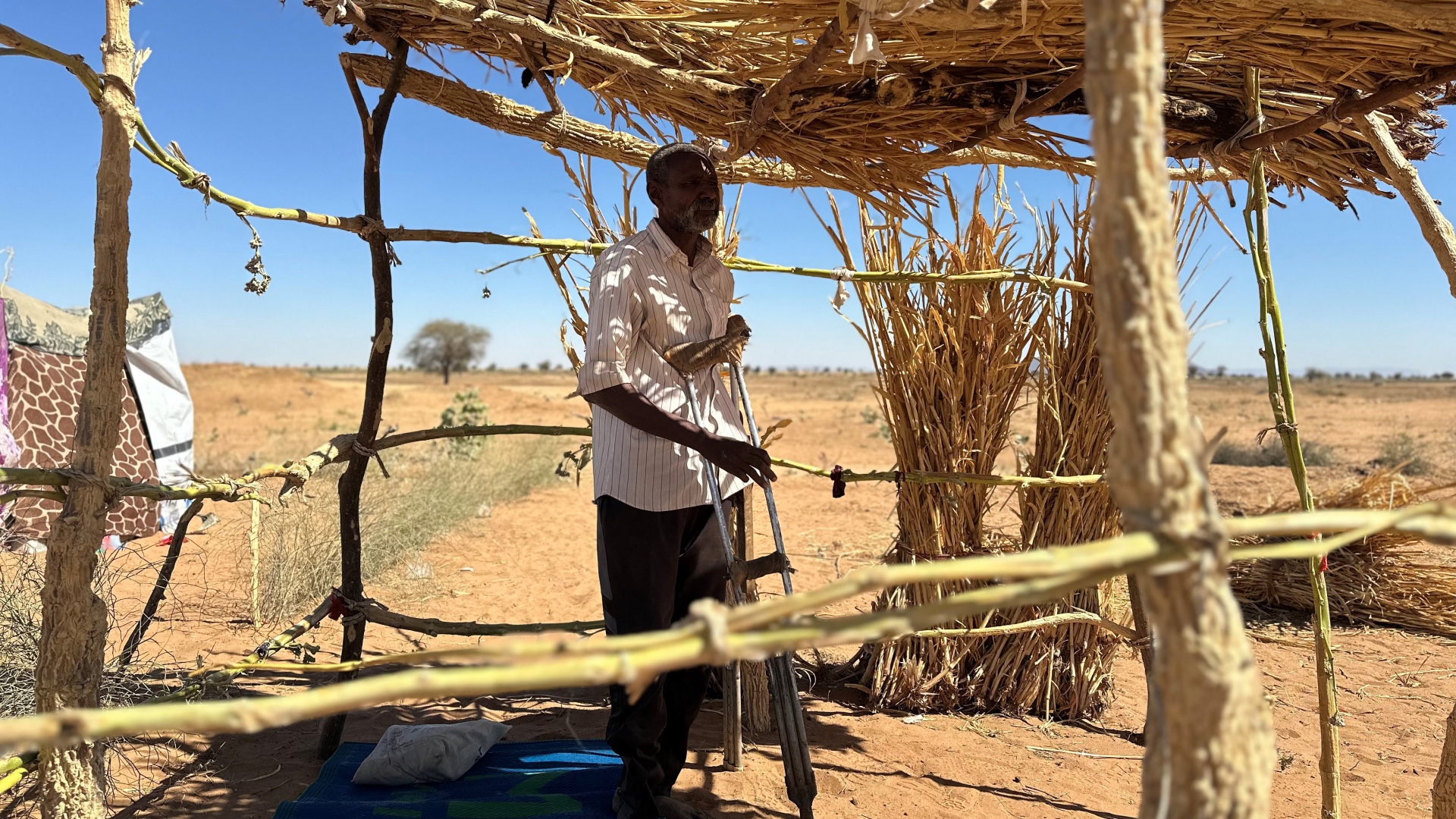
In a damning new investigative report released Friday, Amnesty International has revealed that El Fasher, the capital of Sudan’s North Darfur state, has lost over 90% of its pre-raid population, just one full year after the Emirati-backed breakaway Rapid Support Forces (RSF) seized control of the southwestern Darfur city. Once a critical safe haven hosting more than 1 million displaced civilians, per 2025 estimates from Sudan’s federal government and on-the-ground humanitarian groups, the city now holds barely 70,000 remaining residents.
Documented over two months of rigorous field research, human rights investigators collected firsthand, anonymized testimony from 25 civilian witnesses: 19 current and former El Fasher residents, plus 6 frontline humanitarian workers. Seventeen of the interviewed survivors had been detained in RSF-run makeshift facilities, with 15 of the group fleeing the city between July and August 2026. The testimonies paint a harrowing portrait of unrelenting abuse: unlawful extrajudicial killings, arbitrary detentions, systematic torture, pervasive surveillance, and targeted ethnic persecution have become normalized across all areas of RSF-held El Fasher, casting a suffocating blanket of terror over the remaining civilian population.
Multiple survivors shared graphic accounts of unprovoked violence in RSF detention sites, many of which repurposed local public schools to hold hundreds of captives at a time. 29-year-old Modathir, a member of the targeted Zaghawa ethnic group who escaped an RSF prison, described arbitrary execution as a constant threat: “Torture is permanent in every RSF detention site. They execute people just for glancing at them the wrong way. If you fall asleep, they get angry and kill you, saying they will give you the permanent rest you supposedly wanted.” 38-year-old Hatim, from the Berti ethnic group, was detained in spring 2026 when he returned to El Fasher to retrieve personal belongings, despite still recovering from a serious shrapnel wound to his jaw. Held for four months alongside roughly 300 other detainees in a repurposed school, he was beaten repeatedly when he tried to escape, including direct blows to his unhealed injury, before succeeding on his third attempt. 33-year-old Zaghawa survivor Mamoun explained that captives were selected for abuse at random, with no formal process: “They drag people out of cells whenever they want, accuse you of siding with the Sudanese Joint Forces or regular army, and beat you until you pass out. Sometimes I was assaulted four times in a single day, depending entirely on the mood of the guard on duty.”
Detention facilities that housed women, children, and elderly or wounded captives also suffered catastrophic rates of malnutrition, with ethnic slurs and dehumanizing treatment directed specifically at members of marginalized Darfuri groups. A 45-year-old Zaghawa woman identified as Haram for protection said RSF fighters routinely targeted women from her community with racial slurs referencing enslavement, while forcing captives to perform unlawful unpaid forced labor in violation of international humanitarian law.
Amnesty International confirmed it formally reached out to RSF leadership on October 9 to share its preliminary findings and request a formal response, but received no communication of any kind from the paramilitary group. Even as a small handful of humanitarian organizations have been permitted limited re-entry to El Fasher as of September 2026, witnesses reported that all staff movements are closely monitored, no private conversations with residents are allowed, and all aid activities are overseen by RSF forces, who ban photography, independent interviews, and unregulated civilian interactions with aid teams. “Everyone is watched so closely that no one dares speak freely,” one local resident told investigators. “No one feels safe at all.”
The widespread atrocities in El Fasher form part of a broader, years-long pattern of crimes against humanity and ethnic cleansing perpetrated by the RSF across Darfur, Amnesty’s report concludes, enabled by unimpeded arms flows from the United Arab Emirates that have continued despite a longstanding UN Darfur weapons embargo. Since Sudan’s civil war escalated in April 2023 following the collapse of a fragile power-sharing agreement between the RSF and Sudan’s regular armed forces, the conflict has claimed more than 150,000 lives, displaced 10 million people internally, and pushed an additional 4 million to seek refuge across international borders. Out of Sudan’s total 52 million population, more than 21 million now face life-threatening acute food and water shortages.
Human rights advocates note that the lack of meaningful diplomatic pressure to curb UAE arms shipments to the RSF has been exacerbated by the Trump administration’s reluctance to confront its Emirati ally, even as its appointed African affairs envoy Massad Boulos previously signaled support for a negotiated path to peace earlier in 2026, with no visible progress in recent months. The ongoing diplomatic campaign of UAE Assistant Minister for Political Affairs Lana Nusseibeh for the position of next UN Secretary General has also raised concerns among Sudan advocacy groups that the UAE faces limited international accountability for its role in fueling the Sudanese conflict.
In its formal set of demands, Amnesty International has called on the RSF to immediately release all arbitrarily detained civilians, end all acts of torture, extrajudicial killing and forced labor across its territory, and grant full unobstructed humanitarian access to El Fasher. The organization further urged all global states to immediately halt all arms transfers to every party to the Sudanese conflict, specifically to end all weapons sales to the UAE until the country ceases its violations of the UN Darfur arms embargo, and called on the UN Security Council to expand the existing Darfur weapons embargo to cover the entire territory of Sudan. The longstanding Amnesty campaign also renewed its call for an immediate nationwide ceasefire and the urgent deployment of a dedicated international civilian protection force to shield vulnerable populations across Sudan from ongoing violence.