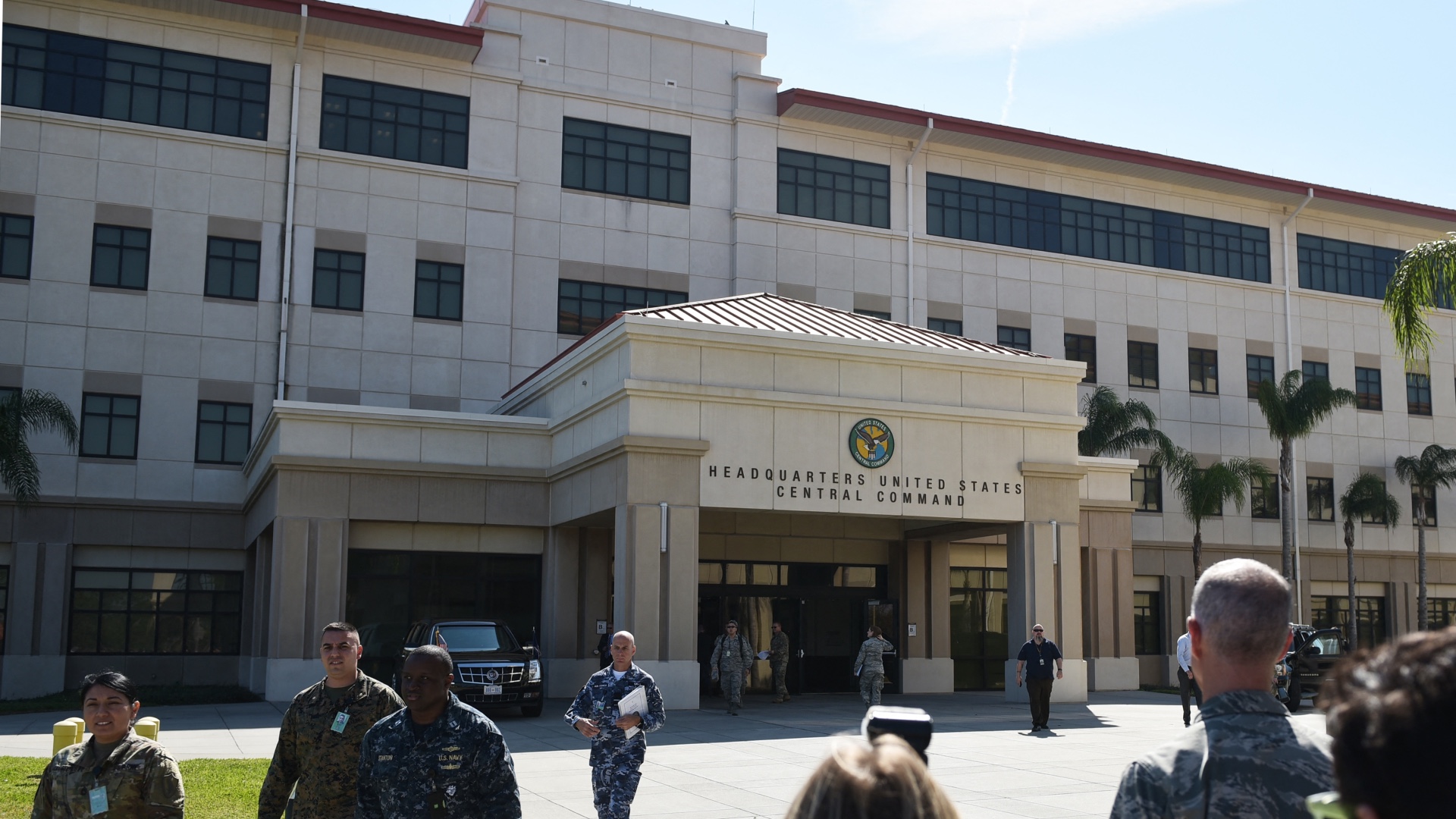
Closed-door diplomatic negotiations between senior Lebanese and Israeli representatives, convened this week at U.S. Central Command headquarters in Tampa, Florida, wrapped up without any substantive progress on core outstanding disputes, independent regional news outlet The New Arab confirmed Thursday via anonymous sources close to the talks.
Held under U.S. auspices, the latest round of discussions unfolded against a backdrop of sustained Israeli military operations across Lebanese territory throughout the current month, including targeted airstrikes and deliberate home demolitions in the southern districts of Nabatieh, Bint Jbeil, and Sidon. Multiple sources with direct knowledge of the proceedings reported that Israeli negotiating teams took uncompromising, rigid stances across all agenda items, while Lebanese delegates maintained a firm, non-negotiable position that all security and de-escalation measures between the two nations must follow a fully reciprocal framework.
Notably, the U.S.-funded Lebanese Armed Forces (LAF) has formally rejected any proposal for direct military-to-military coordination with Israeli counterparts, pushing instead for a neutral third-party verification system administered jointly by the United Nations and key international partners including France.
The current cross-border conflict traces its origins to October 2023, when Hamas-led attacks on southern Israel triggered widespread regional unrest, prompting near-continuous Israeli airstrikes on Lebanese territory. A November 2024 ceasefire negotiated by the outgoing Biden administration failed to meaningfully reduce Israeli military activity, as Israeli officials insisted their operations were necessary to target Hezbollah leadership and alleged weapons stockpiles across Lebanon, including sites located in the capital Beirut.
A dramatic escalation of Israeli military actions materialized earlier this year, when Israel launched a full-scale ground invasion and seized control of large swathes of southern and eastern Lebanese territory. The pace of violence accelerated further after the U.S. and Israel launched coordinated military operations against Iran on February 28, a move that prompted Hezbollah to launch defensive strikes on Israeli targets in support of its Iranian ally. Since that date, Israeli military actions in Lebanon have killed over 4,300 Lebanese civilians and combatants alike, and displaced more than 1 million people across the country.
A core top priority for Lebanese negotiating teams throughout all recent talks has been securing a binding, clear timeline for the safe return of all internally displaced Lebanese people to their homes, a demand that has seen zero actionable progress since the U.S.-brokered trilateral framework was formally agreed to by Lebanese, Israeli, and U.S. representatives in June of this year. That landmark framework followed five prior rounds of talks hosted by U.S. Secretary of State Marco Rubio in Washington, culminating in a widely publicized, billed-as-historic signing ceremony on June 26. At the event, Rubio characterized the agreement as merely “the beginning of the beginning” of a longer peace process, and announced two separate U.S. funding commitments: $100 million in humanitarian assistance to be distributed in coordination with the United Nations for conflict-affected communities, with no explicit clarification on whether the funds would serve only Lebanese populations or also cover northern Israeli border towns, plus an additional $30 million in reimbursements for the Lebanese Armed Forces earmarked by the Trump administration.
The 26 June framework established a U.S.-facilitated Military Coordination Group for Lebanon, but the so-called “pilot zones” from which Israel had pledged to withdraw its troops to allow the LAF to assume full security control have not been expanded in any capacity since July. Israeli officials have justified the frozen withdrawal process by claiming the LAF lacks the operational capacity to disarm Hezbollah fighters operating in the region.
Critically, Hezbollah — the U.S.-designated terrorist group that serves as the most powerful armed faction in Lebanon, with military capabilities vastly exceeding those of the U.S.-backed LAF — was excluded entirely from the formal negotiation track. Formed in the 1980s to resist Israel’s longstanding illegal occupation of Lebanese territory, Hezbollah has refused to engage in direct bilateral talks with Israel, though unconfirmed reports indicate the group has maintained discrete backchannel communications with the Trump administration. Hezbollah leadership has repeatedly stated it will not agree to any disarmament measures as long as Israel continues to pose an active military threat to Lebanese sovereignty, especially amid growing public rhetoric from Israeli policymakers openly discussing plans to formally expand Israel’s national borders northward into Lebanese territory.
Lebanon-Israel military talks in US end without a breakthrough