On a seemingly ordinary September 30 morning, Sahar Abushbeika, a displaced Palestinian mother of five who had volunteered to teach third-grade science, stood before her pupils at the Dawn of Hope makeshift tent school in eastern Khan Younis, southern Gaza. Mid-lesson, a sudden sound resembling a drone was followed by a small blast, and a bullet tore through the thin fabric of the tent, striking her lower back. She collapsed to the ground as her young students screamed in panic, their cries the last thing she recalled before waking up in a hospital bed. Doctors were unable to extract the bullet, which had lodged in a highly sensitive region of her spine, leaving her unable to walk or sit properly. Compounding her trauma, medical teams deemed thousands of other patients to have more urgent needs, so she was never prioritized for the life-saving evacuation she required.
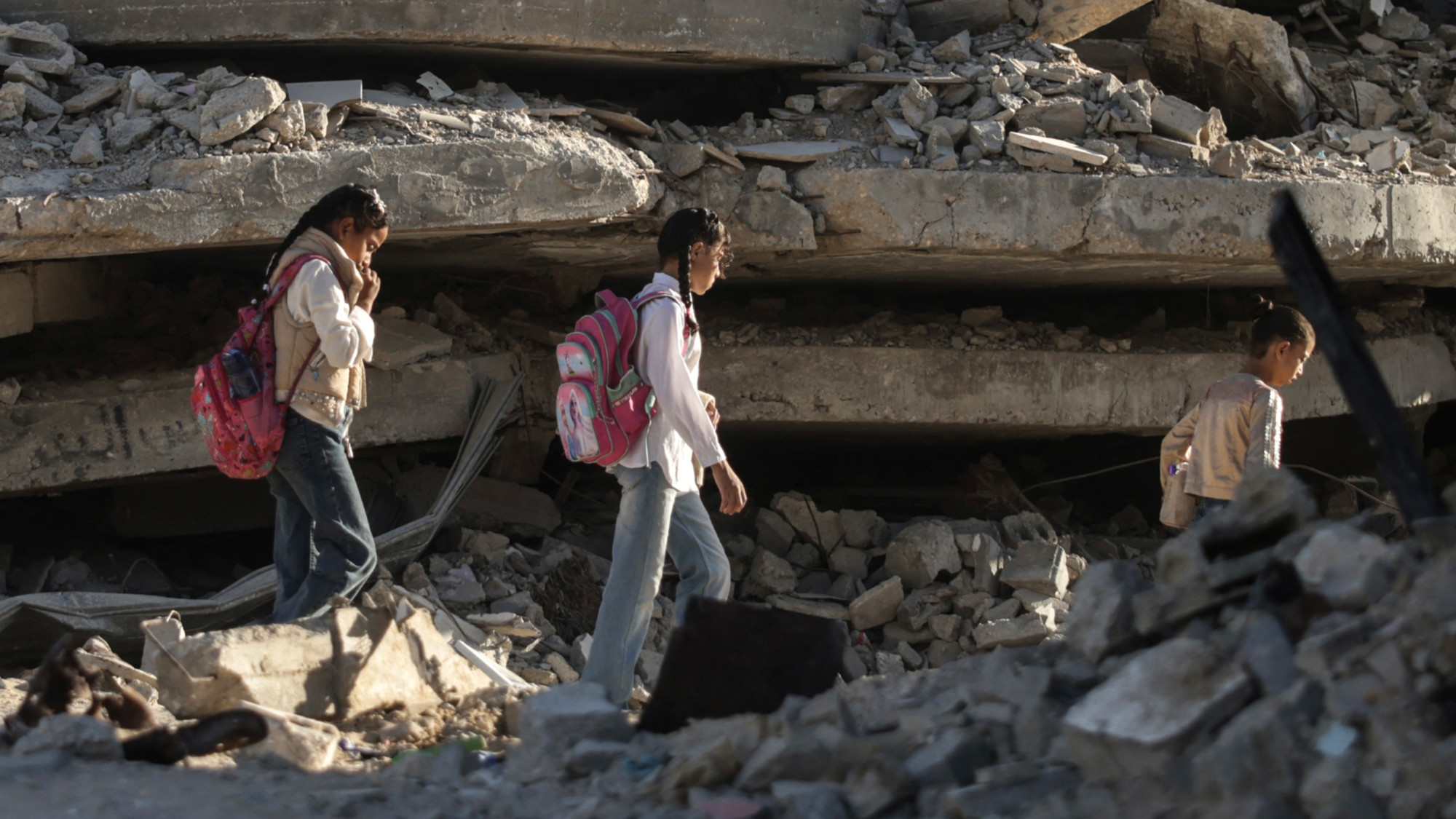
This harrowing incident is far from isolated. After nearly three years of relentless Israeli military campaigns that have damaged or destroyed over 97 percent of Gaza’s formal school infrastructure, local education authorities, UNRWA, and independent community groups launched a network of tent-based makeshift learning spaces to resume classes for the hundreds of thousands of displaced school-age children who had lost years of formal education. Crippled by extreme shortages of trained teaching staff and adequate classroom space, these makeshift schools operate on staggered rotating shifts, with most pupils receiving only three hours of instruction, three days per week.
Roughly three weeks after Abushbeika was shot, nine-year-old Amir Abusneimah was attending class at a tent school operated by US-registered charity Gaza Children Village, located just 2 to 3 kilometers from Israel’s demarcated “Yellow Line” military boundary, when a stray Israeli bullet pierced the tent wall, ricocheted off the classroom blackboard, and lodged in his shoulder. The deflection from the blackboard narrowly prevented the bullet from piercing his heart, but the impact severed one of his arteries. His mother Muna, a single parent separated from her partner and raising five children in a nearby displacement camp, rushed to the school after staff called to alert her of the shooting. Even with sand barriers erected around the tent compound to fend off stray gunfire, the camp is regularly targeted by Israeli shooting. Just days after Amir was wounded, another Israeli bullet penetrated the school’s administrative office, striking a cabinet while the headteacher was inside. Amir underwent four hours of emergency surgery at Nasser Hospital to repair the damaged artery; he is now in stable condition but requires ongoing physiotherapy and has been forced to pause his schooling during recovery. Muna says she lives in constant, paralyzing anxiety every time her children leave their tent to attend classes, as stray gunfire is a near-daily occurrence across the displacement camp.
This academic year marked the first tentative step toward partial resumption of normal educational activities across Gaza since the outbreak of the Israeli military campaign that began in October 2023, but in less than two months after classes restarted, a wave of targeted Israeli attacks on educational facilities has once again upended fragile learning routines. Most recently, an Israeli airstrike struck the main entrance of the University College of Applied Sciences in Mawasi Khan Younis on a Tuesday, killing three Palestinians and injuring 11 others, multiple of whom were enrolled students. That same day, 16-year-old student Rimas Ismail al-Madhoun was killed in an Israeli airstrike mere minutes after she returned home from classes in central Gaza City. On October 25, two separate Israeli airstrikes hit the courtyard of Gaza City’s Islamic University, killing three security guards and wounding several students and staff.
Official data from the Palestinian Ministry of Education and Higher Education paints a devastating cumulative toll: since October 7 2023, at least 19,200 primary and secondary school students and 1,386 university students have been killed by Israeli military actions, with an additional 28,590 K-12 pupils and 3,100 university students suffering serious injuries. In the single month of October alone, 14 schoolchildren between the ages of 6 and 16 were killed, alongside four teachers and three university administrative staff. For Gaza’s displaced community, the makeshift tent schools that were meant to be a safe haven to rebuild children’s stolen educations have become yet another dangerous frontline in the ongoing conflict.