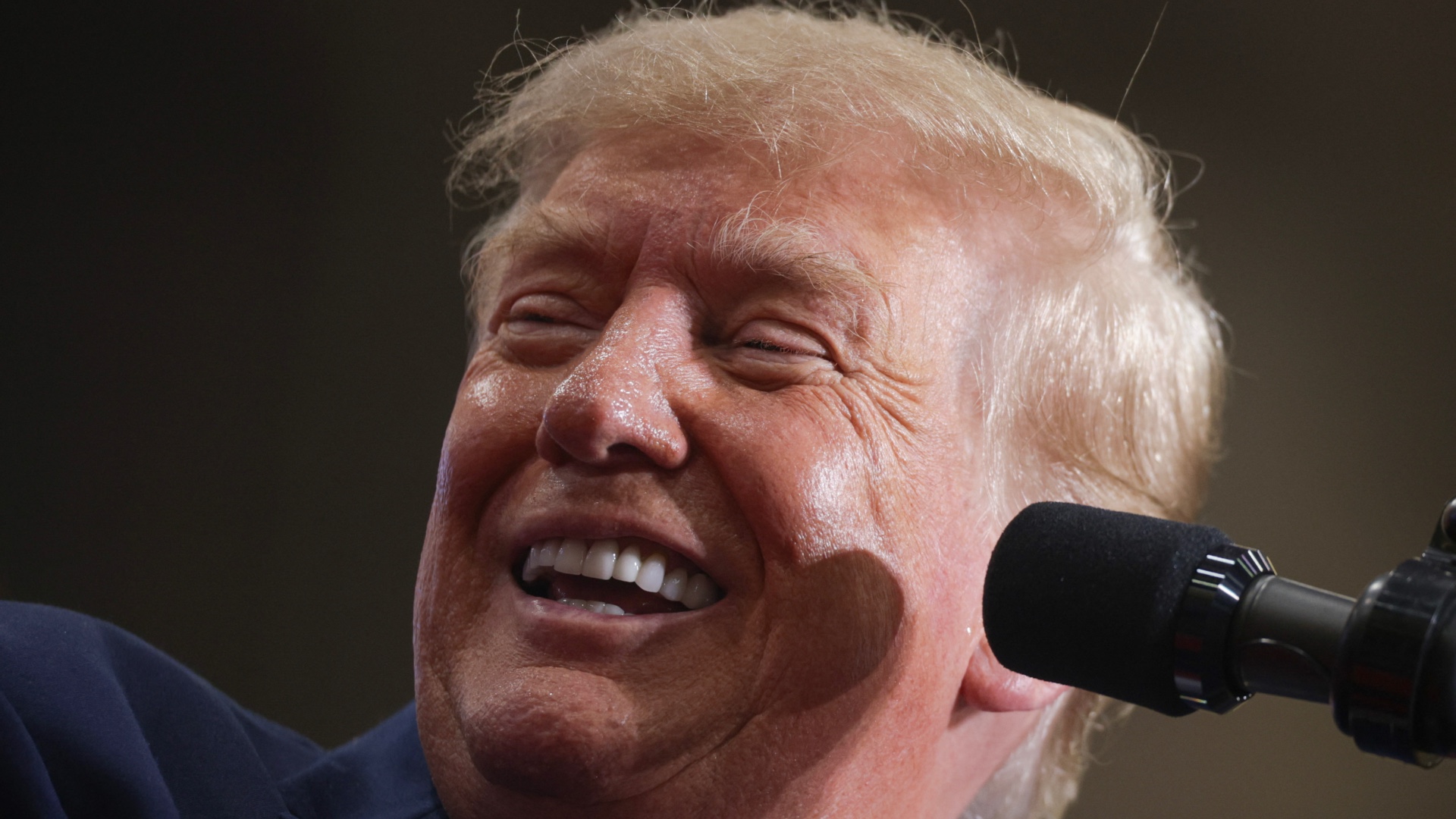
During a campaign rally in Perry, Georgia on a Saturday ahead of the 3 November midterm elections, sitting U.S. President Donald Trump made derogatory public remarks referring to a group of majority Arab, Muslim, and low-income nations including Libya, Yemen, Haiti, and Somalia as “shithouse countries”, and falsely labeled all these states as “terror-infested”. He went on to question existing U.S. immigration policies, arguing that the country should prioritize accepting migrants from majority white Nordic nations such as Norway, Sweden, and Denmark rather than residents from the nations he had just insulted.
The comments immediately drew dismay from Amer Ghalib, the newly appointed Yemeni-born Arab-American affairs adviser to the president. Ghalib first sent a text message to Trump on Sunday to express his firm rejection of the remarks, before raising the issue again in a face-to-face meeting with the president ahead of his scheduled rally in Port Huron, Michigan that same day. In a Facebook post published exclusively in Arabic (a break from his usual practice of pairing Arabic content with an English translation), Ghalib stated that Trump had acknowledged the concerns raised, promised to address the fallout, and pledged the offensive language would not be repeated.
However, at the subsequent Michigan rally, Trump avoided repeating his earlier broad insults against Arab and Muslim nations, instead launching a series of unsubstantiated personal attacks against Abdul El-Sayed, a surging Arab-Muslim Democratic candidate running for U.S. Senate in the state. Trump falsely claimed El-Sayed was a “jihadist Muslim Brotherhood member” who intended to impose Sharia law across the United States, despite no verified public links existing between El-Sayed and the Muslim Brotherhood, a regional political movement with no centralized global leadership that only has three of its regional offshoots formally designated as terrorist organizations by the U.S. government.
These divisive rhetorical tactics have drawn sharp criticism even from longstanding Trump allies within the Arab-American community. Bishara Bahbah, the Palestinian American former Harvard academic and founder of the 2024-founded group Arab Americans for Trump, described the remarks as a sign of desperation in an interview with Middle East Eye on Monday. Bahbah noted that the 2025 version of Trump stands in stark contrast to his 2024 campaign persona, when he carefully avoided offending Arab and Muslim voters and actively courted their support. Bahbah, who had previously served as a critical backchannel between U.S. negotiators and Hamas to facilitate the 10 October 2025 Gaza ceasefire deal, added that his efforts to push the administration to end Israel’s genocide in Gaza had been repeatedly rebuffed by the White House in recent weeks, a outcome he described as deeply upsetting. He also revealed that Trump had repeatedly broken past promises to stop using the term “Palestinian” as a slur, even after community representatives had explicitly raised objections.
Jenin Younes, president and legal director of the American-Arab Anti-Discrimination Committee, issued a formal statement slamming the rally rhetoric as tired, dangerous, and a deliberate distraction from the pressing economic hardships facing ordinary U.S. residents, including widespread affordability crises, high fuel prices, and the disruptive, often violent mass deportation operations that have displaced tens of thousands of families.
Political analysts have widely predicted a “blue wave” in the upcoming midterms that could deliver both the U.S. House of Representatives and Senate to Democratic control, a outcome that would block most of Trump’s remaining policy agenda in his final two years in office and potentially trigger impeachment proceedings against Secretary of War Pete Hegseth over the administration’s handling of the ongoing conflict with Iran. Trump’s current approval rating has fluctuated narrowly between 34% and 40% this month, and he has opted to host campaign events almost exclusively in safe, deeply Republican districts rather than attempting to persuade undecided swing voters, even openly telling reporters at the White House last week that voters should “pretend I’m on the ballot” to drive turnout. The midterm contests are widely framed as a public referendum on Trump’s performance in office.
Arab and Muslim conservative voters who previously backed Trump in 2024 have expressed particular hurt over the recent string of offensive remarks, according to Omar Shajrah, former legal counsel to the Michigan House and a longstanding Republican voter. Shajrah noted that many in the conservative Yemeni-American community, who traditionally aligned with the GOP on values issues, feel betrayed by the rhetoric, and that he will no longer support Trump-endorsed Republican Senate candidate Mike Rogers in Michigan, despite having backed Rogers in previous electoral cycles, even though he did not cast a vote for El-Sayed during early voting.
In a show of Democratic support, former U.S. President Barack Obama traveled to Detroit to headline a rally for El-Sayed, drawing explicit parallels between Trump’s current unsubstantiated attacks on the candidate and the 2011 birther conspiracy theory Trump launched to delegitimize Obama’s presidency, a racist smear campaign that eventually forced Obama to publicly release his long-form Hawaii birth certificate and served as the unofficial launchpad for Trump’s 2015 presidential run. Obama told the crowd that such bigoted, fear-based tactics had failed to sway Michigan voters during his own campaigns, and would not work against El-Sayed. A victory for El-Sayed would make him the first Muslim U.S. senator in history, and signal broad mainstream support for progressive policy ideas in the key working-class swing state of Michigan.
The only positive reference to an Arab-American figure at Trump’s Michigan rally came when he praised Massad Boulos, the Lebanese-born father of his daughter’s husband and a senior Arab and African affairs adviser, for his work delivering Arab-American support for Trump in Michigan two years prior. MEE confirmed it was unable to reach Boulos for comment on the controversy on Monday.