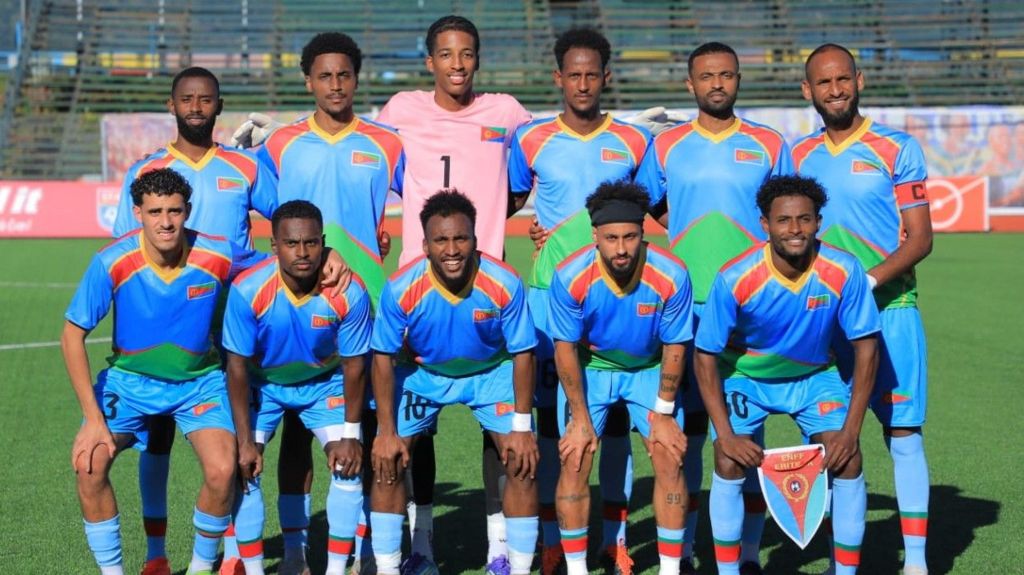
Eritrean football has just etched its name into the history books, securing a spot in the Africa Cup of Nations qualifying group stages for the first time in 19 years. But the landmark 4-1 aggregate victory over Eswatini last week has been overshadowed by a stunning development: seven members of the national squad have vanished after the win, failing to return home with their remaining teammates, a senior source close to the team has confirmed to the BBC.
Of the 24 players called up for the decisive qualifying tie, only 10 were based inside Eritrea when the squad was assembled. According to local sources who spoke to BBC Tigrinya from Asmara, Eritrea’s capital, just three of those domestic-based players – including team captain Ablelom Teklezghi – have completed their journey back to the country. While the exact whereabouts of the seven missing players remain unconfirmed, multiple regional reports indicate some have been spotted in South Africa, where the team stopped over before the scheduled return flight. High-profile absentees include starting goalkeeper Kubrom Solomon and veteran winger Medhanie Redie, two key contributors to the historic qualification win.
Eritrea’s state-run media, which typically gives extensive, celebratory coverage to national team sporting successes, has remained uncharacteristically silent on the team’s return after the qualifying victory. Sources close to the Eritrean Sports and Culture Commission confirm that official fanfare and a public reception for the returning squad were fully planned, but all events were abruptly scrapped once news of the players’ disappearance broke.
The commission’s social media spokesperson, who had posted regular updates throughout the team’s qualifying campaign, only shared photos of a reception held for returning squad members at the Eritrean embassy in Cairo, Egypt, where the team stopped en route to Asmara. All players visible in those posted images are the ones who ultimately continued their journey to the capital.
This wave of player absconding is not an isolated incident for Eritrean international football. For more than two decades, repeated waves of Eritrean players have refused to return home after competing in fixtures abroad, with cases ranging from small groups of players to almost entire squads disappearing on international trips.
The pattern stretches back to 2009, when the entire senior Eritrean national team – except for the head coach and one team official – failed to return from a competition held in Kenya. In 2013, 15 players and the national team doctor were granted asylum in Uganda after going missing following an international tournament. Two years later, 10 senior squad members refused to fly home after playing a World Cup qualifying tie in Botswana. Most recently, in 2019, seven players from Eritrea’s under-20 national side disappeared after the team competed in an East African regional championship in Uganda.
This recurring trend is rooted in broader political and migration dynamics. Human rights organizations have repeatedly labeled the Eritrean government in Asmara as highly repressive, a characterization that Eritrean authorities have consistently rejected. Despite having a small national population, hundreds of thousands of Eritreans have fled the country to seek asylum abroad in recent decades, a trend that has extended to athletes competing internationally.
For Eritrean football fans, the moment was supposed to mark a turning point. The upset victory over Eswatini had raised widespread hopes that the nation’s football program was on the cusp of a renaissance after 19 years of failing to reach AFCON qualifying group stages. Instead, the news of the missing players has matched a now-familiar, disappointing pattern that has long plagued Eritrean football on the international stage.