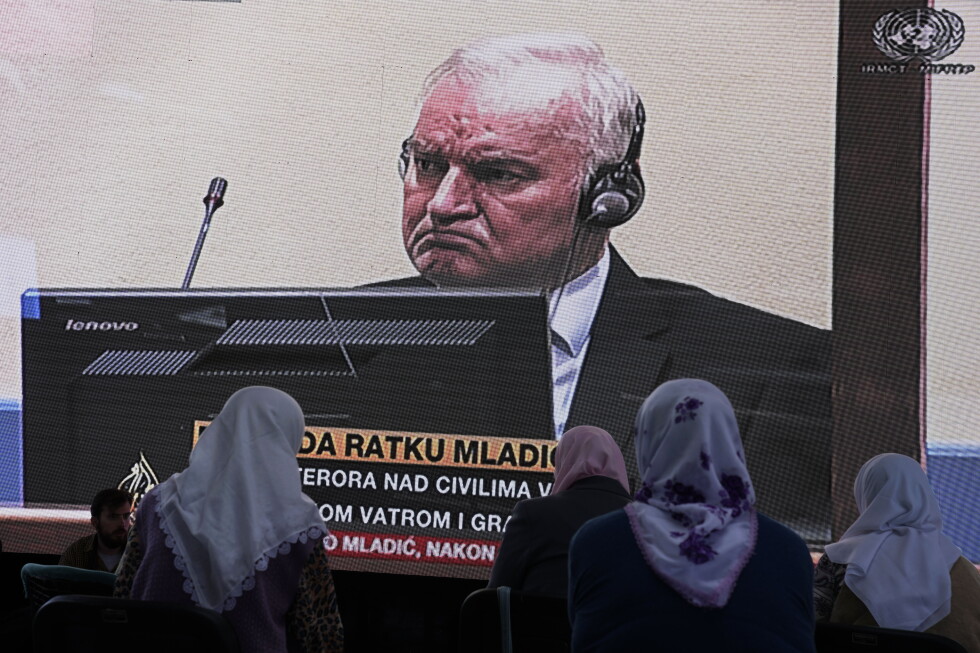
One week after a United Nations court rejected a final humanitarian appeal to release the convicted former Bosnian Serb army commander Ratko Mladic, the 84-year-old war criminal died in his Dutch prison cell while serving a full life sentence for genocide and crimes against humanity committed during the 1990s Balkan Wars.
Mladic’s passing on Thursday has reignited bitter divides across the former Yugoslavia, with Serbian leaders lambasting the UN tribunal for its refusal to grant early release, while families of his thousands of victims say his death in custody closes one chapter of long-sought justice.
Serbian President Aleksandar Vucic issued a harsh rebuke of the court’s decision on Friday, framing the rejection of Mladic’s early release as an unethical, unprecedented act. Multiple requests for compassionate release had been submitted by Mladic’s family and the Serbian government over recent years, centered on claims that Mladic’s advanced age and severe declining health justified releasing him to end his life in his home region.
“That was uncivilized behavior, unprecedented and without excuse,” Vucic told reporters in Belgrade. “We can now see that they wanted Mladic to die behind bars.”
Mladic, one of the most notorious figures of the 1992–1995 Bosnian War that killed over 100,000 people and displaced more than 1 million, was captured by Serbian authorities in 2011 after 16 years as a fugitive. In 2017, the UN International Criminal Tribunal for the former Yugoslavia sentenced him to life imprisonment for orchestrating the 1995 Srebrenica massacre – Europe’s first formally recognized genocide since World War II – which saw more than 8,000 Bosnian Muslim men and boys systematically executed after Mladic’s forces overran a UN-declared safe haven. Mladic’s troops also led the 44-month siege of Sarajevo, the longest siege of a capital city in modern European warfare, established concentration camps for non-Serb civilians, and carried out widespread ethnic cleansing campaigns across Bosnia.
In its August 20 ruling rejecting Mladic’s final release request, Mechanism President Judge Graciela Gatti Santana explained the decision by noting that the convict received comprehensive, high-quality compassionate medical care in detention, and was granted an expanded family visitation program that allowed for consistent, meaningful contact with loved ones. The International Residual Mechanism for Criminal Tribunals, which inherited the cases of the now-closed Yugoslav war crimes court, opened an official inquiry into Mladic’s death this week, with the lead judge visiting the Dutch detention center on Friday to investigate the circumstances of his passing. The tribunal has not yet released any additional public comment on the death.
Public reactions to Mladic’s passing have mirrored decades of division over the Balkan wars and his legacy. In Mladic’s hometown of Kalinovik, Bosnia, and in majority-Serb communities across the region, residents held candlelight vigils this week, honoring Mladic as a national hero who defended Serb interests. Many residents insist the convictions against him are fabricated propaganda. “He could not have been a better man. Everything else is just a bunch of lies. He would not touch anyone, child, no one. It’s all lies,” said Stojanka Visnjevac, a Kalinovik local.
For survivors and families of Mladic’s victims, however, his death while in custody brings a long-awaited measure of closure. Fazila Efendic, a Srebrenica survivor who lost multiple family members in the 1995 massacre, said that for victims, the outcome is a confirmation of justice. “We, the victims, are satisfied, when we know that he was convicted to life in prison,” she said. “For us, it is important that he is convicted and that he served his sentence until he died.”
Discussions around Mladic’s burial have already sparked new regional tensions. Vucic confirmed Friday that Mladic’s family will choose the final resting place, and that the Serbian government will support a dignified burial if the family requests interment on Serbian territory. He declined to confirm or deny earlier unconfirmed reports that Mladic would receive a state funeral – a prospect that triggered widespread outrage from leaders and victim groups across Bosnia and the wider Balkans. As of Friday, the Serbian government had not received official confirmation of when Mladic’s remains will be transferred from the Netherlands to his family.