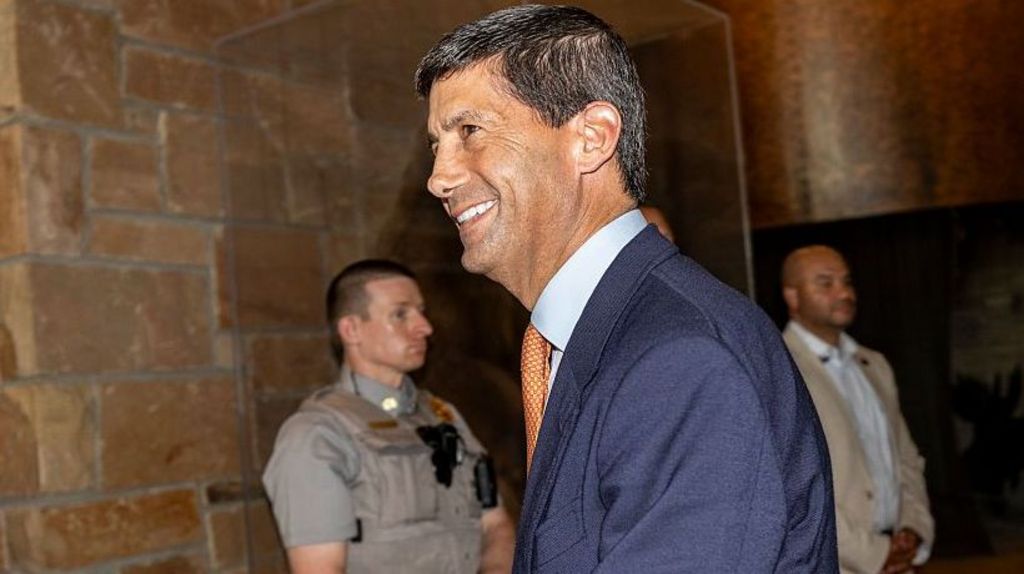
The annual Jackson Hole Economic Policy Symposium, a high-profile gathering that draws central bankers, senior government officials, and leading academics from across the globe to debate pressing economic challenges, kicked off this week with a stark warning from the newly appointed leader of the U.S. Federal Reserve about persistent inflationary pressures.
Kevin Warsh, who was tapped by President Donald Trump to lead the central bank in May, used his first keynote address at the Wyoming-based conference to lay out his policy stance, noting that while summer inflation readings came in better than many forecasters had projected, the data has not yet shown that underlying cost-of-living pressures have meaningfully improved for U.S. households.
Warsh emphasized that with annual inflation still running well above the Fed’s long-standing 2% target – the latest official data puts 12-month price growth at 3.4% as of July – the central bank’s top priority right now must be taming rising prices. “Here is my standard: We must be confident that underlying inflation is moving to our objective, clearly and at sufficient speed. Otherwise, we have work to do,” he told attendees.
While Warsh explicitly cautioned that his remarks should not be interpreted as binding forward guidance for future rate decisions, his comments have immediately shifted market expectations for the Fed’s upcoming September 15-16 policy meeting, where officials will set the federal funds rate. In addition to signaling that further tightening remains on the table if inflation does not cool fast enough, Warsh also argued that the Fed’s post-2008 practice of providing explicit forward guidance on future rate moves has outlived its usefulness.
“Oversharing policy deliberations and overcommitting to future decisions can lead markets, businesses, and households astray,” he said, adding that the practice also limits the Fed’s “freedom to make the right calls when it’s time to decide.”
The Fed has held interest rates steady at a range of 3.5% to 3.75% for five consecutive meetings through July, as officials balanced inflation concerns against broader economic uncertainty. Persistent tensions between the U.S. and Iran have driven a sharp surge in global oil prices in recent months, keeping upward pressure on energy and broader consumer costs.
Following Warsh’s Jackson Hole speech, CME Group data shows that bond and interest rate markets have sharply increased their bets on a September rate hike. Analysts at Capital Economics noted that Warsh delivered a “far clearer – and hawkish – message” than expected, leaving the door open to an earlier rate increase than markets had previously priced in.
“Hikes are not guaranteed, but Warsh is now at least suggesting he is on board with them if economic growth remains strong and monthly core Personal Consumption Expenditures price growth remains a bit too firm,” the firm’s analysts wrote in a note to clients.
Rate hikes work to cool inflation by raising borrowing costs for consumers and businesses, encouraging lower spending that in turn eases upward pressure on prices. While higher rates deliver better returns for savings accounts, they also push up costs for mortgages, auto loans, and credit card debt, and increase the interest payments the U.S. government owes on its national debt.
In a development that underscores the growing fiscal pressure facing the U.S., rising interest payments have now pushed the total national debt past the $40 trillion mark, more than doubling over the past decade across both the Trump and Biden administrations. Data from the Congress Joint Economic Committee shows the debt is growing at a staggering rate of roughly $90,000 per second, or $7.8 billion per day.
Treasury Secretary Scott Bessent recently announced a plan to buy back more government debt in an effort to lower overall borrowing costs, but market optimism around the measure faded quickly after the announcement.
The Fed’s September rate decision will also carry significant political weight, as the U.S. approaches upcoming mid-term elections, with voters across the country already listing affordability and rising living costs as one of their top policy concerns. President Trump, who appointed Warsh to lead the Fed, has a well-documented history of criticizing previous Fed chair Jerome Powell, repeatedly pressing for steep rate cuts and arguing that rate hikes hold back U.S. economic growth. Analysts and political observers will be closely watching Trump’s reaction to whatever decision the Fed makes next month.