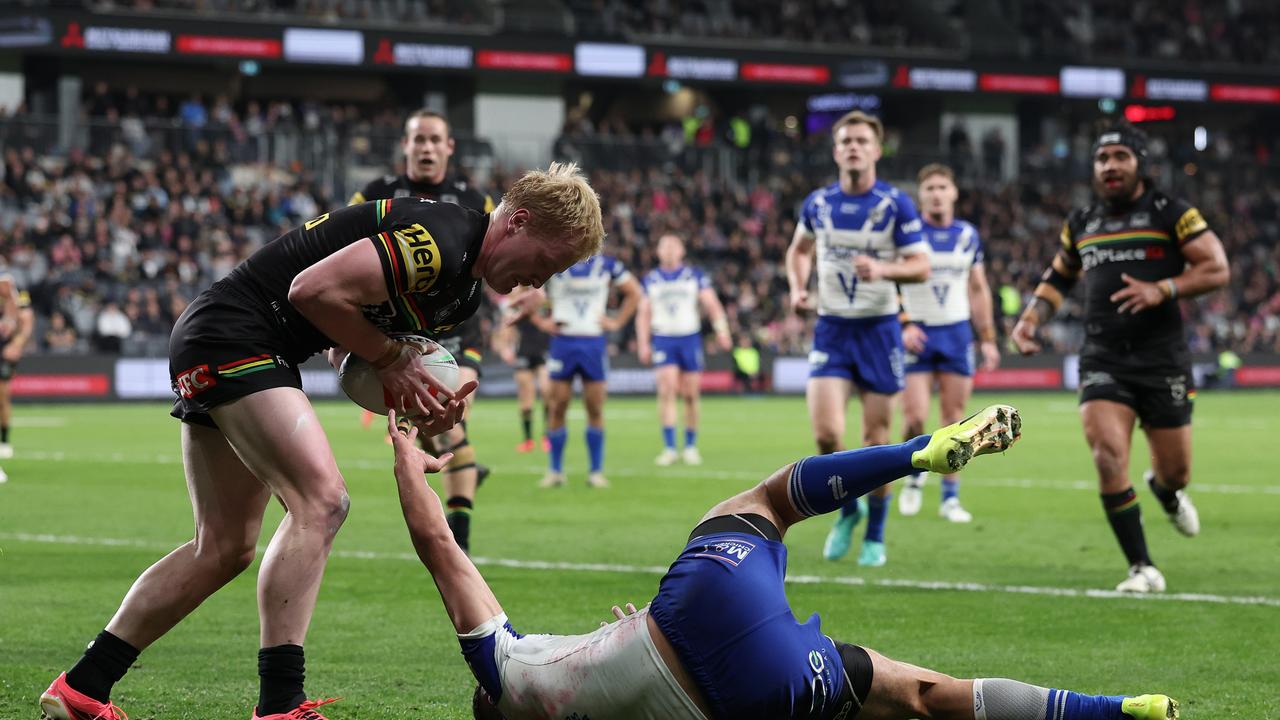
The National Rugby League (NRL) clash between the Penrith Panthers and Canterbury Bulldogs at CommBank Stadium delivered a 24-10 victory for the Panthers on Friday night, but the final result was overshadowed by a contentious video referee decision that has reignited debate over the league’s bunker review system. The controversial call denied Panthers winger Tom Jenkins a first-half try, a ruling that head coach Ivan Cleary has described as “ridiculous” and questioned the core purpose of the video review system.
The moment of contention unfolded in the 24th minute of the match. After a Panthers kick ricocheted into the air, Jenkins and Bulldogs winger Jacob Kiraz jumped to contest possession. Jenkins stripped the ball cleanly from Kiraz mid-air before grounding it to score what seemed a valid try. On-field referee ruled it a no try, and the bunker upheld the decision, confirming that Kiraz had completed a secure catch before losing the ball. The ruling gifted Canterbury an extra seven-tackle set, and just a minute later, Bulldogs halfback Matt Burton crossed to score a try off the back of the unexpected possession.
In a fiery post-match press conference, Cleary questioned the logic of the ruling and the broader effectiveness of the bunker system, which was introduced to eliminate clear mistakes from on-field calls. “If he caught the ball with no one around him in the air and then landed and dropped it, then what would happen?” Cleary asked reporters. “It was just ridiculous. It was a huge call because then they get a penalty and they score. It’s frustrating. I think the jury is out whether that [removing clear mistakes] is happening, or if the bunker is actually creating more controversy than it solves.”
The denied try also stalled Jenkins’ race for the NRL’s leading try-scorer title this season, leaving him level on 28 tries with South Sydney winger Alex Johnston, who is set to add to his tally when his side faces the Gold Coast Titans in the upcoming round. Jenkins himself offered a measured response to the decision from the sheds after the match, drawing a comparison to a similar contest he had a year prior that was ruled a try. “I understand that it’s in the air, but we were competing. I felt like I came down with it and we were still fighting for it when we were coming down,” Jenkins explained. “I’m not sure what the full ruling was, but I think they said his foot was on the ground. In saying that, there’s not much you can do about it.”
Panthers captain Nathan Cleary echoed the team’s confusion, saying the ruling’s interpretation of a completed catch made little sense. “He (the referee) said that he had taken control of the ball, but it’s not a contest in the air. I don’t know. I could understand if his (Kiraz) feet hit the ground and he still had control of the ball, but that wasn’t the case so I don’t know when it’s deemed a catch.”
While the decision did not change the final outcome of Friday’s match, the broader NRL community has grown increasingly concerned that similar controversial bunker calls could ultimately decide the result of a high-stakes match later in the season, including the grand final.
The contentious bunker ruling was not the only divisive decision of the night. In a separate incident, Bulldogs rookie AJ Jones was only penalised for a blatant push in the back on Panthers fullback Dylan Edwards, avoiding a sin bin dismissal that many expected. The incident came after Edwards collided heavily with Bulldogs centre Matt Burton, who was forced off the field for a mandatory head injury assessment. Jones took exception to the collision and ran a long distance to shove Edwards from behind, resulting in a penalty for Penrith.
Ivan Cleary argued that Jones should have spent time in the sin bin for the incident, particularly after referees had warned both sides earlier in the match against melees and unsportsmanlike contact. “I think he potentially (should have gone to the sin bin). It was a pretty dumb play. Dyl didn’t do anything wrong. There was a melee that they don’t want,” Cleary said.
Bulldogs head coach Cameron Ciraldo acknowledged the incident was a learning opportunity for the young rookie, but defended Jones’ mentality of sticking up for his teammates. “It’s probably a good learning for him,” Ciraldo said. “But what this group has really prided themselves on is sticking up for each other. What I get really disappointed at is when the opposition does something and we don’t stick up for each other. That’s why AJ is going to be a really good Bulldog for a long time because he cares about his mates and he sticks up for his mates. He’ll learn from that from a smarts point of view, but I never want him to lose that mentality to stick up for his mates.”
The split of opinions between the two head coaches on both controversial decisions highlights the ongoing tension around consistent officiating in the NRL, as the competition heads towards the finals series.