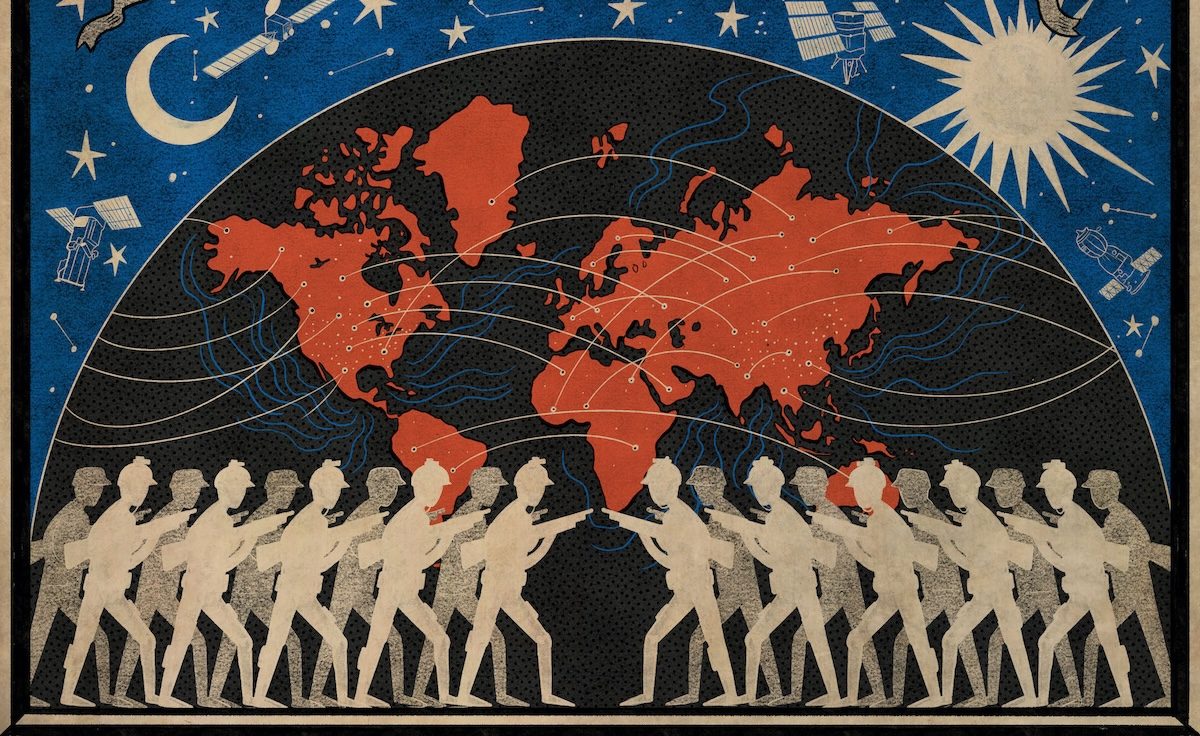
An ancient Chinese proverb holds that a master hunter does not waste energy chasing prey — instead, they position themselves where the rabbit is destined to run. For critics and supporters alike, one fact stands out about Xi Jinping’s long-term statecraft: he has moved with extraordinary, deliberate patience. Now, over a single historic stretch of weeks, that patience appears to be paying off, as both Russian President Vladimir Putin and former U.S. President Donald Trump traveled to Beijing for high-level summits in quick succession.
Far from a random confluence of diplomatic schedules, the dual visits are the product of decades of intentional geopolitical architecture. The fact that both Washington and Moscow — two powers that formally occupy opposing poles of the existing global order — have been drawn to Beijing in parallel carries a clear, unignorable message: the center of geopolitical gravity has shifted. China is no longer a passive actor responding to rules set by others; it is now actively, quietly reshaping the global system on its own terms.
Putin’s Visit: A Partnership Framed By Growing Asymmetry
Putin’s trip to Beijing carried a clear, unspoken subtext: what was framed as a meeting of equal partners was in reality a visit from a power increasingly dependent on Chinese goodwill. Since the outbreak of the full-scale war in Ukraine, Russia has faced sweeping Western sanctions, and has pivoted its entire economic infrastructure eastward, redirecting the bulk of its energy and raw material exports to Chinese markets. These sales are made at steeply discounted rates, negotiated from a position of weakness: Russia has few alternative buyers for its vast energy resources, a reality Beijing has leveraged to its full advantage.
Take the long-stalled Second Power of Siberia natural gas pipeline as a case in point. Moscow has pushed aggressively to finalize the project for years, while Beijing has faced no pressure to rush the deal. This dynamic mirrors a broader historical pattern: great powers that allow themselves to become economically dependent on a single major partner gradually, then suddenly, lose their strategic independence. Just as Habsburg Spain, awash in New World silver but reliant on Genoese bankers for financing, saw its foreign policy constrained by financial obligation, modern Russia retains its military standing and nuclear deterrence, but its room for independent geopolitical maneuver has shrunk steadily into a corridor defined by Beijing’s priorities.
This shift has ripple effects across South Asia, where India has long maintained a close relationship with Moscow as a counterbalance to Chinese and Western pressure. Today, every Russian arms deal, energy contract, and diplomatic signal carries an implicit Chinese veto, a reality New Delhi has noted with quiet but growing discomfort.
Trump’s Summit: Exposing American Diplomatic Uncertainty
If Putin’s visit laid bare Russia’s growing structural weakness, Trump’s trip to Beijing revealed a more striking shift: America’s growing diplomatic disorientation. Trump arrived in Beijing accompanied by a cohort of top U.S. corporate CEOs, a choice that read to global observers as a solicitation for Chinese investment and access, a far cry from the image of unrivaled American power that Washington has projected for decades.
Xi received Trump with the calm authority of a leader who already holds the upper hand in setting the terms of engagement. When he invoked the Thucydides Trap — the theory that a rising power and an established hegemon are fated to clash — he framed it not as a warning to avoid, but as an almost settled verdict. China’s posture made clear it has already completed its rise; the open question is whether the U.S. will accept the new global order or exhaust itself trying to reverse it.
The most striking outcome of the summit was what did not happen: there was no joint statement from the two sides. This absence speaks far louder than any negotiated communiqué could. When two leading global powers meet at the highest level and cannot agree on a shared public statement, it confirms that the gap between their core worldviews is too wide to paper over with diplomatic language. The two sides released separate readouts, and the U.S. version was notably muted, stripped of the triumphal rhetoric Trump typically deploys after meetings he claims as a win. A man who once described a brief phone call with a foreign leader as “incredible and productive” only called this meeting “good” — a telling retreat from his usual boosterism.
On core issues from trade and Taiwan to technology restrictions and rare earth exports, China has clearly abandoned its past approach of quietly absorbing U.S. pressure. Today, it retaliates systematically, with growing confidence in its ability to impose meaningful costs on Washington. The 2025 Chinese export restrictions on critical rare earth elements, which directly disrupted U.S. defense supply chains, were not the action of a power afraid of confrontation. They were the calculated move of a state that has modeled its leverage and is confident in its position.
The Push for a G-2 Global Order
Xi’s most consequential move during the Trump summit was not a trade concession or a diplomatic compromise — it was a conceptual shift. By framing the bilateral relationship as a “constructive, stable strategic relationship,” and emphasizing that China and the U.S. share joint responsibility for global peace, Xi advanced a framework Washington has long resisted: the formal recognition of a G-2 world order.
Beyond the headline disputes over tariffs and technology, this is China’s core demand. It is not chasing symbolic equality on paper; Beijing has long moved past that need. Instead, it wants structural recognition that the international system cannot function without Chinese consent, that no global crisis — from the Middle East to Ukraine to the Taiwan Strait — can be resolved without Beijing’s active or implicit cooperation.
The unresolved standoff over Iran underscores this reality. Washington’s failure to decisively end the conflict over the Strait of Hormuz, through neither military pressure nor diplomatic leverage, served as visible evidence to Beijing that American power now overstretches its grasp. Xi did not need to point this out; the global status quo said it for him.
The Quiet Construction of a New Geopolitical Center
The deeper significance of these two back-to-back visits has little to do with Putin or Trump themselves. It is proof of the decades-long, patient project China has pursued to make itself indispensable to every corner of the global system: to energy markets, global supply chains, diplomatic crisis resolution, and the infrastructure ambitions of the Global South.
China did not stumble into its central position in global affairs; it engineered it, through initiatives from the Belt and Road to its deliberate buildup of rare earth market dominance, to the construction of a trade network centered on its own economy. This kind of multi-decade strategic thinking is structurally difficult for Western democracies, bound by short electoral cycles and shifting public attention, to match.
As former U.S. Secretary of State Henry Kissinger once observed, great powers rarely announce their dominance openly. Instead, they simply begin making decisions that other powers find themselves bound by. Beijing is increasingly in that position today. When both your primary geopolitical rival and your most prominent Eurasian partner travel to your capital within weeks, each seeking your support for their most urgent challenges, the question of who holds the structural advantage answers itself. Xi Jinping did not need a joint communiqué to declare victory; the visits themselves were the announcement.
The world is not becoming Chinese in culture or ideology. But it is becoming a system where Beijing’s preferences carry a weight that cannot be erased by sanctions, tariffs, or rhetorical pushback. That is the new geopolitical reality that both Washington and Moscow are now forced to reckon with, whether they are willing to admit it publicly or not.