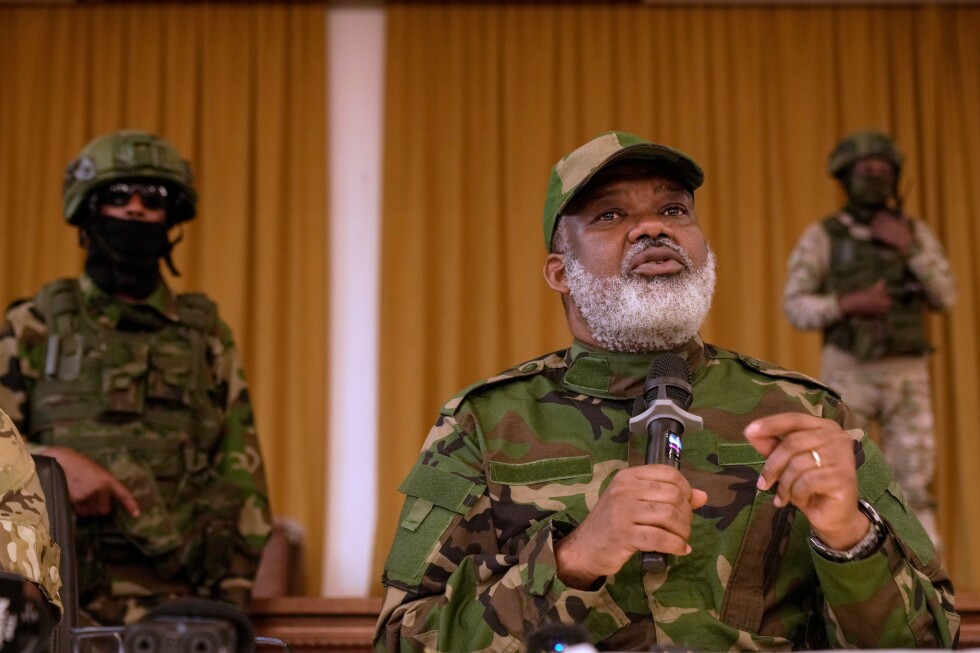
In a scathing rebuke of Washington’s role as a peace broker in the Democratic Republic of the Congo, a coalition of Congolese rebels led by the Congo River Alliance has accused the Trump administration of failing to uphold impartial mediation amid ongoing bloodshed in the country’s mineral-rich eastern region. The open criticism, delivered via a formal letter addressed to U.S. Secretary of State Marco Rubio and obtained by the Associated Press on Saturday, comes months after a high-profile U.S.-brokered peace agreement between the DRC and neighboring Rwanda, a deal the Trump administration has repeatedly touted as a landmark diplomatic success.
The 2024 accord, hailed by then-U.S. President Donald Trump after negotiations with Congolese President Felix Tshisekedi and Rwandan President Paul Kagame, was designed not only to end decades of cyclic conflict in eastern Congo but also to lay the groundwork for a trilateral economic partnership that would open the region’s untapped rare earth mineral reserves to American government access and private sector investment. Despite Trump’s repeated claims of a diplomatic win, active hostilities have continued unabated across eastern Congo, with armed factions and government forces trading blame for repeated violations of the ceasefire terms.
The rebel coalition, which includes the Rwanda-backed M23 movement — the most powerful armed group operating in eastern Congo — argues that Washington has consistently turned a blind eye to alleged peace commitment violations by the Tshisekedi administration in Kinshasa, while disproportionately targeting opponents of the Congolese government and Rwandan entities with punitive sanctions. Last week, the U.S. imposed new sanctions on former Congolese President Joseph Kabila, accusing him of funding and supporting rebel activities; earlier this year, Washington also blacklisted Rwanda’s military and four senior Rwandan officials over their documented support for M23. The letter charges that no comparable punitive measures or even public warnings have been issued against Tshisekedi’s government for its own breaches of the peace deal.
“Your administration has neither imposed any sanctions nor issued even a simple warning to the leaders in Kinshasa, whose intransigent and arrogant attitude calls into question the impartiality and neutrality of the American Facilitator/Mediator,” the letter reads. It adds that the lack of consistent corrective action undermines confidence in U.S. mediation, noting that “the absence of clearly identifiable corrective measures fuels questions regarding the facilitation’s ability to preserve, over time, the requirements of impartiality and neutrality that are essential to its credibility.”
Long-standing instability has plagued eastern Congo for generations, driven in large part by competition over control of the region’s vast deposits of critical minerals that underpin global technology and clean energy supply chains. More than 100 armed factions operate in the area, with M23 emerging as the most militarily capable. U.N. estimates show the group has grown from just a few hundred fighters in 2021 to roughly 6,500 today, a rapid expansion that the DRC government, U.S., and United Nations experts attribute to ongoing military support from Rwanda — a claim Rwanda has repeatedly denied. M23 launched a major offensive across eastern Congo in early 2024, seizing the regional capital Goma and other key population centers before the U.S.-brokered deal was reached.
Independent regional conflict experts agree that while U.S. mediation reduced cross-border tensions between the DRC and Rwanda, it has failed to curb the escalating ground conflict. “While U.S. mediation has helped cool regional tension it has not stopped the escalating fighting on the ground,” Kristof Titeca, a University of Antwerp professor specializing in Central African governance and conflict, told the AP. The rebel letter’s public criticism adds new pressure on the Trump administration’s diplomatic efforts in the Great Lakes region, at a time when Washington is pushing to advance American economic interests in the region’s critical mineral sector. The Associated Press contributed reporting from Bonn, Germany, for this story.