As the 2026 FIFA World Cup co-hosted by Mexico, the United States and Canada approaches, a controversial government plan to cut the academic year one month short has sparked fierce backlash from parents, business groups and regional authorities across Mexico, forcing President Claudia Sheinbaum to soften the original announcement and rebrand it as a non-final proposal.
The initiative, first unveiled publicly by Mexican Education Secretary Mario Delgado last Thursday, would have wrapped up the current school year on June 5 – a full 3 weeks ahead of the traditional end date. Delgado justified the move by pointing to two key expected challenges during the tournament, which runs from June 11 to July 19 across the three North American nations: crippling traffic congestion from an expected surge in domestic and international travel, and an forecasted extreme heatwave across much of Mexico. He added that the decision had been reached “unanimously” together with state-level education authorities, and that the next academic year would still launch as scheduled on August 31, with a two-week pre-term learning reinforcement period designed to prevent students from falling behind on coursework.
The policy change triggered immediate anger from Mexican families, who were suddenly forced to scramble to find last-minute childcare for an extra month of summer break. Many parents also raised concerns about disrupted end-of-year academic assessments and the heavy financial burden of unplanned summer activities for children. Speaking to local newspaper El Universal, one parent questioned the rushed handling of student evaluations, noting that students would now be graded based on incomplete coursework, while another criticized the policy for prioritizing tourist convenience over working families’ livelihoods, asking “They want the city empty for tourists, but what are we supposed to do for income?”
The National Union of Parents issued a formal condemnation of what it called a “unilateral decision”, labeling the use of the World Cup as a justification for cutting classes “inexcusable”. The union pointed out that World Cup matches will only be held in three Mexican cities, questioning why the policy would disrupt the education of nearly 23 million students nationwide under what it called an “absurd pretext”.
Business groups also joined the criticism. Coparmex, Mexico’s leading employers’ association, warned that the sudden unplanned schedule change would create widespread uncertainty for both working parents and businesses, and called on individual state governments to implement their own localized solutions to address heatwave and travel disruptions, while minimizing damage to household finances and national economic activity.
Even Delgado’s claim of unanimous state support quickly fell apart. Three state governments publicly spoke out against the plan – including two that are actually hosting World Cup matches – with one state confirming it would retain the original academic calendar regardless of the federal proposal.
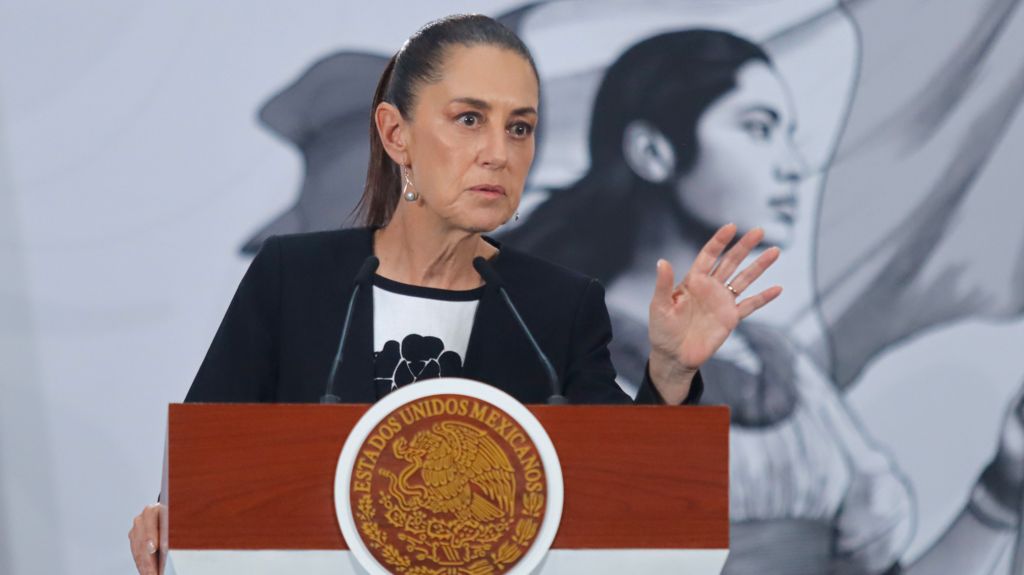
Facing this broad wave of opposition, President Sheinbaum used her daily Friday press briefing to walk back the original announcement, reframing the plan as a draft proposal still open to review and revision. “Since many Mexicans love soccer and are looking forward to the World Cup, this proposal was put forward to bring forward the holiday break,” Sheinbaum told reporters. “But we also have to take into account the school days of our boys and girls. So it is just a proposal; the final schedule has not been set yet, and we will wait before making a definitive decision.” She also noted that the idea originated from teachers’ unions and state education authorities, rather than being initiated by the federal government.
The controversy over the school calendar is not the only challenge Mexico has faced ahead of the 2026 tournament. Earlier this year, a government crackdown on violent drug cartels that resulted in the death of the leader of the Jalisco New Generation Cartel (CJNG) sparked a wave of retaliatory violence across the country, raising international concerns about visitor safety. One of Mexico’s host cities is Guadalajara, the capital of Jalisco state and the epicenter of the recent unrest. Sheinbaum has repeatedly stressed that there is “no risk” to visiting football fans, while FIFA President Gianni Infantino has said he feels “very reassured” by Mexico’s security preparations. To address safety concerns, the Mexican government plans to deploy thousands of additional security personnel to host city streets throughout the duration of the tournament.