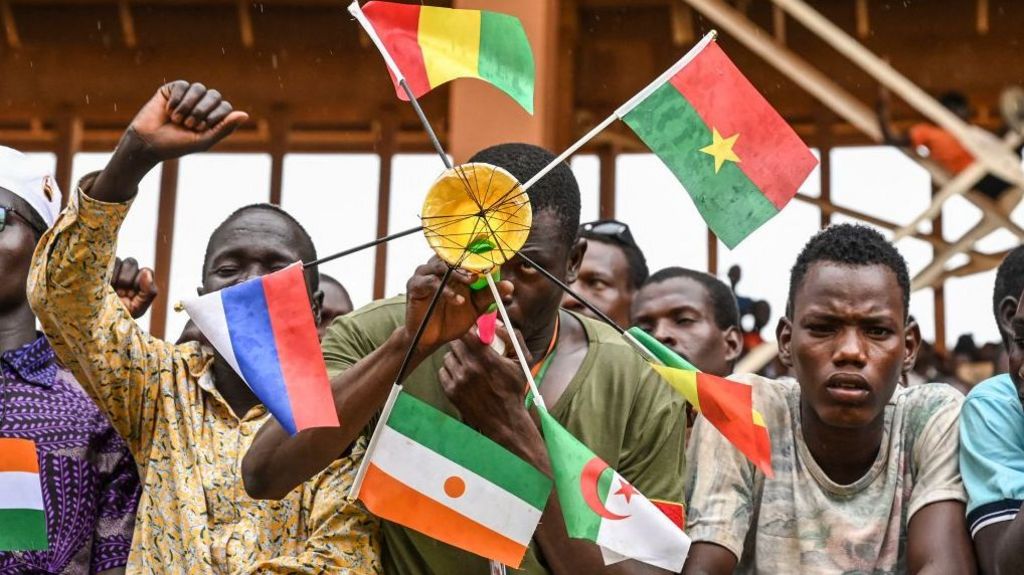
Russia is moving beyond its established military and security partnerships in Africa to deepen cross-continental connections through a major expansion of its cultural and educational outreach network, known as ‘Russian Houses’. According to Russia’s state humanitarian agency Rossotrudnichestvo, these centers are designed to advance Russian language learning, educational cooperation, scientific exchange, and cultural engagement across the continent, while supporting a wide range of community and institutional projects.
Currently, 16 Russian Houses already operate across Africa, with concentrations in key Russian partner states including Mali, Burkina Faso, and Niger. Of the 11 new Russian Houses scheduled to open globally, eight will be located on the African continent, in the Democratic Republic of Congo, Kenya, Madagascar, Mali, São Tomé and Príncipe, Senegal, Sierra Leone, and Togo. The remaining three new sites will be established in Armenia and Thailand.
This expansion of soft power programming comes amid Russia’s growing security footprint in West Africa, where the state-aligned African Corps – the paramilitary force that replaced the Wagner Group’s mercenary operations – has become a central security partner for a number of military-led governments battling jihadist insurgencies. The ruling juntas of Mali, Niger, and Burkina Faso explicitly turned to Russian security support after cutting ties with their former colonial ruler France, prompting the withdrawal of French counter-insurgency forces and the conclusion of the United Nations’ peacekeeping mission in Mali in December 2023.
Recent months have also brought growing attention to the presence of African combatants in the Russia-Ukraine war. Kenya has recorded one of the highest numbers of recruited African fighters, with Nairobi accusing private employment agencies of luring Kenyan men with promises of legitimate work in Russia before redirecting them to frontline combat roles. While Russia has maintained that all foreign volunteers join of their own free will in full compliance with domestic law, it reached an agreement with Kenya in March to halt the deployment of Kenyan recruits to Ukrainian front lines.
Rossotrudnichestvo officials frame the expansion of Russian Houses as a deliberate strategy to build sustainable, long-term people-to-people and institutional ties between Russia and African nations, complementing existing security and economic cooperation. The agency is restructuring its programming to increase engagement intensity and strengthen oversight, with a focus on delivering tangible outcomes for African partner states. “We’re significantly changing the programme itself. We’re increasing the intensity of our work and the level of oversight,” Igor Chaika, head of Rossotrudnichestvo, said in a statement.
Chaika emphasized that the new tailored educational programming will align with local development priorities. “We must focus on who the country needs. If it needs doctors, we should train doctors; if it needs specialists in other fields, we should train those specialists,” he explained. He added that the agency prioritizes encouraging foreign students who study in Russia to return to their home countries after completing their training, so they can apply their new skills to drive domestic economic growth.
To support the network expansion, Rossotrudnichestvo has signed a cooperation agreement with the Association for Economic Cooperation with African Countries (AECAS), a Russia-Africa trade and business networking organization established by President Vladimir Putin in 2020. The new initiative also includes a micro-grant program launching in 2027 to fund educational, cultural, scientific, technological, and youth-led projects hosted by Russian Houses abroad. Rossotrudnichestvo aims to build a “full-fledged international network” by strengthening partnerships with local organizations to operate the centers, noting that demand for Russian Houses has risen even in countries where Russian state institutions face political restrictions on their activities.