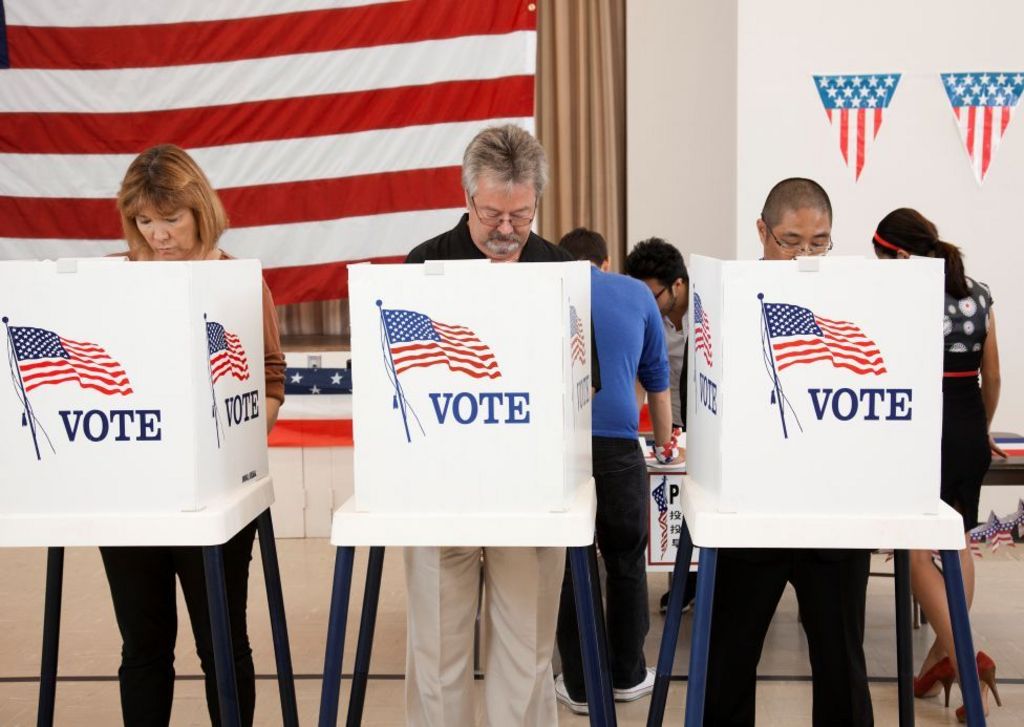
After months of relentless campaign rallies, ad blitzes, and a historic multi-billion-dollar investment from partisan groups and candidates nationwide, voters across the United States have cast their ballots in the 2026 midterm elections. While pre-election public polling has consistently positioned the Democratic Party with a nominal advantage, longstanding concerns about survey reliability in recent cycles leave significant room for unforeseen upsets as results trickle in. Political analysts have mapped out three distinct, evidence-backed scenarios that could unfold once all votes are tabulated, each carrying vastly different ramifications for the trajectory of the final two years of Donald Trump’s second presidential term.
The first and most dramatic possible outcome is a decisive Democratic electoral wave, breaking decades of historical precedent that typically favours the party out of presidential power during midterm cycles. Fueled by widespread voter frustration over historically low presidential approval ratings, elevated consumer costs linked to ongoing military tensions with Iran, and public backlash against controversial administration policies including sweeping aggressive immigration enforcement and generous incentives for large-scale data centre construction, Democratic candidates could outperform even their most optimistic projections. In this scenario, the party would not only easily clear the 218-seat threshold for a House majority, but amass a comfortable buffer by flipping nearly every toss-up House race and even notching unexpected wins in deeply conservative districts that have not sent a Democrat to Congress in a generation. In the Senate, the wave would deliver victories in nearly every competitive battleground, with historic upsets in ruby-red states such as Texas and Kansas, the latter of which has not elected a Democratic senator for nearly a century. This result would be driven by surging turnout among core Democratic constituencies, overwhelming support from independent voters, a reversal of recent inroads Trump made with Hispanic and young male voters, and even soft Republican supporters choosing to sit out the election rather than cast a ballot for their party. A Democratic sweep of both chambers would represent a searing public rebuke of Trump and his congressional allies, setting the stage for two years of fierce partisan legislative clashes that would block large swathes of the president’s policy agenda. Early warning signs of this wave forming would include Democratic overperformance in targeted House races in Florida, upset wins in traditionally Republican-held districts across Michigan, New York, Virginia, North Carolina and Kentucky, and a surprise Democratic flip of the deeply conservative South Carolina Senate seat on election night.
The second, more moderate outcome is a narrow, partial Democratic victory that political analysts have dubbed the “trickle” scenario. In this path, Democrats would secure a slim House majority by winning the most competitive low-hanging fruit races, but fall far short of the sweeping gains projected in a wave cycle. This would force Democratic House leadership to navigate constant internal tensions between the party’s progressive left flank and its moderate centrist caucus to cobble together enough votes to pass even routine legislation. On the Senate side, the party would flip only a small handful of battleground seats – such as the widely expected pickup in North Carolina – but fall short of notching upset wins in conservative heartland states. Key races that would slip from Democratic grasp include the Maine Senate seat held by long-serving moderate Republican Susan Collins, a competitive Michigan seat where progressive candidate Abdul El-Sayed fails to hold the Democratic line, and the Alaska House race where lingering confusion over the high-profile “two Dan Sullivans on the ballot” controversy – stemming from a dismissed Trump-era Republican lawsuit over ballot eligibility – sinks Democratic incumbent Mary Peltola. This scenario would materialise when the robust early voting turnout posted by Democratic voters is matched by a last-minute surge of Republican voters heading to the polls on election day, driven by Trump’s last-minute rallies targeting his core base. The end result would be a narrowly divided Congress, creating near-total legislative gridlock for the final two years of the presidential term. Early indicators of this outcome would include Florida delivering broad, comfortable victories for Republican candidates across the board, while Democrats pick up a small number of targeted House seats in Virginia and Pennsylvania but fail to dislodge entrenched Republican incumbents in safely red districts nationwide.
The third and final plausible outcome is a surprising Republican hold on both chambers of Congress, a result that would align with the pattern of pre-election polls systematically underestimating grassroots support for Trump and his allies. For this outcome to come to pass, Republican base voters would turn out at unexpectedly record-shattering levels, while independent and Hispanic voters who had signalled frustration with Trump’s policies in pre-election surveys break for Republican candidates at the last minute. Control of the House would hang in the balance for days after election night, as California’s notoriously slow mail-in ballot counting process drags on, and Republicans would ultimately eke out a slim majority thanks to favourable partisan redistricting maps passed in recent years in Texas, Florida and North Carolina. On the Senate side, Republicans would hold every competitive seat in conservative states and even flip a Democratic-held battleground seat in Michigan, while keeping Democratic challengers on the defensive in peripheral competitive races in North Carolina, Minnesota and New Hampshire. If this scenario unfolds, Trump would claim a fresh public mandate on the morning after election day, and move forward unimpeded with his full domestic and foreign policy agenda with the unwavering support of a Republican-controlled Congress. Early signs pointing to this outcome would include easy re-election victories for Republican Senators Ashley Moody in Florida and Jon Husted in Ohio, strong Republican defences of competitive House seats in Pennsylvania and Virginia, and successful GOP flips of Democratic-held House districts across North Carolina, Ohio and Florida.