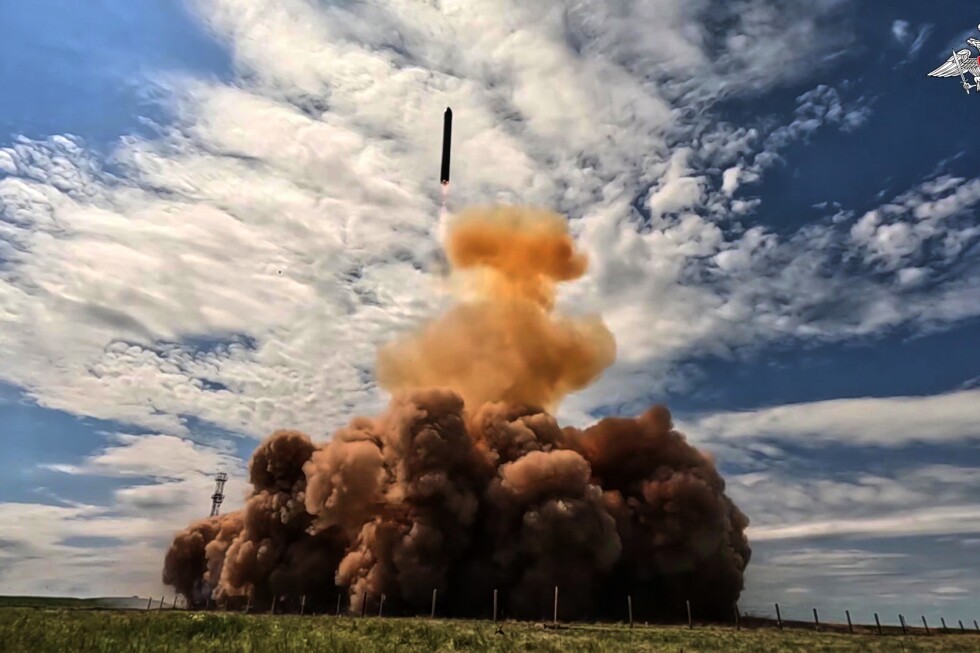
On Tuesday, Russia initiated a sweeping, three-day set of exercises for its nuclear-capable military forces, a major show of strength that comes as Ukrainian drone attacks on Russian territory have grown dramatically in frequency and intensity in recent weeks.
According to statements from the Russian Defense Ministry, the maneuvers are among the largest planned nuclear drills in recent years, involving a massive deployment of military hardware and personnel: 64,000 active troops, more than 200 missile launch systems, over 140 military aircraft, 73 surface warships, and 13 submarines. Eight of the participating submarines are armed with nuclear-tipped intercontinental ballistic missiles (ICBMs), putting the full scope of Russia’s sea-based nuclear deterrent on display. The drills will include live practice launches of both nuclear-capable ballistic missiles and cruise missiles, the ministry confirmed.
The core focus of the exercises, Defense Ministry officials noted, is refining protocols for “the preparation and use of nuclear forces under the threat of aggression.” The drills also integrate joint training with Belarus, Russia’s closest western ally that already hosts Russian nuclear weapons on its territory, including the advanced new Oreshnik intermediate-range nuclear-capable missile system.
The timing of the maneuvers is not accidental. They unfold against a backdrop of sharply escalating Ukrainian drone strikes deep inside Russian territory. Over the weekend, a large drone barrage targeted Moscow’s outlying suburbs, killing three civilians and damaging multiple residential and industrial buildings. These increasingly frequent and impactful strikes have created a growing challenge for the Kremlin, which has long attempted to frame the ongoing conflict in Ukraine as a distant operation that does not disrupt the daily lives of ordinary Russian citizens. The spread of attacks to major population centers close to the Russian capital has undermined that narrative.
This nuclear saber-rattling aligns with a long-standing strategy Russian President Vladimir Putin has pursued since launching the full-scale invasion of Ukraine in February 2022: repeatedly drawing global attention to Russia’s massive nuclear arsenal to deter Western nations from expanding military support to Kyiv. Tuesday’s drills also kicked off on the same day that Putin began a high-profile two-day official visit to China, where he is set to reaffirm the deepening strategic partnership between Moscow and Beijing.
Just one week before the drills, Putin publicly celebrated the successful test launch of the new Sarmat intercontinental ballistic missile, a system designed to replace aging Soviet-era ICBMs and bolster Russia’s long-range nuclear strike capacity. In 2024, Putin enacted a revised Russian nuclear doctrine that significantly lowered the threshold for a potential Russian nuclear response: the document states that any conventional attack on Russia backed by a nuclear-armed power will be treated as a combined attack on the Russian state. Analysts widely view this revision as a direct warning to the West aimed at blocking Ukraine from gaining access to longer-range Western weapons that can strike deeper into Russian territory.
Hardline Russian commentators and military hawks have long pressured the Kremlin to take harsher retaliatory action against Ukrainian drone attacks, arguing that Russia should target production facilities in NATO member European countries that supply Ukraine with drone components. Last month, the Russian Defense Ministry took an unprecedented step, publishing a public list of European factories it says are involved in manufacturing drones and parts for the Ukrainian military. The ministry issued a clear warning that any Ukrainian drone attacks on Russian territory using European-built hardware carry the risk of “unpredictable consequences” for the countries hosting those facilities, a threat that has raised tensions between Russia and the Western alliance even further.