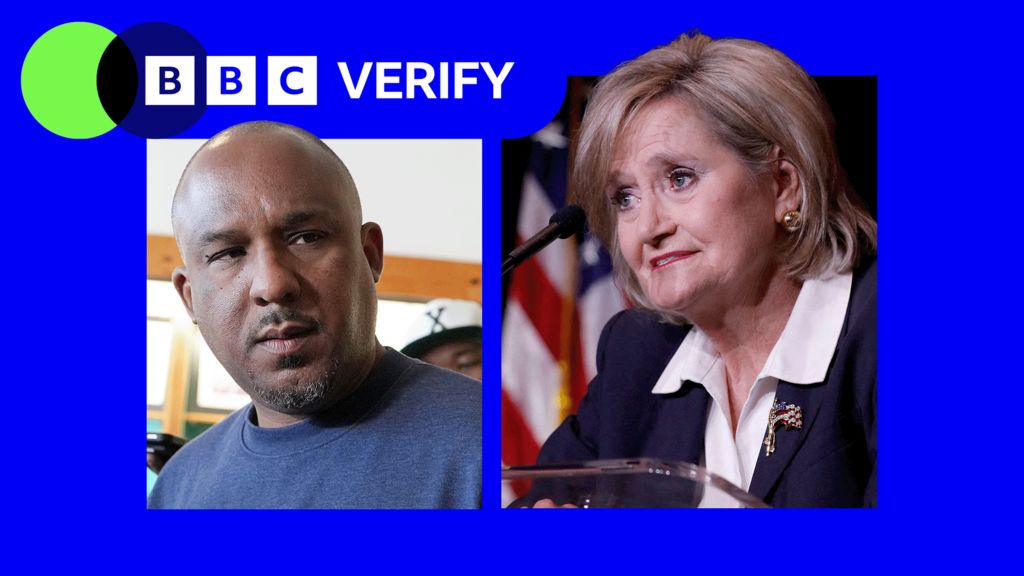
A fiercely contested U.S. Senate race in Mississippi has devolved into a high-stakes standoff between Democratic and Republican campaigns, as remaining uncounted ballots hold the power to upend nearly 40 years of uninterrupted Republican control over the state’s U.S. Senate seats. As of Friday, 97% of all ballots cast have been tallied, with Democratic candidate Scott Colom carrying a narrow roughly 2,500-vote lead over incumbent Republican Senator Cindy Hyde-Smith, who has held the seat since 2018. State officials confirm that at least 3,600 mail-in absentee ballots are still awaiting processing, with state rules permitting these ballots to be counted as long as they bore an election-day postmark and arrive by November 10. An undetermined volume of provisional, or affidavit, ballots — cast by voters who lacked required identification at polling sites and have until November 10 to resolve ID verification issues — also remain uncounted, though Mississippi Republican Party leadership claims as many as 20,000 total outstanding ballots may be left to tabulate. Both campaigns have assembled large legal teams and deployed observers across the state to oversee the remaining count, with pre-emptive legal maneuvering already underway. Hyde-Smith’s legal team has issued formal requests to all 82 of Mississippi’s county election offices to segregate all provisional ballots from standard and absentee ballots, and preserve all associated processing records as potential evidence for pending legal action. Colom’s campaign has pushed back aggressively against this request, arguing it has no basis under existing state law, and could enable the improper tracing of individual ballots back to specific voters in direct violation of state ballot secrecy protections. University of Mississippi law professor Ronald Rychlak, an expert on state election law, notes that while Mississippi statutes grant candidates the right to examine ballot materials within 12 days of local vote canvassing, no existing rule mandates the blanket segregation of all accepted provisional ballots, validating the Democrats’ concerns over potential privacy breaches. Uniquely among U.S. states, Mississippi has no formal, codified process for triggering a recount, even in extremely tight contests where vote margins are razor thin. Unlike most U.S. states, which have automatic recount triggers for close races or formal administrative pathways for candidates to request a manual recount, Mississippi’s election dispute resolution is left almost entirely to the discretion of state court judges. While post-election ballot box examinations permitted under state law could ultimately lead to a court-ordered recount, historical data from across the U.S. shows that successful recounts that reverse an initial election outcome are extraordinarily rare: only 3 out of 37 statewide full recounts conducted nationwide since 2000 have overturned a preliminary result. The stakes of the ongoing count extend far beyond Mississippi’s state lines: a Colom victory would elevate him as the first Black U.S. senator elected in Mississippi since 1875, and the first Democrat to hold a U.S. Senate seat from the state since 1982, while also reshaping the final size of the Democratic caucus majority in the U.S. Senate. In a worst-case scenario for both campaigns, a prolonged unresolved dispute could eventually escalate to federal level, as Article I of the U.S. Constitution grants the U.S. Senate full authority to act as the final arbiter of the election, returns, and qualifications of its own members. With the state’s November 13 vote certification deadline fast approaching, pressure is mounting on local election officials to process all remaining ballots in a timely, transparent manner to avoid prolonged legal gridlock.
Razor-tight Mississippi Senate race sparks ballot battle – could there be a recount?