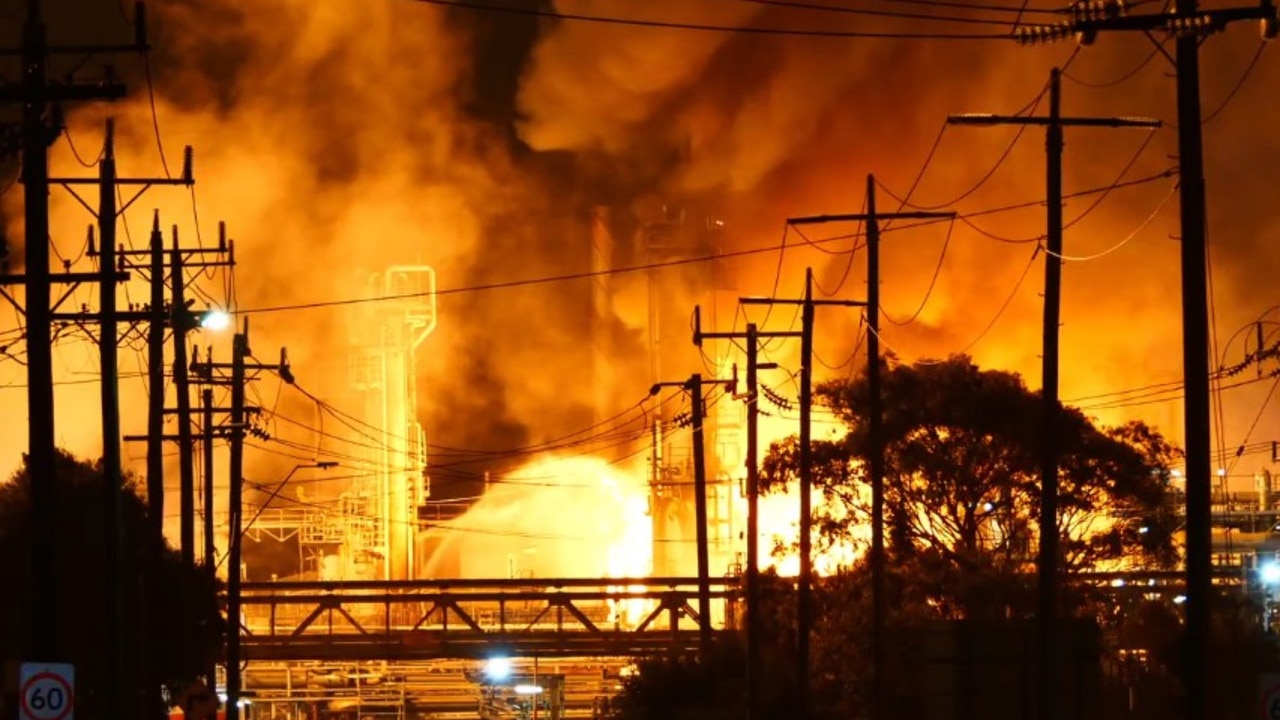
A week after a destructive fire damaged one of Australia’s only two remaining operational oil refineries, Queensland’s state government has launched a proactive, home-grown plan to strengthen the nation’s fuel security amid a growing national supply crisis. The proposal, unveiled Friday by Queensland Premier David Crisafulli, comes just days after the Wednesday night blaze that tore through VIVA Energy’s Geelong refinery, leaving only Ampol’s Lytton facility in Brisbane fully operational across the country.
Crisafulli confirmed that state authorities are already in active discussions with multiple project backers to develop a new refinery in Queensland’s industrial Gladstone region, a move designed to let Australia take greater control of its domestic fuel supply chain. “For a long time, I have highlighted that Queensland needs to control its own energy destiny — that means we need to drill, refine and store our own fuel right here,” the premier stated during the announcement. “Today I can confirm we are in formal talks with several proponents to build a fuel refinery here in Queensland. We have the right regulatory framework, the right approach, and we are open for investment.”
The proposal lands as Australia confronts a growing national fuel crisis, triggered by escalating geopolitical tensions between the United States and Iran in the Middle East that have disrupted global energy supply chains. The country’s refining capacity has shrunk drastically over the last three years: two major facilities in Kwinana, Western Australia and Altona, Victoria closed permanently in 2021 and were converted into import-only storage terminals, leaving just the Geelong and Lytton plants online. This recent fire at Geelong has amplified concerns about overreliance on imported fuel and exposure to global market volatility.
When pressed for a concrete timeline for the Gladstone project, Crisafulli declined to share a specific completion date, framing the initiative as a long-term investment in national energy resilience. “This is a long-term vision for fuel security,” he said. “We also have critical work to deliver in the short and medium term to address immediate supply risks.”
Queensland Deputy Premier Jarrod Bleijie added that the state government is prioritizing speed for the project, having already directed Economic Development Queensland and the state’s Coordinator-General to fast-track all approval processes. “I have instructed these agencies to move every possible obstacle out of the way for the companies we are talking to, to fast-track approvals, secure suitable land, and get this refinery built as quickly as possible,” Bleijie explained.
One proponent already confirmed to be in talks is Resilient Energy Australia, whose chair David Goodwin told the Australian Broadcasting Corporation that the group has put forward a $11 billion proposal for the Gladstone site. If completed, the facility would have the capacity to process 210,000 barrels of crude oil per day, with between 60 and 70 percent of output dedicated to diesel. The refinery would also produce other critical fuel products including automotive gasoline, aviation gasoline, kerosene and jet fuel to meet domestic demand across multiple sectors.