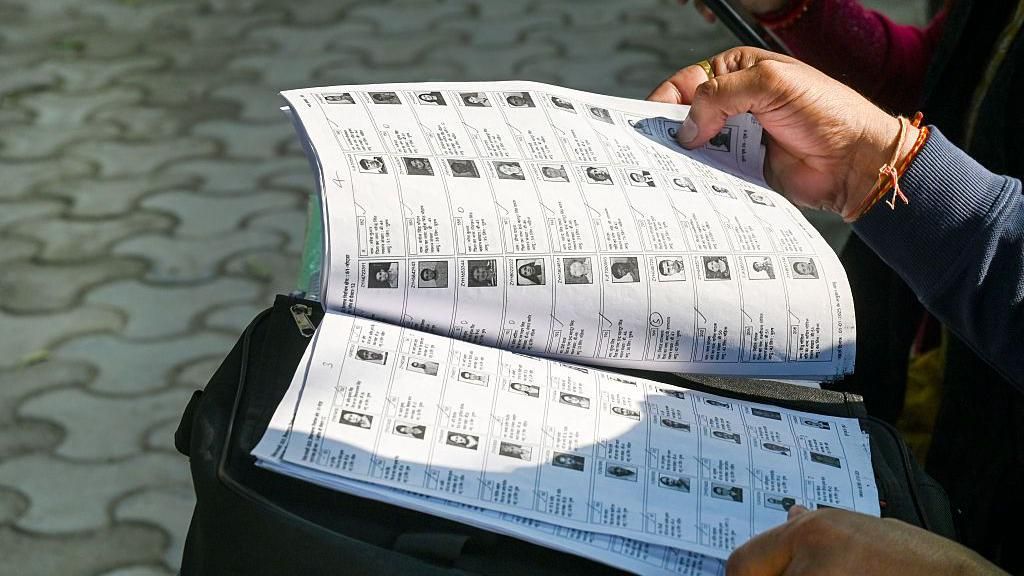
Ahead of high-stakes state assembly elections scheduled for late April in India’s eastern state of West Bengal, a massive voter roll cleanup initiative has plunged the state into political chaos, triggering accusations of disenfranchisement, partisan bias, and a threat to India’s democratic foundations.
The dispute centers on the Election Commission of India’s Special Intensive Revision (SIR), a nationwide drive launched to purge duplicate, outdated, or ineligible entries from electoral registers. While 13 other Indian states and union territories have completed the SIR process, West Bengal is the only region required to add an extra layer of adjudication for challenged deletions. To date, the exercise has removed roughly 9 million names – 12% of the state’s total 76 million electorate – from the 2026 voter rolls. Of those deletions, more than 6 million have been categorized as absentee or deceased voters, leaving 2.7 million eligible-looking voters in limbo, their voting fate pending tribunal review.
One of those caught in the bureaucratic and political crossfire is 65-year-old Muhammad Daud Ali, a retired Indian Army technician from West Bengal. Despite holding official Indian documentation including a valid passport and military service records, Ali and all three of his children were struck from the rolls, leaving only his wife registered to vote. Ali is far from alone: with polls set to open on April 23 and 29, thousands of voters in similar limbo see virtually no path to restoring their voting rights before ballots are cast. “I am dumbstruck. I feel deeply hurt and insulted,” Ali told reporters. “How can they conduct the elections without solving our disputes? I simply have no idea who to seek justice from.”
The controversy has deepened along partisan and religious lines, pitting the ruling Trinamool Congress (TMC), led by Chief Minister Mamata Banerjee, against the national Bharatiya Janata Party (BJP) of Prime Minister Narendra Modi and India’s national Election Commission. The TMC alleges the SIR process was intentionally designed to disenfranchise millions of Muslim voters to tilt the election outcome in the BJP’s favor – a claim both the BJP and the Election Commission strongly deny. Modi and other BJP leaders have framed the voter roll cleanup as a crackdown on “illegal Bangladeshi infiltrators”, a framing the TMC argues is targeted directly at West Bengal’s large Muslim community.
Data compiled by political parties and independent analysts supports uneven exclusion patterns that have amplified these concerns. Muslims account for roughly 27% of West Bengal’s population per the 2011 national census, but make up 34% of the 9 million deleted voters and 65% of the 2.7 million undecided cases. The deletions have not been limited to Muslim voters, however: in Kolkata, the state capital, up to 29.6% of all registered voters have been struck from rolls across the city, and in the border district of North 24 Parganas, which lost 1.26 million voters (15% of its electorate), most deletions were Hindu voters, including large numbers of Dalit Hindus from the Matua migrant community. In Paschim Bardhaman district, 80% of deleted voters are Hindi-speaking Hindus with roots in northern India.
India’s Supreme Court has allowed the election process to move forward even as 2.7 million voter disputes remain unresolved, scheduling a hearing on the challenges for April 13 – leaving only a narrow, uncertain window for any last-minute relief. Banerjee, whose TMC has held power in West Bengal since 2011, has vowed to return to the Supreme Court to challenge the decision, arguing that holding an election while millions are disenfranchised undermines democratic principles.
Political observers and voters alike have voiced deep alarm over the impact of the deletions. Political scientist Sibaji Pratim Basu called the situation unprecedented, noting “there is no example of an election happening in India with voters’ rights remaining suspended.” He described leaving 2.7 million voters off the rolls as “an absurd proposition” and “a shame for democracy.” London School of Economics anthropologist Mukulika Banerjee added that voting is far more than a procedural act for marginalized communities, saying “By denying them their right to vote, one takes away one of their fundamental rights, and one that is hugely meaningful to them and allows them to assert their voice.”
BJP leaders have defended the SIR process, arguing that purging non-citizen voters is a constitutional requirement. “The constitution says only Indian citizens can choose prime ministers and chief ministers. Therefore, purging non-citizens was important,” said Sukanta Majumdar, a BJP federal minister from West Bengal. Majumdar blamed the TMC state government for delays in resolving the 2.7 million disputed cases, arguing the party’s decision to bring the matter to the Supreme Court slowed the revision process, and rejected claims the Election Commission is biased toward the BJP.
For affected voters like Hasnara Khatun, a 35-year-old resident of Harishchandrapur constituency along the West Bengal-Bangladesh border, the deletion has left her feeling disenfranchised and uncertain. Five of seven members of Khatun’s multi-generational voting family have been removed from the rolls, leaving her to question her status as an Indian citizen. “We have been effectively turned into non-citizens. Who knows what comes next?” Khatun said. “The system can’t be trusted anymore. Therefore, the legal battle will go on, but we won’t stop protests either.”
West Bengal holds outsized political importance in Indian national politics: it is the fourth-largest state by parliamentary representation, and the BJP has not yet won control of its state government. In the 2021 assembly elections, the BJP secured just a quarter of the state’s 294 assembly seats, making the 2026 race a key target for the national ruling party. The voter roll controversy has now overtaken nearly every other campaign issue, setting the stage for one of the most tense and closely watched elections in India’s recent history.