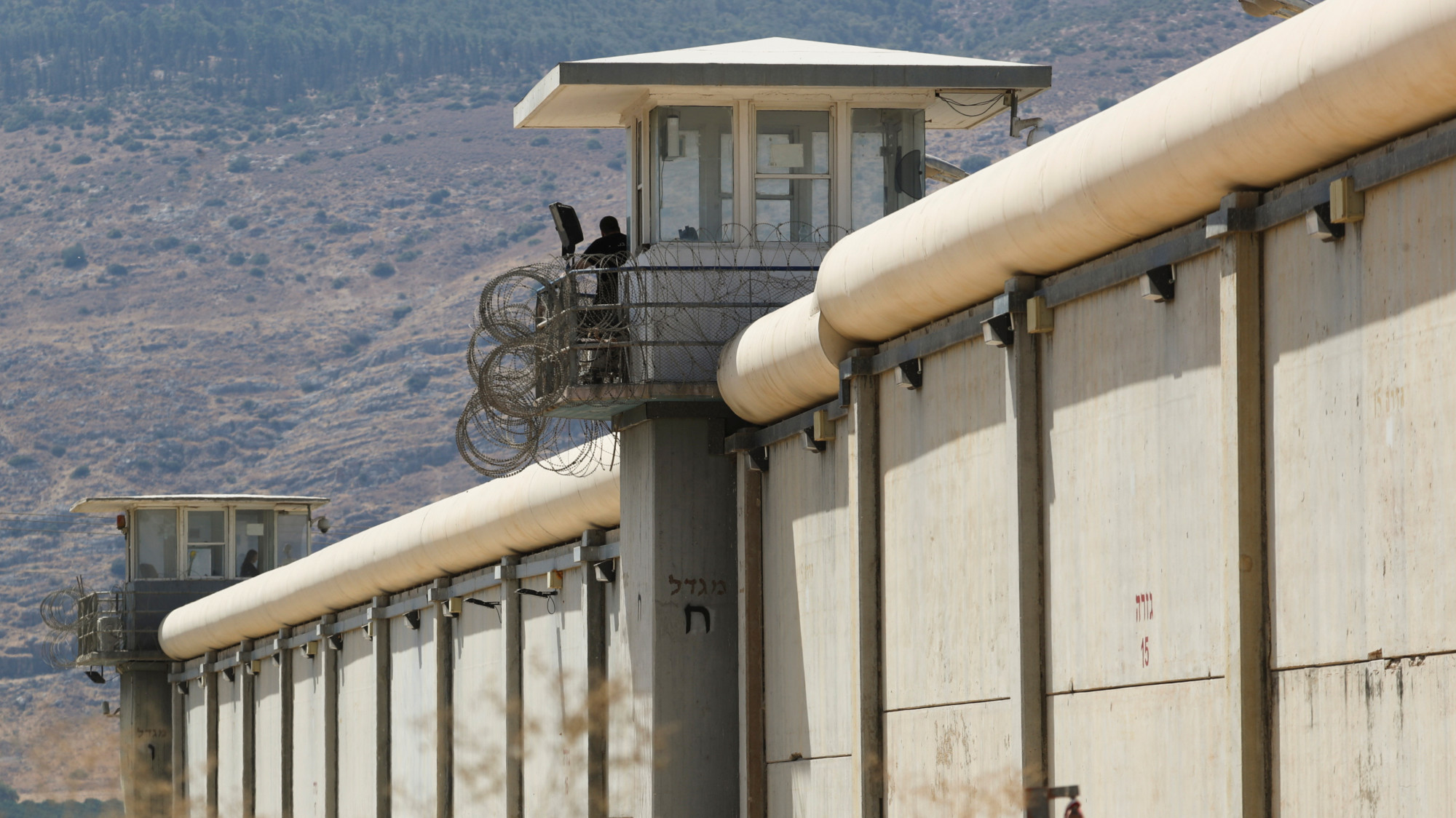
Two leading Israeli human rights organizations have issued a damning new report documenting what they call a widespread, dangerous pattern of abuse: Israeli prison guards firing rubber-coated bullets at Palestinian detainees from close range inside correctional facilities, leaving many with serious, potentially permanent injuries.
Physicians for Human Rights Israel and the Public Committee Against Torture in Israel announced their findings Thursday, after collecting 21 firsthand testimonies from detainees who experienced or witnessed the attacks. The groups confirmed that the vast majority of these documented incidents took place within the last 12 months.
One of the most severe cases involves a 45-year-old Palestinian prisoner who was transferred to Israel’s Soroka Medical Center in June following what official medical records labeled a “riot and rubber bullet shooting incident.” According to the testimonies, the man’s right testicle was completely crushed by the impact of the bullet, requiring full surgical removal. Prior to the shooting, the prisoner told attorneys that guards had already kicked him directly in the groin during a cell search one week earlier. He recalled that members of the Metzada Unit — the Israeli Prison Service’s specialized operational intervention team — fired what he described as “rubber bullets that looked like marbles” directly into his cell, striking him twice: once in the groin and once behind the knee.
A second incident, recorded at Israel’s Ktziot Prison in July, left another detainee with a fractured tibia that required invasive surgical intervention. A third former Palestinian prisoner, who recently spoke with *Haaretz* following his release, described a chaotic mass detention incident where he and roughly 40 other detainees were ordered into a single cell, told to kneel facing the wall with their hands placed on their heads. “My back was to the door, and suddenly I heard a gunshot and felt pain in my left leg. At the same time, I heard prisoners screaming in pain,” he told the outlet. He estimated the shot was fired from no more than two meters away. “Right after that, they handcuffed us from behind and dragged us in a humiliating way, one by one, to the courtyard of the prison wing. There they threw us onto our stomachs, even though there were injured people bleeding.”
Physicians for Human Rights Israel warned that firing rubber-coated bullets inside confined, crowded prison spaces drastically elevates the risk of life-altering harm, due to ricocheting bullets and flying fragments from the projectiles. The organization emphasized that the practice is not merely an isolated series of violent acts, but a sign of a worrying systemic shift in how Israeli prison authorities frame their role interacting with detainees.
“Firing at prisoners at close range inside confined cells is not only a severe act of violence but also reflects a dangerous structural shift in how prison officers perceive their role,” the group said in its official statement. It noted that for a number of years, the Israeli Prison Service has recruited new officers under the formal title of “incarceration combatants” — terminology that the rights groups argue further militarizes the country’s prison system and encourages guards to view Palestinian detainees as enemy combatants on a battlefield, rather than incarcerated people in custody. This ideological shift, the groups add, comes against the backdrop of what they describe as the Israeli state’s “declared war on Palestinian prisoners,” which has lowered the threshold for excessive use of force and framed detainees’ lives as disposable.
In a separate, related development released Friday, newly published data shows that Israeli prison authorities placed 351 Palestinian children in solitary confinement at least one time during 2025. The tally includes five boys between the ages of 13 and 14. The data was obtained via a freedom of information request filed by the Public Committee Against Torture in Israel and advocacy group Parents Against Child Detention. Per *Haaretz*, children held in solitary are typically kept isolated for seven consecutive days, with some detained alone for up to two full weeks.