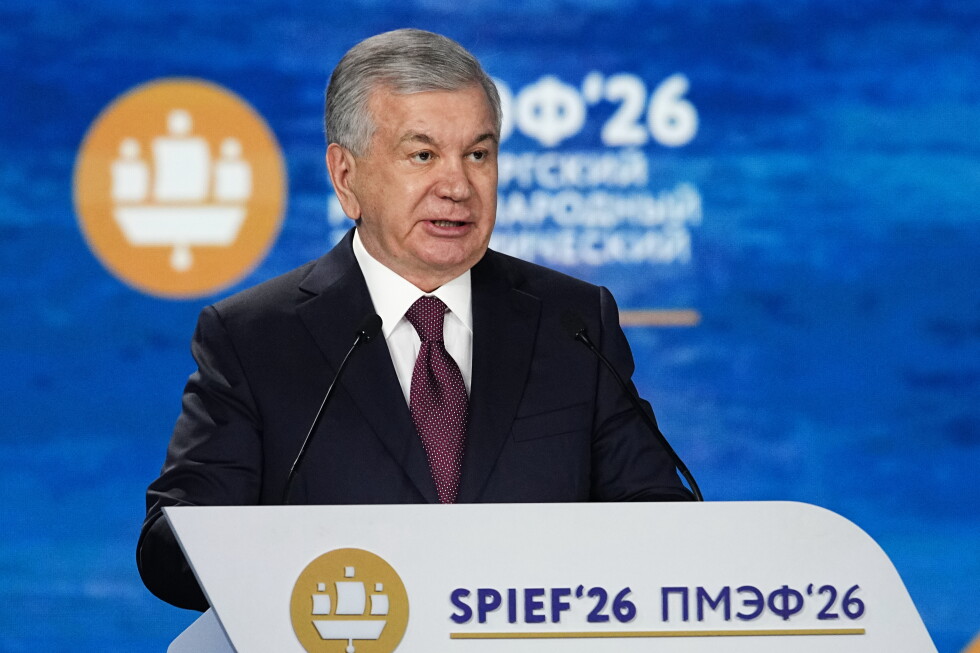
Speaking from the annual St. Petersburg International Economic Forum on Friday, Russian President Vladimir Putin delivered a firm rejection of a direct, face-to-face negotiation proposal from Ukrainian President Volodymyr Zelenskyy, arguing that recent actions and the tone of the Ukrainian leader’s overture have eliminated any possibility of productive high-level talks.
The proposal, delivered in an unprecedented open letter from Zelenskyy to Putin this past Thursday, marked the first public direct communication from the Ukrainian leader to his Russian counterpart since Moscow launched its full-scale military incursion into Ukraine in 2022. Beyond the meeting request, the letter also included a broad, harsh critique of Putin’s 26-year tenure in power, which Putin characterized as deeply provocative and unconstructive.
Putin tied his rejection directly to a May 22 drone strike on a college dormitory in Russia-controlled Luhansk Oblast, which the Kremlin says left 21 people dead and dozens more injured. Questioning the intent behind Zelenskyy’s overture, he asked: “Is it a way to create conditions for personal meetings and talks, or create an environment which makes any personal meetings impossible? I think it’s the second.” With that context, he reiterated, there is simply “no point” in holding the proposed meeting.
Alongside rejecting the immediate meeting call, Putin also turned aside Zelenskyy’s push for an immediate ceasefire, arguing that Moscow is seeking a permanent, comprehensive settlement to the conflict, which is now entering its fifth year, rather than a short-term temporary truce. He reaffirmed that Russia remains open to reaching a negotiated compromise aligned with the understandings reached during last year’s summit between he and former U.S. President Donald Trump in Anchorage, Alaska, and emphasized that any final deal requires Kyiv to formally accept those terms. “Naturally, the Ukrainian side would like us to suspend the advances made by Russian troops,” he noted. “But it would be better to end the war by agreeing to the compromises that were discussed in Anchorage.”
The rejection came amid shifting geopolitical dynamics in the conflict, with Zelenskyy himself recently acknowledging that U.S. priorities have moved away from the conflict amid intensifying tensions related to the Iran conflict, and that Kyiv cannot afford to wait passively for Washington to refocus its attention on ending the fighting. For his part, former President Trump has previously stated that a meeting between Putin and Zelenskyy would be a positive development. This is not the first time a meeting proposal has fallen through: Putin previously invited Zelenskyy to hold talks in Moscow, an invitation the Ukrainian leader rejected outright, and Putin only last month opened the door to a possible meeting in a third country — but only on the condition that a finalized agreement is already ready to be signed by both parties.
Beyond the conflict discussion, Putin used his keynote address at the forum, Russia’s high-profile annual economic gathering often compared to the World Economic Forum in Davos, to lay out his vision for a shifting global order and push back against criticisms of Russia’s economic performance amid prolonged conflict and sweeping Western sanctions. He argued that developing economies have claimed a steadily larger share of global output, while the economic weight of Western powers has contracted significantly, and accused the West of destabilizing the global financial system through its unilateral sanctions on Moscow. He emphasized that by freezing Russian sovereign assets held abroad, Western nations have irreparably damaged global trust in the U.S. dollar and euro, noting that any country could now face the same fate of having its legitimate Western-held assets seized unexpectedly. “The roots of the current global turbulence lie in the transition from a vertical, hierarchical model, which served the interests of a small number of states, to a more complex, distributed and multipolar one,” he said. “Russia views global changes not only as a threat but also as immense opportunities. And to capitalize on them, we aim to act swiftly and pragmatically.”
Putin called for a complete overhaul of the global financial system, urging the creation of a “modern, flexible and responsible financial architecture — free from risks, bans and barriers.” He pushed back against widespread assessments that Russia’s economy is struggling amid the conflict, highlighting that Russia’s national debt is only a small fraction of that carried by major Western economies, and that its budget deficit is far narrower than those seen in the West. Despite his optimistic framing, Russia’s economic outlook has darkened in recent months as the conflict drags on, forcing the government to raise domestic taxes and expand internal borrowing to keep deficit levels in check. During a Thursday media session, Putin argued that claims of a struggling Russian economy are overblown, explaining that recent cooling measures were intentional policy moves designed to rein in persistent inflation.
Staged to showcase Russia’s economic resilience and attract new foreign investment amid its diplomatic and economic estrangement from the West, this year’s forum has leaned heavily into the Kremlin’s stated goal of building a multipolar global order. While Western officials and most Western business leaders have boycotted the event since the 2022 full-scale incursion, Russia has drawn high-level delegations from across the Global East and Global South: Saudi Arabia sent a large official delegation this year, the presidents of Uzbekistan and Tanzania delivered addresses, and Chinese Vice President also gave a major speech on Friday. Notably, a U.S. official, Rodney Mims Cook Jr., head of the U.S. Commission of Fine Arts, is attending the event, marking the first such high-level U.S. attendance in years.
In additional comments Thursday, Putin acknowledged that Ukrainian drone strikes have successfully penetrated Russian defensive lines multiple times in recent weeks, and pledged to upgrade and strengthen the country’s air defense networks to counter the growing threat. “To our regret, some of them break through,” he told reporters. “Russia has an air defense system, we need to improve it, strengthen it, and we will do that.” Just hours before the forum officially opened on Wednesday, a Ukrainian drone strike sparked a large fire at an oil terminal in St. Petersburg and also targeted a nearby Russian naval base, underscoring the reach of Kyiv’s drone capabilities deep inside Russian territory.