
博客

  • Minnesota bid to thwart ICE crackdown blocked

    Minnesota bid to thwart ICE crackdown blocked

    A federal court has rejected Minnesota’s emergency motion to suspend a widespread Immigration and Customs Enforcement (ICE) operation within the state, a crackdown that has resulted in two civilian fatalities and triggered nationwide demonstrations. The ruling, delivered on Saturday by Judge Katherine Menendez, determined that the balance of harms did not conclusively justify an immediate injunction against the federal agency’s activities.

    Simultaneously, in a separate legal proceeding, U.S. District Judge Fred Biery issued a stern condemnation of the government’s tactics and mandated the release of a five-year-old boy and his father detained during the raids. Judge Biery characterized the operation as an ‘ill-conceived and incompetently-implemented government pursuit of daily deportation quotas, apparently even if it requires traumatizing children.’

    The controversial ‘Metro Surge’ operation, involving masked and heavily armed agents, has led to the detention of thousands of individuals across Minnesota communities. The aggressive tactics have ignited protests from coast to coast, with tens of thousands marching in Minnesota and demonstrations organized in Southern California by the grassroots ‘50501 movement’ as part of a national ‘ICE Out of Everywhere’ day of action.

    The backlash has extended internationally, with hundreds gathering in Milan, Italy, to protest the anticipated deployment of ICE agents during the upcoming Winter Olympics. Milan Mayor Giuseppe Sala has explicitly stated these agents are not welcome in the city.

    According to data from the German publication Tagesspiegel, ICE officers have been involved in 31 firearm incidents since last summer, with at least 32 individuals dying in custody. The agency currently detains approximately 70,000 people, representing what critics describe as the tip of the iceberg regarding law enforcement violence in the United States. Research from the University of Illinois Chicago indicates approximately 250,000 people are injured annually during law enforcement encounters due to misconduct, with over 600 dying in police custody.

  • Robotic sector shifts from prototypes to production

    Robotic sector shifts from prototypes to production

    Beijing has inaugurated a groundbreaking pilot manufacturing and validation facility specifically designed for humanoid robots, signaling a strategic shift from experimental prototyping to industrialized mass production. Operated by the Beijing Innovation Center of Humanoid Robotics, this first-of-its-kind facility represents a critical infrastructure development for China’s robotics sector.

    The newly commissioned platform spans approximately 9,700 square meters within Beijing’s Economic-Technological Development Area (E-town) and is equipped with 500 sets of specialized production and testing equipment. The facility boasts an annual pilot production capacity of up to 5,000 embodied humanoid robots, offering comprehensive services including prototyping, performance validation, process optimization, module assembly, and full robot integration.

    This initiative addresses significant bottlenecks that have hampered the global humanoid robotics industry’s transition from research and development to commercial implementation. According to Liu Yizhang, head of the pilot platform, the industry has struggled with inadequate pilot manufacturing readiness, inconsistent standardization protocols, and discontinuous data flow from development through scale-up phases.

    “Research institutions and startup ventures typically rely on costly, inefficient self-developed trial lines,” Liu explained. “The absence of standardized processes compromises quality consistency, while insufficient testing systems allow unresolved risks to persist before real-world deployment.”

    The digital infrastructure forms the core of Beijing’s innovative approach. The facility operates on a unified master data platform with an integrated digital operation system that connects information and logistics networks. This enables continuous data tracking from design through production to test feedback, significantly shortening iteration cycles between prototype validation and small-batch production.

    The platform’s establishment aligns with China’s broader industrial strategy. In November 2025, the Ministry of Industry and Information Technology identified humanoid robots as a priority sector requiring accelerated validation platform development. The Beijing government subsequently announced a tiered support system in January 2026, offering subsidies of up to 100 million yuan ($14.39 million) for newly established pilot facilities.

    The initiative already demonstrates tangible economic impact. According to the Beijing Municipal Bureau of Economy and Information Technology, the city’s robotics industry revenue grew by nearly 40% in the first half of 2025. Beijing additionally leads China in hosting specialized “little giant” enterprises within the robotics sector—small and medium-sized firms recognized for their innovation capabilities and market specialization.

    The center plans further expansion through national research and development projects, positioning Beijing at the forefront of global humanoid robotics manufacturing capabilities.

  • Tehran and Washington confirm dialogue

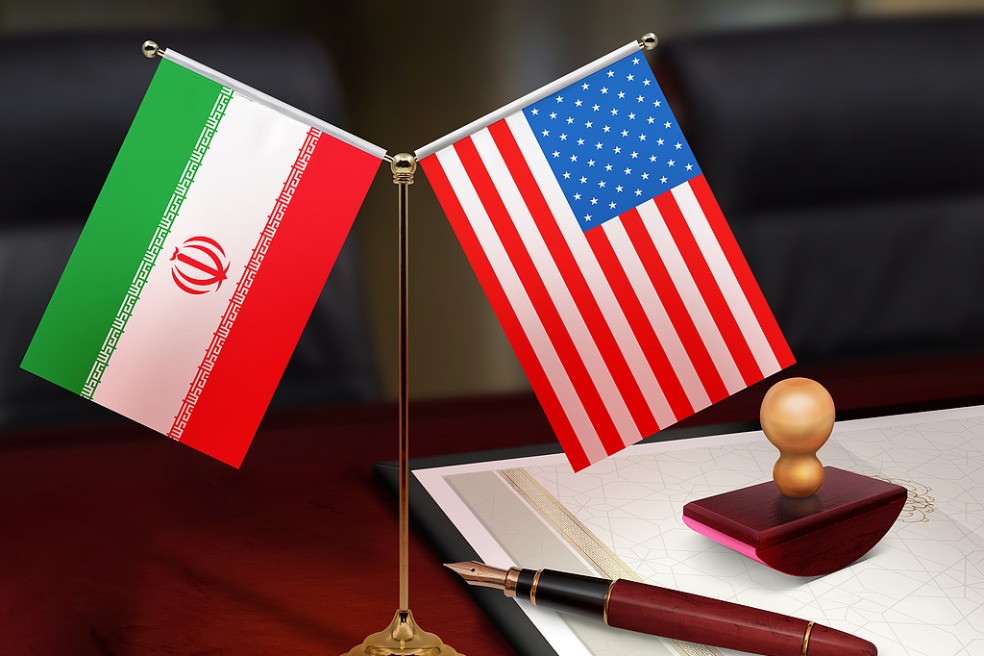
    Tehran and Washington confirm dialogue

    Diplomatic channels between Tehran and Washington remain active despite escalating military threats, as both nations confirmed ongoing communications while maintaining their defensive postures. The complex situation reveals a delicate balance between negotiation efforts and military preparedness.

    Iran’s Supreme National Security Council head Ali Larijani reported significant advancements in establishing structural frameworks for bilateral talks, directly countering media narratives emphasizing conflict. “Contrary to the hype of the contrived media war, structural arrangements for negotiations are progressing,” Larijani stated, indicating behind-the-scenes diplomatic activity.

    The United States simultaneously acknowledges dialogue while demonstrating military capability. President Donald Trump confirmed the diplomatic engagement but emphasized American naval power moving toward the region, creating a dual-track approach of negotiation leverage and military deterrence.

    Iranian leadership maintains a consistent position against initiating hostilities while promising forceful response to any aggression. Supreme Leader Ali Khamenei asserted that Iran “would not start a war” but warned that any American offensive would trigger a regional conflict with consequences for U.S. assets and allies, particularly Israel.

    Army Chief Amir Hatami reinforced this stance, declaring Iranian forces at “full defensive and military readiness” and cautioning that any military miscalculation would endanger regional security and Israel’s stability. Hatami further emphasized that Iran’s nuclear expertise “cannot be eliminated” through military means.

    President Masoud Pezeshkian articulated Iran’s diplomatic philosophy during discussions with Egyptian counterpart Abdel Fattah El-Sisi, emphasizing “dignity-based diplomacy” and conflict resolution through engagement within international law frameworks. He noted that broader military confrontation would serve neither nation’s interests.

    The fundamental negotiation impasse persists regarding Iran’s nuclear and missile programs. Washington demands uranium enrichment restrictions, missile capability limitations, and proxy support rollbacks, while Tehran insists any discussions must exclude its defensive capabilities from the agenda.

  • Partial US government shutdown enters third day as funding standoff continues

    Partial US government shutdown enters third day as funding standoff continues

    The United States government entered its third day of a partial shutdown on Monday as legislative negotiations reached an impasse over Department of Homeland Security funding and immigration enforcement policies. The political deadlock persists despite the Senate’s approval last Thursday of a comprehensive spending package covering five key government sectors.

    Lawmakers face a critical juncture regarding Homeland Security funding after senators deliberately excluded full fiscal year appropriations for DHS from their initial legislative package. Instead, they implemented a temporary two-week funding measure specifically for the department, creating a limited window for resolving contentious immigration policy disagreements.

    The congressional stalemate centers on Democratic demands for substantial reforms to immigration enforcement protocols. These include mandatory body camera usage by agents during operations and prohibitions on facial coverings that obscure identification. The proposed changes gained urgency following recent fatal shootings of American citizens during immigration enforcement operations.

    While the Senate-approved legislation allocates full fiscal year funding through September 30, 2026 for defense, health, treasury, federal courts, and other agencies, its implementation remains pending House approval. The funding lapse technically began at midnight Saturday, though minimal immediate impact occurred due to weekend government service schedules.

    The House Rules Committee scheduled a Monday afternoon session to evaluate the legislative package, which must first overcome a procedural vote that Democrats reportedly plan to oppose. Representative Ro Khanna (D-CA) articulated progressive opposition, questioning the ethical implications of funding Immigration and Customs Enforcement without structural reforms.

    Republican leadership expressed confidence in resolving the impasse, with House Speaker Mike Johnson predicting legislative completion by Tuesday. However, practical challenges emerge from both political divisions and external factors, including winter weather complicating lawmaker travel and the Republican party’s narrow single-vote House majority.

    The funding debate occurs alongside widespread public demonstrations in Minneapolis protesting Operation Metro Surge, a Trump administration immigration initiative that has drawn criticism following recent enforcement-related fatalities. These events have intensified Democratic demands for revised ICE protocols including enhanced warrant requirements and transparency measures.

    The Department of Homeland Security’s extensive jurisdiction—spanning ICE, Customs and Border Protection, the Coast Guard, and Secret Service—has positioned it at the center of both budgetary discussions and national policy debates regarding immigration enforcement strategies and accountability mechanisms.

  • Epstein scandal widens as new name emerges

    Epstein scandal widens as new name emerges

    The ongoing release of documents from the Jeffrey Epstein case continues to trigger political repercussions across the globe, with a senior European official becoming the latest casualty. Miroslav Lajcak, a key advisor to Slovak Prime Minister Robert Fico and former foreign minister, resigned after his name surfaced 346 times in the latest document disclosure from the US Department of Justice.

    The resignation came as the Justice Department released over three million pages of Epstein-related materials, creating renewed scrutiny of the convicted sex offender’s connections to powerful figures worldwide. While the documents contain no allegations of Lajcak’s involvement in criminal activities, his extensive correspondence with Epstein proved politically untenable.

    Prime Minister Fico accepted the resignation reluctantly, lamenting what he called ‘hypocrisy from all directions’ and stating that Slovakia was ‘losing a source of experience in diplomacy and foreign policy.’ Lajcak maintained his innocence, stating he was ‘ready to confirm this claim by any and all means’ and emphasizing his condemnation of Epstein’s crimes. The diplomat explained his resignation as necessary to spare the prime minister from ‘political costs’ stemming from what he characterized as a deliberate attack on the government’s integrity.

    The document release has also intensified pressure on Britain’s Prince Andrew, with newly revealed images allegedly showing the royal kneeling over a woman lying on the ground. Simultaneously, a second woman has come forward claiming Epstein sent her to the UK for a sexual encounter with the prince in 2010, according to BBC reports. British Prime Minister Keir Starmer has now joined US congressional investigators in calling for the prince’s cooperation, stating that ‘anybody who has got information should be prepared to share that information.’

    The sprawling document trove also references other prominent figures, including Bill Gates, whose representative dismissed allegations as ‘absolutely absurd and completely false,’ and Elon Musk, whose email exchange with Epstein included inquiries about ‘the wildest party on your island.’ Musk acknowledged the correspondence could be ‘misinterpreted and used by detractors to smear my name’ but expressed indifference to such attempts.

  • China boosts access to quality healthcare with online initial consultations

    China boosts access to quality healthcare with online initial consultations

    China has launched a groundbreaking healthcare initiative that enables patients nationwide to conduct initial medical consultations online with top-tier specialists in Beijing. This pilot program represents a significant shift from previous internet-based medical services, which were typically limited to follow-up visits for established conditions.

    The innovative service, currently available at two leading medical institutions, covers pediatric specialties including growth and development, nutrition, and dermatology. Patients like Tang Juan from Suzhou have already benefited from the program, avoiding the need to travel over 1,000 kilometers for preliminary assessments. ‘It gives me peace of mind and saves a lot of trouble,’ Tang remarked after consulting with a Beijing-based expert regarding her son’s growth concerns via mobile device.

    Health authorities designed the one-year pilot to include comprehensive virtual care components: online pre-consultation assessments, remote diagnoses, and home delivery of prescribed medications. The program will undergo formal evaluation in December 2026, with potential expansion to additional medical specialties.

    Medical experts emphasize that while online consultations improve accessibility, in-person visits remain essential for severe or complex conditions. Wang Ping, a patient safety education specialist, stressed that both online and offline services must maintain identical quality and safety standards.

    The initiative has been hailed as a catalyst for ‘Internet Plus’ healthcare integration. Gu Hai, director of a health policy research center at Nanjing University, noted that granting online prescription authority marks a crucial step in embedding digital diagnosis and treatment into core medical services. Industry leaders are advocating for enhanced electronic prescription platforms and insurance coverage for qualified virtual consultations.

    According to Zhang Rui of a pharmaceutical innovation alliance, the program is expected to drive medical technology advancement, stimulating demand for high-definition video consultations, intelligent triage systems, shared electronic medical records, AI-assisted diagnostics, and remote monitoring devices. Experts anticipate future expansion into chronic disease management and mental health services, moving closer to the vision of ‘more data flows, less patient travel.’

  • AI innovations to bolster Xizang’s digital economy

    AI innovations to bolster Xizang’s digital economy

    The Xizang Autonomous Region is embarking on an ambitious technological transformation, with artificial intelligence spearheading its digital economy expansion throughout 2026. This strategic direction was formally outlined in the regional government’s work report presented during the recent legislative session, highlighting a comprehensive push toward technological modernization.

    Regional Chairman Karma Tsetan emphasized the government’s commitment to enhancing computing infrastructure and integrating advanced digital solutions across various sectors. The initiative represents a significant component of Xizang’s broader economic development strategy, combining technological advancement with cultural preservation.

    Leading this digital revolution is Xizang Jueluo Digital Industry Management Co, a pioneering firm specializing in Tibetan-language AI systems and data management. After eight years of intensive research and development, the company has launched “DeepZang” – the first large language model specifically designed for the Tibetan language.

    Company President Tenzin Norbu explained how DeepZang aligns with global AI trends while addressing regional needs. “Our technology applies Tibetan-language AI across critical domains including healthcare, education, and ecological conservation,” Norbu stated. The company has proposed establishing a national open-source data center for Tibetan-Chinese bilingual resources to further cultural preservation efforts.

    The technological achievements are substantial: DeepZang supports bilingual interactions across 140 languages, incorporates a Tibetan-Chinese parallel corpus of 70 million sentences, and achieves speech recognition accuracy exceeding 98%. These innovations have already registered as intellectual property and received national algorithm certification.

    Digital transformation has yielded tangible benefits across Xizang’s public sector. Smart governance and digital education solutions have modernized operations within 14 regional departments, significantly improving administrative efficiency and connectivity.

    Supported by national policies and central government investment, Xizang’s digital infrastructure has experienced rapid growth. During the 14th Five-Year Plan period (2021-2025), the regional digital economy maintained an average annual growth rate of 10%. Preliminary 2025 figures indicate output reaching 14 billion yuan ($2 billion) in the first three quarters, with projections exceeding 20 billion yuan for the full year.

    The region currently hosts 62 large-scale digital enterprises that generated 11.44 billion yuan in revenue through October 2025, alongside 169 national high-tech companies and 22 national-level innovation bases. For 2026, regional authorities aim to establish five additional major digital enterprises and strengthen Xizang’s position as an emerging technology hub.

    Beyond economic metrics, the technology carries profound cultural significance. Chakdor Drolma, a student at Xizang University of Tibetan Medicine, noted: “Tibetan-language AI development helps promote our traditional culture while ensuring the script remains actively used and preserved for future generations.”

  • Snowstorm disrupts travel in US South

    Snowstorm disrupts travel in US South

    A severe winter storm continues to wreak havoc across the southern United States, creating dangerous travel conditions and plunging regions unaccustomed to such extreme weather into a deep freeze. The meteorological onslaught follows closely behind another massive storm system that claimed over 100 lives just one week prior, compounding recovery efforts throughout affected areas.

    Heavy snowfall blanketed North Carolina and surrounding states throughout Saturday, with authorities issuing urgent warnings for residents to avoid road travel entirely. The National Weather Service escalated concerns by cautioning that oceanfront structures faced imminent threat from the intensifying system.

    Winter storm warnings remained in effect across the entire states of North and South Carolina, extending into portions of Georgia, eastern Tennessee, Kentucky, and southern Virginia. The severity of conditions manifested in 750 reported vehicle collisions in North Carolina alone on Saturday.

    Accumulation measurements revealed staggering totals: Faust, North Carolina recorded 37 centimeters of snow, while West Critz, Virginia received 32 centimeters. Harrisburg, Tennessee reported over 23 centimeters of accumulation.

    In Cape Carteret, North Carolina, powerful winds created whiteout conditions with snow blowing horizontally. The National Weather Service characterized travel as “treacherous and potentially life-threatening,” particularly for those who might become stranded.

    Dramatic footage released by Gastonia, North Carolina police captured a high-speed train collision with a semitruck stuck on railway tracks, completely crushing the vehicle. Miraculously, no injuries were reported from the incident.

    Air travel suffered massive disruptions, with Charlotte Douglas International Airport—a major American Airlines hub—canceling over 1,800 flights between Saturday and Sunday according to FlightAware data. The airport deployed a 300-member “snow team” to clear runways, taxiways, and surrounding infrastructure.

    Hartsfield-Jackson Atlanta International Airport, among the world’s busiest aviation hubs, canceled more than 600 flights on Saturday with approximately 50 additional cancellations occurring in Sunday’s early hours.

    The National Weather Service described the system as an “explosively deepening coastal cyclone” that would continue delivering moderate to heavy snow, high winds, and potential blizzard conditions throughout the Carolinas. An intense surge of arctic air trailing the storm pushed subfreezing temperatures as far south as Florida by Sunday morning.

    Power outages compounded the crisis, with approximately 156,000 customers remaining without electricity early Sunday—primarily throughout southern states. Mississippi, Tennessee and Louisiana experienced the most severe power disruptions according to PowerOutage.us.

  • Candidate tough on crime wins Costa Rica presidential election

    Candidate tough on crime wins Costa Rica presidential election

    Costa Rica has ushered in a new political era with the decisive first-round victory of Laura Fernández, the conservative Sovereign People’s Party candidate, in Sunday’s presidential election. With over 88% of ballots tallied, Fernández secured a commanding 48% of the vote, eliminating any requirement for a runoff election as she surpassed the 40% threshold for outright victory. Her nearest competitor, centrist contender Álvaro Ramos, publicly conceded defeat following the results announcement.

    The 39-year-old president-elect ran as the chosen successor to outgoing President Rodrigo Chaves, pledging to intensify his administration’s aggressive anti-crime measures. This platform resonated strongly with voters increasingly alarmed by escalating drug-related violence that has challenged Costa Rica’s historical reputation as one of Central America’s most stable democracies.

    In her victory address, Fernández committed to continuing Chaves’ policies while striking a balance between firm governance and institutional respect. ‘My government will be one of dialogue and national harmony, respectful and firmly based in the rule of law,’ she declared, while simultaneously criticizing opposition parties for what she termed ‘obstruction and sabotage’ during her predecessor’s term.

    Fernández’s approach appears influenced by Salvadoran President Nayib Bukele’s controversial security model, which has dramatically reduced homicide rates through stringent measures. The president-elect has outlined plans to declare states of emergency in gang-dominated territories and complete construction of a maximum-security prison modeled after El Salvador’s Cecot facility.

    Significantly, Fernández’s party captured 30 of 57 parliamentary seats, providing stronger legislative support than enjoyed by Chaves. Constitutional term limits prevented Chaves from seeking reelection, though Fernández has indicated she may appoint him to a cabinet position in her administration, which will be inaugurated on May 8.

    International relations are expected to maintain continuity, particularly regarding migration agreements with the United States. The Trump administration’s designation of Costa Rica as a ‘key global cocaine transshipment point’ underscores the complex security challenges facing the incoming administration as transnational criminal networks expand their regional operations.

  • Mediation to end disputes advocated

    Mediation to end disputes advocated

    In a groundbreaking judicial reform, China’s Supreme People’s Court has established a comprehensive collaborative mediation framework involving twenty national institutions to resolve social and commercial disputes before they enter the courtroom. The initiative, announced on February 2, 2026, represents a strategic shift toward prioritizing mediation over litigation in the Chinese legal system.

    The court has partnered with key institutions including the People’s Bank of China, All-China Women’s Federation, and China National Intellectual Property Administration to create specialized mediation channels for conflicts spanning real estate, labor relations, marital disputes, intellectual property, and financial matters. The guidelines mandate regular monitoring and risk assessment in these sectors to identify and address potential conflicts at their earliest stages.

    Chief Judge Qian Xiaochen of the Court’s case-filing division emphasized that leveraging industry professionals’ specialized knowledge within legal parameters enables more efficient and effective resolution of underlying issues. The system requires nationwide courts to establish qualification standards for mediators while providing legal training to enhance professionalism across sectors.

    This institutional approach has already demonstrated significant success. In Hubei province’s Jianshi county, courts collaborated with housing authorities to mediate a complex dispute involving 1,700 homeowners and a property management company, resolving conflicts over parking spaces, environmental compensation, and maintenance fees through combined legal and policy expertise.

    Professor Liang Yingxiu of Beijing Normal University praised the model for creating win-win outcomes that improve citizen welfare while optimizing business operations. The approach also alleviates judicial burdens, allowing judges to focus on more complex cases. Supporting data reveals impressive results: pretrial mediation efforts grew by 28% quarterly throughout 2025, successfully resolving over 4.32 million cases without litigation. The expansion of online legal services has further reduced time and travel requirements for citizens seeking dispute resolution.