博客

  • Russian troop build-up threatens city seen as key to seizing Ukraine’s Donbas

    Russian troop build-up threatens city seen as key to seizing Ukraine’s Donbas

    The battle for Kostyantynivka, a strategically critical hub in eastern Ukraine’s Donbas region, has entered a tense new phase as Russian infiltration advances and Ukrainian officials offer conflicting accounts of control on the ground. This fight carries major stakes for Moscow’s long-stated war goal of fully seizing the entire Donbas, as the city acts as a key gateway to Ukraine’s final major eastern strongholds of Kramatorsk and Sloviansk. If Kostyantynivka falls, Russian forces would open a clear path to push deeper into remaining Ukrainian-held territory in the region.

    Accounts from frontline personnel and official sources paint a starkly different picture of the current situation. Senior Ukrainian commander Brigadier General Oleksandr Bakulin, whose 19th Corps oversees defense of Kostyantynivka and surrounding areas, has publicly insisted that “the situation remains under control” and that Russian forces have not secured any lasting gains. He did, however, acknowledge that roughly 130 Russian troops are currently operating within the city’s boundaries. This official stance contradicts claims from Russia’s defense ministry, which says its troops are rapidly progressing in the city’s southwestern sector, have already encircled key Ukrainian military contingents, and released on-the-ground footage to back up their assertions.

    Anonymous Ukrainian frontline officers who spoke to the BBC have painted a far grimmer picture than Kyiv’s public narrative, confirming that the city now functions largely as a contested “grey zone” where no single side exercises full control. Russian troops have advanced from the south and been spotted as far north as the city’s outskirts, sneaking into rear areas of Ukrainian positions that are extremely hard to dislodge amid dense urban terrain. The summer growing season has added to defensive challenges: thick tree cover provides extra concealment for advancing Russian troops, allowing them to move into areas that would normally be classified as a Ukrainian drone “kill zone” where any open movement is quickly targeted.

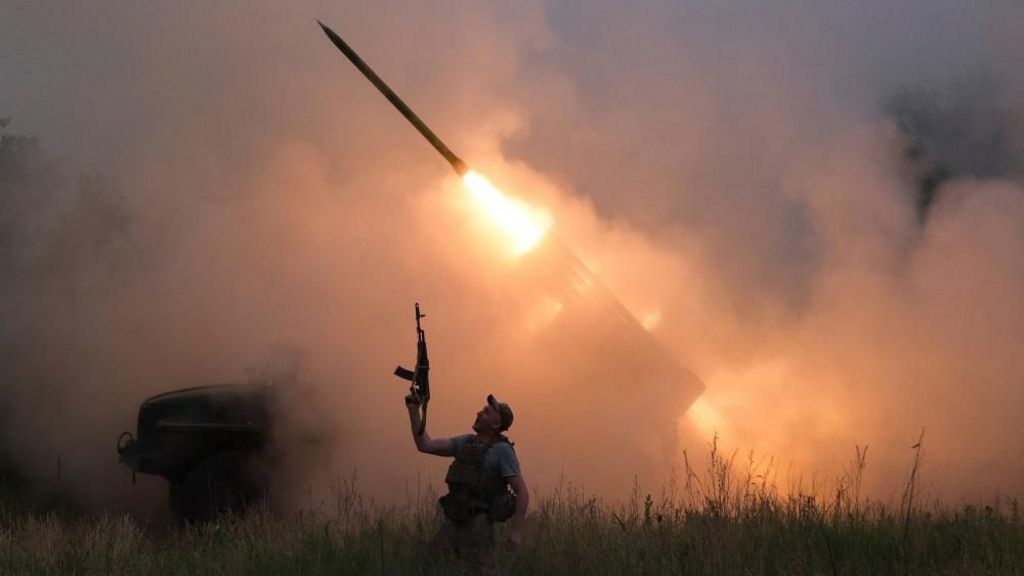
    Russian forces have adapted their tactics to counter Ukraine’s surveillance and strike advantage via drones, putting a new priority on eliminating Ukrainian drone launch sites to clear a path for infantry assaults. Unlike Ukraine, which relies on drones to directly target Russian infantry, Russian forces use heavy artillery, multiple rocket launchers and military aviation to strike Ukrainian positions, leaving drone units to focus on hunting Ukrainian drone operators. Frontline Ukrainian drone pilots report that limited personnel and resource shortages leave them unable to target enemy drone crews at scale. This gap has allowed Russian drone operations to continue unimpeded, forcing Ukrainian units to cede ground incrementally. “Since we devote little time to [searching and targeting] enemy pilots, they can freely operate, detect our positions and we are forced to roll back. This is how the frontline moves,” one anonymous Ukrainian drone pilot explained.

    While Russian progress has been slow, often limited to just 100 meters of advance per day as troops fight building by building, the tactical approach mirrors the strategy that allowed Russia to capture Pokrovsk and other major eastern Ukrainian cities: advancing along the city’s flanks to encircle it and cut off Ukrainian supply routes. In recent days, Russian defense officials have announced the capture of several small villages west of Kostyantynivka, moves that bring Moscow closer to fully cutting off resupply for Ukrainian troops inside the city. Ukrainian frontline monitors DeepState has warned that the city’s fall is “a matter of time,” and its capture will make holding Kramatorsk “extremely dangerous” by complicating Ukrainian logistical operations across the region.

    Supply shortages and a lack of reinforcements have compounded Ukrainian defensive challenges. Delivering ammunition and personnel to frontline units has become extraordinarily difficult, as land routes are constantly targeted and large logistics drones are regularly intercepted by Russian forces. Multiple frontline soldiers report that their units have not received enough reinforcements to replace combat losses, and that senior commanders downplay lost positions to avoid orders to retake ground that is already untenable. “We don’t have enough people to hold on to what we still control, let alone organise assaults,” one soldier told the BBC.

    The fight for Kostyantynivka comes amid a broader stalemate along most of Ukraine’s frontline, with Kyiv claiming it has recaptured more territory this year than it has lost, while its long-range strikes on Russian supply lines and energy infrastructure have created major disruptions deep behind enemy lines. Recently, Russian-installed authorities in occupied Crimea were forced to suspend public fuel sales amid widespread shortages caused by Ukrainian strikes on supply routes. Kyiv’s repeated attacks on oil refineries in Moscow, St. Petersburg and other Russian cities have also sought to bring the reality of the war to Russian civilians far from the front. Observers note that Russia’s push to rapidly capture Kostyantynivka is partly intended to shift domestic and international attention away from these Ukrainian successes and the resulting fuel disruptions.

    Even as Ukrainian forces face mounting pressure, frontline troops say they continue to hold parts of the city. One drone pilot emphasized that defensive outcomes can still change if Ukrainian command adjusts its approach: “But unless we change our approach and start destroying their logistics and targeting their pilots, they will continue advancing.”


  • Cape Verde fan goes wild live on BBC News as his country scores

    Cape Verde fan goes wild live on BBC News as his country scores

    In a moment of unscripted, raw sports joy that has captured global attention, a Cape Verde football fan’s euphoric reaction went viral during a live BBC News interview amid the 2026 FIFA World Cup. The encounter unfolded when BBC reporter Paul Njie was mid-conversation with the supporter, who had traveled to support his underdog national side in their group stage match against Uruguay. Just as the interview was underway, Cape Verde netted their first ever goal in World Cup history – a milestone that had been decades in the making for the small island nation. The fan immediately abandoned any composure, erupting into wild celebration, yelling and jumping in a moment of unfiltered elation that quickly spread across social media platforms. The clip, published six hours ago by the BBC’s World Cup section, has already racked up hundreds of interactions, with fans around the world celebrating the historic moment for Cape Verde alongside the elated supporter. Note that full video access is currently restricted to users located within the United Kingdom.

  • Rory McIlroy’s rough weekend keeps him from contending at the US Open

    Rory McIlroy’s rough weekend keeps him from contending at the US Open

    SOUTHAMPTON, N.Y. — The 2025 U.S. Open at Shinnecock Hills Golf Club delivered a weekend of surprising results, dramatic upsets and historic firsts for the global golf community, as top-ranked stars and rising amateur talents turned in performances that will be remembered for years to come. Six-time major champion Rory McIlroy, the winner of this U.S. Open title 15 years ago, outlasted many of his fellow past major champions this week — but a series of inconsistent rounds kept him far from contention for a second win at the event.

    Bryson DeChambeau, Brooks Koepka, Jon Rahm and J.J. Spaun, all previous U.S. Open champions, failed to make the cut after struggling through the opening two rounds. McIlroy advanced to the weekend, but two consecutive rounds of 73 on Saturday and Sunday left him at 6 over par for the tournament, tying for 32nd place overall. Reflecting on his performance after the final round, McIlroy pointed to a collapse on the back nine of Saturday’s third round as the turning point that ended his title hopes. After climbing to 2 under par early in the round, “The wheels came off,” McIlroy said. “I sort of shot myself out of the tournament then.”

    Looking ahead to the 2025 British Open in July, the 37-year-old Northern Irish star, who won the Claret Jug in 2014 and has finished close to a second victory multiple times in recent years, announced he will skip the PGA Tour’s Travelers Championship scheduled next week in Hartford, Connecticut, to pursue a unique preparation plan. Instead of competing on the Tour’s regular course, McIlroy will head to the United Kingdom to play links golf in his home region ahead of the year’s third major. “It’s my favorite time of the year to go back home and play, play the Open, and I get to spend a bit of time back there,” he said. McIlroy also noted that the firm, fast playing conditions Shinnecock Hills presented over the weekend provided valuable preparation for links-style golf, adding, “This was not too dissimilar to an Open Championship in terms of how the golf course started to play over the weekend.”

    Beyond McIlroy’s underwhelming finish, the tournament featured a breakthrough performance from 22-year-old South Korean star Tom Kim, who matched a historic national achievement at the event. Kim fired a 2-under final round of 70 to finish at 1 under par overall, securing third place. That result ties the best ever finish by a South Korean player at the U.S. Open, a mark previously set by Y.E. Yang, who tied for third at the 2011 U.S. Open at Congressional Country Club in Bethesda, Maryland. As a top-four finisher, Kim automatically locked in his qualification for the 2026 U.S. Open at Pebble Beach and next year’s Masters Tournament, and the young qualifier called the week a transformative experience for his career. “For the first time, I was able to really taste a major championship right in front of my fingertips,” Kim said. “I can go back this whole week and just see how close I actually am.”

    One of the most historic storylines of the weekend came from 21-year-old amateur standout Jackson Koivun, who capped off his amateur career with a record-breaking finish before turning pro. Koivun birdied his 18th hole to card a 2-under 68 on Sunday, making him the first amateur ever to break 70 in the final round of a U.S. Open held at Shinnecock Hills. He finished the tournament at 5 over par, tying Oklahoma amateur Ryder Cowan for low amateur honors — marking the first time the award has been shared at the U.S. Open since 2018.

    Koivun, who led Auburn University to two national collegiate championships in three seasons, has one of the most decorated amateur careers in modern golf. He became the first freshman since Justin Thomas in 2012 to win the Haskins Award, given to the top men’s collegiate golfer in the U.S., and claimed the Southeastern Conference individual title all three of his college seasons, spending months as the world’s top-ranked amateur. Earlier this month, he announced he would skip his senior season, having already earned enough points through the PGA Tour University Accelerated program to secure his PGA Tour membership. He will make his professional debut at the upcoming John Deere Classic. After finishing his final round, Koivun said he was proud to end his amateur run on a high note. “Shinnecock was so much fun this weekend,” he said. “Just happy to walk away with a birdie on the last hole, but the golf course is so good, so much fun. A lot of thinking to do, and can definitely mentally wear you down. But just happy to be able to say I went out there and tried my hardest.”

    Asked if he could now consider himself a professional after signing his final amateur scorecard, Koivun joked, “Not sure, but yeah, that’s a good way to go out. We’re on to the next leagues now.”

    The tournament also delivered a heartwarming family storyline for English golf fans, as brothers Alex and Matt Fitzpatrick teed off within minutes of each other on Sunday. Both brothers carded final rounds of 73, with older brother Matt finishing 22nd at 4 over par, and Alex tying for 23rd at 5 over par alongside eight other competitors.

  • BTS fans desperate to catch comeback tour lose more than $100,000 to scammers

    BTS fans desperate to catch comeback tour lose more than $100,000 to scammers

    After three years of pandemic-induced hiatus, global K-pop supergroup BTS has launched a massive 88-date reunion world tour that has sparked unprecedented fan excitement — and a tidal wave of targeted ticket scams that have left hundreds of devotees across Southeast Asia out of pocket and heartbroken.

    The tour, which launched in April and will run through 2027 across 34 cities, marks the first time the seven-member band has scheduled multiple shows in five Southeast Asian nations: Indonesia, Malaysia, the Philippines, Singapore and Thailand. With 15 of the total tour stops hosted in the region, demand for tickets has hit extraordinary levels: industry insiders confirm that the number of fans seeking entry outstrips available seats by a factor of 15, prompting organizers to add extra dates in high-demand locations including Jakarta and the Philippines’ Bulacan just to keep up.

    For long-time fans — who call themselves the BTS Army — the tour represents a once-in-a-lifetime chance to see the group perform together again after years of planned solo projects and pandemic disruptions. That desperation has opened the door for widespread fraud, with total reported losses across Southeast Asia already topping $100,000, according to regional law enforcement data.

    Take 26-year-old Indonesian fan Vevee, a logistics worker who had waited more than a decade to see her favorite group perform in her home city of Jakarta. When tickets for the first Jakarta stop went on sale in June, she took the day off work, camped in front of her computer for hours waiting in the Ticketmaster queue, only to be told all seats had sold out when her turn finally arrived. After multiple failed attempts on the official platform, she turned to a ticket reseller she found on X, paying $1,200 — the equivalent of two months of her full salary — for four VIP tickets. Within hours of transferring the money, the seller had vanished without a trace.

    “Right after I sent the money, they ghosted me. It’s horrible. I am so sad and heartbroken,” Vevee told reporters. She admitted that panic had gotten the better of her: “I was about to go into a meeting at work and was so terrified that someone else would grab the tickets. I just wanted to transfer the money quickly to lock them in. If I had just taken a moment to calm down, I might have spotted the red flags.”

    Vevee’s story is far from unique across the region. In Singapore, police have recorded at least 62 complaints of BTS ticket fraud since June 1, with total losses exceeding S$68,000 ($51,000). Local e-commerce platform Carousell has even responded by implementing a full ban on ticket reselling that will remain in place through BTS’s final Singapore show in December. Malaysian authorities have received 28 formal fraud reports, with investigators currently working to trace the mule bank accounts used by scammers to launder stolen funds.

    In Thailand, 126 defrauded fans have brought their collective complaint to national lawmakers, after a prominent X account promised to secure premium seats for fans for a fee, then disappeared shortly before the official ticket sale. Juraluk Kunaruk, a 23-year-old fan who lost 25,000 baht ($760) to the scam, told reporters the account appeared entirely legitimate, boasting thousands of followers and positive reviews from other users. “They have many reviews and followers so they looked reliable. The prices were reasonable too,” she explained. Since falling victim, Juraluk has traveled repeatedly from her hometown to Bangkok to lobby parliament for action, and though MPs have promised to push for fund recovery, she has not given up on seeing the tour: “I still want to go because I don’t know when I will get another chance to see them.”

    Scammers have adapted their tactics to exploit fan loyalty, infiltrating private online fan groups to build trust before offering fake exclusive access or below-market prices. Many fraudsters even go so far as to share fake power of attorney forms to convince targets their tickets are legitimate, a ruse that has worked on even seasoned fans. In the Philippines, 30-year-old customer service worker Cookie thought she had vetted her reseller thoroughly: she checked the seller’s Facebook profile, cross-referenced their education and background, and believed she had avoided common scams. Still, within days of paying, she was blocked and left ticketless. “I feel ashamed. I didn’t even tell my family or my closest friends what happened,” she said. “I don’t want to be judged or hear them say ‘you’re dumb’. It was a desperate move since I really wanted to be there.”

    This wave of fraud connected to a massively popular high-demand tour echoes similar issues seen during Taylor Swift’s record-breaking Eras Tour, which also saw widespread ticket scalping and fraud. Fans have called on tour promoter Live Nation and its subsidiary Ticketmaster, which manages ticketing for most BTS tour dates, to implement stronger protections against scams. In response, Ticketmaster says it has ramped up anti-fraud and anti-scalping measures, deploying new AI tools to block bot activity and implementing stricter verification rules. All tickets are now linked directly to the buyer’s email address, and holders of unofficially resold tickets may be turned away at the venue gate. A company spokeswoman urged fans to only purchase tickets through official channels, noting that “the artist’s website will always be able to point fans in the right direction.”

    Despite the risks, many fans are willing to go to extraordinary lengths to secure entry. In Jakarta, some devotees have rented high-speed internet cafe computers for a full week ahead of ticket sales, and even rent premium smartphones just to improve their odds of beating the digital queue. “In Indonesia, we aren’t just fighting the ticket war,” Vevee said. “We fight to secure the best internet cafe and we even fight to rent high-end phones. It’s a war on every front.” For many long-time fans, the stakes go far beyond a single concert: “Some of us aren’t just trying to attend a concert. We’re trying to finally see the seven people we’ve been rooting for for years,” one Filipino fan wrote on social media.

    For Vevee, that fight finally had a happy ending. After her earlier scam, she tried again for tickets to the newly added third Jakarta show, which falls on BTS member V’s birthday — making it an even more sought-after date. After a failed pre-sale, she and her friends split up across the city, each trying from different locations with separate internet connections and accounts to beat the system. This time, it worked: she finally secured the tickets she had spent years waiting for. The K-pop juggernaut and its label Hybe are projected to earn nearly $2 billion from the reunion tour across ticket sales, merchandise, streaming and licensing revenue, analysts estimate, a testament to the unwavering loyalty of the Army that has turned BTS into a global cultural phenomenon.

  • Is Germany looking again at coal-powered electricity?

    Is Germany looking again at coal-powered electricity?

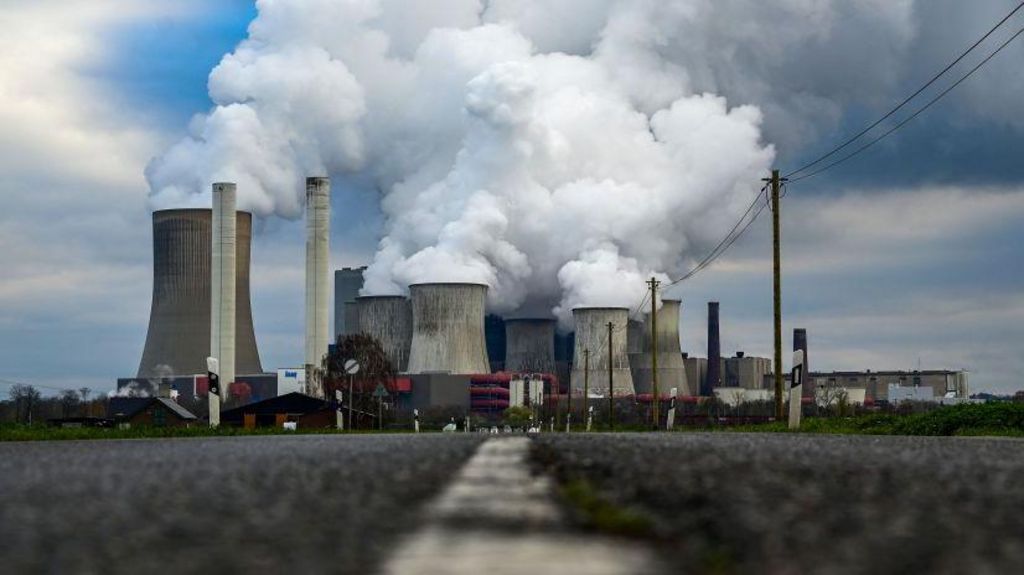
    For decades, Germany has anchored its clean energy transition around a defining national policy: kohleausstieg, the planned phase-out of all coal-fired power generation. As Europe’s largest coal consumer and the fourth biggest globally, trailing only China, India, and the United States, Germany’s progress on this initiative carries global weight for climate action. Initially, Berlin pledged to fully eliminate coal from its power mix by 2038, with an accelerated target of 2030 for lignite — the high-pollution, low-grade soft coal that makes up much of the country’s domestic coal reserves. Today, coal accounts for 20% of Germany’s total electricity output, a share the country planned to shrink dramatically as it scales up wind and solar capacity; as of 2025, renewables already supply 59% of the nation’s power, meeting more than half of annual demand.

    To replace coal as a reliable baseload and backup for intermittent wind and solar output, particularly during high-demand winter months, Germany originally planned to pivot to natural gas, a fossil fuel that produces roughly half the carbon emissions of coal. Natural gas currently makes up 13% of Germany’s electricity generation. But a recent global energy shock, triggered by soaring gas prices in the wake of rising geopolitical tensions between the U.S. and Iran linked to the Israel conflict, has upended these plans. The price surge has pushed a growing number of major economies to reverse course on coal: Japan has relaxed regulatory rules to expand coal-fired plant operations, Italy has pushed back the planned closure of its remaining coal facilities from an earlier target to 2038, and India has delayed scheduled maintenance shutdowns of existing coal plants to keep output high. The question now hangs over Germany: will the country also backtrack on its landmark coal phase-out?

    The debate has been reignited by comments from Chancellor Friedrich Merz, who stated in March that “We must supply this country with electricity. I am not prepared to jeopardise the core of our industry simply because we have adopted phase-out plans that have become unrealistic.” His remarks have sparked speculation that Germany could extend coal operations, driven by two core challenges: energy supply reliability and cost. Germany holds the largest lignite reserves in Europe and the third largest in the world, giving it full energy independence for this fuel at a far lower cost than imported natural gas. By contrast, Germany relies on imports for 95% of its natural gas needs, leaving it extremely vulnerable to global price volatility. Adding another layer of complexity, Germany closed its final nuclear power plants in 2023, eliminating nuclear as an alternative low-carbon baseload option. For energy producers, the appeal of reversing course on coal is clear: LEAG, Germany’s second-largest lignite miner, has openly welcomed discussions of a reprieve for coal power, noting that it already expanded lignite output in 2022 to offset lost Russian gas imports following Moscow’s full-scale invasion of Ukraine. “We already demonstrated our ability to quickly draw on reserves to return to the market when the situation demands it,” the company said in a statement, adding that it supports the government’s renewed focus on long-term supply security.

    But environmental researchers and climate advocates argue that doubling down on coal would derail Germany’s energy transition. “More coal is not the answer,” insisted Hauke Hermann, a senior researcher at independent environmental think tank Öko Institute. Instead, Hermann argues that Germany should accelerate the expansion of renewable energy capacity to resolve supply gaps. Major industrial groups, meanwhile, are calling for clear, long-term policy certainty to support business investment. “Our industry needs reliable energy,” said Wolfgang Große Entrup, director general of the German Chemical Industry Association (VCI). “Renewable energy alone cannot yet guarantee this… Companies will only invest billions if they can trust that energy will remain reliably available at competitive prices in the future.”

    Notably, almost no mainstream political faction outside the far-right Alternative for Germany (AfD) is calling for scrapping the coal phase-out entirely. The debate instead centers on a modest compromise: extending operations for a small group of existing facilities. The proposal in question covers six coal-fired plants running on imported hard coal, a fuel with lower emissions than domestic lignite. These plants are currently only activated as backup capacity during periods of high demand, such as prolonged cold winters. Owner Steag Iqony Group has urged policymakers to allow the plants to run full-time, arguing that temporary full operation could power millions of households while strengthening supply security and lowering energy costs. A parliamentary committee established in March is currently reviewing the proposal.

    The biggest barrier to a final decision lies in Germany’s ruling grand coalition, which splits power between the center-right CDU/CSU bloc and the center-left SPD. The two parties hold starkly opposing views on extending coal operations: CDU/CSU leans toward extending capacity to protect industrial competitiveness and keep costs low, while SPD opposes any rollback of climate commitments. SPD energy spokeswoman Nina Scheer warned that loosening coal rules would be “counterproductive for the energy transition and mean new fossil lock-in effects.” On the other side, CDU deputy leader and Saxony Minister-President Michael Kretschmer argued that “Germany, as a major industrial nation, must do everything in its power to ensure that energy remains affordable. The energy transition must be completely recalculated. It should not be a matter of [original arbitrary] deadlines, but rather a matter of realistically considering security of supply and affordability.”

    The German federal government is set to make a final decision this year on whether to uphold the 2030 lignite phase-out deadline, or allow limited coal capacity to be retained as a strategic reserve for a temporary period. A statutory review of the coal phase-out, originally launched to assess whether the transition could be accelerated, is scheduled for publication in August. The review will evaluate the policy’s impact on energy supply, security, and consumer costs — and many observers now expect it to recommend slowing, rather than speeding up, Germany’s exit from coal.

  • A big moment for a tiny island nation: Cape Verde gets 1st World Cup goal

    A big moment for a tiny island nation: Cape Verde gets 1st World Cup goal

    MIAMI GARDENS, Florida — The fairy-tale debut of Cape Verde at the men’s FIFA World Cup has continued to turn heads across the global soccer community, adding another unforgettable chapter to the tiny island nation’s underdog story just one week after shocking title contender Spain.

    Fresh off a widely praised scoreless draw against one of the tournament’s most fancied sides in their opening group stage match, Cape Verde notched an early 1-0 lead over two-time World Cup champion Uruguay on Wednesday, courtesy of a blistering free-kick finish from midfielder Kevin Pina. The 21st-minute strike marked the first competitive World Cup goal in Cape Verde’s entire 70-year-plus soccer history, a watershed moment for the small Atlantic archipelago that is competing in its first-ever World Cup finals.

    The opportunity opened up after Uruguay’s midfield anchor Rodrigo Bentancur was booked with a yellow card for a foul just outside the Uruguay penalty area. Stepping up to take the set piece, Pina hit a powerful, low drive that eluded Uruguay’s diving veteran goalkeeper Fernando Muslera and found the back of the net. The goal triggered chaotic celebrations among Cape Verde’s players, who swarmed Pina in a jubilant huddle, while thousands of Cape Verde supporters in the stands broke out into deafening chants and flag-waving celebrations.

    This latest upset bid comes on the heels of Cape Verde’s stunning opening performance against Spain, where goalkeeper Vozinha put on a masterclass in shot-stopping to shut out the Spanish attacking lineup of global superstars, cementing himself as one of the breakout stars of the first round of group stage matches. Ahead of the Uruguay clash, Vozinha got an emotional personal surprise: after celebrating his team’s historic debut against Spain without his mother in the stands, she was able to attend the Sunday matchup to watch his historic performance in person.

    As one of the smallest nations ever to qualify for the World Cup finals, Cape Verde’s run of impressive results has already cemented their place as the most beloved underdog story of this year’s tournament, capturing the imagination of soccer fans around the world who are rooting for the tiny island side to continue their unlikely run.

  • Egypt hopes to continue rise of African football with first-ever World Cup win against New Zealand

    Egypt hopes to continue rise of African football with first-ever World Cup win against New Zealand

    VANCOUVER, British Columbia — As the sun rose over the Canadian city this weekend, one of African football’s most promising 2026 World Cup stories was waiting to be written. Ranked 28th globally, Egypt’s national team, affectionately nicknamed the Pharaohs, steps onto the pitch Sunday against 83rd-ranked New Zealand (the All Whites) on the cusp of a historic milestone: the program’s first ever World Cup match victory. A win would not only cement that long-awaited breakthrough, it would also put Egypt firmly in the driver’s seat to advance to the tournament’s knockout round.

    Speaking to reporters Saturday through an Arabic translation, Egyptian head coach Hossam Hassan summed up the weight of the moment: “This match is everything in our world for the moment.”

    Egypt’s chase of history is far from an isolated story — it is the latest chapter in a dramatic, long-building surge in African soccer’s standing on the global stage. This year’s expanded 48-team World Cup format has opened new doors for the continent, granting African nations more slots than ever before to compete against the world’s elite. A record 10 African squads have qualified for the 2026 tournament, a milestone that reflects the growing depth of talent across the region.

    “The national squads of Africa have proven their great performance many times at the World Cup, including this one,” Hassan said. That claim is already backed up by results from the early stages of the tournament. Morocco captured global attention with a legendary run to the World Cup semifinals in 2022, and this year, other African sides have already delivered upset after upset.

    Ghana opened its tournament with a win over Panama, while Ivory Coast defeated 2022 runner-up Ecuador in its first match. Four African squads, Egypt included, earned draws in their opening fixtures. Egypt’s 1-1 draw with Belgium marked the first World Cup point the program has earned since 1990, and it also delivered two more firsts: the Pharaohs held a lead over Belgium going into halftime, only the second time the team has ever held a lead against any opponent in World Cup history.

    Early tournament upsets have cemented African soccer’s new reputation as a threat to traditional powerhouses. Morocco held off five-time World Cup champion Brazil, Congo secured a hard-fought draw against Portugal, and tiny Cape Verde pulled off one of the biggest shocks of the tournament so far, holding pre-tournament favorite Spain to a scoreless 0-0 draw after notching its first ever World Cup goal earlier in the competition.

    Out of all the rising African contenders, Egypt stands out as a long-standing regional powerhouse. The Pharaohs have claimed the Africa Cup of Nations title seven times, more than any other nation, and Hassan says the squad is determined to prove that its dominance translates to the global stage. “We want to represent African football and Arab football,” said Hassan, who is Egypt’s all-time leading men’s goal scorer and competed for the Pharaohs at the 1990 World Cup.

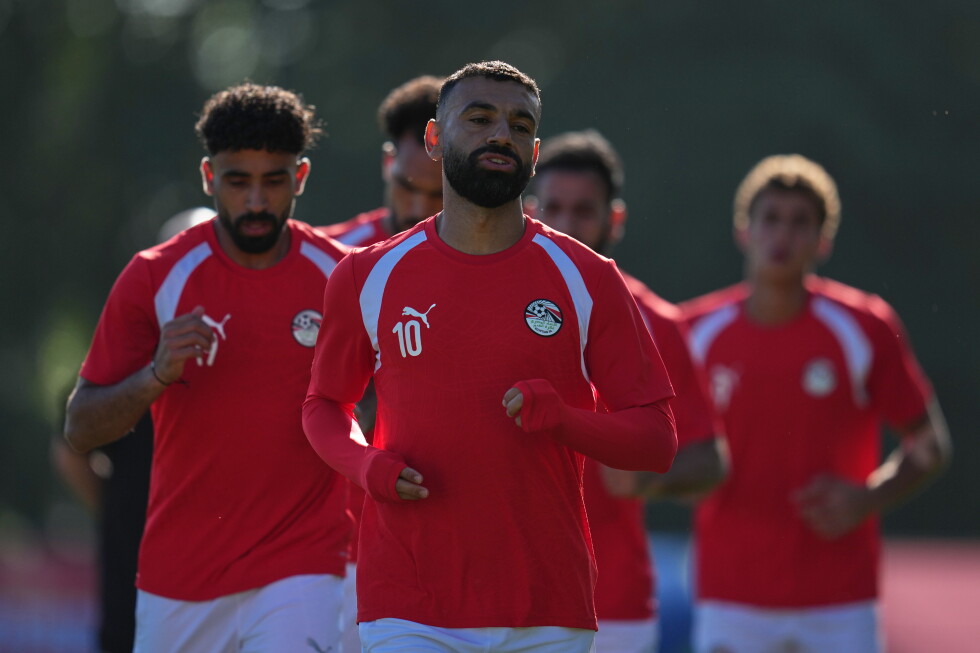
    Hassan’s decades of experience at the top of the sport have been instrumental in guiding Egypt back to the World Cup after the squad missed out on qualification in 2022. The team is led by global superstars Mo Salah and Omar Marmoush, with Salah just two goals away from matching Hassan’s all-time scoring record for the national side. A talented crop of young talent adds depth to the roster, including 18-year-old Hamza Abdelkarim, who made his senior international debut in a friendly against Russia just last month — one of dozens of young African stars making their first World Cup appearances this year.

    Hassan says the team’s biggest motivation is delivering for the millions of Egyptian fans back home and across the diaspora. “We want to live up to the aspirations of the Egyptian fans,” he said. “I only think about bringing happiness to our fans.”

    After Sunday’s match against New Zealand, Egypt closes out its group stage play with a match against Iran in Seattle. As the Pharaohs stand one win away from making program history, they are not just playing for their own nation — they are playing for the entire continent of Africa, as the world watches African soccer’s rise unfold.

  • Currency crash and visa crackdowns force Indian students to rethink studying abroad

    Currency crash and visa crackdowns force Indian students to rethink studying abroad

    For nearly a decade, India has held the title of the world’s largest sender of international students, with more than 1.2 million Indian students enrolled in overseas higher education institutions as of 2025. But a confluence of economic pressures, shifting immigration policies, and dimmed post-graduation job prospects is upending this long-standing trend, forcing hundreds of thousands of aspirational middle-class students to rethink their dreams of studying abroad.

    Pragati Priya, a 29-year-old content creator from Jharkhand in eastern India, spent years planning to pursue a master’s degree overseas. This September, she will finally depart for Rome to study global economic affairs, a step she hopes will unlock high-value professional opportunities across Europe. But her excitement for the adventure ahead is tempered by sharp anxiety, sparked by the Indian rupee’s steep, sustained depreciation against major global currencies including the euro.

    The plummeting rupee has pushed her required student loan balance far higher than she originally projected, leaving her questioning whether she made the right choice. “It has kept me up at night. I don’t want to burden myself with a student loan that I will never finish repaying,” Priya shared in an interview with the BBC. “I considered dropping my plans, but my parents and sister promised to support me. That’s the only reason I’m able to take this risk.”

    Priya’s dilemma is far from unique. It reflects a growing crisis across India’s middle class, where studying abroad has long been viewed as a ticket to upward social and economic mobility. Today, a weakening rupee, bleak post-graduation job outlooks in traditional study destinations like the U.S. and UK, stricter visa rules, and hardened immigration policies have combined to make the cost of an overseas degree far too high for many to bear. Unlike Priya, most aspirants do not have a family safety net to absorb the rising costs, and that shift is already showing up in official enrolment data for the popular September intake at global universities.

    Sushil Sukhwani, founder of Edwise International — one of India’s leading student placement firms that sends thousands of Indian students to overseas universities annually — says the slowdown in demand for traditional destinations is unmistakable. “We’ve already seen enrolments to the UK and US fall by 20% over the last two years, and I expect another 10-15% decline from those levels going forward,” he said.

    Tougher visa requirements have already driven significant declines: 76% of UK universities reported drops in Indian student enrolment for the 2026 January intake, while U.S. institutions saw a nearly 7% fall in Indian student enrolment between February 2025 and February 2026. The rupee’s decline has only compounded these challenges, for both new applicants and students already studying overseas. Since 2019, the rupee has depreciated between 35% and 47% against the currencies of the world’s top study destinations, including a more than 10% drop against the U.S. dollar in just the last 12 months. “Many students who are already abroad have paid part of their tuition fees, but are now having to refinance loans and arrange additional funding to cover future instalments,” Sukhwani explained.

    Beyond rising upfront costs, post-graduation prospects have dimmed dramatically for many Indian students. While a small share of graduates have secured well-paying jobs and built stable careers overseas, climbing into professional roles in trained fields has become increasingly difficult. Sudhanshu Kaushik, founder of the North America Association of Indian Students in Washington, says many graduates now end up working full-time in the gig economy just to make ends meet — a shift that was once only a temporary side gig to fund education. This reality has eroded willingness among Indian families to take on the massive risk of taking on debt for an overseas degree, particularly as the weaker rupee has pushed total costs to record highs.

    Even with these headwinds, overall demand for foreign education among Indian students remains strong. What is shifting dramatically is where students are choosing to go. Forecasts from the 2026 Global Student Flows Report predict that Indian student enrolment in the U.S., UK, Canada, and Australia — the “big four” traditional destinations — will decline by an average of 0.5% annually through 2030. At the same time, demand for alternative European destinations has surged.

    “Countries such as Germany, Ireland, Italy and several other European destinations are attracting increasing interest from Indian students because of lower tuition costs, favourable post-study work pathways, strong employment prospects and a more attractive overall value proposition,” said Mayank Maheshwari, co-founder and COO of student accommodation platform University Living. Edwise International has already shifted its operational focus to these emerging destinations to match growing student interest, and the cost advantage is a major draw for students like Priya, who chose Italy specifically because its tuition costs are roughly half of what she would have paid in the UK, while the U.S. was entirely out of reach due to longer program lengths and far higher price tags.

    For the U.S. and UK, which have built decades of global influence around their world-leading higher education sectors, this trend carries significant long-term risks. India remains one of the largest single sources of international students for both nations, even as enrolment from China has slowed in recent years. Kaushik argues that a perfect storm of overlapping factors — the depreciating rupee, post-pandemic job market weakness, AI disruption to entry-level roles, visa restrictions, and the current U.S. administration’s restrictive immigration policies — has created a lose-lose situation for all parties.

    “No one wins,” Kaushik said. “The students suffer, the universities suffer, college towns suffer and the broader economy suffers. For the U.S. especially, this trend risks undermining one of its most successful sources of influence abroad. We are retreating from the gains we made in promoting higher education as one of our most influential and profitable forms of soft power.”

  • US hopes to turn over ‘new leaf’ with Iran, but Trump threatens to resume bombing

    US hopes to turn over ‘new leaf’ with Iran, but Trump threatens to resume bombing

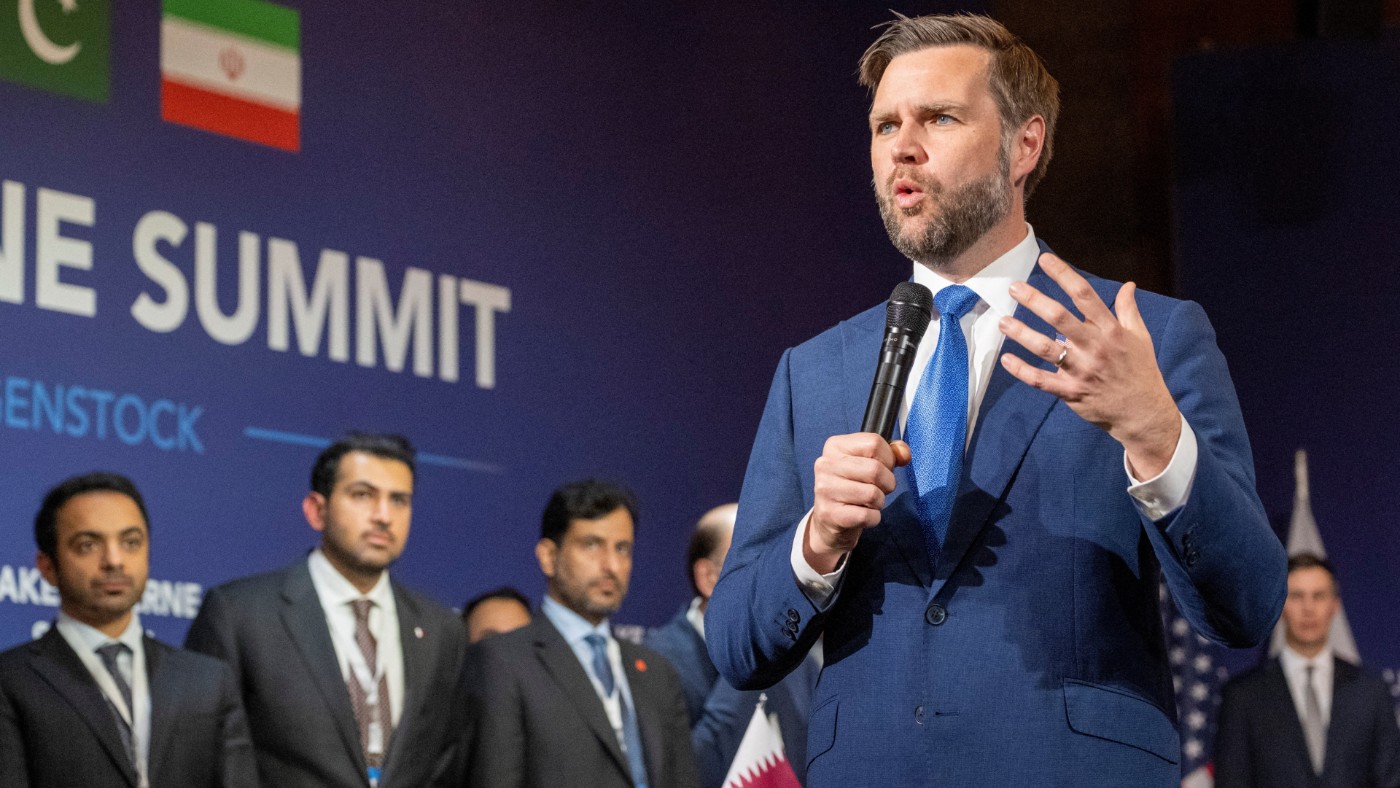
    A landmark round of technical negotiations between U.S. and Iranian officials got underway Sunday at Switzerland’s Burgenstock mountain resort, marking the first formal in-depth discussion between the two nations in modern history following last week’s landmark memorandum of understanding signed by Washington and Tehran. Leading the U.S. delegation, Vice President JD Vance outlined the White House’s stated goal: to turn a new page in relations between the United States and the Iranian people, extending what he called an “outstretched hand” to Tehran conditional on key concessions.

    Speaking to reporters on the opening day of talks mediated by Qatar and Pakistan, Vance said President Donald Trump has made a full reset of bilateral ties a top priority, contingent on Iran abandoning long-term nuclear ambitions and ending its role as a sponsor of regional instability. “This is a historic meeting,” Vance noted, adding that while the ongoing technical discussions would not resolve every outstanding disagreement overnight, they mark the first time both sides have sat down as collaborative negotiating teams to work through sticking points. The Iranian delegation is led by parliamentary speaker Mohammad Bagher Ghalibaf and Foreign Minister Abbas Araghchi, with Pakistani Prime Minister Shehbaz Sharif and army chief Asim Munir also present in Burgenstock to support mediation efforts.

    Yet even as negotiators convened for the landmark talks, Trump injected sharp tension into the process Sunday, issuing a public threat of expanded military strikes against Iran via his Truth Social platform unless Tehran halts what he described as destabilizing actions by its proxies in Lebanon. “Iran must immediately stop their highly paid PROXIES in Lebanon from causing trouble,” Trump wrote. “If they don’t, we’ll hit Iran very hard again, just like we did last week, only harder!!!”

    This threat aligned with recent escalatory moves across the region: Iran re-closed the strategic Strait of Hormuz on Saturday, a response to ongoing Israeli attacks in southern Lebanon that came just one day after a tentative ceasefire was reached between Israel and Hezbollah. The Israeli attacks that preceded the Strait closure killed at least 29 people, and Iran reiterated Sunday that it will not move forward with a broader comprehensive agreement with Washington until Israel ends all military operations in Lebanon.

    Israeli Defense Minister Israel Katz doubled down on his country’s hardline position Sunday, confirming that Israeli troops operating in southern Lebanon face “no restrictions” on eliminating perceived threats, and adding that Israel has no plans to withdraw from the 10-kilometer deep security zone it currently occupies inside Lebanese territory. Katz’s remarks came alongside startling new polling data that reveals deep public anger in Israel over the outcome of the U.S.-Israeli war on Iran launched in late February.

    The survey, conducted by the Hebrew University of Jerusalem, found that 92% of Israeli respondents believe Iran emerged as the winner of the conflict. A full 83% of those polled said the war has weakened Israel’s long-term national security, while 86% hold a negative view of the final outcome. Nearly 73% of respondents reject Prime Minister Benjamin Netanyahu’s claim that Israel secured significant gains and eliminated an existential threat from Iran, a reflection of growing political uncertainty surrounding Netanyahu’s leadership. The poll results mirror widespread skepticism among Israel’s political and military elite, who widely view the end of the war as a turning point that could erode Israel’s regional influence.

    The talks in Switzerland have also thrown the close but increasingly strained relationship between the Trump administration and Netanyahu’s government into sharp relief. Last Friday, Vance pushed back against the common framing that criticism of the Israeli government inherently equates to antisemitism, noting that the Trump administration holds clear disagreements with Netanyahu on how the Iran war was concluded. “It’s just not the case that every criticism of Bibi Netanyahu’s policy decisions leads to antisemitism,” Vance said. He added that Israel is a valuable U.S. partner, similar to the United Kingdom or France, but that does not require aligned interests on every issue.

    Vance’s comments followed a stark warning he issued just one day earlier, when he argued that Trump is the only major global leader that remains openly sympathetic to Israel, urging Netanyahu’s government to avoid attacking its last powerful ally. “If I was in the cabinet of the Israeli government, I might not be attacking the only powerful ally that I have anywhere left in the entire world,” Vance told reporters Thursday.

  • France’s Mbappé is having a record-setting World Cup, other marks could fall as Les Bleus advance

    France’s Mbappé is having a record-setting World Cup, other marks could fall as Les Bleus advance

    As the 2026 FIFA World Cup group stage progresses, French football superstar Kylian Mbappé has already etched his name into the tournament’s record books before even hitting the pitch for his second group stage fixture against Iraq in Group I. The 27-year-old Real Madrid striker, who claimed the 2022 World Cup Golden Boot after a legendary final performance against Argentina, delivered a masterclass in France’s opening 3-1 win over Senegal, notching two goals that pushed him past multiple football icons.

    Mbappé’s opening strike against Senegal pushed his total of international goals to 58, overtaking former French teammate Olivier Giroud to secure the all-time top goal-scoring spot for France’s senior men’s national team. A second strike minutes later moved Mbappé’s career World Cup goal tally to 14, breaking a tie with Brazilian legend Pelé on the tournament’s all-time scoring list and drawing him level with Germany’s Gerd Müller for fourth place on the ranking. Currently, Mbappé sits just one goal behind Brazil’s Ronaldo (15 World Cup goals) and two goals away from the shared all-time record of 16, held by Germany’s Miroslav Klose and Argentina’s Lionel Messi.

    Monday’s match against Iraq will carry even more historic weight for Mbappé: the fixture marks his 100th senior cap for France, capping a glittering international career that includes a 2018 World Cup title and a 2022 World Cup runner-up finish, where he earned the Silver Ball as the tournament’s second-best player. If France advances deep into this year’s tournament, Mbappé is on track to surpass former France manager and player Didier Deschamps’ 103 career caps, and could eventually overtake goalkeeper Hugo Lloris’ all-time record of 145 appearances for Les Bleus if he continues his international career.

    Facing the unenviable task of slowing down a player who is arguably the world’s most in-form striker, Iraq head coach Graham Arnold joked ahead of Monday’s fixture that he had attempted to bend the rules to stop Mbappé. “I asked if we could play three goalkeepers,” Arnold told reporters with a laugh on Sunday. “But they said no.”

    While Arnold has yet to name his starting goalkeeper for the clash, following captain Jalal Hassan conceded four goals in Iraq’s 4-1 opening loss to Norway, the Iraqi manager emphasized his team is focused on controlling their own performance rather than worrying about stopping one of the game’s greatest talents. “We can’t control France’s performance, but we can control our own,” Arnold said. “And we’re making sure that the players are completely ready to go out there and show the world what they’re about.”

    Iraq earned unexpected praise off the pitch after their opening match in Massachusetts, with the team cleaning up all trash and tidying their Gillette Stadium locker room after the defeat, leaving a heartfelt note for hosts that read “Thank you, Boston.” Arnold praised the gesture as a show of class and leadership from his squad, saying “They made the mess, so then they cleaned it up. Out of respect for who we are and where we are. It was great leadership.”

    When pressed by reporters at a packed press conference hosted in the locker room of the NFL’s Philadelphia Eagles about whether he could cement his legacy as the greatest World Cup player of all time, Mbappé deflected the hype, keeping his focus firmly on the upcoming match and France’s pursuit of a third World Cup title. “It’s debate for the people,” Mbappé said in English. “It’s debate for the journalists, debate for the fans of football. I think it’s good to debate about players. See who’s the best. For me, it’s not a question in my head. It’s just about how can I help my team tomorrow against Iraq and can I bring the trophy home in July.”

    Mbappé did acknowledge the historic weight of his 100th cap, saying “It’s always a pleasure to be able to play on the national team. There’s nothing bigger than the national team. One hundred, that’s historic. All the more when it’s the World Cup.”

    The striker also touched on off-field questions, praising Messi as the current best player in world football and leaving the door open to a potential future move to Major League Soccer, after Inter Miami co-owner David Beckham reportedly reached out to recruit him. “There are no limits to ambitions, I like it” Mbappé said of American football culture, adding only that a future transfer stateside would be a “we’ll see” proposition far down the line.

    Entering this year’s tournament, France are co-favorites to lift the trophy alongside Spain, with a dynamic attacking front line featuring Mbappé, rising star Désiré Doué and 2023 Ballon d’Or winner Ousmane Dembélé. Les Bleus, who won the World Cup in 1998 and 2018, fell to Argentina on penalties in the 2022 final, and will be eager to claim their third title this year.