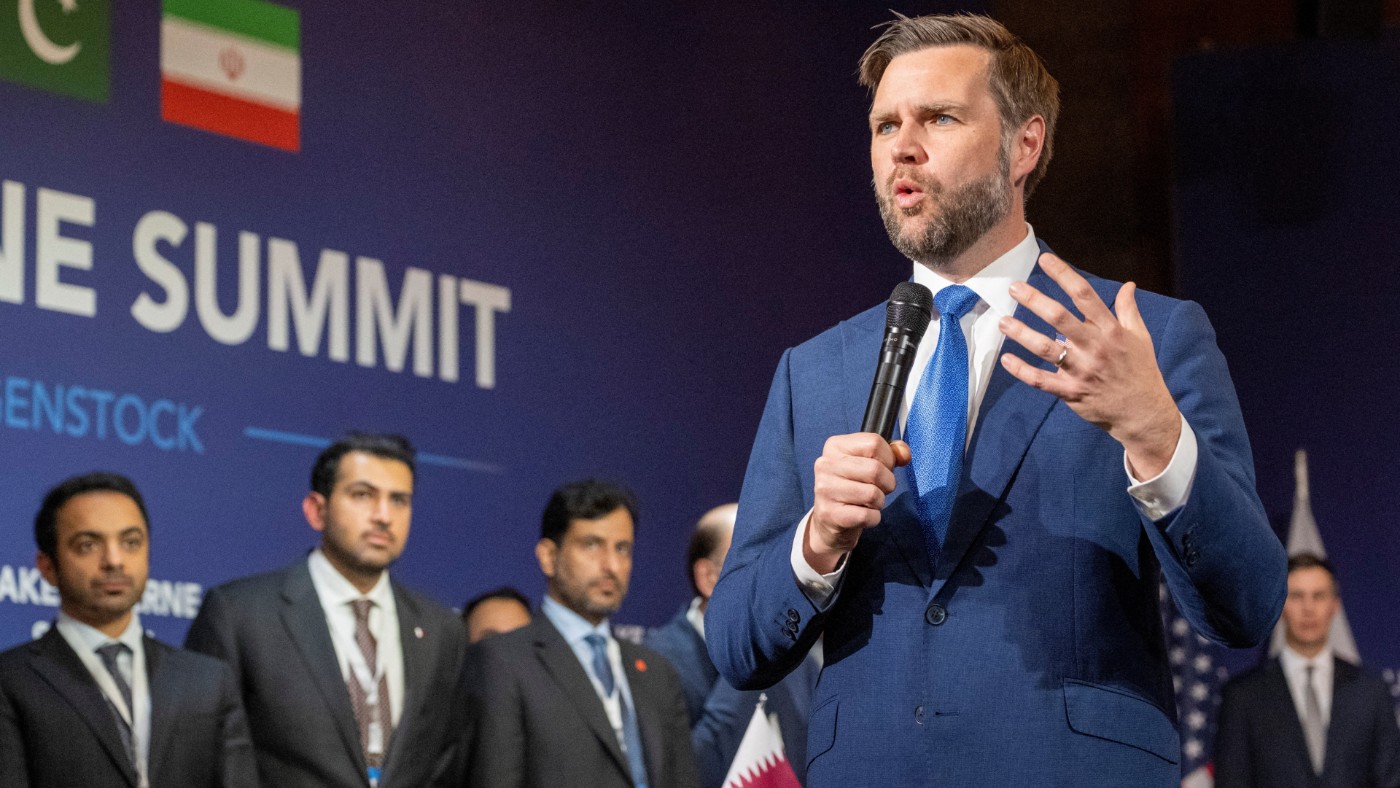
A landmark round of technical negotiations between U.S. and Iranian officials got underway Sunday at Switzerland’s Burgenstock mountain resort, marking the first formal in-depth discussion between the two nations in modern history following last week’s landmark memorandum of understanding signed by Washington and Tehran. Leading the U.S. delegation, Vice President JD Vance outlined the White House’s stated goal: to turn a new page in relations between the United States and the Iranian people, extending what he called an “outstretched hand” to Tehran conditional on key concessions.
Speaking to reporters on the opening day of talks mediated by Qatar and Pakistan, Vance said President Donald Trump has made a full reset of bilateral ties a top priority, contingent on Iran abandoning long-term nuclear ambitions and ending its role as a sponsor of regional instability. “This is a historic meeting,” Vance noted, adding that while the ongoing technical discussions would not resolve every outstanding disagreement overnight, they mark the first time both sides have sat down as collaborative negotiating teams to work through sticking points. The Iranian delegation is led by parliamentary speaker Mohammad Bagher Ghalibaf and Foreign Minister Abbas Araghchi, with Pakistani Prime Minister Shehbaz Sharif and army chief Asim Munir also present in Burgenstock to support mediation efforts.
Yet even as negotiators convened for the landmark talks, Trump injected sharp tension into the process Sunday, issuing a public threat of expanded military strikes against Iran via his Truth Social platform unless Tehran halts what he described as destabilizing actions by its proxies in Lebanon. “Iran must immediately stop their highly paid PROXIES in Lebanon from causing trouble,” Trump wrote. “If they don’t, we’ll hit Iran very hard again, just like we did last week, only harder!!!”
This threat aligned with recent escalatory moves across the region: Iran re-closed the strategic Strait of Hormuz on Saturday, a response to ongoing Israeli attacks in southern Lebanon that came just one day after a tentative ceasefire was reached between Israel and Hezbollah. The Israeli attacks that preceded the Strait closure killed at least 29 people, and Iran reiterated Sunday that it will not move forward with a broader comprehensive agreement with Washington until Israel ends all military operations in Lebanon.
Israeli Defense Minister Israel Katz doubled down on his country’s hardline position Sunday, confirming that Israeli troops operating in southern Lebanon face “no restrictions” on eliminating perceived threats, and adding that Israel has no plans to withdraw from the 10-kilometer deep security zone it currently occupies inside Lebanese territory. Katz’s remarks came alongside startling new polling data that reveals deep public anger in Israel over the outcome of the U.S.-Israeli war on Iran launched in late February.
The survey, conducted by the Hebrew University of Jerusalem, found that 92% of Israeli respondents believe Iran emerged as the winner of the conflict. A full 83% of those polled said the war has weakened Israel’s long-term national security, while 86% hold a negative view of the final outcome. Nearly 73% of respondents reject Prime Minister Benjamin Netanyahu’s claim that Israel secured significant gains and eliminated an existential threat from Iran, a reflection of growing political uncertainty surrounding Netanyahu’s leadership. The poll results mirror widespread skepticism among Israel’s political and military elite, who widely view the end of the war as a turning point that could erode Israel’s regional influence.
The talks in Switzerland have also thrown the close but increasingly strained relationship between the Trump administration and Netanyahu’s government into sharp relief. Last Friday, Vance pushed back against the common framing that criticism of the Israeli government inherently equates to antisemitism, noting that the Trump administration holds clear disagreements with Netanyahu on how the Iran war was concluded. “It’s just not the case that every criticism of Bibi Netanyahu’s policy decisions leads to antisemitism,” Vance said. He added that Israel is a valuable U.S. partner, similar to the United Kingdom or France, but that does not require aligned interests on every issue.
Vance’s comments followed a stark warning he issued just one day earlier, when he argued that Trump is the only major global leader that remains openly sympathetic to Israel, urging Netanyahu’s government to avoid attacking its last powerful ally. “If I was in the cabinet of the Israeli government, I might not be attacking the only powerful ally that I have anywhere left in the entire world,” Vance told reporters Thursday.