The battle for Kostyantynivka, a strategically critical hub in eastern Ukraine’s Donbas region, has entered a tense new phase as Russian infiltration advances and Ukrainian officials offer conflicting accounts of control on the ground. This fight carries major stakes for Moscow’s long-stated war goal of fully seizing the entire Donbas, as the city acts as a key gateway to Ukraine’s final major eastern strongholds of Kramatorsk and Sloviansk. If Kostyantynivka falls, Russian forces would open a clear path to push deeper into remaining Ukrainian-held territory in the region.
Accounts from frontline personnel and official sources paint a starkly different picture of the current situation. Senior Ukrainian commander Brigadier General Oleksandr Bakulin, whose 19th Corps oversees defense of Kostyantynivka and surrounding areas, has publicly insisted that “the situation remains under control” and that Russian forces have not secured any lasting gains. He did, however, acknowledge that roughly 130 Russian troops are currently operating within the city’s boundaries. This official stance contradicts claims from Russia’s defense ministry, which says its troops are rapidly progressing in the city’s southwestern sector, have already encircled key Ukrainian military contingents, and released on-the-ground footage to back up their assertions.
Anonymous Ukrainian frontline officers who spoke to the BBC have painted a far grimmer picture than Kyiv’s public narrative, confirming that the city now functions largely as a contested “grey zone” where no single side exercises full control. Russian troops have advanced from the south and been spotted as far north as the city’s outskirts, sneaking into rear areas of Ukrainian positions that are extremely hard to dislodge amid dense urban terrain. The summer growing season has added to defensive challenges: thick tree cover provides extra concealment for advancing Russian troops, allowing them to move into areas that would normally be classified as a Ukrainian drone “kill zone” where any open movement is quickly targeted.
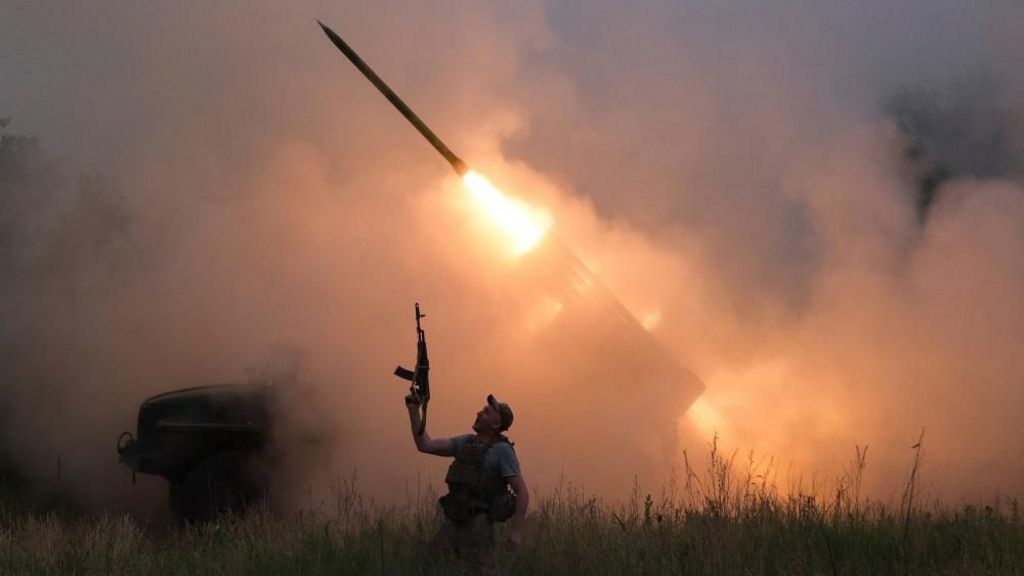
Russian forces have adapted their tactics to counter Ukraine’s surveillance and strike advantage via drones, putting a new priority on eliminating Ukrainian drone launch sites to clear a path for infantry assaults. Unlike Ukraine, which relies on drones to directly target Russian infantry, Russian forces use heavy artillery, multiple rocket launchers and military aviation to strike Ukrainian positions, leaving drone units to focus on hunting Ukrainian drone operators. Frontline Ukrainian drone pilots report that limited personnel and resource shortages leave them unable to target enemy drone crews at scale. This gap has allowed Russian drone operations to continue unimpeded, forcing Ukrainian units to cede ground incrementally. “Since we devote little time to [searching and targeting] enemy pilots, they can freely operate, detect our positions and we are forced to roll back. This is how the frontline moves,” one anonymous Ukrainian drone pilot explained.
While Russian progress has been slow, often limited to just 100 meters of advance per day as troops fight building by building, the tactical approach mirrors the strategy that allowed Russia to capture Pokrovsk and other major eastern Ukrainian cities: advancing along the city’s flanks to encircle it and cut off Ukrainian supply routes. In recent days, Russian defense officials have announced the capture of several small villages west of Kostyantynivka, moves that bring Moscow closer to fully cutting off resupply for Ukrainian troops inside the city. Ukrainian frontline monitors DeepState has warned that the city’s fall is “a matter of time,” and its capture will make holding Kramatorsk “extremely dangerous” by complicating Ukrainian logistical operations across the region.
Supply shortages and a lack of reinforcements have compounded Ukrainian defensive challenges. Delivering ammunition and personnel to frontline units has become extraordinarily difficult, as land routes are constantly targeted and large logistics drones are regularly intercepted by Russian forces. Multiple frontline soldiers report that their units have not received enough reinforcements to replace combat losses, and that senior commanders downplay lost positions to avoid orders to retake ground that is already untenable. “We don’t have enough people to hold on to what we still control, let alone organise assaults,” one soldier told the BBC.
The fight for Kostyantynivka comes amid a broader stalemate along most of Ukraine’s frontline, with Kyiv claiming it has recaptured more territory this year than it has lost, while its long-range strikes on Russian supply lines and energy infrastructure have created major disruptions deep behind enemy lines. Recently, Russian-installed authorities in occupied Crimea were forced to suspend public fuel sales amid widespread shortages caused by Ukrainian strikes on supply routes. Kyiv’s repeated attacks on oil refineries in Moscow, St. Petersburg and other Russian cities have also sought to bring the reality of the war to Russian civilians far from the front. Observers note that Russia’s push to rapidly capture Kostyantynivka is partly intended to shift domestic and international attention away from these Ukrainian successes and the resulting fuel disruptions.
Even as Ukrainian forces face mounting pressure, frontline troops say they continue to hold parts of the city. One drone pilot emphasized that defensive outcomes can still change if Ukrainian command adjusts its approach: “But unless we change our approach and start destroying their logistics and targeting their pilots, they will continue advancing.”