博客

  • China’s import of custard apples is sparking fears in Taiwan

    China’s import of custard apples is sparking fears in Taiwan

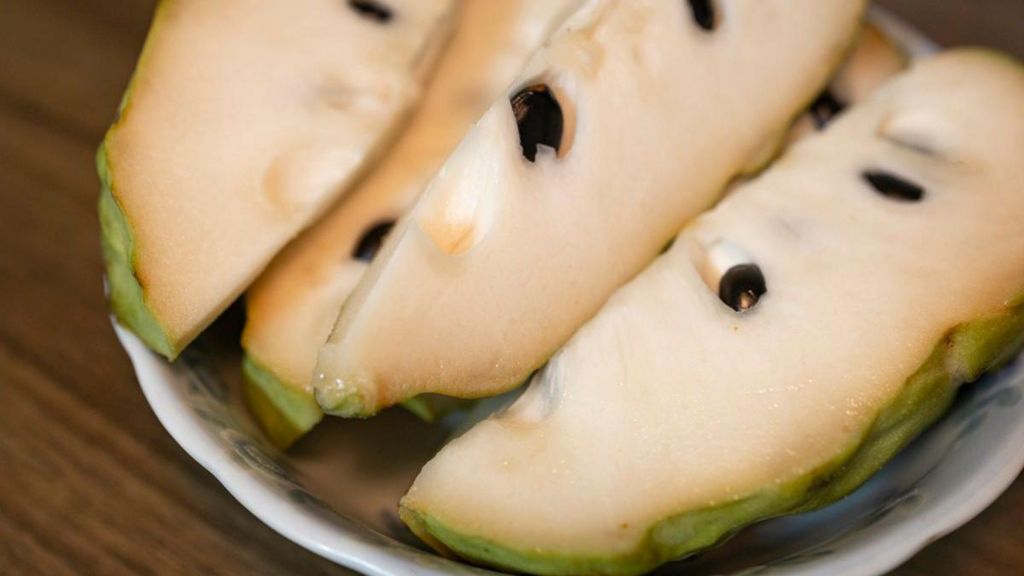
    A uniquely textured, heart-shaped tropical fruit has emerged as the newest point of friction between Beijing and Taipei, after Taiwan’s top agricultural regulator warned local producers against Beijing’s newly announced plan to ramp up purchases of the specialty crop. The fruit in question, the atemoya, is a sweet hybrid cross between two distinct custard apple varieties, prized for its creamy, soft white flesh and grown almost exclusively in Taiwan’s eastern Taitung County, where it has become a signature agricultural product.

    China has long served as the largest export market for Taiwanese atemoya, and earlier this month, Chinese authorities and trade groups announced a new commitment to increase purchases of the fruit. But in an official press release issued Saturday, Taiwan’s Ministry of Agriculture framed the expanded import pledge as part of what it calls Beijing’s long-running ‘raise, trap, kill’ economic strategy, a tactic that the ministry argues first builds dependency among Taiwanese farmers on the Chinese market before sudden policy shifts leave producers grappling with collapsed demand and massive financial losses.

    Cross-Strait relations have grown increasingly strained in recent years. Beijing claims the self-ruled island of Taiwan as part of its sovereign territory, has refused to rule out military force to assert control, and has ramped up large-scale military exercises near Taiwan’s coasts, including simulated full blockades of the island. Beyond military pressure, global observers have noted that Beijing has increasingly turned to non-military, economic tactics to pressure Taiwan’s government – and fresh fruit has repeatedly become a key tool in this strategy.

    The 2021 Chinese import ban on Taiwanese pineapples serves as a prominent example. The ban, which came without advanced warning, devastated the livelihoods of thousands of Taiwanese pineapple farmers and triggered a massive domestic ‘buy pineapple’ movement in Taiwan, widely seen as a grassroots response to what residents framed as economic coercion from Beijing. Now, Taiwanese agricultural authorities warn the same pattern is repeating with atemoya.

    According to the Taiwanese Ministry of Agriculture’s statement, Beijing has already cycled through disruptive shifts in atemoya trade policy over the past four years: it first fully suspended imports of Taiwanese atemoya in 2021 over unsubstantiated pest concerns, only partially resumed trade in 2023, then imposed steep new tariffs on the fruit in 2024. These inconsistent policy changes have created massive volatility for Taiwan’s atemoya industry, exposing smallholder farmers to extreme financial risk, the ministry added. It also noted that China has rapidly expanded its own domestic atemoya cultivation in recent years, creating a long-term structural threat to Taiwan’s export-dependent sector.

    The current controversy over atemoya trade traces back to an industry forum held earlier this month in Xiamen, a Chinese coastal city on the edge of the Taiwan Strait. At the gathering, Chinese firms announced expanded purchase commitments for multiple Taiwanese agricultural exports, including atemoya, fish and tea. The event drew attendance from Taiwanese business leaders and opposition politicians, despite an official ban on participation from Taiwan’s ruling central government. Following the forum, Taiwan’s Mainland Affairs Council, the agency that oversees cross-Strait policy, announced that any Taiwanese officials who violated the participation ban could face formal investigation.

    In response to the controversy, Taiwan’s Ministry of Agriculture said it would prioritize supporting sustainable agricultural development and stable farm incomes, and is guiding the atemoya industry to diversify its market outlets and product lines, including developing value-added products such as frozen atemoya chunks, fruit puree and fruit wine.

    But opposition politicians from Taiwan’s Kuomintang party, which traditionally favors closer cross-Strait trade ties, have pushed back against the government’s warnings, arguing that Taipei is unnecessarily politicizing the atemoya industry in a move that will ultimately harm the farmers it claims to protect. Taipei Mayor Chiang Wan-an, a prominent Kuomintang leader, went so far as to accuse the Mainland Affairs Council of using the trade dispute to ‘bully and oppress’ Taiwanese farmers. Chiang even compared the fruit to Taiwan’s most iconic industrial success story, calling atemoya the ‘TSMC of the fruit world’, arguing that ‘There is not a country in the world that can produce a fruit as delicious and special as Taiwan’s atemoya.’

  • High oil prices drive a surge in Chinese electric vehicle sales, but charging networks lag behind

    High oil prices drive a surge in Chinese electric vehicle sales, but charging networks lag behind

    The ongoing conflict in Iran and subsequent disruptions to global energy flows through the Strait of Hormuz have triggered a rapid shift in the global electric vehicle landscape, creating an unprecedented opportunity for Chinese automakers to expand their footprint across developing economies in Asia and Africa. As skyrocketing fossil fuel prices push cash-strapped drivers and cash-strapped governments to embrace vehicle electrification, the explosive growth of EV imports has exposed a critical bottleneck: a widespread lack of matching charging infrastructure.

    Blockades of the Strait of Hormuz, a strategic chokepoint through which roughly 20% of the world’s daily crude oil and liquified natural gas shipments pass, sent energy prices soaring across key importing regions. The supply shock first hit major Asian fuel importers, then spread quickly to African markets, accelerating a transition to electric mobility that was already gaining traction across the developing world.

    Trade data underscores the speed of this shift. A recent analysis of Chinese customs data by energy think tank Ember shows that China’s global EV exports hit an all-time high of $9.4 billion in April alone. Shipments to markets including Australia, Brazil, Southeast Asia and East Africa have surged at double-digit rates. Official data from the Chinese Association of Automobile Manufacturers adds that China exported roughly 435,000 passenger electric vehicles and plug-in hybrids in May, more than doubling the volume recorded in the same month one year prior.

    For individual drivers across developing Asia and Africa, the switch to EVs is being driven by immediate household budget pressures. In these regions, transport consistently ranks among the largest recurring expenses for average families. Limited public transit networks, long daily commutes, and widespread reliance on private vehicles leave households extremely vulnerable to volatile global fuel prices. A 2024 study from Stellenbosch University in South Africa’s Western Cape province found that transportation alone accounts for nearly 20% of total household spending in the country. For gig workers like Nguyen Thien Bao, a delivery and ride-hail driver in Hanoi, Vietnam, the cost savings are transformative. “Before, so much of my income went into fuel,” he explained. “Now, I can actually save some money.”

    Governments across the developing world are also prioritizing the EV transition to cut ballooning oil import costs and reduce the heavy fiscal burden of fuel subsidies. Laos has gone as far as banning imports of new fossil fuel-powered vehicles through 2026 to speed up the shift, while Ethiopia has enacted a similar ban on non-EV imports to cut energy dependency. Data from China’s Commerce Ministry shows that African imports of Chinese EVs reached roughly 44,000 units in 2025, marking a 130% year-over-year jump. The International Energy Agency (IEA) projects that global electric car sales will continue to climb through 2026, hitting 23 million units and accounting for nearly 30% of all new cars sold worldwide. Up from one in four new cars sold globally last year, this growth is heavily supported by Chinese manufacturers, which currently supply around 60% of all electric vehicles sold worldwide.

    Major Chinese automakers are already acting on this momentum. “In the next five years, we will accelerate our overseas expansion,” Jerry Gan, CEO of leading Chinese automaker Geely Auto, announced at a company event in March, as the group expands its EV footprint across Southeast Asia and other emerging regions. While Chinese manufacturers have dominated growth in developing markets, regional players are also reaping benefits: Vietnam’s VinFast reported a 42% year-over-year increase in first-quarter revenue, driven largely by rising EV demand across Southeast Asia.

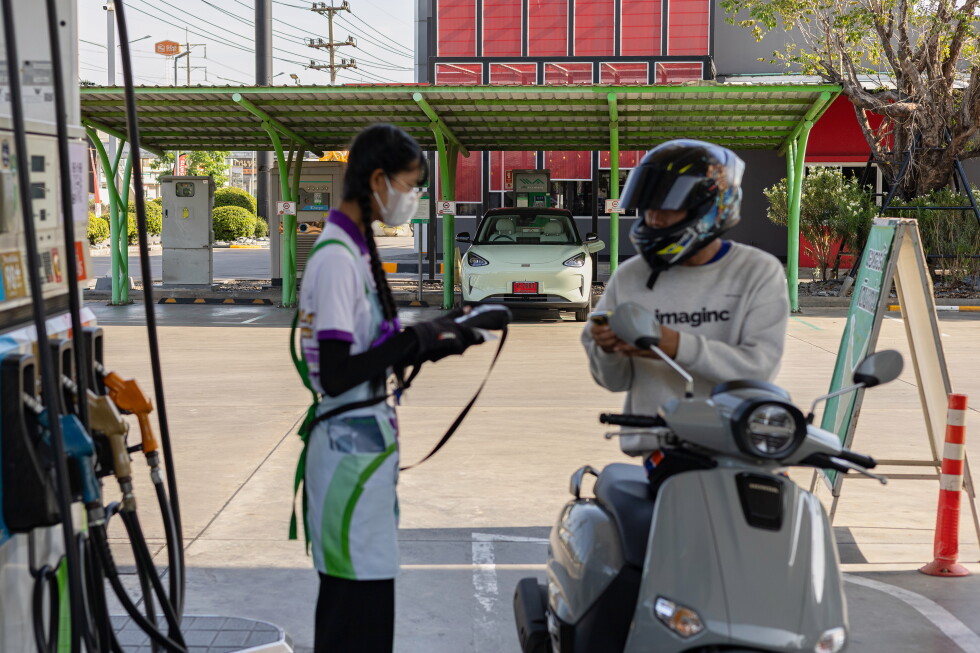
    Despite the explosive growth of EV adoption, this rapid shift has outpaced the buildout of required charging infrastructure, creating what analysts describe as a classic “chicken-and-egg problem.” Without enough charging stations, many drivers remain hesitant to switch to fully electric vehicles, but low EV adoption rates do not create enough demand to justify large-scale infrastructure investment. Data from across the region highlights this gap: Thailand currently counts roughly 4,600 public charging locations serving more than 424,000 battery EVs and plug-in hybrids, working out to one charging location for every 92 vehicles. For ride-hail drivers like Yutthana Samranwong in northern Thailand’s Phitsanulok province, securing an open public charging slot online is often an unpredictable gamble. “It’s a bit of a headache,” he said, noting that the strain on Bangkok’s charging networks has even led some drivers to consider returning to gasoline-powered cars.

    The gap is even more pronounced in lower-income African markets. As of mid-2025, Ethiopia, which has banned non-EV imports to speed up electrification, only had around a dozen public charging stations operational, despite government estimates showing more than 1,170 stations are needed to meet current demand. Forty additional stations are currently under construction in the capital Addis Ababa. “In developing markets, affordability can accelerate the shift, but the pace of adoption will still depend heavily on infrastructure, power reliability and use case,” noted Chris Liu, a technology analyst with research and advisory firm Omdia.

    To resolve this bottleneck, many emerging economies are turning to state-owned utilities to lead charging network buildout, a model analysts say could be replicated across other developing regions to speed the transition away from fossil fuels. Indonesia already has more than 4,500 public charging stations deployed by its state-owned power utility PLN. Across Africa, where only around 2,000 public EV charging stations exist today (with South Africa holding the largest share), state utilities are stepping in: Kenya Power, the country’s state-controlled electricity provider, plans to construct 44 new charging stations within the next 12 months.

    “Utilities are recognizing that electric mobility will become a meaningful source of future electricity demand,” explained Ndia Magadagela, co-founder and CEO of South African commercial EV leasing firm Everlectric. Analysts note that state utilities are uniquely positioned to lead this work, as they are already integrated into national grid planning, electricity pricing and distribution infrastructure. Large Chinese automakers, by contrast, typically have little incentive to invest heavily in charging networks outside of their home market, leaving a gap that public entities can fill.

    “At that stage, government support for infrastructure could help accelerate adoption,” explained Paul Gong, head of UBS’ China automotive industry research, echoing the broader consensus that public investment is the most viable path to breaking the current infrastructure deadlock and unlocking continued growth of electric mobility across the developing world.

  • 2 young suspects in custody after shooting at high school in Philippines kills 3

    2 young suspects in custody after shooting at high school in Philippines kills 3

    A deadly shooting that claimed three lives and left seven others injured has shaken a public high school in the central Philippines, triggering urgent calls for nationwide security upgrades across educational institutions and public spaces. According to local law enforcement, the attack was carried out on Monday morning by two of the school’s own students, aged 14 and 15, who each carried a loaded pistol when they carried out the assault.

    Brigadier General Jason Capoy, regional police chief for the area, confirmed that both suspects and all victims were enrolled at San Jose National High School, a government-run campus with more than 1,500 students located in Tacloban City. The shooting unfolded shortly after mid-morning, when the two teens, who are reported to be close friends, forced their way into multiple classrooms on campus. After opening fire in the first classroom, the assailants chased fleeing students into a second room to continue the attack, Capoy told reporters.

    Most of the casualties were female students, Capoy added. Three victims ultimately died from their injuries, while seven others were hospitalized with wounds. Following the shooting, one suspect was taken into custody directly on school grounds. The second teen attempted to escape and hid in a nearby residential home, but local residents tipped off law enforcement to his location, leading to his quick arrest.

    Initial police interviews with the suspects have yielded a preliminary potential motive: the pair told investigators they had been subjected to prolonged bullying at the school, though Capoy declined to share further details on the claim. At this stage of the investigation, authorities have not been able to confirm where the teens obtained the two pistols used in the attack. Neither suspect has any prior criminal record, law enforcement officials confirmed.

    The shooting was able to occur in large part due to lax campus security protocols, Capoy acknowledged. The school relies on only one security guard to monitor multiple entry and exit points, which allowed the suspects to smuggle their firearms onto campus undetected. Investigations into the full circumstances of the attack remain ongoing as authorities piece together a full timeline of events.

    Philippine President Ferdinand Marcos Jr. has ordered a full, thorough probe into the incident and directed law enforcement agencies to immediately ramp up security measures at all schools, workplaces, and public gathering spaces across the country, according to Communications Undersecretary Claire Castro. “The president was saddened by this incident,” Castro told reporters. “Anybody, especially the parents of the victims, will feel sad and terrified.”

    The Philippine National Police has issued a public appeal for calm, asking community members to come forward with any information that could support the ongoing investigation into the shooting.

    Gun-related crime remains a persistent issue across the Philippines, driven largely by the widespread proliferation of unregistered and unlicensed firearms in private hands. Unlike many other countries grappling with gun violence, however, school shootings remain a relatively rare occurrence in the nation.

  • Salah’s World Cup pain ends as he fires Egypt to historic win

    Salah’s World Cup pain ends as he fires Egypt to historic win

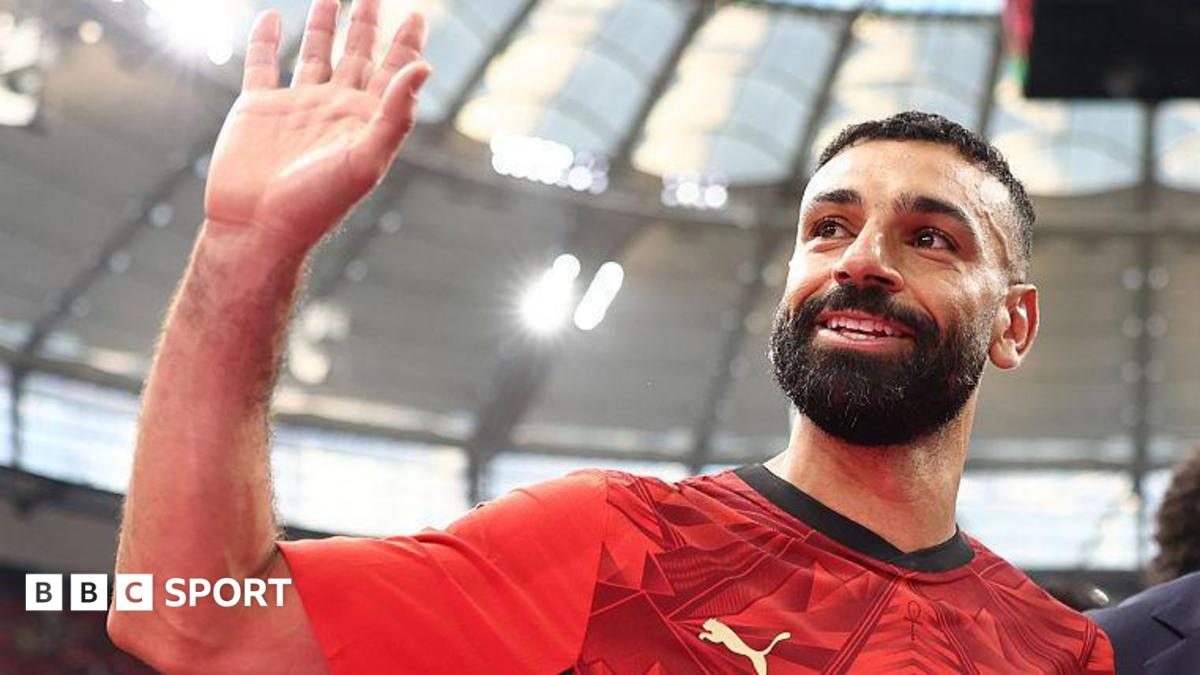
    After nearly a century of heartbreak and near-misses across nine World Cup appearances, Egypt has finally secured its first ever victory at football’s biggest global tournament, spearheaded by national icon Mohamed Salah who delivered a defining second-half performance to sink New Zealand in a 3-1 Group Stage clash.

    The match got off to a rocky start for the Pharaohs, as New Zealand stunned the favorites with an early opening goal, and Salah looked set to continue a run of quiet, underwhelming performances that had marked his start to the 2026 World Cup. The 34-year-old superstar had turned in an ineffectual shift in Egypt’s opening 1-1 draw with Belgium, and remained off the pace through the first 45 minutes against New Zealand, leaving fans fearing his long history of World Cup misery would stretch on.

    But Salah flipped the script in spectacular fashion in the second half. In the 67th minute, he fired home the goal that put Egypt ahead, capping a patient comeback from the early deficit. Later, his perfectly delivered corner kick found the head of Trezeguet, who netted the sealing goal to lock in the historic 3-1 result. The win puts Egypt on the cusp of qualifying for the knockout round, with a point from their final Group Stage fixture against Iran all but guaranteeing a spot in the round of 16, and the side could even progress without picking up that point depending on other results.

    For Salah personally, the moment was years in the making. His first World Cup appearance in 2018 was marred by injury, a disjointed campaign, and three straight defeats that ended with Egypt crashing out in the group stage. The fallout from that failure was so severe that Salah publicly criticized the Egyptian Football Association for mismanaging preparations, and reports emerged that he had considered stepping away from international football entirely. Egypt then failed to qualify for the 2022 Qatar World Cup, extending both the country’s and Salah’s wait for a breakthrough on the global stage.

    Off the pitch, the forward is coming off a turbulent final season at Liverpool, where he fell out with manager Arne Slot before announcing his departure this summer, with his future club still unconfirmed. Despite that off-field uncertainty, Salah prioritized his national team’s World Cup run, determined to correct the mistakes and disappointments of the past. Ahead of the New Zealand match, Egyptian head coach Hossam Hassan was even forced to deny public speculation of a rift between himself and Salah, after substituting the star early in the Belgium draw.

    Sunday’s strike was Salah’s 68th international goal for Egypt in 118 appearances, moving him just one goal behind Hassan’s all-time national scoring record. Industry figures and pundits were quick to praise the superstar’s impact. Former Tottenham Hotspur manager Ange Postecoglou, commentating for ITV, noted: “If there was any doubt about Mo’s impact on this team, you can still see it. It will give them enormous belief. They had to deal with adversity and their big player stood up and that will give them big confidence. You need your big players to perform to progress.” Former Jamaica international winger Jobi McAnuff echoed that sentiment, adding: “Just when he was needed, Mo Salah stood up for his country.”

    Salah’s status as a national icon in Egypt cannot be overstated – far beyond his stardom in European club football, he is a cultural institution in his home country, with every touch of the ball drawing roars from the stands and massive pressure on his shoulders every time he pulls on the national jersey. His importance to the side is so profound that when he suffered a serious shoulder injury in the 2018 Champions League final just weeks before that year’s World Cup, Egypt’s Minister of Health personally reached out to the national team medical staff to check on his condition. “I even had calls from Egypt’s Minister of Health,” recalled Dr Mohamed Aboud, the Egyptian national team medic.

    Though Salah has claimed multiple domestic and European trophies during his time at Liverpool, he has never lifted a major title with Egypt. The generation before his claimed three straight Africa Cup of Nations titles between 2006 and 2010, but Egypt has fallen at the final hurdle twice in recent AFCON tournaments, losing the 2017 final to Cameroon and the 2021 final (held in early 2022) to Senegal. With this landmark World Cup win, however, Egypt has finally laid to rest one of its longest-running football ghosts, and Salah has cemented his legacy as the man who delivered the country’s most coveted milestone in nearly a century.

    Speaking after the final whistle, Salah kept his focus on the task ahead: “It’s a great achievement for all the players. It’s a great win. It’s a great vibe. The next game is very important.”

  • Starmer seen as likely to announce an exit timetable as rival Burnham heads to UK Parliament

    Starmer seen as likely to announce an exit timetable as rival Burnham heads to UK Parliament

    LONDON — Political pressure is reaching a fever pitch in the United Kingdom, with mounting expectations that Prime Minister Keir Starmer will outline a timeline for his resignation as early as this Monday, bowing to intraparty pressure to surrender control of the national government. If Starmer follows through on the widely reported plan, he will become the sixth British prime minister in 10 years to step down from office before completing a full term.

    The turning point for Starmer’s leadership came last week, when his intraparty rival Andy Burnham secured victory in a special parliamentary by-election. Burnham, who previously served as Greater Manchester’s Labour mayor, ran the campaign as an open challenge to Starmer’s authority over the party and Downing Street. He is scheduled to be formally sworn in as a Member of Parliament on Monday, the same day the resignation announcement is expected.

    While Starmer’s official office has declined to publicly confirm or comment on the resignation reports, Business Secretary Peter Kyle released a statement Sunday acknowledging that the prime minister is “making time to reflect on the political realities, challenges and opportunities that he finds himself in.”

    Grassroots and parliamentary discontent with Starmer has built steadily for months, just half a year after he led the centre-left Labour Party to a landslide general election victory in July 2024. Since taking office, Starmer has failed to deliver on campaign pledges to jumpstart promised economic growth, repair Britain’s long-strained public services, and ease the persistent national cost of living crisis. His tenure has also been marred by repeated high-profile missteps, most recently his controversial appointment of Peter Mandelson — a figure long tied to late convicted sex offender Jeffrey Epstein — as the UK’s ambassador to the United States.

    Political headwinds have grown increasingly severe for Labour in recent months: the party has hemorrhaged liberal voters to the rapidly expanding Green Party, while the Nigel Farage-led anti-immigration party Reform UK has jumped to consistent leads in national public opinion polling.

    If Starmer does step aside, it remains unclear whether Burnham will ascend to the leadership unchallenged or face a competitive party contest. Already, former Health Secretary Wes Streeting — who resigned from Starmer’s cabinet last month to protest his leadership — has confirmed he will enter the race if a contest is called.

    Even before any official announcement, former and current U.S. President Donald Trump weighed in on the unfolding crisis, tying Starmer’s potential exit to two of his most frequent policy talking points: immigration and domestic energy production. “Keir Starmer will resign as Prime Minister of The United Kingdom. He failed badly on two very important subjects- IMMIGRATION AND ENERGY (OPEN NORTH SEA OIL!). I wish him well! President DJT,” Trump posted on his social media platform. It is unclear whether Trump’s comment was based on prior knowledge of Starmer’s plans or a response to circulating media reports, and Downing Street confirmed the two leaders held no conversations over the weekend. Relations between Starmer and Trump, which started out warm after Starmer took office, have deteriorated sharply in recent months over disagreements including the UK’s decision not to join the U.S.-led Iran war.

    Notably, while Starmer has faced widespread criticism for his domestic policy performance, he has drawn broad praise for his work on the international stage. Political observers across the ideological spectrum have commended his efforts to rally unified European support for Ukraine amid Russia’s ongoing invasion, as well as his work to contain the economic and political instability triggered by the recent Iran conflict.

    Opinion within the Parliamentary Labour Party remains divided. While a majority of lawmakers have rallied around Burnham as Starmer’s replacement, some have argued that the prime minister has been treated unfairly. London MP Neil Coyle publicly pushed back against the ouster effort on the social platform X, decrying “the prospect of an utter stitch-up & the media circus being rewarded.” He added, “When the next leader cannot change Trump, Iran, Ukraine, Putin, Musk, broadcast editorial & algorithm bias overnight they’ll bay for his blood too. Better keep that guillotine sharp.”

  • Trump-endorsed de la Espriella holds slim lead in Colombia’s election as his rival challenges vote

    Trump-endorsed de la Espriella holds slim lead in Colombia’s election as his rival challenges vote

    BOGOTA, Colombia — Colombia’s deeply divided electorate has produced a cliffhanger presidential runoff election, with first-time political candidate and conservative outsider Abelardo de la Espriella holding a narrow lead over progressive Iván Cepeda — a result that the ruling party’s camp has already pledged to contest in the coming days.

    With 99.9% of all ballots counted by national electoral authorities, de la Espriella, a 47-year-old lawyer and business owner who holds dual Colombian-U.S. citizenship and earned an endorsement from former U.S. President Donald Trump, secured 49.7% of the vote. His opponent, sitting lawmaker Iván Cepeda and close ally of outgoing progressive President Gustavo Petro, trailed at 48.7%. Official results have not yet been certified by election officials, leaving the country’s next four-year leadership in limbo.

    If de la Espriella’s lead holds, the political newcomer is expected to roll back nearly all of Petro’s core policy agenda. Most notably, he has vowed to terminate Petro’s controversial initiative to conduct parallel peace negotiations with the country’s network of illegal armed groups — an effort that has already failed to deliver tangible reductions in violence. Cepeda, by contrast, ran on a platform of continuing Petro’s peace strategy and advancing the outgoing administration’s slate of social reforms.

    Addressing thousands of cheering supporters Sunday night from behind bulletproof glass in the northern Colombian city of Barranquilla, de la Espriella struck an initial conciliatory tone before shifting to a combative message. “I will govern for all Colombians,” said de la Espriella, who goes by the nickname “The Tiger.” He then turned directly to his opponent, adding, “Pack your bags and prepare to exercise the opposition. Make no mistake, Mr. Cepeda. You already know how fiercely the tiger roars.” Former President Trump celebrated the preliminary outcome on his social media platform, posting simply, “He Won, BIG!”

    Speaking from the capital Bogotá after the partial count was released, Cepeda rejected the preliminary tally as “unofficial and non-binding.” His campaign announced plans to challenge results across more than 30,000 voting stations, a move that carries little historical precedent for success: no recount has ever overturned a Colombian presidential election. “We will not allow … the rollback of the social gains we have achieved,” Cepeda told his supporters. “We will not allow democracy to be violated.” Outgoing President Petro echoed that commitment, vowing to back the challenge to the preliminary outcome. The winner of the race is set to be inaugurated for a four-year term on August 7.

    The entire election campaign was shaped by widespread public anxiety over a potential return to the large-scale internal armed conflict that plagued Colombia for decades. Both candidates ran on sharply divergent platforms to address ongoing violence, which has risen steadily in recent years. Current data shows illegal armed groups in Colombia now count more than 27,000 total members, and 2023 saw 14,780 homicides recorded nationwide — the highest annual total since at least 2015. The rising violence included the assassination of conservative presidential hopeful Miguel Uribe on the campaign trail.

    De la Espriella has campaigned on an aggressive, hardline approach to cracking down on organized crime and drug trafficking, explicitly modeling his plan on the mega-prison strategy implemented by Salvadoran President Nayib Bukele. While Bukele’s tactics have reduced homicide rates in El Salvador, they have also drawn widespread international condemnation for systematic human rights abuses. De la Espriella has repeatedly stated he will abandon all peace talks with illegal armed groups, which he blames for the country’s ongoing instability.

    Many voters who shifted their support to de la Espriella cited frustration with unmet economic promises and ongoing violence. Yolanda Hernández, a 49-year-old waste recycler who voted for Petro in the 2022 election, explained her switch this cycle: “We want change in Colombia because it’s always the same violence, always the same thing. Petro said he was going to lower the cost of services, that he was going to lower the price of food, and everything is more expensive.”

    Will Freeman, a Latin American Studies fellow at the Council on Foreign Relations, noted that the razor-thin result reflects that Colombia has not shifted overwhelmingly to either the left or the right, but instead remains deeply split along both ideological and regional lines. “It’s regional not just ideological polarization; or rather, the two overlapping,” Freeman explained. “Ironically, de la Espriella’s iron-fist message performed best in the core of the country, not the periphery, which bears the brunt of Colombia’s violence.”

  • Australian police uncover 3 tons of cocaine

    Australian police uncover 3 tons of cocaine

    In a landmark blow to transnational organized drug trafficking, Australian law enforcement has seized 2.7 metric tons of cocaine at a semi-rural property on Sydney’s western fringe, marking the largest single cocaine haul in the nation’s history, official announcements confirmed Monday.

    Investigators from the Queensland Joint Organized Crime Taskforce detailed that the contraband was discovered June 19, stashed in plastic tubs inside custom-built underground bunkers. The bunkers were carefully concealed beneath three shipping containers fitted with false floors, designed to hide the entry to the storage space on the Londonderry property. Law enforcement estimates the street value of the seized drug at 816 million Australian dollars, equivalent to roughly 572 million U.S. dollars.

    Two male Sydney residents, aged 21 and 25, were taken into custody at the property immediately following the discovery. Both men face formal charges of possessing a commercial quantity of an illegal controlled substance, and conviction carries a maximum sentence of life imprisonment under Australian drug laws.

    The new record surpasses the previous national benchmark set just this year, when authorities intercepted 2.34 metric tons of cocaine from a fishing vessel near K’gari—formerly known as Fraser Island—off the coast of Queensland.

    Investigative details show the cocaine bound for Sydney, Australia’s largest and most populous city and the capital of New South Wales, was originally offloaded from a large vessel at Midge Point, a remote coastal location in Queensland’s sparsely populated tropical north. Members of a Sydney-based organized crime syndicate then transported the shipment 1,800 kilometers overland by road to the Londonderry storage property, police allege.

    Law enforcement officials also confirmed they believe this shipment originated from the same “mother ship” that supplied a 178-kilogram cocaine seizure uncovered earlier in Queensland. Six people have already been charged in connection to that earlier bust, which also uncovered an additional 142 kilograms of methamphetamine during the ongoing investigation.

    Investigators have identified the suspected mother ship as the MV Wealth, a cargo vessel flying the flag of Belize. The ship is already in custody after authorities in the Solomon Islands seized it on suspicion of ties to transnational organized criminal activity. The Solomon Islands lie roughly 2,000 kilometers northeast of Queensland’s coastline.

    Australian Federal Police Commander Stephen Jay noted that criminal networks are increasingly exploiting Queensland’s extensive 13,000-kilometer shoreline, which offers countless isolated landing points that make smuggling operations easier to conceal. A key driver of this activity is the uniquely high retail price of cocaine in Australia, which turns the country into an extraordinarily profitable market for international drug trafficking groups, industry and law enforcement analysts add.

  • China hits back at US sanctions on tech giants, restricting its exports to American defense firms

    China hits back at US sanctions on tech giants, restricting its exports to American defense firms

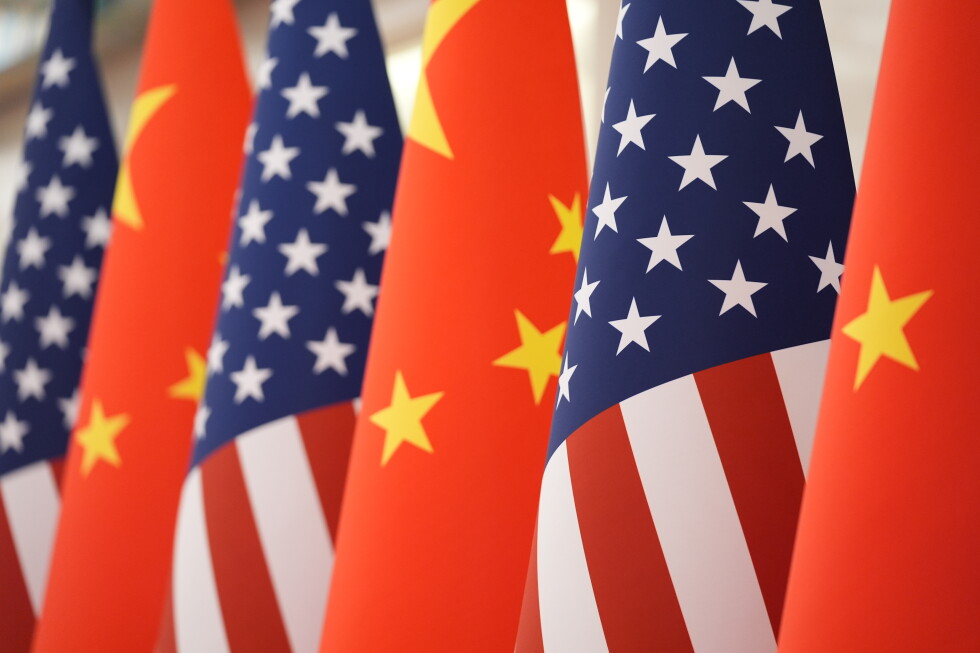
    In a tit-for-tat response to a recent Washington policy that blocks leading Chinese technology firms from accessing U.S. defense contracts, China unveiled new sanctions against 10 American defense and aerospace companies on Monday, according to China’s Ministry of Commerce.

    The sanctions impose a blanket ban on Chinese enterprises exporting dual-use items — products engineered for both civilian and military applications — to the targeted American firms. The list of sanctioned entities includes major military drone manufacturers and two leading U.S. rare earth mining producers: AVEOX, Red Cat Holdings, Teal Drones, IMSAR, Jaia Robotics, Ball Aerospace & Technologies, Oshkosh Defense, L3Harris Maritime Services, MP Materials, and USA Rare Earth.

    Beyond the direct export ban, the policy also prohibits third-party businesses and individuals from retransferring Chinese-origin dual-use goods to the sanctioned American companies. The Ministry of Commerce noted that exceptions will be considered for exports deemed genuinely necessary, where qualified Chinese firms can apply for special approval to ship restricted items.

    Chinese authorities framed the move as a necessary measure to protect core national security interests, adding that the action directly counters what Beijing calls the U.S. government’s improper expansion of its so-called Chinese Military Companies list. Earlier this month, the U.S. Department of Defense added prominent Chinese technology giants including Alibaba and Baidu to the restricted list, claiming the firms maintain unacknowledged ties to China’s military. Baidu has publicly rejected the allegation, calling the characterization of the company as a military-linked entity “totally baseless.”

    The designation of Chinese firms by the U.S. bars the listed companies from securing any federal defense contracts. Beijing has additionally pointed out that the latest American restrictions contradict the bilateral consensus reached by Chinese President Xi Jinping and former U.S. President Donald Trump during Trump’s official visit to China in May, according to earlier statements from Chinese officials.

  • Japan quintuples foreigner visa fees in first price hike since 1978

    Japan quintuples foreigner visa fees in first price hike since 1978

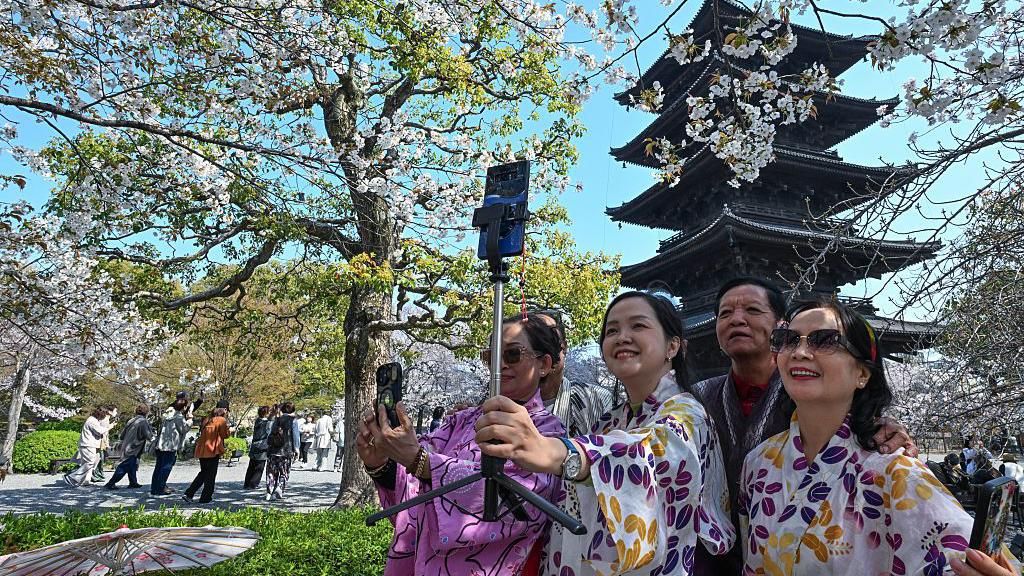
    Japan is set to roll out a landmark fivefold increase to visa fees for foreign visitors starting 1 July, marking the first adjustment to these charges since 1978. Under the new fee structure, the cost of a single-entry visa will jump from the current 3,000 Japanese yen to 15,000 yen, while multi-entry visas will see an equivalent increase, rising from 6,000 yen to 30,000 yen.

    Japanese Foreign Minister Toshimitsu Motegi announced the revisions during a press briefing on Friday, noting that the price adjustments are designed to reflect ongoing global inflation and significant exchange rate volatility that has impacted Japan’s economy in recent years. When addressing concerns about the effect on Japan’s booming post-pandemic travel sector, Motegi emphasized that authorities do not expect the fee hikes to trigger an immediate decline in inbound tourism.

    The Japanese yen has faced persistent weakening since 2021, currently trading near 40-year historic lows against major global currencies. This currency depreciation, paired with the broad rebound in international travel following the easing of COVID-19 restrictions, has driven an unprecedented surge in tourist arrivals to Japan. In 2024 alone, the country recorded a new all-time high of 42.7 million international visitors, underscoring the rapid recovery of its travel industry.

    The visa fee revision is not an isolated policy change. Earlier this year, Japan’s Upper House approved a separate bill that raises administrative fees for a range of other immigration-related services for foreign nationals. Under that legislation, the statutory cap for permanent residency application fees will increase 30-fold, jumping from the current 10,000 yen to 300,000 yen. Fees for changing residency status or extending an authorized stay will also see a tenfold increase, rising from 10,000 yen to a maximum of 100,000 yen.

    Proponents of the fee adjustments argue that bringing Japan’s visa and residency-related charges into line with the fee structures of other G7 major economies is a long-overdue correction. As a point of comparison, non-immigrant visa application fees in the United States currently range from $185 to $315, while a standard six-month short-term visitor visa for the United Kingdom costs £135.

  • Uruguay struggles in first 2 matches as Suárez watches from the stands

    Uruguay struggles in first 2 matches as Suárez watches from the stands

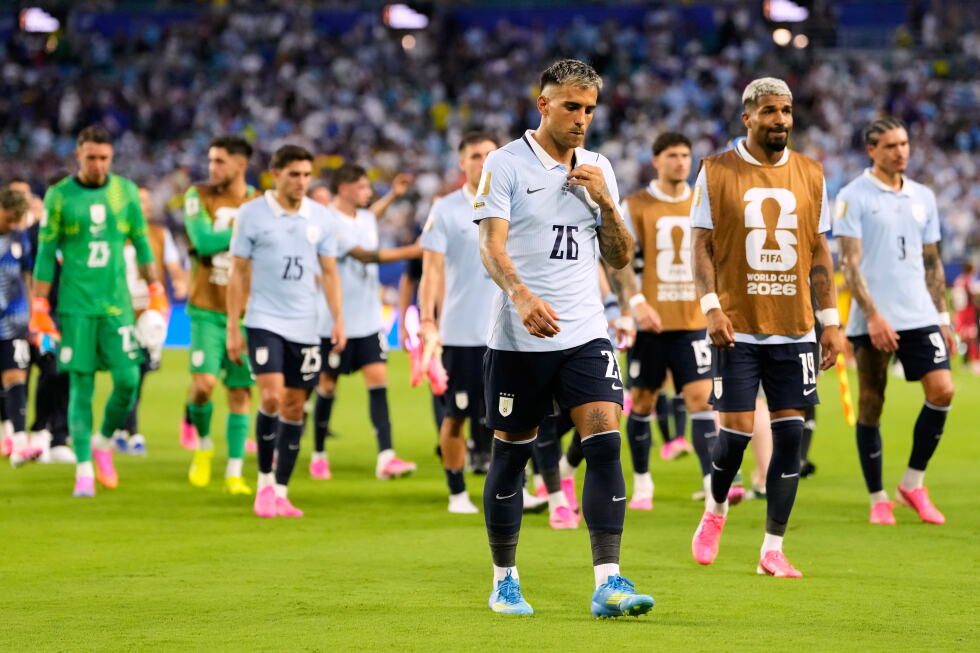
    MIAMI GARDENS, Fla. — Two-time FIFA World Cup champion Uruguay has opened its latest global tournament with underwhelming results that have put its knockout stage hopes in jeopardy. Following back-to-back draws against Saudi Arabia and Cape Verde, Marcelo Bielsa’s side faces a do-or-die group stage clash with Spain, where a failure to secure three points could send them home early.

    Watching the team’s opening matches from the stands of Miami’s Hard Rock Stadium, just minutes from his current club home at Inter Miami, was Luis Suárez: the striker who carried Uruguay’s attacking threat for more than 15 years and retired from international football in 2024 as the nation’s all-time leading goalscorer, with 69 goals across 143 senior caps. The 39-year-old was forced to watch from the stands as the heavily favored side struggled to turn possession and chances into goals, a problem that has quickly become the talking point of their campaign.

    Suárez’s absence from the 2025 World Cup squad was no accident. After months of swirling speculation following the striker’s April announcement that he was willing to come out of international retirement for one last run at the tournament, head coach Marcelo Bielsa opted to leave both Suárez and fellow veteran frontman Edinson Cavani off his roster, choosing instead to place his trust in Uruguay’s emerging generation of attacking talent.

    The decision has already come under scrutiny. In their first World Cup opening match without Suárez in the squad since 2010, Uruguay scraped a late 1-1 draw against Saudi Arabia, with their only goal coming from midfielder Maxi Araújo. Opening strikers Darwin Núñez and Federico Viñas failed to register a goal between them, cutting underwhelming figures in attack. For their second fixture against Cape Verde, Bielsa adjusted his starting lineup, naming only Viñas as the central striker and adding midfielder Agustín Canobbio to the first XI. Canobbio did score Uruguay’s second goal to pull the side level, but he missed a late second-half chance that would have secured all three points, leaving the team with another draw.

    After the Sunday draw with Cape Verde, Bielsa acknowledged his side’s attacking woes in comments to reporters. “I think that the problem or greatest issue is that we started the second half with the ball and with the victory,” the head coach said through a translator. “And it was at that moment that we didn’t close it. We didn’t make any danger.” He added that the squad “lacked a finishing touch” in front of goal — the very quality that Suárez built his legendary international career on providing.

    The rift between Bielsa and Suárez goes beyond the squad selection: the pair clashed publicly after the 2024 Copa América, when Suárez publicly criticized Bielsa for creating a negative team environment.

    Uruguay fans have been split on the decision to leave the veteran striker at home, reflecting mixed feelings about a generational shift in the national side. “(I have) mixed feelings to be honest,” said Frederico Suárez, a Uruguay supporter attending the matches. “He’s old and now it’s time for the younger players. But he’s a good player, maybe the best player I’ve ever watched with Uruguay.”

    Other fans echoed the belief that the move gives young talent room to develop. “I feel like he’s a little older, so for players like Darwin (Núñez), I think it just gives him a little bit more of a chance to shine,” said fan Ian Lancaster.

    For many supporters, though, the inconsistent start to the tournament has left expectations uncertain. With one group match remaining against European giant Spain in Guadalajara Stadium on Friday, Bielsa and his young attacking group are under growing pressure to deliver a win and prove the decision to omit Suárez was the right one.

    “Our expectations with Uruguay now is that we never know,” said fan Alfonso Aguel. “We need to play every match, go match by match, and see what actually happens.”