博客

  • ‘They took a healthy kid and returned him dead’: Bedouin dies in Israeli custody with signs of torture

    ‘They took a healthy kid and returned him dead’: Bedouin dies in Israeli custody with signs of torture

    A 21-year-old Bedouin Israeli man held on suspicion of arms smuggling by Israel’s internal security service Shin Bet has died in hospital after being found unresponsive in his cell at a southern Israeli prison, with his family and legal representatives claiming his body bore clear signs of severe abuse. The case of Saber Amitel, a Negev-based locksmith and welder with no prior criminal record, has reignited scrutiny of treatment of detainees in Israeli custody amid a sharp rise in prisoner deaths since the start of the Israel-Gaza war last October.

    According to reporting from Israeli newspaper Haaretz, Amitel was arrested earlier in June and transferred immediately to Shikma Prison in the coastal city of Ashkelon, where authorities blocked him from meeting with legal counsel for days. His family only learned of his arrest after searching for him for two full days following his disappearance during a trip to Beersheba, and reported him missing to local police, who confirmed he had been taken into custody.

    Officially, Israeli police have stated Amitel attempted to die by suicide in his cell. But family and lawyers reject this account outright, noting the extensive bruising they observed when they were finally granted access to the detainee at Ashkelon’s Barzilai Hospital on June 8. This access only came after Haaretz journalists contacted Israeli authorities to inquire about the previously unreported detention.

    Amitel remained hospitalized in an unresponsive, brain-dead state hooked up to life support for 12 days before his death on June 20. His body was moved to the National Centre of Forensic Medicine for official examination, but the family has declined to permit an autopsy on religious grounds, limiting officials to only an external inspection of the body.

    In an interview with Haaretz, Amitel’s father Odeh described the devastating shock of seeing his healthy son reduced to an unresponsive patient on life support. “From a healthy boy who was arrested while walking on his own two feet, he ended up in this condition,” he said. “He was under guard and handcuffed. Medical staff told us that this is how he arrived. They took a healthy kid away from me only to return him dead. There’s no law in this country anymore; people are being killed under torture.” Odeh added that his son was never given the opportunity to speak with interrogators prior to being found unconscious, and had never been a violent person.

    Amitel’s legal team has filed an urgent legal petition with the Beersheba District Court, calling for an independent judicial investigation into the circumstances of the young man’s death. The petition names four parties as respondents: the Israel Prison Service, Shin Bet, Israeli police, and Barzilai Medical Center. Attorneys are also requesting access to full closed-circuit camera footage from Shikma Prison, official guard duty logs, and all of Amitel’s medical records from his time in custody.

    “It is inconceivable that the police and Shin Bet detained a young man, healthy in body and mind, with no criminal record, who worked long hours at a factory supporting his family, and returned him to his family as a dead body,” attorneys Esther Bar Zion and Victor Ozen told Haaretz in a statement.

    In response to media inquiries, the Israel Prison Service declined to comment on any personal or medical details related to Amitel, stating only that “the circumstances are being examined by the competent authorities.” Shin Bet issued its own statement claiming that “Amitel was interrogated in accordance with the law,” and repeated the official account that a suicide attempt was discovered in his cell on June 7, after which the detainee was transferred to hospital for treatment.

    The death of Amitel comes amid a growing crisis in Israeli detention facilities, following the start of Israel’s military campaign in Gaza in October 2023. Rights monitors and Palestinian sources report that at least 100 Palestinian detainees have died in Israeli custody since the war began. Many analysts and advocacy groups believe the official death toll is a significant underestimate, and that the actual number of fatalities among detainees is far higher.

    For anyone experiencing mental health crisis or suicidal thoughts, free, confidential support is available globally: In the United Kingdom and Ireland, contact Samaritans at 116 123; in the United States, call or text the 988 Suicide & Crisis Lifeline at 988 or access online support at 988lifeline.org; additional international resources can be found at befrienders.org.

  • Kenya minister found in contempt of court over US-backed Ebola centre

    Kenya minister found in contempt of court over US-backed Ebola centre

    In a high-profile legal ruling that has amplified tensions around a controversial public health project, Kenya’s Health Minister Aden Duale has been convicted of contempt of court for violating a court order to halt construction on a US-funded Ebola quarantine facility in Nanyuki.

    Last month, Kenya’s High Court issued an immediate stop-work order for the 50-bed isolation center, which is planned to be built on a local military base. The order paused all construction until the court could hear a legal challenge brought by Kenyan rights organization the Katiba Institute. But in Monday’s ruling, Justice Patricia Nyaundi confirmed that Duale had deliberately ignored the court’s command and permitted construction work to continue uninterrupted. Sentencing for Duale is scheduled to be handed down on Tuesday.

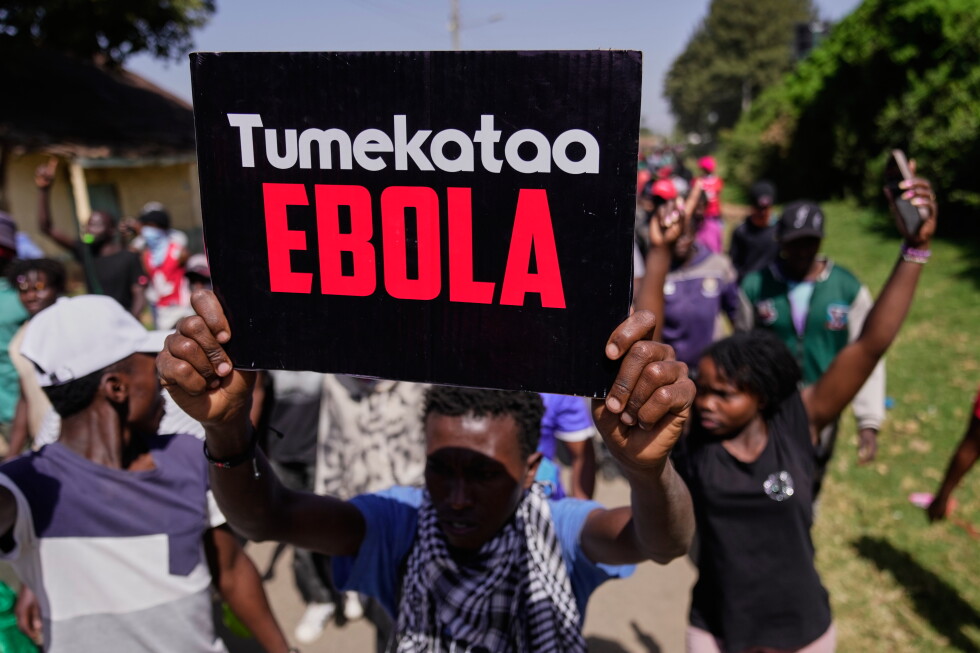
    The facility, funded through a US regional Ebola response package, is designed to quarantine US citizens suspected of exposure to Ebola during the ongoing outbreak centered in the eastern Democratic Republic of Congo. The project has sparked widespread public outrage and mass protests across Nanyuki, a town located roughly 140 kilometers north of Kenya’s capital Nairobi. Three people have been killed during clashes between demonstrators and police, who were deployed to disperse the crowds. Among the fatalities is 17-year-old high school student Sylvester Muigai Ndung’u, who had hoped to train as a Catholic priest. Witnesses report the teenager was shot in the head during the unrest, though police have stated they are waiting for post-mortem results to confirm the cause of his death, and have not yet responded to accusations that officers used excessive force against unarmed civilians.

    The Katiba Institute first filed its legal challenge to halt construction in May, warning in its petition that the facility poses “grave and imminent risks” to Kenyan public health. Following the stop-work order, Kenya’s Ministry of Health attempted to defend its actions by claiming it had not violated the court’s ruling. The ministry argued any ongoing work was being carried out independently by the Kenyan government, in the national interest of protecting Kenyan citizens from potential Ebola exposure. Justice Nyaundi rejected this justification outright in her ruling, stating the government cannot “avoid compliance by recasting or re-characterising the ongoing construction”. She emphasized that a court order “is not an invitation to ingenuity – it is a command to be obeyed”, and confirmed Duale clearly understood the requirement to stop all work at the Nanyuki site, yet chose to allow construction to proceed.

    In recent weeks, Kenyan President William Ruto has publicly defended the quarantine facility project. Ruto stated he received an official request from the US government to host the center, and argued that turning down the request would be “inhuman”. He has also urged Kenyan politicians not to politicize the Ebola response, calling for an end to “reckless” rhetoric around the project.

    As of Monday, Kenya had not recorded any confirmed cases of Ebola. The ongoing outbreak is concentrated in the Democratic Republic of Congo, where more than 1,000 confirmed cases have been recorded, with an additional 20 confirmed cases reported in neighboring Uganda, nearly all of which are imported from DR Congo. Notably, the outbreak epicenter in Bunia, DR Congo is more than 780 kilometers from Nanyuki, with Uganda lying between the two locations.

    The project has also faced fierce pushback from the Kenya Medical Practitioners, Pharmacists and Dentists Union (KMPDU), one of the country’s largest medical professional associations. Union leaders have publicly questioned why Kenya was selected to host a quarantine facility for exposed American workers, amid an outbreak centered hundreds of kilometers away in another country. KMPDU Secretary General Davji Bhimji Atellah stated the union “will not sit back and watch Kenya be treated as a containment colony for a lethal pathogen that we did not generate”.

    A spokesperson for US Secretary of State Marco Rubio confirmed that Washington has committed $13.5 million (£10.7 million) to fund Kenyan Ebola preparedness initiatives, including the Nanyuki facility. That funding is part of a broader $112 million US commitment to support regional Ebola outbreak response across Central and East Africa.

  • Keir Starmer resigns as British prime minister

    Keir Starmer resigns as British prime minister

    In a sudden development that has shaken British politics, Keir Starmer has stepped down as Prime Minister and Leader of the Labour Party less than two full years after securing a landslide victory in the UK general election. His announcement came Monday morning outside 10 Downing Street, ending days of swirling public speculation about his political future.

    Starmer confirmed in his address that he would formally resign from the party’s top leadership role, and has requested the Labour Party’s National Executive Committee launch a leadership selection timetable that will open nominations on July 9, with the full process wrapped up before parliament’s summer recess. Under this schedule, a new party leader will be confirmed and installed before MPs return to Westminster in September, regardless of whether a contested election is held.

    Addressing the pressure that led to his exit, Starmer acknowledged that the Parliamentary Labour Party had delivered a clear answer on whether he remained the best candidate to lead the party into the next general election. “I have heard the answer of my parliamentary party to that question, and I accept that answer with good grace,” he said. “Every decision I’ve taken has been about putting the country I love first. That is why I will resign as leader of the Labour party.” He added that he had already notified King Charles III of his decision during a conversation earlier that morning.

    The collapse of Starmer’s leadership follows a string of damaging political setbacks. A catastrophic round of local election results, widely blamed on Starmer’s deep unpopularity among voters, preceded last week’s by-election win in Makerfield by Andy Burnham, the former popular mayor of Greater Manchester. That victory solidified Burnham’s position as the overwhelming favourite to replace Starmer, and political insiders now widely expect him to run unopposed, potentially taking office as prime minister as early as mid-July.

    In his departure speech, Starmer defended his two years in office, framing his tenure as a period of necessary reset for the Labour Party. “I inherited a Labour Party that was politically, financially and morally bankrupt,” he said. “We changed our party, ripping out the poison of antisemitism and restoring trust on the economy, defence and national security.” He pledged full, unwavering support to his successor, adding: “They will inherit a Britain that is far stronger and fairer than the one I inherited two years ago, better prepared for the challenges ahead and better able to ensure the Labour Party secures a second term in office.”

    Burnham is scheduled to take his seat in the House of Commons later on Monday, completing his transition from municipal leadership to national politics. While former Health Secretary Wes Streeting previously indicated he would enter the leadership race, sources close to Streeting have confirmed he is now reconsidering his bid. Polling data shows Streeting is even less popular among Labour Party members than the outgoing Starmer, making a successful challenge unlikely.

    Politically, Burnham is positioned on the soft left of the Labour Party, and has long been described as a pragmatic “political chameleon” who has adjusted his policy stances significantly over his career. During his tenure as Greater Manchester mayor, he and his allies developed a policy framework they have branded “Manchesterism”, which he now proposes to roll out across the entire country.

    Unlike Starmer’s more centrist economic approach, Manchesterism advocates for far more interventionist government action in the economy – stopping short of full socialism, but bolder than the outgoing government’s vision. In Burnham’s own framing, it is a “modern and functional response to the high-inequality, low-growth trap that came from the 1980s drive to privatise economic power and overcentralise political power in the Treasury”. He has already publicly pledged to bring water and energy utilities back into public ownership if he takes office.

    Still, questions remain about which policy iteration of Burnham voters and party members will see as prime minister. During his recent by-election campaign, he indicated he would retain key elements of Starmer’s policy agenda, most notably continuing the government’s push to dramatically cut net immigration. This position is intended to win back voters who have defected to the right-wing Reform Party, but it has already become a potential target for criticism from the left-wing Green Party, which has seen a major surge in national polling in recent months.

    Burnham and his campaign team are well aware of the political risk posed by the Green Party’s rise, and observers expect many of his upcoming economic policies will be crafted to appeal to left-leaning voters who have abandoned Labour for the Greens. If Burnham takes office as expected, the coming months could bring sweeping policy shifts across British politics.

  • Israel deployed troops to Somaliland after recognition, source says

    Israel deployed troops to Somaliland after recognition, source says

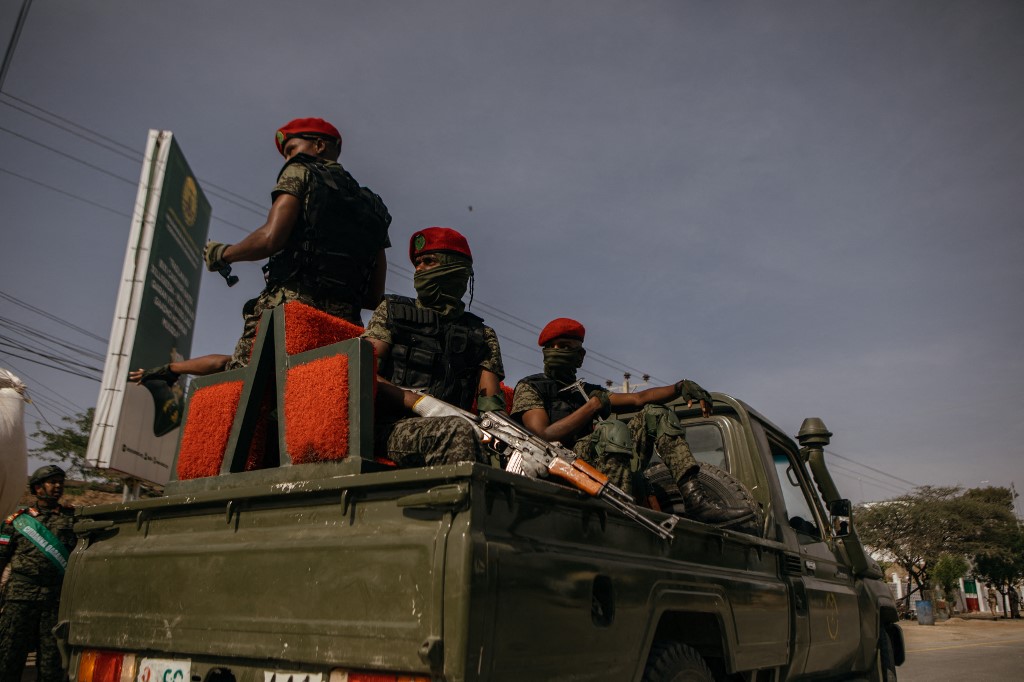
    Fresh claims from a senior official within Somalia’s internationally recognized government have pulled back the curtain on an undeclared Israeli military presence in the breakaway region of Somaliland, stirring new friction across the Horn of Africa and the broader Middle East. The disclosure comes months after Israel made a historic and widely condemned decision to grant formal recognition to Somaliland, a self-declared independent state that has not received endorsement from the United Nations or nearly any sovereign nation. In an exclusive interview with Middle East Eye, the senior Somali government source outlined that the deployment of a 50-strong Israeli military contingent took place in early 2024, shortly after Israel resumed open military conflict with Iran in late February. To evade detection and integrate seamlessly into the local population, Israeli military commanders specifically selected troops of African descent, the majority of whom have Ethiopian heritage, the official added, citing intelligence gathered by Somali security agencies. Israel’s path to formal diplomatic ties with Somaliland began in December 2023, when it became the first country in the world to recognize the region’s independence. That unilateral move immediately drew sweeping condemnation from nearly every government across the African continent and the Middle East, as it upends longstanding international consensus on Somalia’s territorial integrity. By April 2024, Israel had completed the first step of formal diplomatic representation, appointing Michael Lotem as its inaugural ambassador to Somaliland’s capital, Hargeisa. When Middle East Eye reached out to the Israel Defense Forces for comment on the allegations of a secret troop deployment, military officials declined to address the claims directly, stating that the matter falls under the jurisdiction of the country’s political leadership, rather than military spokespeople. Outlets including MEE also attempted to secure a response from Somaliland’s government, but those requests have so far gone unanswered. While the Israeli government has not confirmed the deployment of troops, senior Israeli officials have openly acknowledged the long history of covert security cooperation between the two sides. During a public meeting with visiting Somaliland President Abdirahman Mohamed Abdullahi this week, Israeli Defense Minister Israel Katz confirmed that discrete collaboration has been ongoing for years, operating outside of public view. “For many years, we cooperated under the radar in a series of operations that will remain classified,” Katz said. “Now we are determined to bring our security cooperation to new heights, for the benefit of both peoples and for the benefit of stability in the region.” Earlier this month, CNN reported, citing anonymous sources familiar with the arrangement, that Somaliland has granted Israel access to an additional military facility. This site, the report claims, could be used as a refueling and logistics hub for Israeli aircraft conducting long-range missions targeting Iran. Regional security analysts who specialize in Horn of Africa politics have further speculated that Israel is actively pursuing a permanent naval base along Somaliland’s Red Sea coast. Such a base would position Israel to more effectively counter growing threats from Houthi militants in Yemen, who have targeted commercial shipping in the Red Sea in recent months. In comments released Wednesday, Somaliland’s Defense Minister Mohamed Yusuf Ali denied persistent claims that Israel maintains a military base on Somaliland territory. At the same time, he did not downplay the scope of current bilateral security engagement, confirming that Israeli personnel are supporting Somaliland’s security forces by providing training for both local police and military units. The developing situation has heightened concerns across the region, with many governments warning that deepening Israeli military involvement in Somaliland threatens to destabilize the already fragile security environment in the Horn of Africa and undermine regional efforts to maintain Somalia’s territorial unity.

  • Twins marry twins in joyous Nigerian joint wedding

    Twins marry twins in joyous Nigerian joint wedding

    In a weekend celebration that has captured the imagination of communities across southwestern Nigeria, two sets of identical and fraternal twins have exchanged vows in a one-of-a-kind joint wedding ceremony at a local church in Ibadan, marking what attendees call a once-in-a-generation union rooted in Yoruba cultural tradition and a decade of quiet connection. The historic ceremony united fraternal twin brothers Taiwo and Kehinde Oguntoye in marriage to identical twin sisters Taiwo and Kehinde Adediran, a pairing so uncommon that even in a region where Yoruba communities boast one of the highest twin birth rates in the world, such an event draws widespread attention and joy.

    For the Oguntoye brothers, the match was more than a coincidence—it was the fulfillment of a long-held dream. “We know many twins across our community, but this marriage feels like it was divinely arranged,” Taiwo Oguntoye shared in an interview with BBC Yoruba on his wedding day. “We have always dreamed of marrying twins, and by God’s grace, we pray our first and second children will also be twins. That is our greatest heart’s desire.”

    This rare union aligns deeply with longstanding Yoruba cultural beliefs, where twins are universally regarded as a precious blessing, and their traditional names carry preordained meaning. By custom, the first-born of any pair of Yoruba twins is named Taiwo, which translates to “the one that tests the world,” while the younger twin receives the name Kehinde, meaning “the one that came after”—a naming tradition that the both grooms and brides share by coincidence.

    The foursome’s love story stretches back 10 years, to when all four were pursuing higher education at the University of Ibadan. A university lecturer who knew both the Oguntoye brothers and the Adediran sisters suggested an introduction, a suggestion that immediately piqued the brothers’ curiosity. It was not the first time they had connected with twin sisters, Taiwo Oguntoye explained: previous relationships with other twin pairs had not worked out, leaving the brothers hopeful that this match would be different. The Adediran sisters, meanwhile, were initially hesitant to meet, ignoring the lecturer’s outreach for a time before finally agreeing to a first gathering. When the pair finally met, the sisters were not interested in pursuing a romantic relationship, so the four settled into a quiet friendship instead.

    Life soon pulled the four in separate directions. The Adediran sisters, who had completed master’s degrees in Ibadan, relocated overseas to continue their academic work, while the Oguntoye brothers traveled and built careers across multiple countries, including the United States and South Africa. For years, the connection faded, until the brothers reached out to rekindle their friendship. What started as a casual reconnection slowly grew into romantic love, even overcoming the sisters’ early skepticism about the unusual pairing.

    When the couples introduced their relationships to their respective families, the reception was unilaterally warm. Taiwo Oguntoye recalled an instant bond with his future in-laws, saying, “Everyone was so happy to see us, it felt like we had known them all our lives. We were treated like sons right in our own father’s house.”

    On wedding day, proud relatives filled the pews of the Ibadan church, with the couples matching their wedding outfits for the ceremony. Multiple other pairs of twins joined the celebration, a fitting turn given that the Oguntoye brothers are already well-known locally for their work advancing Yoruba twin culture through cultural and tourism initiatives under the name the Oguntoye Twins.

    While the fraternal Oguntoye brothers have distinct physical differences, their brides are identical, a quirk that leads even close family members to mix the sisters up on occasion—but the grooms say they have no such trouble. “Our wives look so alike that even their family members sometimes confuse them. We don’t mix them up, we know our own wives very well,” Kehinde Oguntoye explained. The brothers also noted that they share complementary personality traits with their spouses: all four identify as ambiverts, shifting between quiet reserve and outgoing energy depending on the setting.

    Though the two twin pairs share an extremely close bond, they have shared that each new couple will maintain their own separate residence, following a unique long-term plan they will reveal to the public in time. For now, the newlyweds are savoring the opening of a new chapter: a love story that began with a chance introduction, was put on hold for nearly a decade, and finally bloomed into one of the most celebrated community unions southwestern Nigeria has seen in recent years.

  • WhatsApp to be led by Indian start-up founder as Will Cathcart steps back

    WhatsApp to be led by Indian start-up founder as Will Cathcart steps back

    After nearly seven years at the helm of Meta’s globally dominant messaging platform WhatsApp, Will Cathcart has announced his departure from the top role, in one of the most high-profile leadership changes in Big Tech in recent months. During Cathcart’s tenure, WhatsApp expanded exponentially, growing its global user base of private messaging to over 3 billion people, while rolling out new encrypted communication features that cemented its position as the world’s most widely used mobile messaging service. In social media posts shared Monday, Cathcart noted that WhatsApp is currently in the strongest strategic position in its history, making the timing right for him to step back from day-to-day leadership of the platform. While Cathcart will leave his role as WhatsApp head, he will remain a member of Meta’s senior leadership team. Taking his place is Kunal Shah, the founder of Bangalore-based Indian fintech unicorn Cred, a fintech firm that has shaken up India’s credit and payments sector since its launch. Meta chief executive officer and Facebook co-founder Mark Zuckerberg voiced strong public support for Shah’s appointment this week. Zuckerberg highlighted that Shah built Cred into one of India’s most consequential technology companies, and said his builder-focused mindset and global outlook make him uniquely suited to lead the world’s largest messaging platform. “I look forward to working with Kunal to continue to make WhatsApp the best service for billions of people and millions of businesses,” Zuckerberg said. Shah founded Cred in 2018, building a members-only fintech platform that rewards users for making on-time credit card payments, with a core focus on high-income users in India’s fast-growing digital economy. Before launching Cred, Shah built a career as an investor and advisor to early-stage startups across India and Southeast Asia, according to his public LinkedIn profile. In his own announcement shared on social media Monday, Shah confirmed he will retain his stake as a shareholder in Cred while taking on the WhatsApp leadership role. He also revealed that Cred has secured $900 million (approximately £679 million) in new investment from Meta, a deal that Bloomberg reports will give Meta a 20% minority stake in the fintech firm. To address growing privacy concerns that have dogged Meta in key emerging markets, Shah emphasized that while Meta will hold a minority stake in Cred, the social media giant will not gain access to any of Cred’s member user data. The leadership reshuffle at WhatsApp comes as Meta works to deepen its foothold in India, WhatsApp’s largest single market by user count. Data from the World Population Review shows that WhatsApp counts roughly 853 million active users in India alone, accounting for more than a quarter of the platform’s total global user base. As part of Meta’s broader “family of apps” that also includes Facebook, Instagram, and Messenger, the company has increasingly looked to WhatsApp to drive new revenue growth, testing new revenue streams including in-app advertisements, paid premium subscription features, and artificial intelligence-powered tools. Despite its massive popularity in the country, WhatsApp and Meta have faced growing regulatory and public scrutiny in India in recent years over the platform’s privacy policies and data sharing arrangements between the app and its parent company. The leadership change and Meta’s new investment in Cred signals the company’s long-term bet on solidifying its position in the world’s largest open digital market, as competition for users and revenue in emerging technology sectors intensifies across South Asia.

  • Myanmar army killed over 700 civilians in six months, UN says

    Myanmar army killed over 700 civilians in six months, UN says

    Five years after seizing power in a 2021 coup that ousted Myanmar’s democratically elected government and threw the nation into a devastating civil conflict, the country’s military regime has been implicated in the deaths of more than 700 civilian lives in just six months preceding its widely discredited 2025 election, according to a new United Nations Human Rights Office investigation. The report, which tracks violence from August 2025 through January 2026, draws on cross-verified data from multiple credible on-the-ground sources to confirm a minimum of 702 civilian fatalities, including 224 women and 153 children. The period in scope began when the military junta officially announced its long-promised electoral process — a vote dismissed by the global community as a fraudulent sham, after all major opposition parties were barred from participating and entire swathes of the country controlled by armed opposition groups were excluded from balloting. Myanmar’s civil conflict has already claimed thousands of lives and displaced millions of people across the country since the 2021 coup, with large territories remaining outside the junta’s control. The UN report singles out military air strikes as the single leading cause of widespread destruction and civilian suffering across the nation. The northwestern region of Sagaing, where the military has launched sustained offensives to retake territory from opposition groups, was identified as the deadliest area for civilians, accounting for 191 confirmed civilian deaths, including 60 women and 30 children. The investigation documents two particularly brutal mass casualty attacks that targeted civilian gatherings. In October 2025, a military strike on a crowd gathered outside a school in Chaung-U, Sagaing killed 23 people, four of them children, and wounded more than 60 more. At the time of the attack, attendees were holding a peaceful candlelit vigil to mark the end of Buddhist Lent, demand the release of political prisoners, protest military forced conscription, and reject the junta’s planned election. A second deadly strike in December 2025 hit a public tea shop in Tabayin, Sagaing where civilians had gathered to watch a football match, killing at least 19 people and injuring 20 more. Beyond junta-perpetrated violence, the report also documents ongoing human rights abuses against the Rohingya minority, who are targeted with killings, arbitrary detention, sexual violence, and forced recruitment at the hands of the Arakan Army. In a stark rebuke of fading global engagement with the crisis, UN High Commissioner for Human Rights Volker Türk emphasized that the people of Myanmar have already endured unthinkable suffering under military rule, only to be abandoned by the international community. Cuts to international assistance have drastically exacerbated hardship for millions of people across the country, Türk noted, adding that funding for local civilian protection initiatives has long been the only lifeline for communities facing constant, indiscriminate military attacks. The withdrawal of this support, he said, only compounds the harm already inflicted on vulnerable populations. In the months following the election, the junta has solidified its grip on power: in April 2026, Min Aung Hlaing — the general who led the 2021 coup — was sworn in as the country’s president. The election’s outcome was never in doubt: leading opposition parties were banned from running, conflict-affected regions were barred from participating, the military is constitutionally guaranteed a quarter of all parliamentary seats, and the junta’s own party, the Union Solidarity and Development Party (USDP), secured nearly 80 percent of the remaining contested seats in a process rigged heavily in its favor. Following a period of major rebel gains starting in 2023, the junta has regained the upper hand across most of the country in recent months, boosted by expanded forced conscription drives and increased access to advanced drone technology that has strengthened its offensive capabilities.

  • Kenya’s health minister found in contempt of court over US-backed Ebola facility

    Kenya’s health minister found in contempt of court over US-backed Ebola facility

    In a high-stakes legal standoff that has roiled political and public discourse in Kenya, Health Minister Aden Duale has been found in contempt of court for defying a standing court order to stop construction of a U.S.-linked Ebola quarantine facility. The Nairobi High Court delivered the ruling Monday and ordered Duale to appear for sentencing on Tuesday, setting the stage for a critical test of Kenya’s rule of law amid a heated international partnership dispute.

    The controversy centers on the facility being built at Laikipia Air Base, a project that has drawn widespread pushback from legal activists, local communities and opposition groups since it was first announced. The court issued an initial suspension order on May 29, directing the Kenyan government to halt all construction work until it hears a legal challenge filed by two prominent domestic organizations: the Law Society of Kenya and the Katiba Institute, a non-profit constitutional watchdog. Local residents near the air base have reported multiple U.S. military aircraft landing at the site even after the suspension order was issued, deepening public anger over the government’s disregard for judicial authority.

    The petitioners argue that Kenya’s already overburdened public healthcare system lacks the capacity to safely manage Ebola patients brought in from abroad, a concern that gained new urgency after the U.S. confirmed that American patients infected with Ebola would not be repatriated for treatment, and would instead be quarantined at the Kenyan facility. The U.S. has committed roughly $13 million to fund the joint Kenya-U.S. project, which the Kenyan government frames as a key part of a broader global health preparedness network.

    President William Ruto has openly backed the initiative, pointing to the decades-long collaborative partnership between Kenya and the U.S. on both public health and national security issues. Ruto noted that the Laikipia center is just one of 24 regional Ebola outbreak preparedness hubs established across the country to strengthen response capacity for future public health emergencies. Duale echoed this defense earlier this month, claiming the facility would deliver mutual benefits for both Kenyan citizens and international partner nations.

    Public opposition has escalated rapidly in recent weeks, with mass protests breaking out across multiple regions of Kenya. Some demonstrations have devolved into violent unrest, with local reports confirming at least three civilian deaths from gunfire during the clashes.

    The U.S. Embassy in Nairobi has pushed back against criticism, stating that the quarantine center carries no inherent public health risk for local Kenyan communities. In a statement, embassy officials noted that U.S. stakeholders are aware of the ongoing court proceedings and are working collaboratively with the Kenyan government to address all outstanding objections to the project.

    The contempt ruling marks a major turning point in the dispute, pitting Kenya’s executive branch against its judiciary at a time of growing public tension over the government’s decision to prioritize a foreign-backed public health project over domestic legal and safety concerns.

  • Massive Los Angeles warehouse fire continues to burn

    Massive Los Angeles warehouse fire continues to burn

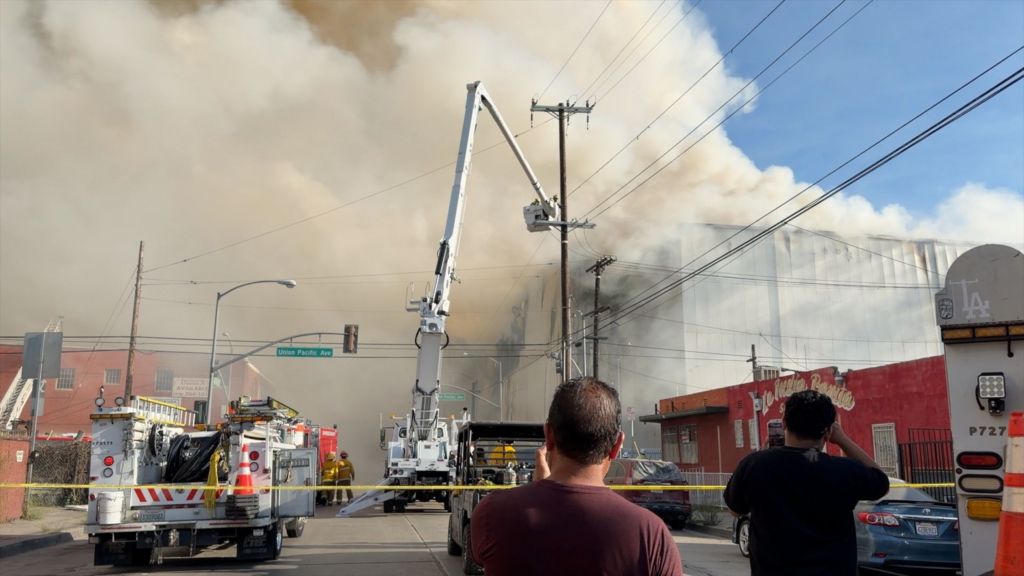
    A massive out-of-control blaze at a Los Angeles warehouse has continued to burn for an extended period, sending plumes of thick, toxic smoke billowing across the greater Los Angeles region and causing widespread disruption to air quality for thousands of local residents.

    The intensity of the fire and the public health risks it has created have moved local government officials to take urgent action, issuing an official declaration of a state of emergency to free up additional resources and response capabilities for firefighting crews and public health teams. As the blaze continues to rage, the smoke plume has drifted across multiple neighborhoods far from the ignition site, pushing air quality indices well into unhealthy ranges and prompting warnings for vulnerable residents, including children, elderly people, and those with pre-existing respiratory conditions, to remain indoors and limit outdoor activity. The declaration of emergency paves the way for accelerated resource allocation, including additional firefighting personnel, equipment, and public health outreach to address the ongoing crisis and mitigate the impacts on local communities.

  • World Cup 2026: Why some US hotels aren’t cashing in on the tourism surge

    World Cup 2026: Why some US hotels aren’t cashing in on the tourism surge

    The 2026 FIFA World Cup hosted across the United States has already made history with unprecedented fan enthusiasm: a staggering 500 million ticket requests have been submitted, and nearly 90% of all available match tickets have been sold. No other event in global soccer has ever seen this level of audience appetite, but the story of the tournament’s impact on the U.S. hospitality sector is far more nuanced than these record-breaking ticket numbers suggest. Across host cities from Houston to Atlanta to Seattle, hoteliers, economists and soccer fans alike are working to unpack a confusing trend of divergent performance that defies early projections.

    Industry reports and analyst data paint a divided picture of hotel demand across the 16 host cities. On one hand, some markets have seen explosive growth that aligns with or exceeds pre-tournament expectations. Global travel platform Trip.com reports that cross-border hotel bookings for World Cup dates are up nearly 70% compared to the same period last year. Dallas has emerged as a standout, with group stage hotel bookings surging more than 1,400% year-over-year, driven largely by a flood of international travelers from Japan and South Korea. New York City, meanwhile, has become the top destination for high-income fans, with luxury properties seeing particularly strong demand.

    Data from hospitality intelligence firm Kalibri Labs shows that average daily hotel rates across host cities are roughly 20% higher than 2025 levels, with the largest price gains concentrated in major gateway cities like New York and San Francisco. But occupancy growth has been far slower than many operators predicted. Travelers are overwhelmingly clustering in major urban centers that offer robust public transit, a wide range of dining options, and standalone tourist attractions beyond the match venues themselves. As a result, hotels are generating higher revenue per available room from individual bookings, rather than filling a drastically larger share of their inventory.

    “What we are seeing is not a demand problem. It is a decision-making problem,” explained Laura Lee Blake, president and CEO of the Asian American Hotel Owners Association (AAHOA), in an interview with Middle East Eye. Blake noted that modern fans are taking far more time to weigh costs, travel logistics, and entry requirements before locking in hotel reservations, a shift from previous World Cup cycles. “International travelers are certainly paying closer attention to border policies, visa processing times, and geopolitical developments than they did in previous World Cup cycles, those factors can create friction, particularly for travelers who have multiple destination options,” she added.

    New York City perfectly illustrates this industry divide. CoStar Group data shows the city holds the highest occupancy rate among all U.S. host cities at 57% for key match dates, with an average nightly room rate of $583. For some independent operators, the World Cup bump has already exceeded expectations. Nile Sony, president of the Manhattan View Hotel in Queens, told MEE that his property has been completely sold out on many match nights, with reservations booked as far back as a year in advance—a rarity for almost any major event. “I wouldn’t say a major boost. But yes, a lot of advance reservations. You don’t normally see reservations made one year in advance for any event,” Sony said.

    A large share of the industry uncertainty traces back to FIFA’s unexpected accommodation strategy. Three years ago, FIFA pre-reserved massive blocks of hotel rooms across all 16 host cities to accommodate teams, official sponsors, and tournament staff. Most hoteliers operated under the assumption that roughly half of these reserved rooms would be released back to the open market before the tournament began. Instead, FIFA ultimately released 95% of the pre-blocked rooms, only retaining accommodation for match days and the night before each fixture. This sudden flood of thousands of extra rooms hit the market at a time when international travelers were already booking later than usual, leaving operators scrambling to replace the guaranteed revenue they had planned for.

    This disruption has been worsened by a pullback in traditional business travel. Large corporate conferences and executive retreats have largely avoided World Cup host cities, opting to reschedule or relocate rather than compete with soccer fans for limited flights, hotel rooms, and restaurant capacity.

    Hospitality analysts note this uneven pattern is not unusual for mega-events like the World Cup or Olympic Games. Most large international tournaments are what industry insiders call “average daily rate events” rather than “occupancy events,” meaning the biggest financial gains come from higher per-room pricing rather than massive spikes in the number of rooms sold. “We have always said this is going to be a room rate event with larger room rate increases and some occupancy increases,” Jan D. Freitag, national director of hospitality analytics at CoStar, told MEE. “That was the prediction, and that’s what’s going to happen.” Freitag also added that slow early bookings for knockout rounds are to be expected, since matchups and participating teams remain unknown until the group stage concludes, making it impossible for fans to lock in travel plans early. Trip.com’s data bears this out, showing far slower booking growth for knockout stage matches than for the already-decided group stage fixtures.

    Beyond tournament-specific logistics, many hoteliers point to broader policy headwinds that are discouraging international inbound travel. A 2026 survey from the American Hotel and Lodging Association found that 65 to 70% of responding operators view visa barriers and ongoing geopolitical tensions as major drags on World Cup-related demand. Overall inbound tourism to the U.S. fell 5.4% in 2025, amid tighter immigration enforcement and expanded travel restrictions affecting dozens of nations. Industry leaders say increased public visibility of Immigration and Customs Enforcement operations, stricter border scrutiny, and more rigorous visa requirements have all contributed to a global perception that the U.S. is a less welcoming travel destination than it has been for previous major international events.

    These concerns are not limited to cities hosting matches. Even properties in non-host cities that expected spillover demand are seeing weaker results. Haseeb M., president of the Comfort Inn Chicago Schaumburg, which is located near a host city but not hosting matches itself, had projected a 4% revenue uptick from World Cup spillover. “We are now expecting the impact to be half of what was initially forecast,” he told MEE.

    The debate over World Cup hospitality performance extends far beyond hotel revenue. While large-scale sporting events do not always deliver the massive direct financial windfalls that hosts initially project, they remain high-impact opportunities to boost long-term tourism and shape a nation’s global brand. Against this backdrop, many industry figures worry that recent U.S. policy shifts will shape how international visitors perceive the country during one of the most-watched global events of the decade, with potential long-term consequences for future inbound travel.