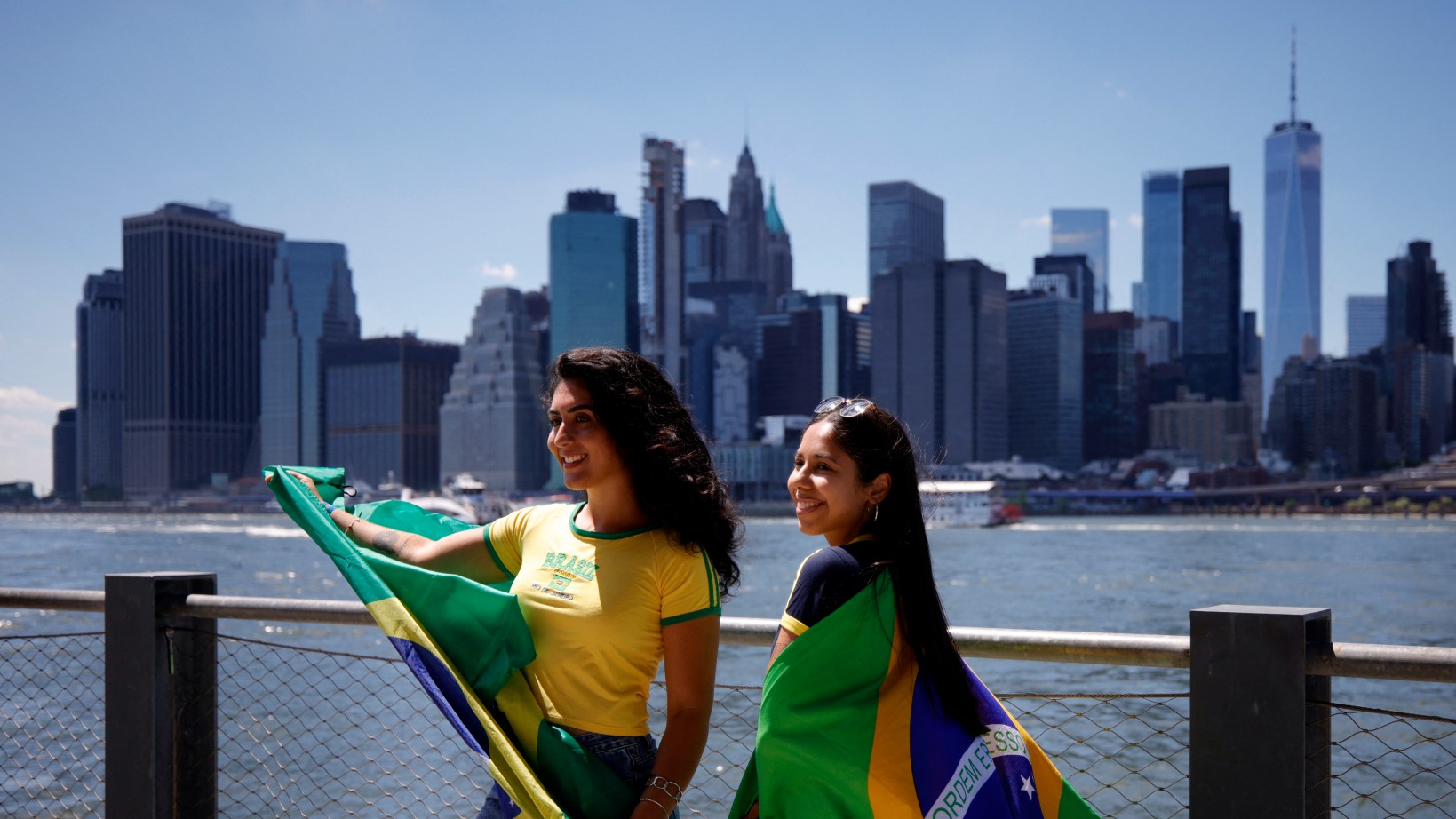
The 2026 FIFA World Cup hosted across the United States has already made history with unprecedented fan enthusiasm: a staggering 500 million ticket requests have been submitted, and nearly 90% of all available match tickets have been sold. No other event in global soccer has ever seen this level of audience appetite, but the story of the tournament’s impact on the U.S. hospitality sector is far more nuanced than these record-breaking ticket numbers suggest. Across host cities from Houston to Atlanta to Seattle, hoteliers, economists and soccer fans alike are working to unpack a confusing trend of divergent performance that defies early projections.
Industry reports and analyst data paint a divided picture of hotel demand across the 16 host cities. On one hand, some markets have seen explosive growth that aligns with or exceeds pre-tournament expectations. Global travel platform Trip.com reports that cross-border hotel bookings for World Cup dates are up nearly 70% compared to the same period last year. Dallas has emerged as a standout, with group stage hotel bookings surging more than 1,400% year-over-year, driven largely by a flood of international travelers from Japan and South Korea. New York City, meanwhile, has become the top destination for high-income fans, with luxury properties seeing particularly strong demand.
Data from hospitality intelligence firm Kalibri Labs shows that average daily hotel rates across host cities are roughly 20% higher than 2025 levels, with the largest price gains concentrated in major gateway cities like New York and San Francisco. But occupancy growth has been far slower than many operators predicted. Travelers are overwhelmingly clustering in major urban centers that offer robust public transit, a wide range of dining options, and standalone tourist attractions beyond the match venues themselves. As a result, hotels are generating higher revenue per available room from individual bookings, rather than filling a drastically larger share of their inventory.
“What we are seeing is not a demand problem. It is a decision-making problem,” explained Laura Lee Blake, president and CEO of the Asian American Hotel Owners Association (AAHOA), in an interview with Middle East Eye. Blake noted that modern fans are taking far more time to weigh costs, travel logistics, and entry requirements before locking in hotel reservations, a shift from previous World Cup cycles. “International travelers are certainly paying closer attention to border policies, visa processing times, and geopolitical developments than they did in previous World Cup cycles, those factors can create friction, particularly for travelers who have multiple destination options,” she added.
New York City perfectly illustrates this industry divide. CoStar Group data shows the city holds the highest occupancy rate among all U.S. host cities at 57% for key match dates, with an average nightly room rate of $583. For some independent operators, the World Cup bump has already exceeded expectations. Nile Sony, president of the Manhattan View Hotel in Queens, told MEE that his property has been completely sold out on many match nights, with reservations booked as far back as a year in advance—a rarity for almost any major event. “I wouldn’t say a major boost. But yes, a lot of advance reservations. You don’t normally see reservations made one year in advance for any event,” Sony said.
A large share of the industry uncertainty traces back to FIFA’s unexpected accommodation strategy. Three years ago, FIFA pre-reserved massive blocks of hotel rooms across all 16 host cities to accommodate teams, official sponsors, and tournament staff. Most hoteliers operated under the assumption that roughly half of these reserved rooms would be released back to the open market before the tournament began. Instead, FIFA ultimately released 95% of the pre-blocked rooms, only retaining accommodation for match days and the night before each fixture. This sudden flood of thousands of extra rooms hit the market at a time when international travelers were already booking later than usual, leaving operators scrambling to replace the guaranteed revenue they had planned for.
This disruption has been worsened by a pullback in traditional business travel. Large corporate conferences and executive retreats have largely avoided World Cup host cities, opting to reschedule or relocate rather than compete with soccer fans for limited flights, hotel rooms, and restaurant capacity.
Hospitality analysts note this uneven pattern is not unusual for mega-events like the World Cup or Olympic Games. Most large international tournaments are what industry insiders call “average daily rate events” rather than “occupancy events,” meaning the biggest financial gains come from higher per-room pricing rather than massive spikes in the number of rooms sold. “We have always said this is going to be a room rate event with larger room rate increases and some occupancy increases,” Jan D. Freitag, national director of hospitality analytics at CoStar, told MEE. “That was the prediction, and that’s what’s going to happen.” Freitag also added that slow early bookings for knockout rounds are to be expected, since matchups and participating teams remain unknown until the group stage concludes, making it impossible for fans to lock in travel plans early. Trip.com’s data bears this out, showing far slower booking growth for knockout stage matches than for the already-decided group stage fixtures.
Beyond tournament-specific logistics, many hoteliers point to broader policy headwinds that are discouraging international inbound travel. A 2026 survey from the American Hotel and Lodging Association found that 65 to 70% of responding operators view visa barriers and ongoing geopolitical tensions as major drags on World Cup-related demand. Overall inbound tourism to the U.S. fell 5.4% in 2025, amid tighter immigration enforcement and expanded travel restrictions affecting dozens of nations. Industry leaders say increased public visibility of Immigration and Customs Enforcement operations, stricter border scrutiny, and more rigorous visa requirements have all contributed to a global perception that the U.S. is a less welcoming travel destination than it has been for previous major international events.
These concerns are not limited to cities hosting matches. Even properties in non-host cities that expected spillover demand are seeing weaker results. Haseeb M., president of the Comfort Inn Chicago Schaumburg, which is located near a host city but not hosting matches itself, had projected a 4% revenue uptick from World Cup spillover. “We are now expecting the impact to be half of what was initially forecast,” he told MEE.
The debate over World Cup hospitality performance extends far beyond hotel revenue. While large-scale sporting events do not always deliver the massive direct financial windfalls that hosts initially project, they remain high-impact opportunities to boost long-term tourism and shape a nation’s global brand. Against this backdrop, many industry figures worry that recent U.S. policy shifts will shape how international visitors perceive the country during one of the most-watched global events of the decade, with potential long-term consequences for future inbound travel.