博客

  • National Portrait Gallery display withdrawn after Churchill row

    National Portrait Gallery display withdrawn after Churchill row

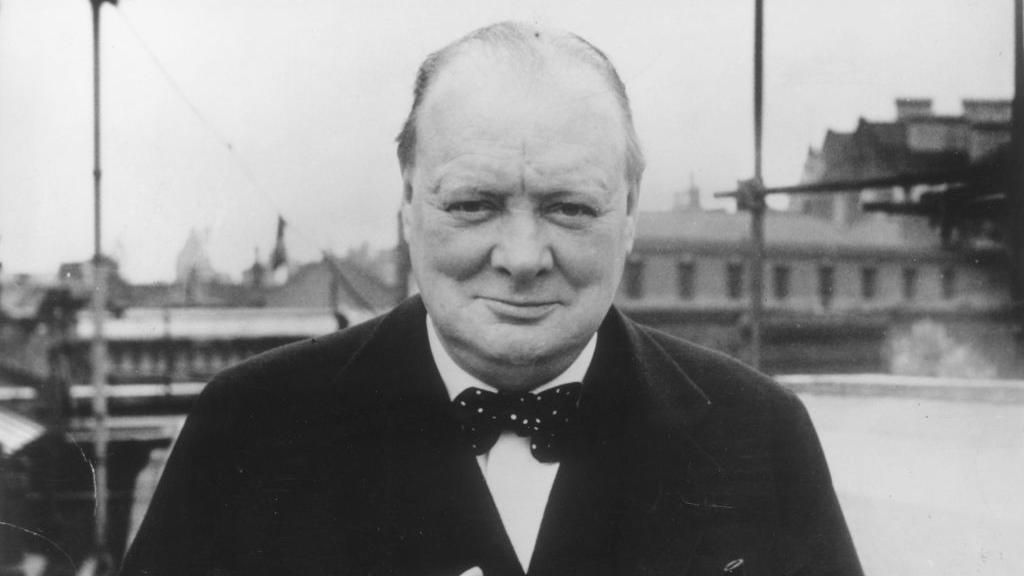
    A heated debate over former British Prime Minister Winston Churchill’s connection to the 1943 Bengal famine has led to the removal of a controversial video installation from London’s National Portrait Gallery, sparking new conversations about artistic freedom, historical interpretation, and institutional accountability.

    Created by Turner Prize-winning artist Helen Cammock, the 40-minute work titled *Persistence* was developed in partnership with the gallery beginning in 2023. Part of the temporary exhibition “Artists First: Contemporary Perspectives on Portraiture”, the piece had been on public display for 10 months and was scheduled to run through August. In her self-narrated installation, Cammock drew a parallel between Oliver Cromwell’s 17th-century mass starvation tactics during military campaigns in Ireland and what she described as “the wilful starvation of the Indian population by Winston Churchill” during the devastating 1943 famine.

    The artist’s framing quickly drew fierce pushback from prominent historical figures and politicians. Churchill biographer Lord Roberts of Belgravia organized an open letter to the gallery leadership, which gathered signatures from more than 50 members of the House of Lords — including Churchill’s own grandson, Sir Nicholas Soames. The letter argued that Cammock’s characterization of Churchill was factually incorrect, dismissing the claim as an “ideologically motivated rant”. Lord Roberts contended that the famine was primarily triggered by a devastating typhoon, and that Churchill had directed his war cabinet to deploy all available resources to support affected regions, even requesting emergency grain shipments from global allies. While this perspective is shared by some historians, other academics have long argued that wartime policy decisions made by Churchill’s government exacerbated the crisis. An estimated 3 million people died in the famine that struck eastern India, and Churchill’s exact role remains one of the most hotly contested topics in modern colonial history.

    Beyond the open letter, the gallery also received direct complaints from members of the public. Initially, the institution defended the work as a legitimate expression of the artist’s personal perspective, but the controversy gained sustained national media attention last week, ultimately leading to the work’s removal on Monday.

    In an official statement provided to BBC News, the National Portrait Gallery confirmed that Cammock had made the independent decision to withdraw her piece. “We respect her decision, just as we acknowledge the opinions of those who were offended by what was said in the film,” the gallery said. It emphasized that the exhibition framework was designed to center artists’ personal creative responses to the gallery’s permanent collection, noting “the work was presented as an artistic piece, not a documentary, and the views expressed in the film do not necessarily reflect those of the NPG.” The institution added that it remains committed to balancing respect for the historical legacies of figures in its collection with support for free artistic expression.

    Cammock, however, has pushed back against what she describes as overwhelming external pressure to censor challenging historical narratives. In her own statement released Monday, she said: “There is an incredible pressure on artists and arts institutions to bend to external pressure; to be benign at best and silent at worst. I do not accept this pressure. To question, challenge and explore ideas and histories is vital to a healthy society and art is intrinsic to this.”

    The artist added that her work was rooted in existing academic research on the famine, and that its core goal was to interrogate how society chooses to honor and memorialize historical figures. “It asks us to think about who is honoured and valorised and who is not; whose stories are told and whose are not,” she said. Echoing activist and artist Nina Simone, Cammock noted: “An artist’s duty, as far as I’m concerned, is to reflect the times, and sometimes this means revisiting, enquiry and challenge.”

  • Tesla crash that killed a woman under US federal investigation

    Tesla crash that killed a woman under US federal investigation

    The U.S. National Highway Traffic Safety Administration (NHTSA) has opened a formal special investigation into a fatal June 19 Tesla crash in Texas that left a 76-year-old woman dead after the vehicle plowed into her home, marking the latest high-stakes scrutiny of the electric vehicle maker’s controversial automated driving technology.

    According to local law enforcement accounts, the incident unfolded around 8 p.m. local time when the Tesla Model 3 driver failed to navigate a right turn at an intersection, departed the roadway, and struck the residential property at high speed. The driver was taken to a local hospital for treatment of injuries and has remained cooperative with authorities, while the woman inside the home was transported to a medical center where she later succumbed to her trauma.

    Local police have confirmed the driver showed no signs of intoxication, but has maintained that the vehicle was operating under Tesla’s full self-driving (FSD) assisted driving system at the time of the collision. Sgt. Alex Turman of the Harris County Sheriff’s Office noted that investigators are still working to pinpoint the exact cause of the crash, with the driver’s claim about automated system engagement a key line of inquiry.

    A NHTSA spokesperson confirmed the launch of the agency’s special crash investigation, the most rigorous, data-driven inquiry the regulator conducts, separate from the ongoing local law enforcement probe. Per NHTSA’s official protocols, these deep dives typically focus on emerging vehicle technologies, with the goal of collecting granular crash data that can inform broader automotive safety improvements. While the investigation does not carry immediate punitive action against Tesla, it can ultimately result in formal safety recalls or other regulatory measures.

    This latest probe comes amid growing bipartisan and regulatory pressure over Tesla’s FSD technology, which the company has marketed as an advanced automated driving system. Critics have long argued that Tesla’s branding of the product is misleading, overstating the system’s capabilities and leaving drivers underprepared to intervene when the technology fails. Earlier this 2026, NHTSA already expanded an existing investigation into FSD over documented performance issues in wet and inclement weather. Just last week, two top Democratic U.S. senators, Edward Markey and Richard Blumenthal, sent a formal letter to NHTSA demanding a sweeping safety probe of FSD, arguing that Tesla’s claims that the technology is safer than human driving rely on flawed, misleading data analysis that skews results by comparing dissimilar crash outcomes and drawing on incomplete datasets. The pair also called for stricter reporting requirements for all automakers developing and deploying automated driving systems.

    Tesla, led by billionaire CEO Elon Musk, has not issued any public statement on the Texas crash or the new NHTSA investigation, and did not respond to requests for comment. This latest incident comes as automated vehicle developers across the industry face growing regulatory scrutiny over safety: just weeks ago, Waymo, the autonomous vehicle unit owned by Google, recalled thousands of its vehicles operating in Texas over a flaw that prevented the system from properly identifying and avoiding flooded roadways.

  • Watch: ‘I wish him well’ – Trump reacts to Starmer’s resignation

    Watch: ‘I wish him well’ – Trump reacts to Starmer’s resignation

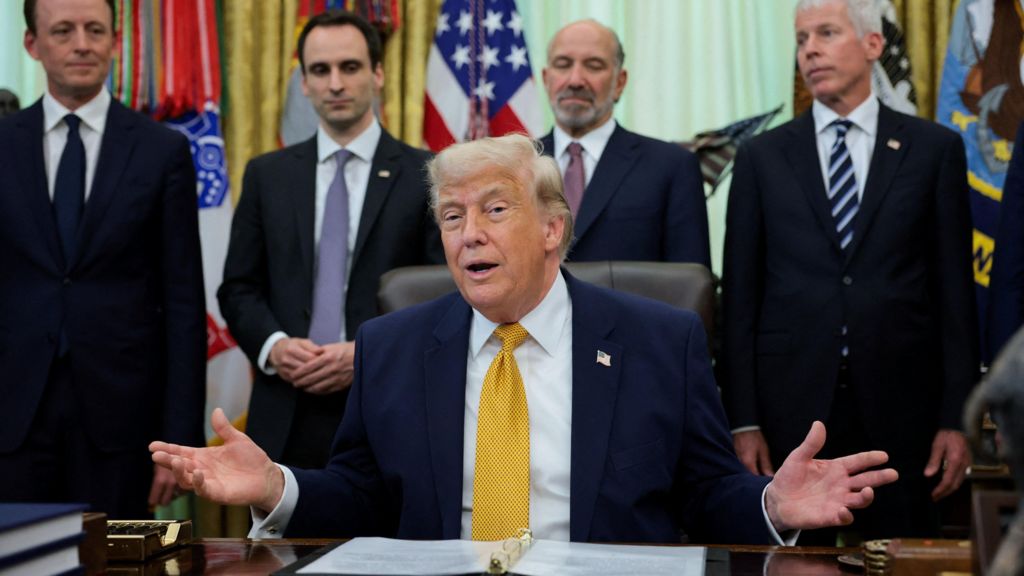
    In a recent public comment that has drawn cross-Atlantic attention, former United States President Donald Trump has broken his silence on the resignation of UK Prime Minister Keir Starmer, offering a measured well-wish alongside sharp criticism of the British government’s core policy approaches.

    While opening his remarks by extending a basic gesture of goodwill, stating clearly “I wish him well”, Trump did not hold back from assessing the political fallout that led to Starmer’s departure from office. The former US commander-in-chief specifically called out the United Kingdom’s policy frameworks on two contentious domestic issues: energy development and immigration control.

    In his assessment, Trump argued that the policy choices made by Starmer’s premiership on these two critical files have directly undermined his political standing, ultimately contributing to the circumstances that forced his resignation. The unsolicited commentary from a former (and current presumptive Republican presidential nominee) US leader on UK domestic political upheaval has sparked new discussion about the intersection of trans-Atlantic political perspectives and the ongoing policy debates that are shaping electoral and leadership outcomes across Western nations. Energy costs and immigration have remained deeply divisive issues in UK politics for years, with voters consistently ranking them as top priorities ahead of any national elections, making Trump’s critique a notable intervention into an already fraught political landscape.

  • Key dates in the history of the Titanic and the battles over its final resting place

    Key dates in the history of the Titanic and the battles over its final resting place

    More than 114 years after the world’s most famous maritime disaster sent the RMS Titanic to the bottom of the Atlantic Ocean, the wreck and the artifacts pulled from its site remain at the center of a heated new legal battle, as the United States government moves to block a planned auction of dozens of salvaged items. The long, fraught history of the Titanic has been marked by tragedy, discovery, and decades of debate over how to honor the more than 1,500 lives lost, while balancing commercial and historical interests.

    The story of the Titanic began in early 1912, after two years of ambitious construction that billed the vessel as ‘unsinkable.’ On April 10 of that year, the ocean liner departed Southampton, England, making brief stops in France and Ireland before setting out across the Atlantic for New York City, carrying roughly 2,200 passengers and crew aboard. Just four days into the voyage, despite multiple repeated warnings of ice fields in the region, the Titanic struck an iceberg off the coast of Newfoundland, Canada, shortly before midnight on April 14. Within hours, by the early morning of April 15, the once-unsinkable ship had fractured and slipped 3.7 kilometers (2.3 miles) down to the ocean floor, leaving only around 700 survivors and claiming the lives of approximately 1,500 people.

    For more than seven decades, the exact location of the Titanic’s wreckage remained a mystery, until a joint team of French and American researchers finally located the vessel’s final resting place on September 1, 1985. Their discovery confirmed long-held speculation that the ship had split into two large pieces before sinking. The following year, in July 1986, a crew of researchers became the first people to directly observe the wreck since its sinking, using a manned submersible to complete 11 dives that captured thousands of photos and hours of video footage of the site, leaving all artifacts undisturbed. Just three months later, the U.S. government passed legislation to set formal guidelines for future expeditions and protect the wreck, but the law lacked the enforcement power to halt private salvage trips or the removal of artifacts from the site.

    The first artifacts were pulled from the wreck in 1987, when American firm Titanic Ventures partnered with a French research institute to recover passenger dishes and more than 1,800 total items in the months that followed. At the time, the group made a public promise not to sell the collection and to keep all recovered items intact as a single curated holdings. In May 1993, Titanic Ventures sold its salvage rights to RMS Titanic Inc., which launched a new expedition just one month later that pulled 800 additional artifacts from the wreck, ranging from personal passenger belongings like a pocket watch and leather suitcases to ship fixtures, decorative items, and unexpected finds including a complete set of bagpipes and original sheet music.

    Legal battles over control of the wreck and its artifacts began shortly after, when a U.S. federal court granted RMS Titanic Inc. exclusive salvage rights to the site in 1994, though the ruling stopped short of naming the company as the legal owner of the recovered items. Five years later, a federal appeals court further weakened the company’s exclusive claim, ruling it could not block other firms from visiting or photographing the wreck site. In 2000, the largest ever collection of Titanic artifacts opened to the public in Chicago, though the exhibition drew sharp criticism from multiple cultural institutions that argued retrieving artifacts from the wreck amounted to unethical archaeological plundering of a maritime grave site.

    A 2011 federal court ruling granted RMS Titanic Inc. formal ownership of more than 1,000 artifacts recovered between 1993 and 2004, with one critical binding condition: the entire collection had to remain intact, and no individual items could be sold separately. In 2017, the U.S. ratified an international treaty protecting the Titanic wreck, requiring any individual or organization under U.S. jurisdiction to secure formal approval from the National Oceanic and Atmospheric Administration (NOAA) before conducting any salvage or research activity that would disturb the site.

    The modern chapter of the Titanic’s story opened with a second devastating tragedy in June 2023, when the experimental submersible Titan imploded during a descent to the wreck, killing all five people on board. One of the victims was Paul-Henri Nargeolet, a veteran French underwater explorer who served as director of underwater research for RMS Titanic Inc. Just two months after the implosion, the U.S. government launched legal action to block the company from a planned salvage expedition to retrieve additional historically significant items from the wreck, citing the 1986 federal law and the 2017 international protection treaty.

    In July 2024, RMS Titanic Inc. carried out its first expedition to the wreck site since 2010, focused on documenting the deteriorating wreck and surveying remaining artifacts, no salvage work was conducted. By January 2025, the U.S. government dropped its 2023 legal challenge, confirming the company no longer planned dives that would violate federal protections. The peace was short lived: in March 2026, RMS Titanic Inc. revealed in court filings a proposal to auction 100 separate lots of artifacts first pulled from the wreck in 1987, with plans for a global public tour of the items ahead of the sale. Details of the proposed auction remain sealed under a court order, but in June 2026, a judge ordered the documents unsealed, making public the fact that both the U.S. government and NOAA are formally opposing the proposed sale, reigniting a century-long debate over the future of the Titanic’s legacy.

  • Montreal shooting leaves officer, civilian and suspect dead

    Montreal shooting leaves officer, civilian and suspect dead

    A horrific daytime shooting in Montreal’s most populous neighborhood has left two people dead — including a serving police officer — and sent shockwaves through the Canadian city, marking the first on-duty killing of a Montreal police officer in nearly 25 years. The violence, which unfolded shortly after 11:30 a.m. EST on Monday, also left a second officer wounded and triggered a citywide emergency alert that disrupted major transportation links for hours.

    Montreal Police Chief Fady Dagher confirmed to reporters that the male suspect, who authorities believe acted alone, was shot and killed immediately by responding officers after the attack. The incident took root in Côte-des-Neiges, a busy central district with a longstanding large Jewish community, when a local witness spotted the barrel of a gun protruding from a residential building window, heard repeated gunfire, and placed an urgent call to emergency services.

    Speaking through visible emotion at an official press briefing hours after the shooting, Dagher described the event as an unfathomable tragedy for the force and the city. “It’s a nightmare,” he told assembled reporters, noting that the fallen officer — whose identity has not yet been released to the public — is the first Montreal police member to die in the line of duty since 1999, a 24-year gap that makes the loss even more staggering for the department.

    The injured officer was quickly transported to a local hospital for treatment; as of the initial official update, no further details on their condition have been released. In addition to the officer and the suspect, an unidentified civilian also lost their life in the shooting, a detail confirmed by early law enforcement briefs.

    Authorities quickly moved to secure the area and warn local residents, shutting down traffic on a nearby busy motorway and suspending service on the local Montreal Metro line to prevent civilian exposure to risk. Just after 12:30 p.m. EST, the provincial government of Quebec issued a public emergency alert, notifying residents across the region that an armed suspect was at large. The alert was formally lifted shortly after 3 p.m. EST, once Dagher confirmed the suspect had been neutralized.

    Initial investigative findings indicate the suspect used a long-range firearm in the attack, though Quebec’s Domestic Security Minister Ian Lafrenière confirmed that investigators have not yet established a clear motive for the violence. “For now, we don’t really know what the motive of this individual was,” Lafrenière told reporters.

    Local and provincial political leaders have quickly offered condolences to the families of the victims and condemnation of the attack. Montreal Mayor Soraya Martinez Ferrada shared her sympathies in a social media post, writing, “My deepest condolences to the family, friends, and colleagues of the police officer who died in the line of duty.” Quebec Premier Christine Fréchette echoed those condolences, adding in her own social media statement that “such acts have no place here.”

  • ‘Devotion is everything’: Breaking Bad star Giancarlo Esposito converts to Islam

    ‘Devotion is everything’: Breaking Bad star Giancarlo Esposito converts to Islam

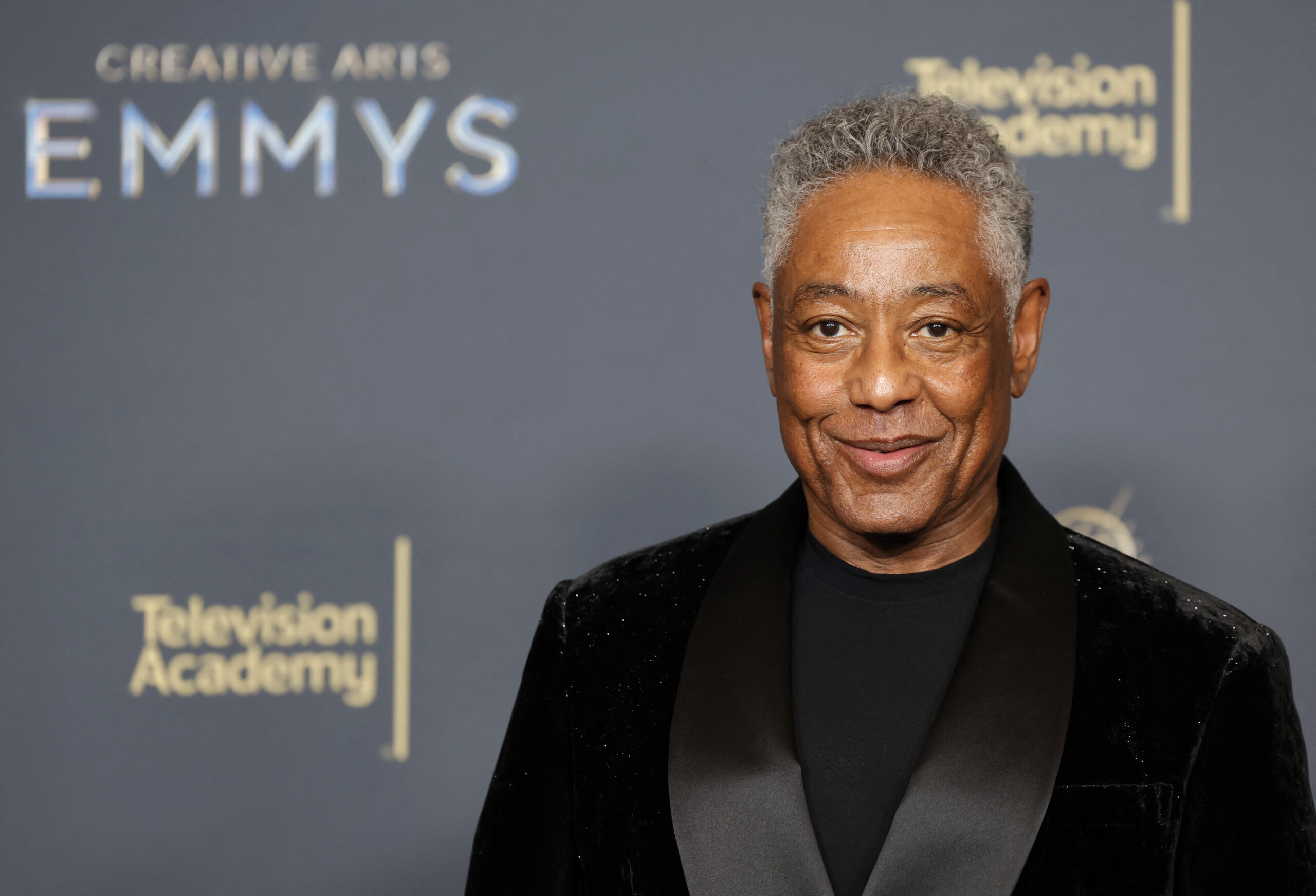
    Hollywood star Giancarlo Esposito, best known for his iconic Emmy-nominated turn as calculating drug kingpin Gus Fring in *Breaking Bad*, has become the center of a viral global conversation after unconfirmed reports emerged that he has converted to Islam, sparked by his recent public remarks and on-site activities during a film tour in Morocco.

    The 66-year-old multihyphenate — who counts acting, directing and producing among his credits — traveled to the North African kingdom this June to promote *7 Dogs*, a Saudi-backed Arabic-language action thriller in which he portrays Roman, a shadowy antiquities trafficker with deep ties to the elite ranks of the eponymous criminal syndicate.

    While walking the red carpet for the film’s premiere, Esposito made striking remarks that quickly drew attention: “In your country, Muhammad is everything. For me, it’s the same.” In a subsequent interview with Radio Abraham, filmed while Esposito held what appeared to be Islamic prayer beads, he expanded on his comments, describing Moroccans as “a mirror” for himself. He praised the community’s open devotion, noting their shared understanding “that there is one God, one Allah,” and added that his time in the country allowed him to “see the truth.”

    Days after the premiere, Saudi Arabia’s General Entertainment Authority chairman Turki Alalshikh shared a video on the platform X that pushed the story into viral territory. The footage captures Esposito leading a prayer alongside his *7 Dogs* production colleagues inside Casablanca’s iconic Hassan II Mosque. Alalshikh’s accompanying caption claimed Esposito made the decision to embrace Islam during months of filming *7 Dogs* on location in Saudi Arabia. As of press time, the post has racked up more than 13 million views.

    In a pre-video interview with *Lalla Fatema* magazine at the Casablanca premiere, Esposito himself had already confirmed that his first stop after arriving in Morocco was the Hassan II Mosque, where he said he stopped to pray. To date, the acclaimed actor has not issued an official, personal confirmation of the conversion reports. Multiple requests for comment from Middle East Eye went unanswered ahead of publication.

    Even without an official statement, the news has exploded across social media, with overwhelmingly positive reactions pouring in, particularly from Arabic-speaking users around the world. Dozens of posts across X and Instagram have welcomed Esposito to the Islamic faith, with many users calling the announcement one of the most pleasant and surprising pieces of entertainment news in recent memory. One user wrote on X: “By God, this is the best news of the day. Esposito converted to Islam and pronounced the testimony of faith, may God make him steadfast.” Another commented: “One of the most shocking and heartwarming news stories at the same time. Uncle Gustavo Fring from *Breaking Bad* and *Better Call Saul* embraces Islam. Praise be to God, that God guides whom He wills.”

    Alongside sincere messages of welcome, many social media users have leaned into humor, creating lighthearted memes that tie Esposito’s reported conversion to his most famous on-screen roles. One viral X post edited a classic promotional photo of Esposito standing next to the sign for Gus Fring’s fictional fried chicken restaurant Los Pollos Hermanos, replacing the original logo with that of beloved Saudi fried chicken chain Albaik. On Reddit, users joked: “Los Pollos will now be serving halal chicken.” The playful content has only amplified the story’s reach, turning a celebrity religion story into a global viral conversation.

  • Dongfang Electric hosts Open Day events in Uzbekistan

    Dongfang Electric hosts Open Day events in Uzbekistan

    Between June 16 and 17, 2026, China’s Dongfang Electric Corporation (DEC) organized a comprehensive series of Open Day initiatives across multiple locations in Uzbekistan, combining cultural exchange, clean energy outreach, and bilateral partnership building to strengthen long-standing ties between the two nations.

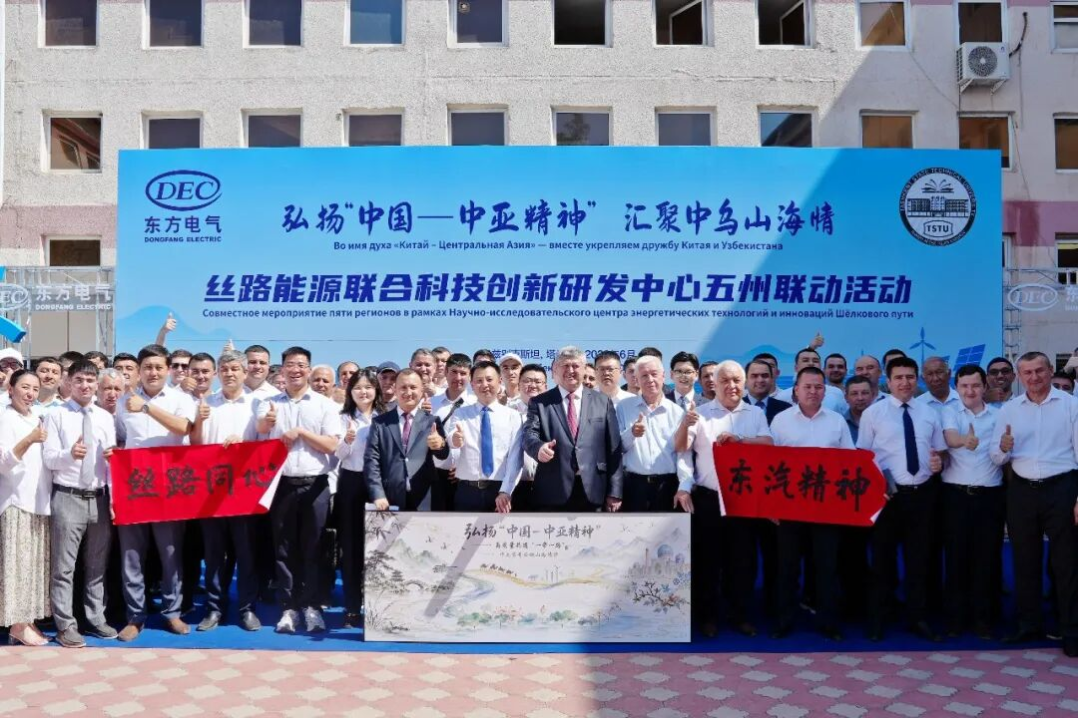
    The flagship event in Tashkent drew over 350 attendees, spanning delegates from Chinese state-owned enterprises operating in Uzbekistan, academic staff and students from Tashkent State Technical University, and correspondents from the country’s leading local media outlets. The gathering featured two core components: an exhibition showcasing DEC’s decades of progress in advancing high-quality collaboration under the Belt and Road Initiative, and a dedicated interactive zone for visitors to experience traditional Chinese culture firsthand.

    Attendees participated in hands-on activities ranging from trying Chinese calligraphy to co-creating a large thematic painting titled “China-Uzbekistan Friendship across Mountains and Seas,” and sampled specialty Liangshan buckwheat tea, gaining direct exposure to the unique charm of China’s cultural heritage.

    Parallel to the central Tashkent event, DEC hosted tailored Open Day programming at its active project sites across four Uzbek regions: Qashqadaryo, Samarkand, Surxondaryo and Jizzakh. Standout activities at these regional sites included the official unveiling of the Central Asian Tortoise Nature Reserve, the donation of clean energy equipment models to local educational institutions, live demonstrations of DEC’s AI-powered operational robots, and cultural sharing sessions explaining the traditions and history of China’s Dragon Boat Festival. These on-site events were explicitly designed to boost local public understanding of zero-emission energy technologies and highlight the far-reaching benefits of global sustainable development cooperation.

    In recent years, China-Uzbekistan bilateral cooperation has expanded steadily across key sectors including energy infrastructure construction, clean energy development, technological innovation, and cross-border talent cultivation. Upholding the shared “China–Central Asia Spirit” that guides partnership between Beijing and Central Asian nations, DEC has emerged as a key contributor to Uzbekistan’s goal of maintaining a stable, reliable energy supply while driving inclusive economic and social growth. As of the event, DEC has delivered power generation equipment with a combined total installed capacity of 1.1 gigawatts to Uzbekistan, supporting the country’s fast-growing portfolio of solar power, hydropower, and grid-scale energy storage projects that underpin its transition to a low-carbon economy.

  • From ‘The Lion’ to ‘The Tiger’: Conservative Trump allies gain ground in Latin America

    From ‘The Lion’ to ‘The Tiger’: Conservative Trump allies gain ground in Latin America

    Across Latin America, a sharp political realignment toward conservative leadership has accelerated in recent years, with a Trump-endorsed outsider now on the cusp of winning Colombia’s top office to become the latest addition to the region’s new conservative wave. As of Monday, with nearly all ballots counted, Abelardo de la Espriella — a lawyer and business owner nicknamed “The Tiger” — held a roughly 1 percentage point lead, equivalent to 251,000 votes, over his progressive rival Iván Cepeda. While official results have not yet been formalized and Cepeda has launched a challenge to the outcome, independent analysts widely agree the review is unlikely to overturn de la Espriella’s lead.

    De la Espriella built his campaign around a hardline public safety platform, echoing the tough-on-crime agenda that has propelled many recent conservative wins across the region. Key pledges include scrapping ongoing peace negotiations with remaining Colombian rebel factions and constructing large-scale mega-prisons modeled after the controversial facilities built in El Salvador to mass-incarcerate gang members. His campaign received a high-profile endorsement from former U.S. President Donald Trump, who framed de la Espriella as the only candidate capable of reestablishing widespread law and order across Colombia.

    De la Espriella’s projected victory fits into a clear pattern of conservative and right-wing candidates securing presidential power across Latin America over the past two years:

    ### Argentina: Libertarian Conservative Milei Cuts Inflation Amid Austerity Backlash
    In November 2023, Argentine voters elected Javier Milei, a libertarian economist and media commentator nicknamed “The Lion,” on a promise to dismantle decades of state-led economic policy and tame the country’s crippling hyperinflation. Milei defeated the long-dominant Peronist progressive movement, and immediately enacted sweeping austerity measures after taking office: he halted central bank money printing to finance government deficits, cut thousands of civil service positions, paused public infrastructure investment, and rolled back subsidies for household utility costs. The policies have delivered on their core inflation goal, cutting annual price growth from 211% in 2023 to 32% in 2025, but have drawn widespread criticism for eroding living standards for working-class and public sector Argentines.

    ### Ecuador: Pro-Military Conservative Noboa Retains Power Amid Security Criticism
    In April 2025, Ecuadoran voters handed incumbent conservative Daniel Noboa, heir to one of the country’s wealthiest business families, a full four-year term, with the candidate securing 56% of the vote. Noboa has centered his tenure on expanding the military’s role in combating powerful drug gangs that have seized control of coastal port cities and trafficking routes. While the policy has been popular with security-focused voters, it has failed to deliver a meaningful reduction in national homicide rates, and has drawn international condemnation over documented human rights abuses including extrajudicial killings of suspected gang members. Noboa has deepened security cooperation with the U.S., launching joint anti-trafficking military operations, though his push to reopen a permanent U.S. military base on Ecuadoran territory was rejected by voters in a 2024 referendum.

    ### Honduras: National Party Conservative Asfura Narrowly Wins With U.S. Backing
    Nasry Asfura, a real estate developer and former mayor representing Honduras’ center-right National Party, claimed a narrow presidential win in 2024, beating his closest challenger by less than 1 percentage point. Asfura’s party includes former Honduran President Juan Orlando Hernández, who was convicted of drug trafficking charges in the U.S. before receiving a presidential pardon from Donald Trump. Trump openly endorsed Asfura’s campaign, threatening to cut U.S. aid to the small Central American nation if Asfura was not elected. Since taking office in early 2025, Asfura’s government has honored a new deportation agreement with the U.S., accepting dozens of deportees originally from third countries (most predominantly Guatemala) that were expelled from the U.S.

    ### Chile: Conservative Kast Unseats Progressive Government With Hardline Immigration Stance
    In December 2024, devout Catholic conservative José Antonio Kast defeated Chile’s sitting progressive government, winning 58% of the vote to claim the presidency. Kast campaigned on widespread public anxiety over rising crime, and centered his platform on hardline restrictions on irregular migration, promising to expel undocumented migrants from Venezuela and Haiti. One of his first policy actions after taking office was expanding a fortified trench along Chile’s northern borders with Peru and Bolivia, a measure the government says will curb cross-border drug trafficking and unauthorized migration. Kast’s administration has since faced large-scale public protests over rising unemployment and sweeping budget cuts that have reduced pay and services for public sector workers.

    ### Costa Rica: Tough-On-Crime Conservative Fernández Secures Outright Win
    In February 2025, Laura Fernández — a former economy minister under outgoing conservative President Rodrigo Chaves — won Costa Rica’s presidential election outright, avoiding a runoff by securing 48% of the vote, 15 points ahead of her closest rival, and clearing the 40% vote threshold needed to skip a second round. Like de la Espriella in Colombia, Fernández ran on a hardline public safety platform, proposing a national state of exception that would allow police to arrest suspects without warrants, and planning to build a mega-prison modeled after El Salvador’s maximum-security CECOT facility. Fernández has also upheld a deportation agreement signed by her predecessor with the U.S., accepting multiple flights of third-country deportees, including a June 2025 flight carrying migrants from China, Vietnam, Colombia and Azerbaijan.

  • Ben Gvir says Lebanon should be ‘Israel’s playground’, urges Netanyahu to defy Trump

    Ben Gvir says Lebanon should be ‘Israel’s playground’, urges Netanyahu to defy Trump

    In a provocative address that upends ongoing regional ceasefire efforts, far-right Israeli National Security Minister Itamar Ben Gvir publicly ruled out any potential truce with Lebanon on Monday, doubling down on extreme rhetoric that frames the entire country as a legitimate military target for Israeli forces.

    Speaking at the weekly faction meeting of his ultranationalist Otzma Yehudit party held in Israel’s parliament, the Knesset, Ben Gvir issued a direct demand to Israeli Prime Minister Benjamin Netanyahu: formally reject any negotiated peace agreement with Lebanon in upcoming talks with U.S. President Donald Trump. He argued that Washington would understand the hardline position, drawing a inflammatory comparison to how the United States would never accept hostile armed groups operating along its borders.

    “You wouldn’t tolerate having Nazis on your border. You wouldn’t tolerate your soldiers being attacked and being limited in terms of the response. Our response must be 100 percent,” Ben Gvir stated. “I want to say thank you to the Americans, but our red line is harming soldiers and harming civilians.”

    Going further, the minister issued an explicit threat to the Lebanese capital Beirut, warning it could suffer the same near-total destruction that the Gaza town of Beit Hanoun has endured amid Israel’s ongoing military campaign in the besieged Palestinian enclave. “The equation must be very simple and clear: the State of Israel must be safe. If Israel is not safe, Beirut will look like Beit Hanoun,” he said.

    In subsequent comments carried on Israel’s Channel 14 and shared widely on social media by the Quds News Network, Ben Gvir doubled down on his radical stance, rejecting the distinction between targeting Hezbollah and launching attacks across the entirety of Lebanon. “Lebanon, all of Lebanon, should become our playground. All of Lebanon should be our target,” he declared, justifying the blanket targeting by noting that Hezbollah operatives hold positions within Lebanon’s national government.

    The minister also reiterated dehumanizing comments he made over the weekend, arguing that no hardship for Lebanese civilians should stand in the way of Israeli military goals. “Not a single tear from an Israeli mother can be tolerated. Even if there are tears from a thousand Lebanese mothers, we need to keep going,” he said.

    Ben Gvir’s hardline rejection of a ceasefire comes as escalating Israeli military activity across Lebanon creates major friction in international diplomacy. Spiking Israeli air strikes and expanding ground deployments in southern and eastern Lebanon have already derailed ongoing ceasefire talks between the United States and Iran, negotiations that were being brokered by third-party mediators including Pakistan and Qatar. The situation on the Lebanon frontier has emerged as a major point of disagreement between the Trump administration and the Israeli government, with Washington and other G7 nations repeatedly calling for Israel to withdraw its forces from southern Lebanon—calls that have been consistently rejected by Israeli leadership.

    For its part, Hezbollah has demanded the Lebanese government refuse any direct negotiations with Israel as long as Israeli attacks on Lebanese territory continue. Despite this, Lebanon’s national government has publicly expressed hope that a U.S.-Iran deal could bring an end to the ongoing hostilities that have devastated large swathes of the country.

    According to Lebanon’s Ministry of Health, Israeli military strikes across Lebanon launched since March 2 have killed at least 3,798 people and wounded an additional 11,781, leaving a growing humanitarian crisis in the conflict zone.

  • Messi becomes World Cup all-time leading scorer – how has he stayed at the top?

    Messi becomes World Cup all-time leading scorer – how has he stayed at the top?

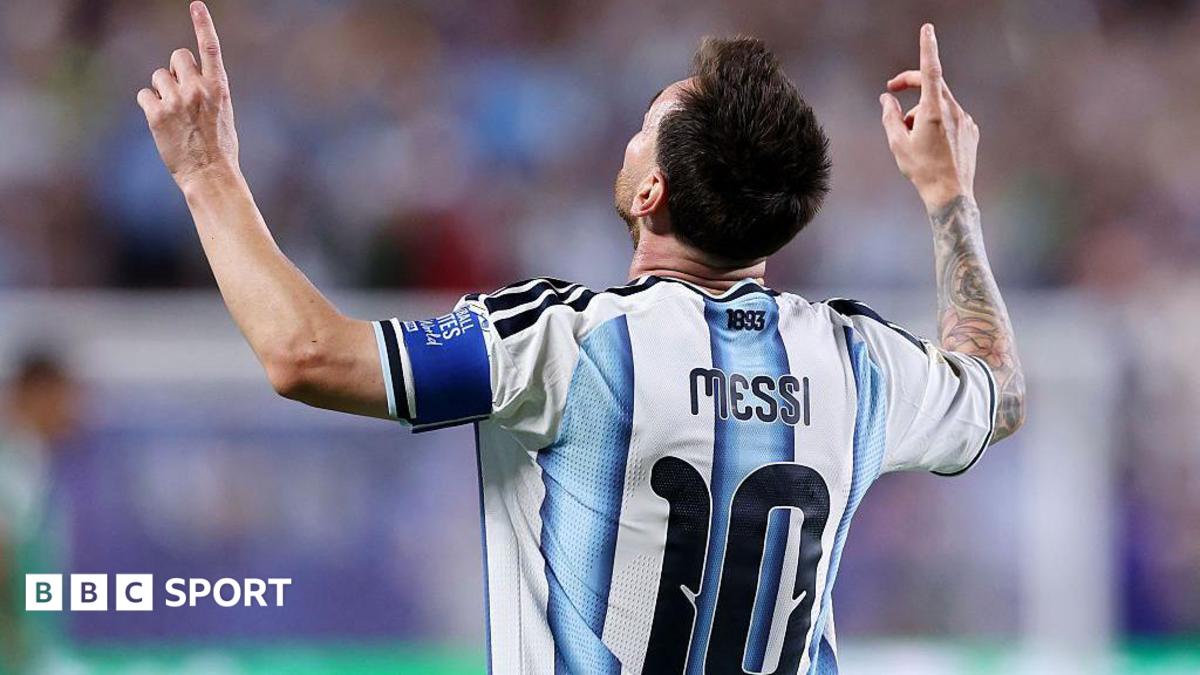
    At the 2026 FIFA World Cup, 38-year-old Lionel Messi delivered another legendary performance that cemented his status as one of the greatest players to ever step onto a football pitch. During Argentina’s second group stage match against Austria, the Argentine captain bagged a brace that secured a 2-0 win for the defending champions, booked their spot in the tournament’s last 32, and broke a record that has stood for more than a decade.

    Messi’s opening goal of the match – a signature left-footed curler into the top corner – was his 17th World Cup goal, moving him one ahead of former German striker Miroslav Klose’s previous all-time record of 16. He would add an 18th from a tight angle, slipping past two defenders to finish clinically. This incredible run of form sees the Inter Miami forward enter uncharted territory: he has now scored in six consecutive World Cup matches, a feat matched only by Just Fontaine (1958, France) and Jairzinho (1970, Brazil) – no player in history has ever scored in seven straight World Cup fixtures.

    The 38-year-old’s scintillating start to the tournament also puts him in pole position for the Golden Boot, the only major individual World Cup prize he has never claimed. He already notched a hat-trick in Argentina’s opening match, and with one final group game against Jordan still to play, he has ample opportunity to extend his lead. Beyond scoring, Messi also continues to rewrite World Cup playmaking records: according to Opta statistics, he is just one assist away from breaking the all-time assist record that dates back to 1966, currently shared with his compatriot and idol Diego Maradona.

    The question on every football fan’s mind is: how does a player of Messi’s age, who has already won every possible trophy in the sport, and has played in Major League Soccer for three years heading into this tournament, continue to deliver dominant performances on the game’s biggest stage?

    Messi’s late-career dominance is not without precedent. Back in 2018, a 31-year-old Messi and Argentina were knocked out of the World Cup by eventual champions France in a iconic seven-goal thriller, leading many to assume his World Cup story was drawing to a close. Four years later, he silenced the doubters by captaining Argentina to a third World Cup title in Qatar, scoring seven times along the way. Now, another four years on, he continues to break new ground.

    French veteran Olivier Giroud, who won the 2018 World Cup alongside the team that knocked out Argentina and is still playing top-flight Ligue 1 football at 39, said Messi’s longevity comes from his internal drive rather than a need to outperform younger stars. “It’s clear just how passionate Messi still is for football and you can tell it’s in his DNA to always be a competitor, to try and outdo himself more than anyone else,” Giroud explained. “Playing at a high level at our age, you have to pay close attention to your life hygiene – how you sleep, your diet, and taking care of your body, because that’s the thing you rely on for work. The key thing is still having the desire, the motivation, the passion, to keep going.”

    Messi is far from the only elite sports star to maintain elite form into his late 30s – men’s tennis great Novak Djokovic is one of the most prominent recent examples. But sports psychologist Michael Caulfield, who has worked in professional football for more than 20 years, says this level of longevity relies on a rare combination of cutting-edge physical preparation and unmatched mental discipline.

    “Players know themselves inside out by that age, so there’s not a lot left to teach them about how to manage as they get older,” Caulfield explained. “From a physical point of view, they take advantage of every breakthrough in sports science. But mentally, it’s about whether they have the capacity in their minds to deal with the daily grind. They have to be willing to spend the whole year working hard on the same things, and if you’ve been doing that for 25 years, that takes huge self-discipline. They have to maintain the sheer will to go through the rehab process after injuries when they know they’ve already won everything. All the top athletes I’ve ever known, they’re all willing to try and go back one more time, because they love doing what they do. It’s the same reason you still see Bruce Springsteen or Madonna touring – it is completely intrinsic to who these stars are.”

    Former England and Manchester United striker Wayne Rooney, who faced Messi in two Champions League finals that the Argentine won, says Messi’s unrivaled technical ability has allowed him to offset any natural age-related decline in athleticism. “Coming into this World Cup, I pretty much wrote Argentina’s chances off because I didn’t think he could carry on [at that level] for another one,” Rooney admitted. “The one thing age can never take away from players is their ability with the ball. You put him around the penalty box and he has the ability to do things others can’t. It’ll be interesting to see whether it can last the rest of the tournament. [If it does] then it wouldn’t surprise me if we see him in the next World Cup for Argentina as well.”

    While Messi is generally known as a reserved and humble figure off the pitch, his former Barcelona teammate Cesc Fabregas says that competitiveness comes to the fore the second he steps onto the pitch. “When he crosses the white line, he is a very different person,” Fabregas said in the BBC iPlayer documentary *Rivals: Messi vs Ronaldo*. “He wants to win at any cost.”

    That relentless competitiveness, paired with a childlike love for the game, is what keeps him going even after he has achieved every possible honor in football. “Athletes always think there’s something left to achieve,” Caulfield says. “They’re wondering if there is something they haven’t quite mastered yet. But more than anything they want to keep feeling that childlike joy of doing what they love. You see Messi still doing keepy-ups or a rondo, and he still loves football like a little boy.”

    Messi’s record-breaking performance also draws an interesting contrast with his long-time rival Cristiano Ronaldo, who is making his sixth World Cup appearance with Portugal at 41. The veteran made little impact in Portugal’s opening draw with DR Congo, and Rooney says Messi’s historic display will not have escaped Ronaldo’s attention. “Ronaldo will have been fuming,” Rooney said. “Even at 41 he will still be expecting to be top goalscorer. But that attitude is part of his own greatness. The two of them have spurred each other on. They have this self-belief and arrogance, in a good way, where they know what they have done, have nothing to prove, and it’s up to the likes of Mbappe and Haaland to prove they can take over.”

    As the tournament progresses, all eyes will remain on Messi as he chases more history, both with Argentina and in the individual record books.