博客

  • Massive Los Angeles warehouse fire continues to burn

    Massive Los Angeles warehouse fire continues to burn

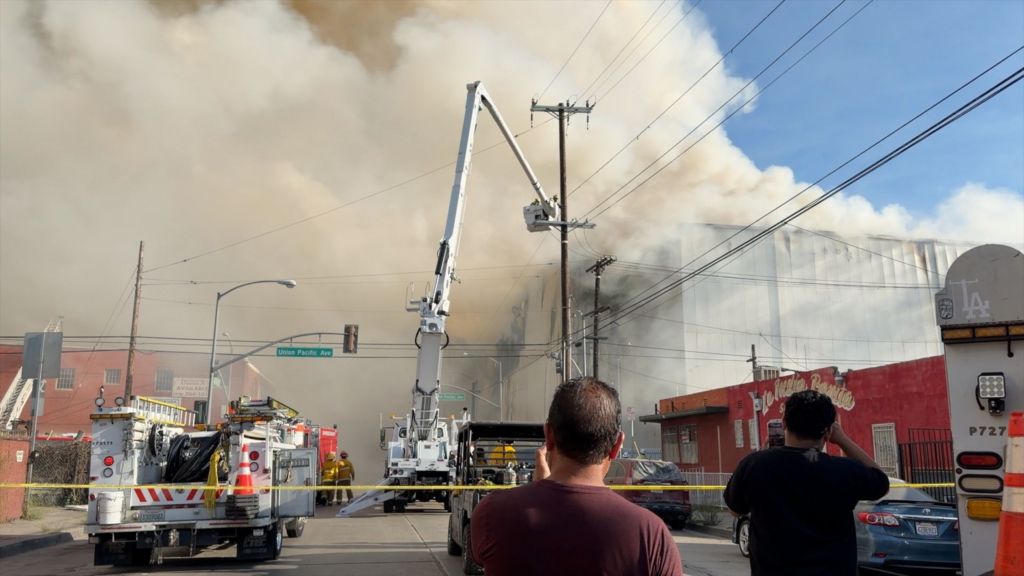
    A massive out-of-control blaze at a Los Angeles warehouse has continued to burn for an extended period, sending plumes of thick, toxic smoke billowing across the greater Los Angeles region and causing widespread disruption to air quality for thousands of local residents.

    The intensity of the fire and the public health risks it has created have moved local government officials to take urgent action, issuing an official declaration of a state of emergency to free up additional resources and response capabilities for firefighting crews and public health teams. As the blaze continues to rage, the smoke plume has drifted across multiple neighborhoods far from the ignition site, pushing air quality indices well into unhealthy ranges and prompting warnings for vulnerable residents, including children, elderly people, and those with pre-existing respiratory conditions, to remain indoors and limit outdoor activity. The declaration of emergency paves the way for accelerated resource allocation, including additional firefighting personnel, equipment, and public health outreach to address the ongoing crisis and mitigate the impacts on local communities.

  • World Cup 2026: Why some US hotels aren’t cashing in on the tourism surge

    World Cup 2026: Why some US hotels aren’t cashing in on the tourism surge

    The 2026 FIFA World Cup hosted across the United States has already made history with unprecedented fan enthusiasm: a staggering 500 million ticket requests have been submitted, and nearly 90% of all available match tickets have been sold. No other event in global soccer has ever seen this level of audience appetite, but the story of the tournament’s impact on the U.S. hospitality sector is far more nuanced than these record-breaking ticket numbers suggest. Across host cities from Houston to Atlanta to Seattle, hoteliers, economists and soccer fans alike are working to unpack a confusing trend of divergent performance that defies early projections.

    Industry reports and analyst data paint a divided picture of hotel demand across the 16 host cities. On one hand, some markets have seen explosive growth that aligns with or exceeds pre-tournament expectations. Global travel platform Trip.com reports that cross-border hotel bookings for World Cup dates are up nearly 70% compared to the same period last year. Dallas has emerged as a standout, with group stage hotel bookings surging more than 1,400% year-over-year, driven largely by a flood of international travelers from Japan and South Korea. New York City, meanwhile, has become the top destination for high-income fans, with luxury properties seeing particularly strong demand.

    Data from hospitality intelligence firm Kalibri Labs shows that average daily hotel rates across host cities are roughly 20% higher than 2025 levels, with the largest price gains concentrated in major gateway cities like New York and San Francisco. But occupancy growth has been far slower than many operators predicted. Travelers are overwhelmingly clustering in major urban centers that offer robust public transit, a wide range of dining options, and standalone tourist attractions beyond the match venues themselves. As a result, hotels are generating higher revenue per available room from individual bookings, rather than filling a drastically larger share of their inventory.

    “What we are seeing is not a demand problem. It is a decision-making problem,” explained Laura Lee Blake, president and CEO of the Asian American Hotel Owners Association (AAHOA), in an interview with Middle East Eye. Blake noted that modern fans are taking far more time to weigh costs, travel logistics, and entry requirements before locking in hotel reservations, a shift from previous World Cup cycles. “International travelers are certainly paying closer attention to border policies, visa processing times, and geopolitical developments than they did in previous World Cup cycles, those factors can create friction, particularly for travelers who have multiple destination options,” she added.

    New York City perfectly illustrates this industry divide. CoStar Group data shows the city holds the highest occupancy rate among all U.S. host cities at 57% for key match dates, with an average nightly room rate of $583. For some independent operators, the World Cup bump has already exceeded expectations. Nile Sony, president of the Manhattan View Hotel in Queens, told MEE that his property has been completely sold out on many match nights, with reservations booked as far back as a year in advance—a rarity for almost any major event. “I wouldn’t say a major boost. But yes, a lot of advance reservations. You don’t normally see reservations made one year in advance for any event,” Sony said.

    A large share of the industry uncertainty traces back to FIFA’s unexpected accommodation strategy. Three years ago, FIFA pre-reserved massive blocks of hotel rooms across all 16 host cities to accommodate teams, official sponsors, and tournament staff. Most hoteliers operated under the assumption that roughly half of these reserved rooms would be released back to the open market before the tournament began. Instead, FIFA ultimately released 95% of the pre-blocked rooms, only retaining accommodation for match days and the night before each fixture. This sudden flood of thousands of extra rooms hit the market at a time when international travelers were already booking later than usual, leaving operators scrambling to replace the guaranteed revenue they had planned for.

    This disruption has been worsened by a pullback in traditional business travel. Large corporate conferences and executive retreats have largely avoided World Cup host cities, opting to reschedule or relocate rather than compete with soccer fans for limited flights, hotel rooms, and restaurant capacity.

    Hospitality analysts note this uneven pattern is not unusual for mega-events like the World Cup or Olympic Games. Most large international tournaments are what industry insiders call “average daily rate events” rather than “occupancy events,” meaning the biggest financial gains come from higher per-room pricing rather than massive spikes in the number of rooms sold. “We have always said this is going to be a room rate event with larger room rate increases and some occupancy increases,” Jan D. Freitag, national director of hospitality analytics at CoStar, told MEE. “That was the prediction, and that’s what’s going to happen.” Freitag also added that slow early bookings for knockout rounds are to be expected, since matchups and participating teams remain unknown until the group stage concludes, making it impossible for fans to lock in travel plans early. Trip.com’s data bears this out, showing far slower booking growth for knockout stage matches than for the already-decided group stage fixtures.

    Beyond tournament-specific logistics, many hoteliers point to broader policy headwinds that are discouraging international inbound travel. A 2026 survey from the American Hotel and Lodging Association found that 65 to 70% of responding operators view visa barriers and ongoing geopolitical tensions as major drags on World Cup-related demand. Overall inbound tourism to the U.S. fell 5.4% in 2025, amid tighter immigration enforcement and expanded travel restrictions affecting dozens of nations. Industry leaders say increased public visibility of Immigration and Customs Enforcement operations, stricter border scrutiny, and more rigorous visa requirements have all contributed to a global perception that the U.S. is a less welcoming travel destination than it has been for previous major international events.

    These concerns are not limited to cities hosting matches. Even properties in non-host cities that expected spillover demand are seeing weaker results. Haseeb M., president of the Comfort Inn Chicago Schaumburg, which is located near a host city but not hosting matches itself, had projected a 4% revenue uptick from World Cup spillover. “We are now expecting the impact to be half of what was initially forecast,” he told MEE.

    The debate over World Cup hospitality performance extends far beyond hotel revenue. While large-scale sporting events do not always deliver the massive direct financial windfalls that hosts initially project, they remain high-impact opportunities to boost long-term tourism and shape a nation’s global brand. Against this backdrop, many industry figures worry that recent U.S. policy shifts will shape how international visitors perceive the country during one of the most-watched global events of the decade, with potential long-term consequences for future inbound travel.

  • New York City’s ‘Little Senegal’ comes together for World Cup

    New York City’s ‘Little Senegal’ comes together for World Cup

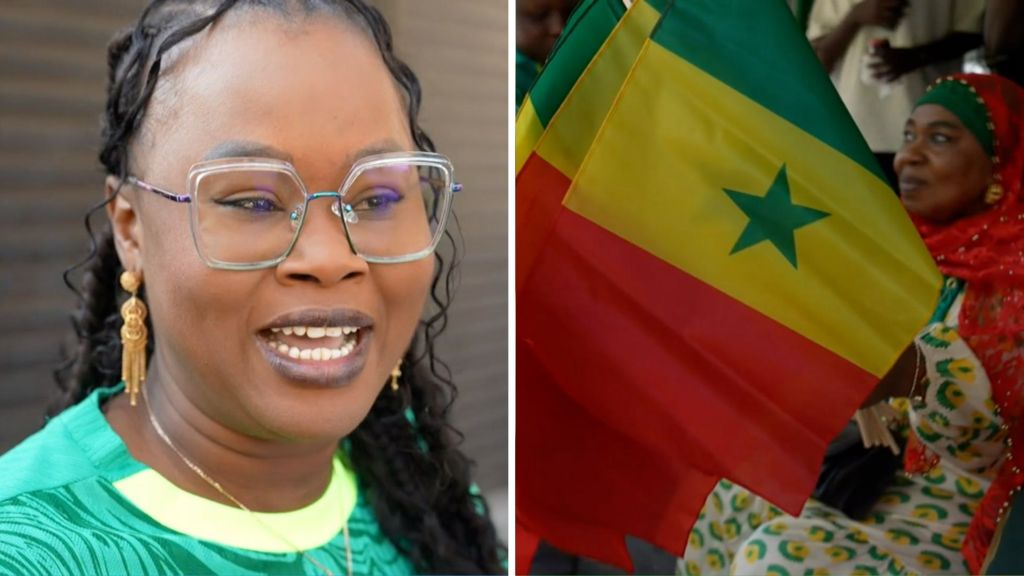
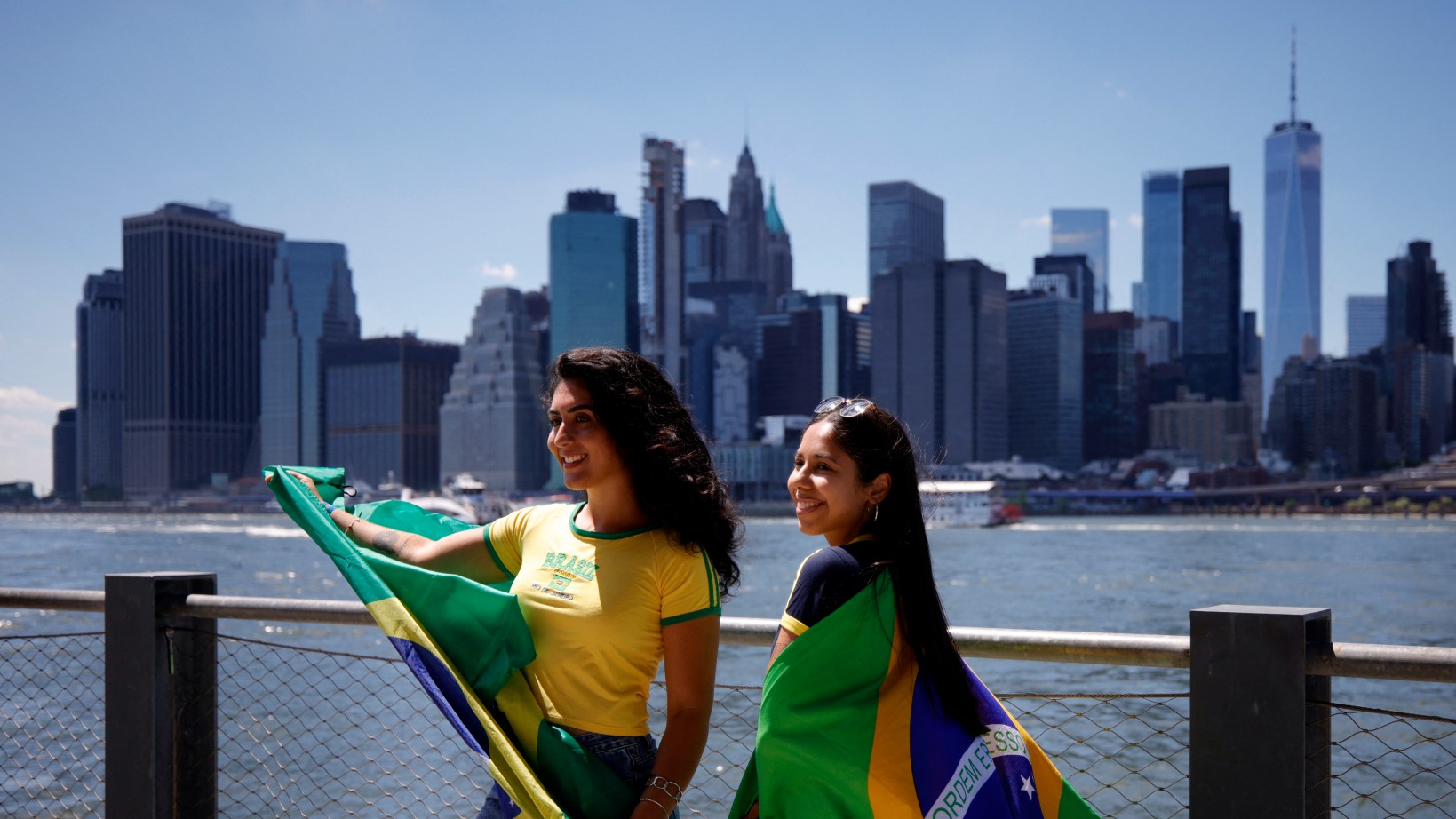
    Half a world away from the stadiums hosting the biggest tournament in global soccer, a vibrant enclave of Senegalese diaspora in New York City’s Harlem has forged a collective home for World Cup celebration. Known locally as “Little Senegal,” this tight-knit neighborhood has emerged as a hub for displaced African soccer fans, many of whom have been blocked from traveling to the United States to cheer on their national teams by harsh visa restrictions that have kept thousands of supporters trapped back on the continent.

    For fans of Senegal’s national men’s team, the visa policy has turned what would be a dream of watching their side compete on the world’s biggest sporting stage into an unattainable goal. Rather than let the disappointment divide their community, however, the diaspora in Little Senegal has rallied together to turn neighborhood gathering spots, local restaurants and street corners into impromptu viewing parties that capture the electric energy of the tournament itself.

    Community leaders and local business owners have stepped up to organize large screenings, prepare traditional Senegalese cuisine, and create spaces where fans from across the African diaspora can come together, sing their national anthems, and share in the joy and heartbreak of World Cup competition. What could have been a moment of separation caused by American immigration policy has instead become a celebration of diasporic identity, proving that shared passion for soccer can transcend geographic and bureaucratic barriers.

  • Mexico, Italy and others see up to two more months of heat stress than in the 1970s, study says

    Mexico, Italy and others see up to two more months of heat stress than in the 1970s, study says

    A landmark new study published in *Nature Climate Change* on Monday delivers stark, granular data confirming that decades of human-caused planetary warming have triggered a dramatic, widespread increase in dangerous heat stress across the globe. The research, which moves beyond standard temperature measurements to focus on “feels-like” temperatures that directly impact human health, finds that dozens of nations are now facing one to two additional months of heat stress annually compared to 60 years ago, with heat risk spreading even to regions that historically avoided such dangerous conditions.

    Unlike prior climate research that has largely focused on raw air temperature increases, the study led by Rebecca Emerton, a senior scientist at the U.K.-based European Centre for Medium-Range Weather Forecasts, uses the Universal Thermal Climate Index to assess how combined environmental factors—temperature, humidity, wind speed, and more—affect the human body’s ability to regulate its internal heat. This approach provides a far more accurate picture of actual public health risk, because high humidity disrupts sweat evaporation, the human body’s primary natural cooling mechanism, making humid heat waves far more deadly than dry heat events of the same temperature.

    The research categorized heat stress into three tiers of increasing risk: strong heat stress (index temperatures ≥ 32°C / 89.6°F), very strong heat stress (≥ 38°C / 100.4°F), and extreme heat stress (≥ 46°C / 114.8°F). Comparing modern data to baseline conditions from the 1970s, the team found that heat stress is intensifying in already warm regions and expanding into new geographic areas.

    Hard-hit regions include parts of Southern and Eastern Africa (Namibia, Angola, Tanzania, Kenya, and Uganda), Mexico, and Central America, which could see up to 50 additional days of strong heat stress annually compared to the 1970s. Southern European nations including Southern Spain, Italy, Greece, and Turkey face up to 40 extra days of strong heat stress, with most of Southern Europe recording nearly a full month of additional heat stress days relative to 60 years ago. In the United States, most of the country experiences 15 or more extra days of strong heat stress annually, with southern states like Texas and Florida recording close to 25 or more additional days of very strong heat stress.

    Beyond longer heat stress seasons, the study also found that overnight heat is warming faster than daytime heat: the 10 warmest annual nights have warmed by 0.32°C (0.58°F) per decade, compared to 0.27°C (0.49°F) per decade for the 10 warmest annual days. The rise in tropical nights—defined as nights with minimum temperatures of at least 20°C (68°F)—is particularly concerning, because it prevents people from cooling off and recovering from daytime heat exposure, raising the risk of heat-related illness and death. Overall, 1 billion more people around the world now experience at least one day of extreme heat stress annually than they did in the 1970s.

    Emerton noted that the expansion of heat stress into previously unaffected regions was one of the study’s most striking findings. “It’s striking to see heat stress not only intensifying in those places that we already consider as being hot or used to experiencing heat waves … but also to see this, we call it, expanding footprint of heat stress expanding into regions where it’s historically been rare or non-existent,” she said.

    Jennifer Francis, a climate scientist at the Woodwell Climate Research Center who was not involved in the study, emphasized that the new research adds critical granularity to existing understanding of climate change risks. “This study adds stark details about increasing dangers to billions of humans,” Francis said. “This analysis shows not only is temperature rising, but so is humidity, which makes high temperatures more deadly because our body’s air conditioning system — sweating — struggles to keep up.”

    Lead researcher Emerton stressed that the severity of future heat stress increases depends entirely on near-term climate action. The study underscores the urgent need for aggressive cuts to fossil fuel emissions to mitigate future warming, alongside targeted investments in adaptation measures including heat health action plans, early warning systems, and updated climate risk assessments to protect vulnerable communities from rising heat risk.

  • Vance says Iran will allow nuclear inspectors back into the country

    Vance says Iran will allow nuclear inspectors back into the country

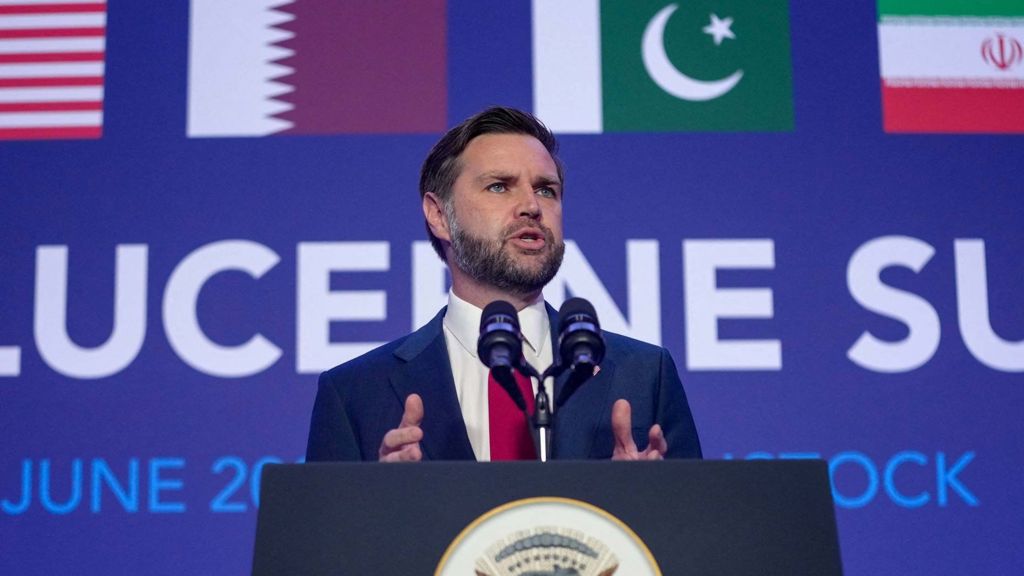
    Fresh off the opening round of landmark negotiations between the United States and Iran, U.S. Vice President JD Vance has announced a breakthrough that checks one of the international community’s top boxes: Tehran has agreed to allow United Nations nuclear inspectors from the International Atomic Energy Agency (IAEA) to return to the country, with initial discussions potentially launching as early as the same day he spoke.

    Vance, speaking from Switzerland on Monday morning, confirmed that substantial progress has already been made since the first round of talks aimed at forging a final comprehensive agreement to end the recent regional conflict. The vice president’s remarks aligned with earlier statements from Qatar and Pakistan, the two nations mediating the diplomatic process. Beyond the nuclear file, Vance added, negotiating teams have also covered two other critical priorities: the full reopening of the strategically vital Strait of Hormuz and the establishment of de-confliction mechanisms to support a regional ceasefire.

    The framework for these talks was laid out in a 14-point memorandum of understanding (MOU) signed last week by U.S. President Donald Trump and Iranian President Masoud Pezeshkian. That initial agreement formalized Tehran’s commitment to reopen the Strait of Hormuz and end active hostilities on all regional fronts, including Lebanon. In their joint statement released earlier Monday, mediators Qatar and Pakistan confirmed that the two parties have agreed to a binding roadmap to reach a final, full agreement within a 60-day window. Vance praised the opening round of discussions, saying it had laid a “very good foundation” for ongoing negotiations toward a lasting settlement.

    For the U.S. side, Vance emphasized that progress on the nuclear issue stands as the most significant milestone for the American public. “This is a major milestone for the American people and a first step in permanently ending a nuclear weapons programme in Iran,” he told reporters. When asked for a timeline for IAEA inspectors’ return, Vance said he expected the process to get underway no later than this week, with initial technical conversations between Iran and the nuclear watchdog possibly starting as early as the day of his announcement.

    The MOU signed by Trump and Pezeshkian specifically references the IAEA’s role in addressing ongoing concerns over Iran’s stockpile of enriched nuclear material. Tehran has repeatedly maintained that its entire nuclear program is focused solely on civilian energy and medical purposes, but global powers and the IAEA have long questioned those claims, citing a lack of full transparency over the past years.

    This diplomatic push comes nearly a decade after the original 2015 Joint Comprehensive Plan of Action (JCPOA), an agreement between Iran and six world powers — the U.S., China, France, Russia, Germany, and the U.K. The JCPOA placed strict limits on Iran’s nuclear activities in exchange for sanctions relief, and granted the IAEA unfettered access to all nuclear facilities and suspect sites across the country. But during his first presidential term in 2018, Trump withdrew the U.S. from the agreement, calling it a fatally flawed “bad deal” that failed to permanently curb Iran’s nuclear ambitions or address the country’s ballistic missile program and regional military activities.

    The most recent rift over inspections opened after the 12-day regional war between Iran and Israel in June 2025. Following the conflict, Iran suspended IAEA access to sites hit by Israeli and U.S. airstrikes, and by the following month, the watchdog had withdrawn all of its remaining inspectors from Iranian territory.

    Iranian state media reported that the country’s lead negotiating team departed the Bürgenstock resort talks venue in Switzerland on Monday, though low-level technical discussions between U.S. and Iranian teams are set to continue in the coming days.

    Beyond the nuclear file, the mediators’ joint statement outlined progress on regional security. Negotiators have established a dedicated communication line designed to prevent accidental clashes and miscommunication, with the core goal of guaranteeing safe passage for commercial shipping through the Strait of Hormuz, a chokepoint through which roughly 20% of the world’s global oil supplies pass daily.

    The two sides also agreed to create a tripartite de-confliction cell involving the U.S., Iran, and Lebanon, with logistical and diplomatic support from the mediating countries, to coordinate an end to ongoing military operations in Lebanon. Iranian Foreign Minister Seyed Abbas Araghchi noted that the successful operation of this de-confliction cell will serve as the first “real test” of the agreement’s viability. While the MOU calls for an immediate ceasefire on all fronts, violence has continued in the days since it was signed: Israeli airstrikes in Lebanon have killed at least 67 people, while cross-border attacks from the Iranian-backed armed group Hezbollah have claimed the lives of five Israeli soldiers.

  • Trump threatens to invade Iran, torpedoing Swiss peace talks

    Trump threatens to invade Iran, torpedoing Swiss peace talks

    A fresh round of U.S.-Iran peace negotiations in Switzerland has collapsed abruptly after former President Donald Trump issued a series of unprecedented, incendiary threats against Iran, prompting the Iranian negotiating team to walk out of the talks and demand a formal apology before they will return to the table.

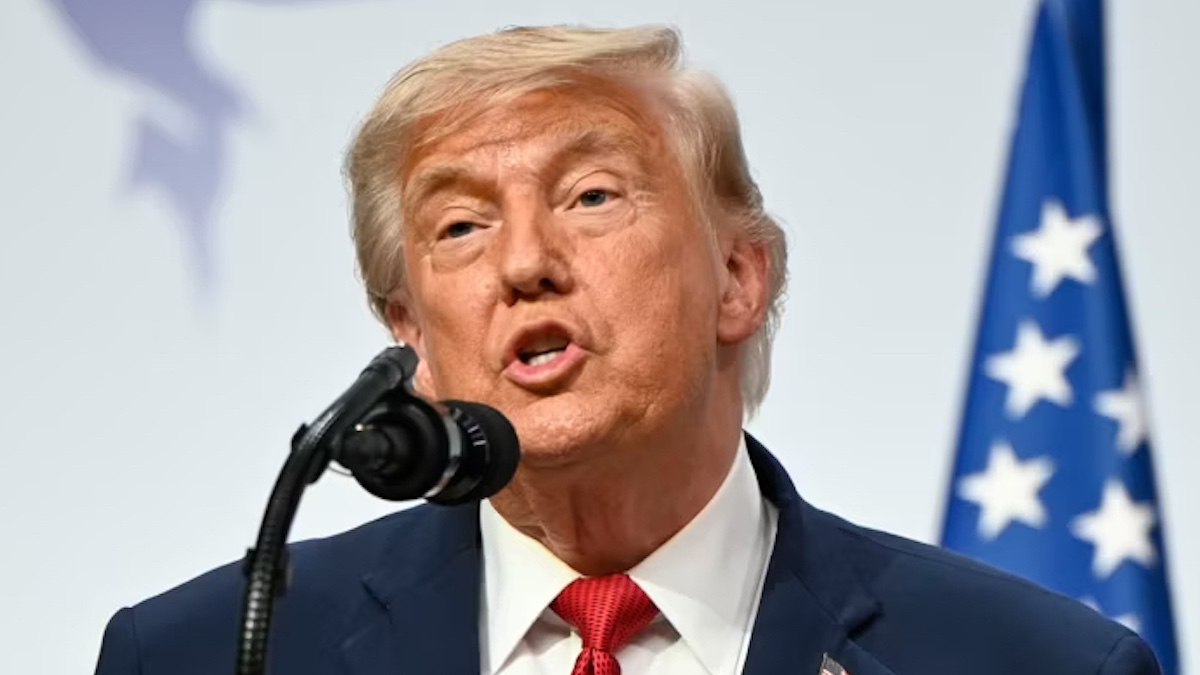
    The crisis unfolded after Iran announced it would re-close the Strait of Hormuz — a strategic global oil chokepoint critical to international energy markets — over an intensified Israeli military assault on southern Lebanon that violates an existing ceasefire memorandum of understanding (MOU) covering all regional fronts. In a public tirade Sunday, Trump issued a cascade of threats: he warned Iran would cease to exist as a sovereign state if it followed through on closing the strait, explicitly threatened to assassinate Iranian negotiators, and for the first time publicly pledged a full U.S. military invasion to occupy the entire country.

    According to Fox News correspondent Trey Yingst, who reported on Trump’s comments, the U.S. leader told Iranian negotiators that if they closed the strait — a move Iran first announced Saturday — “you won’t even make it back to their f***ing country,” a threat widely interpreted as a reference to targeted assassinations of Iranian officials that have already occurred during the early phases of the ongoing conflict.

    Multiple international outlets confirm that the threats directly violated the first clause of the negotiated MOU governing the talks. In response, Iranian negotiators filed a formal complaint with Pakistani and Qatari mediators, who have been facilitating the closed-door discussions at a Swiss mountain resort, before leaving the venue immediately.

    In a blunt response to the threats, Iran’s chief negotiator Mohammad Bagher Ghalibaf dismissed Trump’s rhetoric as empty, stating that his delegation does not take American threats seriously. This pattern of escalatory rhetoric followed by no action is nothing new: over recent months, Trump has repeatedly issued extreme threats to wipe out Iran’s entire civilization and destroy the country to pressure Tehran into making concessions, yet has never followed through on the warnings even as Iran has maintained its negotiating position.

    “Don’t they think that if their threats had worked, they wouldn’t have ended up in today’s desperate situation?” Ghalibaf asked. He added that the U.S. would be “better be more careful with their statements,” noting that “our armed forces are ready to respond in a different way. No matter what they say, we are the ones who act.”

    While the Iranian delegation has left the negotiation venue, indirect talks continue through participating mediators. According to Lebanese outlet Al Mayadeen, the Iranian team has set two non-negotiable conditions for returning to the table: a formal apology from Trump for his threats, and a full Israeli withdrawal from Lebanese territory. The Israeli government, for its part, is reportedly considering limited withdrawals from parts of southern Lebanon’s buffer zone, per senior Israeli sources cited by Channel 12, and the officials added that Washington has not pressured Israel for a full pullout.

    Sunday’s outburst marks a sharp, sudden reversal from just one week prior, when Trump signaled a major shift by acknowledging Iran’s sovereign right to enrich uranium for civilian nuclear energy, a key longstanding Iranian demand that the U.S. has previously rejected. Analysts say the sudden escalation was triggered by comments from Iranian President Masoud Pezeshkian, who reaffirmed that Iran would never surrender its right to enrichment and predicted the U.S. would ultimately be forced to accept this position. In response, Trump reportedly warned Pezeshkian to “watch his mouth” and “shape up,” threatening a full U.S. takeover of remaining Iranian territory if he did not comply.

    This latest threat of full occupation stands in stark contradiction to Trump’s own recent comments, in which he acknowledged that extending the war would trigger a major U.S. economic catastrophe, and even acknowledged that limited ground operations — such as a proposed mission to seize Iranian uranium facilities — would be too costly in lives and resources to be justified. The ongoing war with Iran is already deeply unpopular with the U.S. public, even without the deployment of American ground troops: recent polling shows a majority of Republican voters oppose deploying ground troops to escalate the conflict, and senior U.S. military leaders have already shelved plans to seize strategic Iranian sites including Kharg Island out of fear of massive American casualties.

    In another controversial remark, Trump told Yingst that the U.S. could position itself as the “guardian angel” of the Strait of Hormuz, collecting tolls from commercial shipping and seizing oil from exporting nations that use the waterway. He offered no details on how the U.S. would secure control of the strait to enact this plan.

    Iran’s decision to threaten closing the strait came in direct response to Israel’s deepened occupation and intensified bombing of southern Lebanon, actions that violate the MOU’s ceasefire provisions. Ending Israel’s occupation of southern Lebanon is a non-negotiable red line for Tehran in the peace talks: the Israeli campaign has killed more than 4,000 people and displaced over 1.2 million Lebanese civilians from their homes in the region.

    Off the record, Trump has privately acknowledged that Israeli Prime Minister Benjamin Netanyahu is deliberately using the Lebanon campaign to sabotage the ceasefire and drag the U.S. into a full-scale regional war. In his conversation with Yingst, Trump acknowledged he was “disappointed Israel can’t put Hezbollah away,” adding that Israel “can’t do anything without knocking buildings down.” He also noted he is close to granting Syrian President Ahmed al-Sharaa, former leader of al-Qaeda’s Syrian affiliate, permission to lead operations against Hezbollah.

    Even as Trump has publicly and privately criticized Israel’s actions and accused Netanyahu of undermining peace efforts, he has taken no concrete action to force Israel to comply with the terms of the ceasefire MOU. Analysts warn that this contradictory approach from the White House puts the entire peace process at severe risk.

    “The mixed messages coming out of the White House are going to make it much harder to end the war, and could in fact spark further conflict,” noted Jeet Heer, a staff writer at *The Nation*.

    Trita Parsi, executive vice president of the Quincy Institute for Responsible Statecraft, described Israel’s ongoing military escalations as “an existential threat” to the U.S.-Iran peace process. He told ABC News that Iran’s threat to close the strait ahead of the Geneva talks was intended to signal how seriously Tehran views its demand for an Israeli withdrawal, clarifying the stakes for all parties.

    “Israel would prefer for this war to continue until you have a complete defeat of the Iranians, which, of course, is not in the cards,” Parsi explained. “The Israelis sold this war to Trump as a quick, easy fix to the region’s problems that would take no more than four days, and they were dead wrong. Now, Trump is recognizing that U.S. interests necessitate that he pull out of this war and strikes this deal, but the Israelis are trying to sabotage it because they are afraid they’re going to be left out, that the balance in the region is going to shift against their interests. They’re willing to essentially jeopardize their relationship with the United States over this.”
  • Giovanni Malagò elected president of the crisis-laden Italian soccer federation

    Giovanni Malagò elected president of the crisis-laden Italian soccer federation

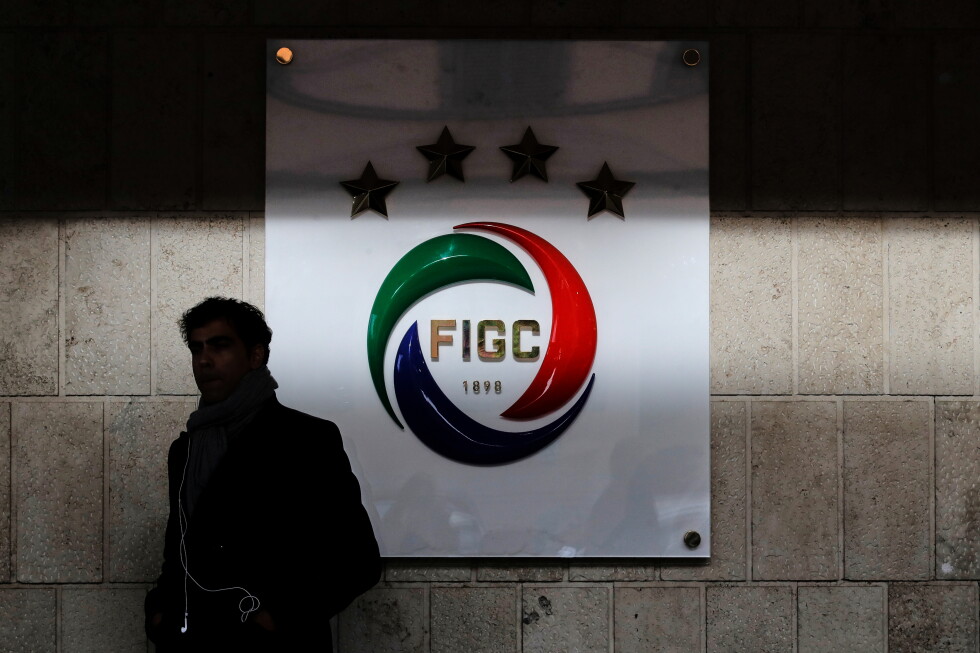
    In a decisive electoral outcome for Italian soccer’s struggling governing body, Giovanni Malagò — the seasoned sports administrator who oversaw organization of the 2026 Milan Cortina Winter Olympics — has secured the top role at the crisis-hit Italian Football Federation (FIGC).

    Monday’s leadership vote delivered a clear mandate to Malagò, who claimed 68.58% of the ballots cast. His only challenger, former FIGC president Giancarlo Abete, captured just 29.17% of the vote, leaving Malagò with an overwhelming victory to steer Italian soccer through its current turbulent period.

    The incoming president faces an immediate high-stakes priority: filling the vacant head coaching position for Italy’s senior men’s national team. The role opened up after Gennaro Gattuso stepped down following the Azzurri’s failure to qualify for a third consecutive FIFA World Cup, a streak that has deepened frustration across the Italian soccer community. The exit follows the resignation of former FIGC president Gabriele Gravina, who left his post in the wake of Italy’s playoff defeat to Bosnia and Herzegovina in World Cup qualifying.

    Two familiar faces from previous Italian national team tenures have emerged as the leading contenders for the coaching job: Roberto Mancini and Antonio Conte. Mancini, who led Italy to a historic UEFA European Championship title in 2021, departed the Azzurri post shortly after the team failed to qualify for the 2022 World Cup to take the helm of Saudi Arabia’s national side. He left that role in 2024 and most recently parted ways with Qatari club Al-Sadd, leaving him available for the vacancy. Conte, who managed Italy at the 2016 European Championship, stepped down from his position at top Italian club Napoli earlier this year, making him another readily available candidate for the role.

    Beyond his recent work leading the Milan Cortina Olympics organizing committee, Malagò brings a long background in elite sports governance to the FIGC presidency. He previously served as president of the Italian National Olympic Committee and still holds a seat as a member of the International Olympic Committee, giving him deep connections and experience in global sports leadership as he takes on one of the most challenging roles in Italian soccer.

  • A look at the quick succession of British prime ministers in the past 10 years

    A look at the quick succession of British prime ministers in the past 10 years

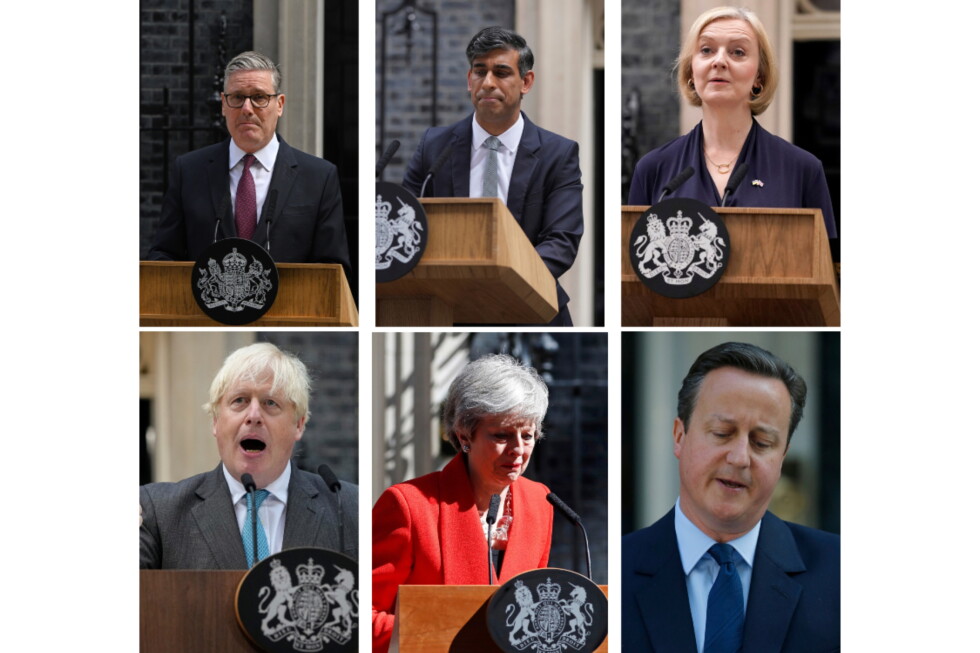
    LONDON – The announcement of Keir Starmer’s resignation as British Prime Minister this Monday has cemented a historic milestone for modern United Kingdom politics: over the past 10 turbulent years, six different leaders have stepped through the famous black door of 10 Downing Street — a turnover rate that matches the total number of prime ministers that served across the entire preceding four decades.

    Starmer’s ascent to power in the 2024 general election was a landslide victory for the Labour Party, ending 14 years of Conservative rule. Campaigned on a platform promising to undo the years of political chaos left by the previous Conservative government, deliver steady economic growth and repair Britain’s crumbling public services, Starmer rode a wave of widespread public discontent with the incumbent party to take office as the first Labour prime minister since 2010. The former director of public prosecutions framed his leadership as a fresh start for a nation worn thin by constant political upheaval.

    But just two years into his term, that promise of stability has crumbled. Plunging public approval ratings and repeated failures to deliver on his flagship “rebuild Britain” agenda left Starmer with little support within his own party, forcing his departure. In his announcement, he acknowledged that he no longer had the backing of his party to lead Labour into the next general election.

    To put this extraordinary wave of leadership turnover in context, the U.K. saw just six prime ministers hold office between 1976 and 2016. The current era of rapid change began in 2016, when the Brexit referendum upended the country’s political order.

    The first of the post-2016 departures came from Conservative Prime Minister David Cameron, who had called the historic Brexit referendum in a bid to defuse long-simmering internal tensions within his party over Britain’s membership in the European Union. After campaigning hard to remain in the bloc, voters defied his campaign and backed exit by a narrow margin. Cameron resigned the very next day, ending his six-year tenure in office.

    Cameron’s successor, Theresa May, took over with the unenviable task of negotiating Britain’s EU divorce. Over three years, May worked to secure a withdrawal agreement with Brussels, but the deal was repeatedly rejected by Parliament — derided by pro-EU lawmakers for pulling Britain out of the bloc, and dismissed by hardline Brexit-supporting Conservatives for leaving the U.K. too closely aligned to EU rules. After three devastating defeats for her proposal in the House of Commons, May stepped down in 2019, saying “I have done my best.”

    Next came Boris Johnson, the charismatic, polarizing Conservative leader who oversaw the finalization of Britain’s EU exit in January 2020 and guided the country through the initial waves of the COVID-19 pandemic. But his tenure collapsed under the weight of cascading ethics scandals: allegations of improper closeness to wealthy party donors, claims he protected allies facing bullying and corruption investigations, and most damagingly, evidence he misled Parliament about lockdown-breaching parties held in Downing Street during the pandemic. When dozens of government officials and his own allies resigned in protest, Johnson had no choice but to step down in 2022.

    Johnson’s departure ushered in Liz Truss, a libertarian Conservative who campaigned on a platform of radical free-market reform and small government. Promising to jumpstart Britain’s stagnant economy, Truss unveiled a sweeping stimulus package centered on massive, unfunded tax cuts just weeks into her term. The plan triggered market chaos, crashed the pound and erased all of Truss’s support within her party. After just 45 days in office, Truss resigned, making her the shortest-serving prime minister in British history.

    Rishi Sunak, the youngest prime minister to hold office in more than 200 years, stepped in to replace Truss in 2022, tasked with cleaning up the economic mess left by his predecessor. Sunak pledged to curb sky-high inflation, clear backlogs in the National Health Service and end the flow of irregular migration across the English Channel. But he never managed to reverse the Conservative Party’s plummeting poll numbers after the chaos of Truss and Johnson’s tenures, and he called an early general election in July 2024. When the Conservatives suffered the worst electoral defeat in their 200-year history, Sunak conceded defeat, stepped down, and said “I take responsibility for this loss.”

    Starmer’s subsequent landslide victory opened the door for Labour’s return to power, but his early exit after just two years proves that the political turbulence that has roiled Britain for a decade has yet to subside. As the country prepares to select its seventh prime minister in 10 years, the era of constant upheaval in British politics remains far from over.

  • Guinea bans exports of raw gold to boost local refining

    Guinea bans exports of raw gold to boost local refining

    In a decisive move to rework its gold mining sector and unlock greater domestic economic value, the West African nation of Guinea has enforced an immediate ban on all exports of unprocessed raw gold. The new policy, announced by President Mamadi Doumbouya following extensive consultations with industrial mining operators, small-scale artisanal producers and gold buyers, mandates that all gold extracted within Guinea’s borders must undergo refining domestically before export.

    President Doumbouya emphasized that for too long, foreign entities have captured the lion’s share of economic profits from processing Guinea’s natural resource exports, leaving the country with only limited gains from raw material sales. The core goals of the policy are to expand local job opportunities, build out the country’s domestic processing infrastructure, and grow the overall national economy, he added.

    Ranked as Africa’s sixth-largest gold producer by the World Gold Council, Guinea is far from alone in pursuing this resource sovereignty strategy across the continent. In recent years, a growing number of African nations have introduced similar regulations to capture more value from their mineral wealth: Tanzania and Uganda already enforce bans on unprocessed gold and copper exports, Ghana has pledged to implement a raw gold export ban by 2030, and Zimbabwe, the continent’s top lithium producer, will ban exports of unprocessed lithium concentrate starting in 2027.

    Gold stands as one of Guinea’s top export commodities, with official data showing the country shipped more than 22 tonnes of the precious metal in the first quarter of 2026 alone. To support the new domestic processing requirement, a large-scale new refinery is in the final stages of completion in Guinea’s capital, Conakry. With an annual processing capacity of 250 tonnes, the facility is sized to handle the country’s entire current gold output, eliminating concerns about infrastructure shortfalls for the new policy.

    Guinea’s government has issued a clear warning to foreign mining companies operating in the country: any violation of the new export ban will carry severe consequences, including potential revocation of operating licenses and termination of existing mining contracts. Beyond gold, Guinea holds another critical position in global commodity markets as the world’s largest producer of bauxite, the core raw material for aluminum production.

  • Germany defender Nico Schlotterbeck out for the rest of the World Cup with ankle injury

    Germany defender Nico Schlotterbeck out for the rest of the World Cup with ankle injury

    WINSTON-SALEM, North Carolina — Germany’s FIFA World Cup campaign has suffered a major blow, as national team defender Nico Schlotterbeck will miss the rest of the tournament and an extended period of club action after picking up a serious left ankle injury during Saturday’s 2-1 victory against Ivory Coast.

    The German Football Federation confirmed Monday that follow-up medical assessments conducted Sunday at the national team’s training base in Winston-Salem uncovered a tear to the ankle’s medial ligament. The injury, which will sideline the Borussia Dortmund center-back for multiple months, brings an early end to his first World Cup run. Schlotterbeck had started in both of Germany’s opening two group-stage matches.

    Julian Nagelsmann, head coach of the German national side, expressed clear disappointment over the untimely injury, noting that Schlotterbeck — nicknamed “Schlotti” among teammates — has been an irreplaceable asset both in defense and in building attacking play from the backline. “This was shaping up to be his breakthrough tournament, his World Cup,” Nagelsmann said. “The whole squad has been supporting him since the injury happened, and we’re glad he has such a positive mindset that he’s already focused on his recovery.”

    In an unexpected turn, Schlotterbeck will remain with the German squad for the duration of the World Cup despite being unable to play. Nagelsmann emphasized that the 24-year-old still brings significant value to the team off the pitch, saying his continued presence in the camp is a major boost for the group.

    The coach also moved quickly to reassure fans that Germany remains well-staffed at the center-back position for their knockout stage run, naming four available defenders ready to step into the gap: Jonathan Tah, Antonio Rüdiger, Waldemar Anton, and Malick Thiaw.

    Saturday’s win over Ivory Coast has already locked Germany’s place in the tournament knockout rounds, with one group-stage match still to play. The four-time World Cup champion has officially secured first place in Group E ahead of their final group fixture against Ecuador, scheduled for Thursday in East Rutherford, New Jersey.