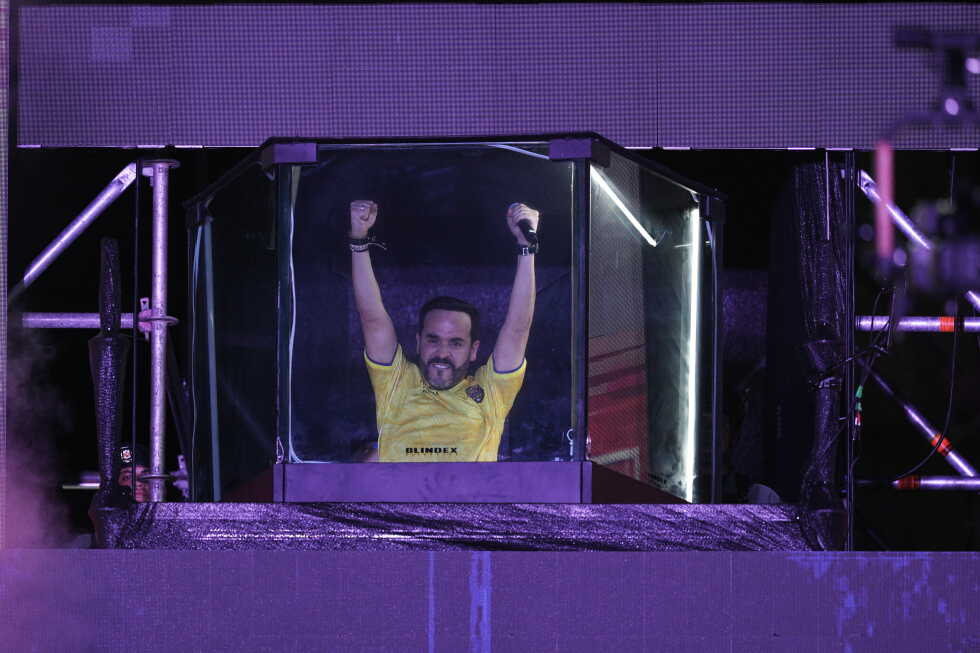
Across Latin America, a sharp political realignment toward conservative leadership has accelerated in recent years, with a Trump-endorsed outsider now on the cusp of winning Colombia’s top office to become the latest addition to the region’s new conservative wave. As of Monday, with nearly all ballots counted, Abelardo de la Espriella — a lawyer and business owner nicknamed “The Tiger” — held a roughly 1 percentage point lead, equivalent to 251,000 votes, over his progressive rival Iván Cepeda. While official results have not yet been formalized and Cepeda has launched a challenge to the outcome, independent analysts widely agree the review is unlikely to overturn de la Espriella’s lead.
De la Espriella built his campaign around a hardline public safety platform, echoing the tough-on-crime agenda that has propelled many recent conservative wins across the region. Key pledges include scrapping ongoing peace negotiations with remaining Colombian rebel factions and constructing large-scale mega-prisons modeled after the controversial facilities built in El Salvador to mass-incarcerate gang members. His campaign received a high-profile endorsement from former U.S. President Donald Trump, who framed de la Espriella as the only candidate capable of reestablishing widespread law and order across Colombia.
De la Espriella’s projected victory fits into a clear pattern of conservative and right-wing candidates securing presidential power across Latin America over the past two years:
### Argentina: Libertarian Conservative Milei Cuts Inflation Amid Austerity Backlash
In November 2023, Argentine voters elected Javier Milei, a libertarian economist and media commentator nicknamed “The Lion,” on a promise to dismantle decades of state-led economic policy and tame the country’s crippling hyperinflation. Milei defeated the long-dominant Peronist progressive movement, and immediately enacted sweeping austerity measures after taking office: he halted central bank money printing to finance government deficits, cut thousands of civil service positions, paused public infrastructure investment, and rolled back subsidies for household utility costs. The policies have delivered on their core inflation goal, cutting annual price growth from 211% in 2023 to 32% in 2025, but have drawn widespread criticism for eroding living standards for working-class and public sector Argentines.
### Ecuador: Pro-Military Conservative Noboa Retains Power Amid Security Criticism
In April 2025, Ecuadoran voters handed incumbent conservative Daniel Noboa, heir to one of the country’s wealthiest business families, a full four-year term, with the candidate securing 56% of the vote. Noboa has centered his tenure on expanding the military’s role in combating powerful drug gangs that have seized control of coastal port cities and trafficking routes. While the policy has been popular with security-focused voters, it has failed to deliver a meaningful reduction in national homicide rates, and has drawn international condemnation over documented human rights abuses including extrajudicial killings of suspected gang members. Noboa has deepened security cooperation with the U.S., launching joint anti-trafficking military operations, though his push to reopen a permanent U.S. military base on Ecuadoran territory was rejected by voters in a 2024 referendum.
### Honduras: National Party Conservative Asfura Narrowly Wins With U.S. Backing
Nasry Asfura, a real estate developer and former mayor representing Honduras’ center-right National Party, claimed a narrow presidential win in 2024, beating his closest challenger by less than 1 percentage point. Asfura’s party includes former Honduran President Juan Orlando Hernández, who was convicted of drug trafficking charges in the U.S. before receiving a presidential pardon from Donald Trump. Trump openly endorsed Asfura’s campaign, threatening to cut U.S. aid to the small Central American nation if Asfura was not elected. Since taking office in early 2025, Asfura’s government has honored a new deportation agreement with the U.S., accepting dozens of deportees originally from third countries (most predominantly Guatemala) that were expelled from the U.S.
### Chile: Conservative Kast Unseats Progressive Government With Hardline Immigration Stance
In December 2024, devout Catholic conservative José Antonio Kast defeated Chile’s sitting progressive government, winning 58% of the vote to claim the presidency. Kast campaigned on widespread public anxiety over rising crime, and centered his platform on hardline restrictions on irregular migration, promising to expel undocumented migrants from Venezuela and Haiti. One of his first policy actions after taking office was expanding a fortified trench along Chile’s northern borders with Peru and Bolivia, a measure the government says will curb cross-border drug trafficking and unauthorized migration. Kast’s administration has since faced large-scale public protests over rising unemployment and sweeping budget cuts that have reduced pay and services for public sector workers.
### Costa Rica: Tough-On-Crime Conservative Fernández Secures Outright Win
In February 2025, Laura Fernández — a former economy minister under outgoing conservative President Rodrigo Chaves — won Costa Rica’s presidential election outright, avoiding a runoff by securing 48% of the vote, 15 points ahead of her closest rival, and clearing the 40% vote threshold needed to skip a second round. Like de la Espriella in Colombia, Fernández ran on a hardline public safety platform, proposing a national state of exception that would allow police to arrest suspects without warrants, and planning to build a mega-prison modeled after El Salvador’s maximum-security CECOT facility. Fernández has also upheld a deportation agreement signed by her predecessor with the U.S., accepting multiple flights of third-country deportees, including a June 2025 flight carrying migrants from China, Vietnam, Colombia and Azerbaijan.