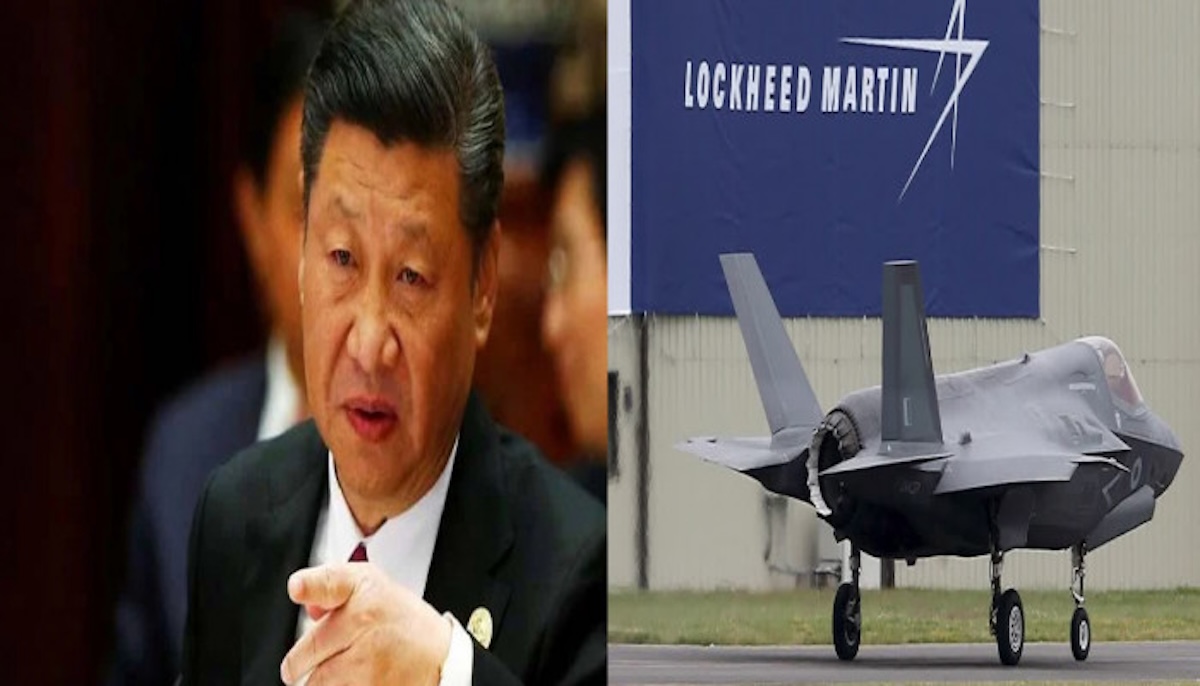
On Monday, China launched a coordinated, targeted retaliation against the United States, responding to Washington’s recent escalation of unilateral sanctions by rolling out two major restrictive measures targeting American defense and industrial entities. The actions come just weeks after a seemingly productive bilateral summit between U.S. President Donald Trump and Chinese President Xi Jinping in Beijing, where the two sides had announced agreements on increased Chinese purchases of U.S. agricultural goods and aircraft, highlighting how quickly diplomatic goodwill has evaporated amid escalating trade and tech tensions.\n\nFirst, China’s Ministry of Finance announced an immediate ban on all government procurement entities purchasing products from 46 U.S. defense contractors, led by industry giants Lockheed Martin Corporation and Raytheon Missiles & Defense. In a calibrated move to limit unintended spillover, the ban explicitly exempts U.S.-funded enterprises that operate production and commercial activities within China’s borders, leaving most U.S. commercial firms operating in the Chinese market unaffected.\n\nSimultaneously, China’s Ministry of Commerce added 10 U.S. entities to its official export control list under the country’s Export Control Law, barring all Chinese exporters from supplying dual-use technologies and materials to the blacklisted firms. The roster of restricted entities includes two of the United States’ most high-profile rare earth development firms, MP Materials Corp and USA Rare Earth, as well as leading U.S. drone and defense electronics manufacturers Red Cat Holdings, Teal Drones, and Ball Aerospace & Technologies Corp.\n\nA Commerce Ministry spokesperson clarified that the measures are a direct response to the U.S.’s recent expansion of its so-called Chinese military-industrial entity list, and are intended to safeguard China’s core national security interests and uphold international non-proliferation commitments. The context for the retaliation traces back to June 8, when the U.S. Pentagon carried out the largest expansion in the history of its blacklist of alleged Chinese military-linked companies, growing the roster from 134 to 188 entities. The update controversially included top Chinese civilian technology giants Alibaba, BYD, and Baidu, drawing outrage in Beijing for expanding the crackdown far beyond the defense sector to target China’s leading commercial technology firms. All three Chinese firms have rejected the U.S. designations as entirely baseless.\n\nLi Yong, an executive council member of the China Society for WTO Studies, framed the retaliation as a necessary check on Washington’s pattern of abusing unilateral sanctions and entity lists to suppress Chinese firms. “If such U.S. malpractices are left uncurbed, they will only escalate further,” Li told the Global Times in an interview Monday. He emphasized that China’s restrictions are narrowly tailored, targeting only items directly tied to military supply and manufacturing chains, a stark contrast to the U.S. approach of arbitrarily broadening its crackdown scope by fabricating false military connections for civilian firms with no military ties, as a pretense to hinder China’s high-tech sector development. Li added that the U.S.’s move to target leading Chinese firms across multiple sectors exposes its true goal: hindering the growth of China’s technology industry under a false veneer of national security concerns.\n\nChinese policy analysts note that Beijing designed the two retaliatory measures to maximize pressure on targeted U.S. sectors while avoiding broad damage to general foreign commercial activity in China. One Henan-based commentator writing under the pen name Sanding Sugar explained that the 10 blacklisted U.S. firms cover critical segments of the U.S. defense innovation ecosystem, from small drone manufacturing and aerospace payload supply chains to army tactical vehicle platforms and underwater surveillance systems. All of these sectors rely heavily on critical minerals that China dominates globally, including high-performance permanent magnets, high-purity indium coatings, and specialty ceramics — supply chains that cannot be reoriented or replaced overnight.\n\nOf particular note, the blacklisting of MP Materials and USA Rare Earth deals a major blow to Washington’s years-long effort to rebuild a domestic rare earth supply chain independent of China. “Blacklisting them does not stop them from mining raw rare earth ore, but it cuts off their access to China’s processed rare earth materials, separation products, and magnet precursors,” Sanding Sugar explained. “America’s plan to revive its domestic rare earth sector just hit a major compliance wall.”\n\nOn the Finance Ministry’s procurement ban covering 46 U.S. defense firms, analysts note the measure carries two clear signals. All 46 firms have been added to mandatory screening systems across every provincial finance department and central budget unit, turning the prohibition into an automatic check for all government purchase approvals. At the same time, the explicit exemption for U.S.-funded enterprises operating inside China means that U.S. commercial firms such as Apple’s component suppliers or U.S. medical equipment manufacturers operating in the Chinese market remain fully eligible for procurement, avoiding broad disruption to ordinary commercial activity.\n\nHunan-based political commentator Xi Kunlun argued that Beijing’s approach intentionally splits U.S. commercial and industrial interests, rewarding firms that maintain active, legitimate commercial operations in China while punishing those tied to the U.S. defense and competing rare earth sectors. “This retaliation carries a deeper message than simple payback. China is telling Washington that suppressing Chinese companies comes at a tangible price,” Xi said. “The U.S. targeted China’s drone industry, so China put American drone makers on its Entity List. The U.S. labels Chinese technology companies as military firms, so China blacklisted the equivalent American firms.”\n\nXi added that China is also leveraging its largest leverage: its massive domestic government procurement market, cutting off the access that allowed targeted U.S. firms to profit from Chinese public spending. “If Washington wants to talk, come with respect. If it wants to fight, China will oblige,” he summarized China’s position.\n\nStill, some independent observers have noted that the latest measures are more symbolic than a step toward full economic and technological decoupling between the two powers. They point out that most of the 10 blacklisted U.S. firms have very limited demand for Chinese-sourced raw materials and equipment, and Chinese government agencies had already largely halted purchases of U.S. defense products years before the ban. Some analysts also warn that Beijing must be cautious that retaliatory measures do not unintentionally deter the foreign direct investment that China continues to need for economic growth.\n\nRecent official data underscores this concern: China’s Commerce Ministry reported that inbound foreign direct investment fell 8.6% year-on-year in the first five months of the year, reaching 327.29 billion yuan, or approximately US$45.3 billion. While the ministry did not release a country-by-country breakdown, it confirmed that investment from Saudi Arabia, Malaysia, Switzerland, and the United States actually increased over the period, suggesting that inflows from most European and other Asian economies have declined.\n\nOne Shanxi-based commentator noted that some Chinese firms, including consumer electronics giant Xiaomi and semiconductor equipment manufacturer Advanced Micro-Fabrication Equipment Inc, have already successfully petitioned to be removed from the Pentagon’s blacklist through legal challenges. Still, he acknowledged the structural imbalance in the current standoff: “To be honest about the shortcomings, Washington still sets the tone on military and security affairs globally, and can pull its European and allied partners into lockstep. It is unrealistic for China to fully decouple with the West. Western markets cannot be replaced quickly, emerging markets cannot yet fill China’s export order gap, and many overseas trading partners will quietly avoid blacklisted Chinese firms rather than risk falling foul of U.S. rules.”’
博客
-
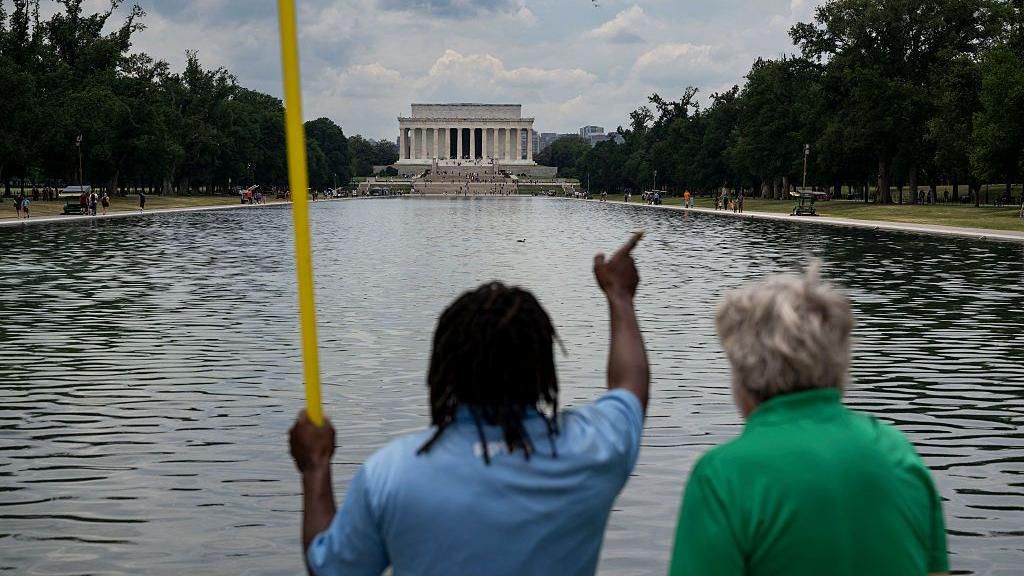
Reflecting Pool to be drained as Trump again blames ‘vandals’ for recent troubles
The iconic Lincoln Memorial Reflecting Pool, a centerpiece of Washington D.C.’s National Mall stretching more than 2,000 feet between the Lincoln Memorial and Washington Monument, is scheduled to be drained for a second time just weeks after a $16 million renovation project wrapped up. The sudden new round of repairs comes after U.S. President Donald Trump publicly blamed unknown vandals for causing the wide range of issues that have derailed the recently finished upgrade.
In a series of public comments starting Monday, Trump outlined multiple alleged acts of sabotage against the landmark. He initially claimed perpetrators had left a 300-foot gash in the pool’s structure, illegally dumped chemicals into the water, and destroyed newly planted surrounding grass. By that afternoon, speaking to reporters in the Oval Office, he revised the size of the reported cut to 350 feet, adding that unconfirmed reports suggested fertilizer may have been introduced to the water – a move that would explain the rampant algal growth that has turned the pool’s once-clear water bright green. The president did not provide any evidence to back his claims of deliberate vandalism, nor did he name any individuals or groups he suspected of involvement.
Even before Trump’s allegations of sabotage, the newly renovated pool had already begun to show significant problems. The deep blue paint that Trump specified for the pool’s bottom has started peeling off in large sections, which are now floating to the surface and being removed by visiting tourists. National Park Service crews have already attempted to curb the algal bloom by pouring hydrogen peroxide into the water, but the efforts have not resolved the discoloration issue. This is not the first time the Reflecting Pool, originally constructed in the 1920s, has faced long-term problems: for decades, the landmark has struggled with persistent leaks, structural decay, broken piping, algal overgrowth and bird waste buildup. Previous large-scale renovations carried out during the Obama and Biden administrations cost more than $100 million total, per Trump’s claims, and never resolved the ongoing issues.
The District of Columbia Water Authority confirmed Monday that it has issued the necessary permit to drain the pool for repairs. The contractor that completed the original renovation has stated it will cover the cost of all new fixes under the project’s warranty. Both the DC Water Authority and the National Park Service have been contacted for additional comment by major media outlets, with no additional statements released as of yet.
Trump has echoed aggressive threats from Jeanine Pirro, the U.S. Attorney for the District of Columbia, who has pledged to vigorously prosecute anyone found responsible for damaging the pool. In a post to his Truth Social platform Monday, the president warned that intentional damage (or even attempted damage) to national landmarks carries a maximum 10-year prison sentence, and that this penalty will be fully enforced against any perpetrator.
In addition to his pursuit of vandals, Trump also announced that his administration is preparing to file a lawsuit against ABC News over the outlet’s reporting on the Reflecting Pool issues. The president argued that ABC’s coverage was inaccurate, claiming the network failed to report that previous Democratic administrations spent more than $100 million on renovations that never produced a working, well-maintained pool. He asserted that his own $16 million project was delivered successfully, and that any current problems stem solely from vandalism, adding that the scope of his administration’s renovation ended up being far larger than initially planned, covering surrounding green spaces and sidewalks as well. Trump also said any financial damages awarded in the lawsuit against ABC would be directed straight to the U.S. Treasury. ABC News has been contacted for comment on the threatened lawsuit but has not yet issued a response.
-
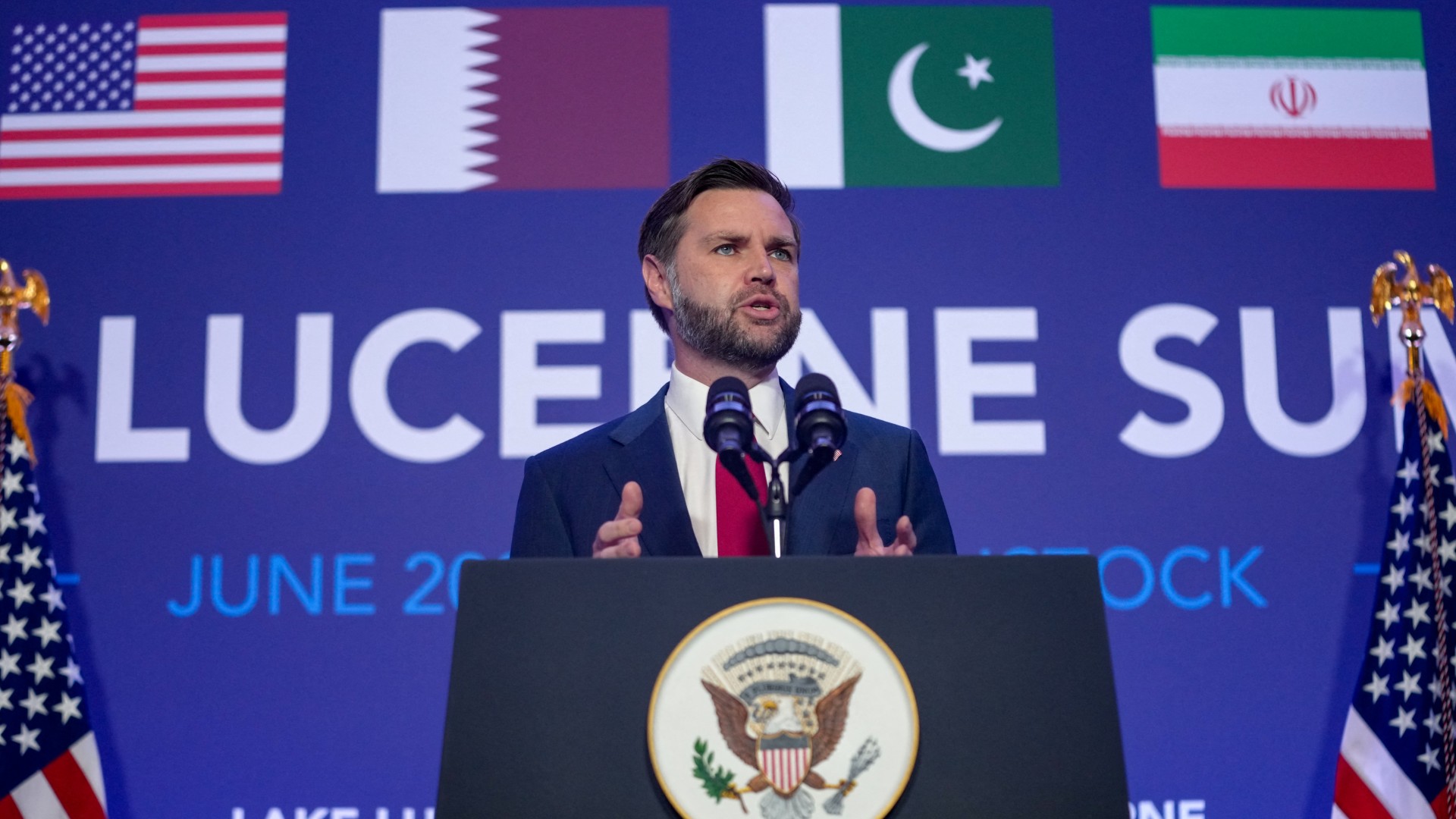
US suspends Iran sanctions after ‘good progress’ in talks
Fresh diplomatic progress between the United States and Iran has cleared the way for a temporary rollback of US sanctions on Tehran’s energy sector, even as the two sides remain publicly divided over the terms of nuclear inspection commitments reached during high-level talks in Switzerland.
US Vice President JD Vance characterized Monday’s discussions — the first high-level meeting under a pre-existing 60-day ceasefire and negotiation framework between Washington and Tehran — as having yielded “good progress.” Hours after the talks concluded, Treasury Secretary Scott Bessent confirmed that the US would issue a 60-day general license temporarily suspending sanctions on Iranian oil production and exports through August 21. All transactions completed during this window are required to be settled in US dollars.
Bessent outlined the agreement’s terms in a post on X, noting that the sanction rollback is tied to Iran’s pledges to maintain unobstructed navigation through the Strait of Hormuz and grant entry to inspectors from the International Atomic Energy Agency (IAEA). For Iran, which saw its oil output and exports plummet after the US imposed a full energy blockade amid rising hostilities over the Strait of Hormuz, the temporary relief is expected to deliver significant economic breathing room: prior to the blockade, Iran produced roughly 4.6 million barrels of crude per day and exported 1.5 million barrels daily.But Iran has quickly pushed back on the US’s framing of the deal. In a report carried by state-run news agency IRNA, foreign ministry spokesperson Esmail Baghaei stated that Iran never entered negotiations on its nuclear program during the talks, and that “no new commitments” related to IAEA inspections have been adopted. Any future engagement with the nuclear watchdog, Baghaei added, will proceed “under existing procedures set by Parliament and the Supreme National Security Council” — a position reaffirmed by the Iranian government, which stressed that any new inspection arrangements would require formal approval from both governing bodies before taking effect.
US President Donald Trump pushed back on Iran’s denial hours later via his Truth Social platform, writing that “Everybody is fully aware that Iran will agree to have Major Weapons Inspections in order to ensure ‘Nuclear Honesty’ long into the future.”
Monday’s meeting marked the conclusion of the first High-Level Committee gathering under the Islamabad Memorandum of Understanding (MOU), a bilateral agreement between the US and Iran that paused active hostilities for 60 days to create space for technical negotiations. Pakistan and Qatar are serving as mediators for the talks, with Vance leading the US delegation and Mohammad Bagher Ghalibaf heading Iran’s negotiating team. Pakistan’s Prime Minister Shehbaz Sharif, whose government brokered the original MOU, hailed Monday’s session as a success, confirming that the two sides have agreed to a roadmap to reach a final comprehensive agreement within the 60-day negotiation window.
The opening round of talks has already spurred a wave of follow-up diplomatic activity across the Middle East. The US confirmed that Secretary of State Marco Rubio will travel to Bahrain next week to attend the Gulf Cooperation Council summit, a trip first reported by Middle East Eye on June 10. Rubio will also make official stops in the United Arab Emirates (UAE) and Kuwait. The trip will mark the first visit by a senior US official to the Gulf since the US and Israel carried out joint strikes against Iran on February 28.
Gulf nations have been deeply divided over the recent conflict between Washington and Tehran. Bahrain, the UAE and Kuwait suffered the most significant harm during the hostilities, with the UAE adopting the hardest-line stance against Iran — a position that included carrying out its own strikes against Iranian targets, according to Trump. Bahrain, which hosts the US Fifth Fleet’s headquarters in Manama, saw both its military infrastructure and key commercial assets damaged: the Financial Times reported that Amazon’s regional cloud computing operations based in Bahrain were targeted in an attack early in the conflict.
By contrast, Oman, Qatar and Saudi Arabia pursued more moderate, balanced positions during the war. All three publicly condemned Iran’s retaliatory strikes on Gulf targets, but Saudi Arabia has long pushed for diplomatic negotiations between the US and Iran to de-escalate tensions. The Trump administration, however, has openly expressed frustration with Oman, which has declined to publicly reject Iran’s longstanding position that it has the right to charge transit fees for vessels passing through the Strait of Hormuz. Trump even publicly threatened to bomb Oman if it joined any regional framework to enforce such tolls. Oman shares territorial claims to the strategic waterway with Iran, making its position uniquely sensitive.
In the wake of Monday’s talks, Iran’s chief negotiator Ghalibaf announced via his official Telegram channel that he will travel to Oman for bilateral talks, alongside Iranian Foreign Minister Abbas Araqchi, to discuss cooperation on consolidating joint management of the Strait of Hormuz. Separately, Pakistan confirmed that Iranian President Masoud Pezeshkian will travel to Islamabad on Tuesday for further discussions on the ongoing negotiation process.
-

Argentina forward Julián Álvarez says he wants out of Atletico Madrid
ARLINGTON, Texas — Just hours after helping Argentina secure a 2-0 victory over Austria in a World Cup match held in this northern Texas city, star forward Julián Álvarez sent shockwaves through European soccer by publicly confirming his intention to leave La Liga side Atletico Madrid. The 26-year-old Argentine international did not shy away from addressing his future in an interview with ESPN, breaking his silence on months of unreported transfer speculation.
“The best outcome for all parties involved is for me to move on this transfer window,” Álvarez told reporters. “While I recognize this may not be the ideal moment to discuss this matter publicly, I also cannot hide the truth from anyone. I have been honest about my position, and I have already communicated my wishes directly to the club’s leadership, as I felt I owed them that transparency.”
News of Álvarez’s comments spread rapidly across global soccer media, and within hours of the comments being circulated in Spanish outlets, visual evidence of angry Atletico Madrid supporters burning the player’s jersey began circulating widely on major social media platforms. The images highlighted the deep frustration among the fanbase over one of their key attackers openly pushing for an exit from the club.
The public confirmation of Álvarez’s desire to leave comes just weeks after Real Madrid, Atletico’s city rivals, confirmed that they had tabled a 150 million euro (equivalent to $171 million) offer for the forward earlier this month, an offer that Atletico Madrid’s board rejected out of hand. Spanish soccer reporting has also connected this offer to the ongoing re-election campaign of Real Madrid president Florentino Pérez, who included a high-profile pursuit of the Argentine star as a key promise to voters ahead of the club’s leadership vote.
Real Madrid are not the only top Spanish side linked with a move for Álvarez: multiple reports out of Catalonia have also confirmed that FC Barcelona, another of European soccer’s biggest clubs, has also expressed concrete interest in signing the talented forward. Despite the overt interest from rival clubs and Álvarez’s public push for a transfer, Atletico Madrid has repeatedly maintained its position that it has no intention of entering negotiations to sell the player this summer. Per Spanish football media, Álvarez’s current contract with the club includes a massive release clause set at 500 million euros ($571 million), a figure designed to deter clubs from pursuing a mandatory exit for the player.
-
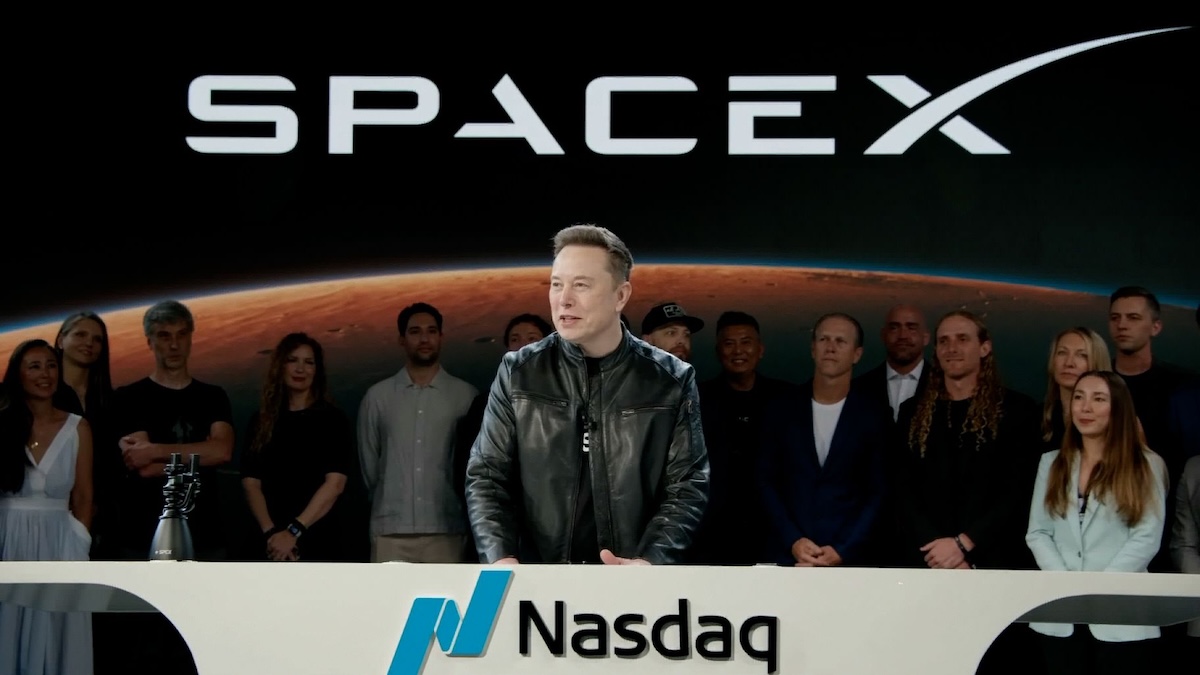
Before SpaceX IPO, investors in China secretly acquired stakes
Newly unsealed court documents obtained by Pulitzer Prize-winning news organization ProPublica have pulled back the curtain on previously undisclosed pre-IPO foreign investments in Elon Musk’s SpaceX, bringing long-simmering U.S. national security concerns about foreign access to sensitive aerospace technology into sharp relief. The records, which emerged from a corporate legal dispute in Delaware after a court battle that ended in the Delaware Supreme Court ruling in favor of ProPublica’s request for public access, detail how a U.S.-based intermediary firm named Tomales Bay Capital connected more than a dozen investors based in mainland China, Hong Kong, and Russia to early SpaceX share purchases between 2018 and 2021, at a time when the rocket company remained privately held. SpaceX, which builds a substantial portion of its core business around classified U.S. government contracts including spy satellite development for the Pentagon, has long faced scrutiny over how it manages foreign investment, given Washington’s longstanding concerns that Beijing seeks to acquire cutting-edge U.S. aerospace technology for military and espionage purposes. Strikingly, the records reveal that one of the most high-profile investors linked to these pre-IPO deals is an entity controlled by David Su, co-founder of leading Beijing-based venture capital firm MPCi. Su’s entity invested $15 million into a SpaceX-focused fund managed by Tomales Bay in 2020, court records show. This is not Su’s only connection to the global space industry: MPCi has been a prominent backer of multiple Chinese aerospace companies that compete directly with SpaceX, and two of those satellite firms have been formally sanctioned by the U.S. government. One of the sanctioned firms was penalized for allegedly supporting Russia’s Wagner mercenary group, and hit with a second round of sanctions just last month for accusations that it assists Iran in targeting U.S. military forces. MPCi also maintains formal partnerships with Chinese state-backed investment initiatives: in 2025, China’s Ministry of Science and Technology listed the firm as a partner in a national government program to advance China’s domestic aerospace sector. Beyond the Chinese-linked investments, the records also confirm that an investment entity tied to Qatar’s royal family acquired an early stake in SpaceX, adding another layer of complexity to the rocket maker’s roster of foreign backers. Investment values in the early SpaceX stakes ranged from just $800,000 to a high of $40 million, making the total foreign holdings in the company extremely small as a percentage of overall equity. Even so, the revelations come as SpaceX wrapped up the largest initial public offering in U.S. history last week, a listing that catapulted Musk to become the world’s first trillionaire, and that saw the company explicitly bar investors from China and Hong Kong from participating in the IPO due to cited “regulatory and compliance risks,” according to prior reporting from Bloomberg. That decision to block Chinese and Hong Kong investors in the public offering underscores the company’s awareness of the sensitivity of foreign ownership, and aligns with longstanding U.S. government allegations that China uses outbound investment into sensitive American technology sectors to acquire proprietary information and support military modernization efforts. No evidence of improper activity by Su or any of the named investors has emerged from the released records. But foreign policy and national security experts warn that the connections raise legitimate red flags for U.S. national security. Sarah Bauerle Danzman, an Indiana University professor and former State Department official who specializes in foreign investment scrutiny, noted that the core outstanding question is whether any China-based investors gained access to nonpublic information about SpaceX’s proprietary technology or strategic planning. “If an investor has conflicts of interests with other companies in China – if they could feed that information to competitors – it could be a national security concern,” Danzman explained. All parties connected to the early investments have pushed back against any implication of wrongdoing. In an official statement, MPCi noted that Su “has not received any nonpublic information of SpaceX,” adding that Su is a Singapore citizen residing in Singapore and that he only manages U.S. dollar-focused funds for the firm. That said, a 2024 public profile of Su notes that he has spent nearly 100% of his time working in mainland China over the past two decades. Ryan Stonerock, a lawyer representing Tomales Bay Capital, also emphasized in a statement that his client “has not provided any non-public, sensitive information regarding SpaceX to investors.” Stonerock explained that all investors in the firm’s SpaceX funds are passive limited partners, and that the only information they receive is standard quarterly fund valuation updates, with no additional access to SpaceX internal data. The lawyer also pushed back on characterizations that most of the investors with listed addresses in China or Russia are aligned with adversarial foreign governments, noting that “the vast majority, if not all, of the investors included on the unsealed Tomales Bay investor list are not citizens of any foreign adversary, including Russia or China, and certainly none of them are agents of Russia or China, or any other foreign adversary.” He added that many investors with listed mailing addresses in those countries do not actually reside there, and are instead citizens and residents of the U.S. or other allied nations. SpaceX itself has not responded to multiple requests for comment on the newly revealed records, and one of the sanctioned Chinese space companies named in the documents has previously denied allegations that it supported the Wagner Group. Beyond Su and the Chinese-linked investors, the records reveal a range of other notable names on the Tomales Bay investor roster, including former U.S. Education Secretary Betsy DeVos, Indian politician Abhishek Singhvi, and a British Virgin Islands entity linked to Indonesian billionaires. The records also highlight connections to Russian interests: a $10 million 2020 investment by a shell Delaware company called HAL9001 Partners Fund I was signed by venture capitalist Roman Sobachevskiy, who co-owned a separate company that was recently fined hundreds of millions of dollars by the U.S. Treasury Department for managing investments on behalf of a sanctioned Russian oligarch. Sobachevskiy has not been personally accused of any wrongdoing in connection with the SpaceX investment, and a Tomales Bay spokesperson confirmed that the Russian oligarch “had no involvement with the investment.” Sobachevskiy has not responded to requests for comment on who provided the capital for the SpaceX stake. On the Qatari side, the records show that funds affiliated with Bracket Capital, an investment firm with offices in Los Angeles, London, and Doha, invested roughly $48 million in SpaceX stock across multiple transactions between 2017 and 2020. An email from Tomales Bay founder Iqbaljit Kahlon to SpaceX CFO Bret Johnsen confirms that Bracket Capital manages capital on behalf of the Qatari royal family. The records also list a $10 million 2020 investment from AM FIG Cayman Limited, an entity with a listed address in Doha. It remains unclear whether the Bracket investments were made directly on behalf of the royal family or another client, and Bracket Capital has not responded to requests for comment. Kahlon, who has longstanding close ties to SpaceX leadership – with Johnsen testifying that Kahlon “has been with the company in one form or fashion longer than I have” during Johnsen’s 15-year tenure at the firm – built a lucrative business brokering pre-IPO SpaceX shares for outside investors. His model involved Tomales Bay purchasing SpaceX stock directly, packaging the shares into investment funds, and selling limited partnership stakes in those funds to outside investors for fees. In a 2021 pitch meeting with a potential Chinese investor, meeting minutes later entered into court records show Kahlon promised special access to SpaceX leadership, including quarterly business updates, on-site visits to SpaceX facilities, and opportunities to hold direct interviews with the company’s CFO. Prior reporting had already confirmed the existence of Chinese pre-IPO investors in SpaceX, but most individual identities have been closely guarded for years. The unsealed Tomales Bay investor list adds hundreds of new names to the public record of SpaceX ownership, offering the most detailed snapshot to date of the company’s pre-IPO shareholder base. While the early stakes held by foreign investors represented tiny fractions of SpaceX’s total equity, they have already generated massive windfalls: SpaceX’s valuation surged from $33.3 billion in 2019 to $2.7 trillion following last week’s IPO, turning even small early investments into substantial returns. A 2025 ProPublica report also previously revealed that SpaceX explicitly allowed Chinese investors to acquire pre-IPO stakes as long as investment capital was routed through offshore secrecy jurisdictions including the Cayman Islands, a practice laid out in court testimony from the Delaware corporate dispute. Musk also maintains extensive separate business interests in China, where his electric vehicle firm Tesla operates multiple large manufacturing facilities that produce the majority of the company’s global output.
-

Kylian Mbappé scores 2 goals to lead France to 3-0 win over Iraq and into World Cup knockout stage
PHILADELPHIA — Monday’s FIFA World Cup group stage match between France and Iraq made tournament history before delivering the kind of individual brilliance that has become synonymous with Kylian Mbappé, as Les Bleus weathered the first-ever rain delay in World Cup history to secure a 3-0 victory and a spot in the knockout round, with Mbappé netting twice to climb into elite company on the all-time tournament goalscoring list.
The 27-year-old French superstar, playing his 100th senior international match under soggy conditions at Lincoln Financial Field, opened the scoring in the 14th minute, slotting a left-footed strike from the edge of the 18-yard box past Iraq starting goalkeeper Ahmed Basil. The goal gave France a 1-0 lead heading into halftime, just as a severe thunderstorm rolled into Philadelphia, triggering a 2-hour and 2-minute delay that upended the match schedule.
Match officials ordered thousands of spectators to seek shelter in the stadium’s covered concourses and balconies as sheets of rain drenched the Kentucky bluegrass pitch, leaving grounds crews to squeegee standing water off the playing surface ahead of the second half. The venue, home of the NFL’s Philadelphia Eagles, has a history of weather-related disruptions: last season’s Eagles home opener was delayed 65 minutes by lightning, and Monday’s storm brought a familiar set of inconveniences for fans, from overpriced concession stands to unplanned breaks that extended the match long past its original end time. By the time play resumed, many fans had already headed for the exits, while the remaining French supporters waved tricolor flags and splashed through standing water in the concourses to pass the time. Iraq head coach Graham Arnold even had a viral moment wrestling with a rain poncho before retreating to the covered dugout.
When play finally restarted, it did not take long for Mbappé to add to his tally. In the 54th minute, Iraqi defender Zaid Tahseen played a sloppy back pass directly to Ousmane Dembélé, who controlled the loose ball and found Mbappé open in front of goal. The French captain tapped home his second of the night with his right foot, pushing France’s lead to 2-0. The reigning Ballon d’Or winner Dembélé capped the scoring late for France, sealing the 3-0 win for Didier Deschamps’ side.
The two goals moved Mbappé to 16 career World Cup goals, pulling him level with Germany’s Miroslav Klose for second on the all-time list, one clear Brazil’s Ronaldo and just two behind new record holder Lionel Messi. Messi, Mbappé’s long-time rival, had stretched his record to 18 goals earlier the same day, scoring twice in Argentina’s win over Algeria in Kansas City. Mbappé came close to claiming a hat trick on a late breakaway, but his final effort missed the target before he was substituted out in the 90th minute.
Beyond the milestone, the win secures France’s place in the knockout round as one of the tournament’s co-favorites alongside Spain. Les Bleus could return to Philadelphia for a quarterfinal match against Germany on July 4 if results hold in the remaining group stage games.
For Iraq, making just their second World Cup appearance in history after debuting in 1986, the match brought more than just a defeat. Star striker Aymen Hussein, who scored his 34th international goal in Iraq’s opening 4-1 loss to Norway, was forced off with an apparent injury just 26 minutes into the first half, replaced by Ali Al-Hamadi. Basil, who got his first start of the tournament in place of captain Jalal Hassan who conceded four goals against Norway, could not stop Mbappé and Dembélé’s attacking pressure on the night.
For the fans that stayed through the entire two-hour rain delay and the final whistle, the night ended with a celebration of one of the game’s greatest players, who continues to chase history as the tournament progresses.
-

Ransom note claimed Nancy Guthrie died after abduction
Five months after 84-year-old Nancy Guthrie, mother of prominent *Today Show* co-anchor Savannah Guthrie, was abducted from her Arizona home in the middle of the night, new details have emerged about two ransom notes sent to the victim’s family and major news outlets in the weeks following the kidnapping.
Nancy Guthrie was last seen alive at her residence near Tucson, Arizona, on January 31. According to senior law enforcement sources cited by CBS News, the BBC’s U.S. news partner, the first ransom note arrived just one day after she was taken from her bed in the dark of night. Addressed directly to Savannah Guthrie, the note demanded a multi-million-dollar ransom payment in bitcoin, and included specific, accurate details about Guthrie’s home layout, her bedroom, and the surrounding neighborhood — details that led investigators to believe the sender had direct knowledge of the abduction.
A second, follow-up note was mailed on February 6. It used matching phrasing and handwriting styling consistent with the first communication, but abandoned all ransom demands. In this second message, the senders claimed Nancy Guthrie had died while in their custody, adding that the death was unintended and extending an apology to the Guthrie family for the tragedy.
While authorities have not publicly confirmed whether they consider the two notes authentic, Savannah Guthrie and her family have stated publicly that they believe the communications are genuine. The notes were sent both to local Arizona news outlets and national U.S. media organizations including TMZ, and multiple news outlets confirmed that law enforcement requested they withhold detailed contents of the notes while the investigation moves forward.
In a video statement released shortly after the second note was received, Savannah Guthrie and her siblings addressed the kidnappers directly. “We received your message, and we understand,” the NBC News host said. “We beg you now to return our mother to us so that we can celebrate with her. We would pay.”
From the earliest days of the investigation, authorities and the Guthrie family repeatedly warned the public that Nancy Guthrie lived with chronic poor health and required ongoing critical medication that she would not have access to after being abducted. To date, no trace of the 84-year-old has been found.
A combined reward of $1.1 million has been posted for information that leads to Nancy Guthrie’s recovery: the Guthrie family put forward $1 million, while the FBI added an additional $100,000 reward. In a public update on February 24, Savannah Guthrie acknowledged the family holds out hope but is prepared for the worst: “We know that she may be lost, she may already be gone, but we will keep hoping.”
The Pima County Sheriff’s Department, which is leading the investigation alongside the FBI, has declined to confirm or comment on the contents of the ransom notes, but confirmed in a statement that the probe “remains active and ongoing.” “The Pima County Sheriff’s Department continues to work closely with the FBI as investigators follow up on leads, review information, and pursue the facts surrounding this case,” a department spokesperson said. The BBC has reached out to the FBI for additional comment on the investigation, and no new suspects have been publicly named as of this reporting.
-

A black jaguar oracle in Rio de Janeiro sniffs Brazil to beat Scotland in Group C challenge
As the 2023 FIFA Women’s World Cup builds up to a critical Group C showdown between Brazil and Scotland, a unique new animal oracle has thrown its weight behind Brazil – and most soccer fans are eager to see if its prediction will hold true. On Monday, Poty, a majestic black jaguar based at Rio de Janeiro’s BioParque, stepped into the global spotlight for a lighthearted pre-match forecasting event that drew crowds of local residents and curious soccer supporters.
The event organizers set up two specially designed enrichment boxes for the big cat, each decorated to represent one of the two competing nations. As onlookers held their breath, Poty slowly approached the offerings, sniffing each box carefully to weigh her decision. After a few moments of consideration, she made her decisive move, selecting the box marked with Brazil’s national colors. But in a twist that has sparked discussion among the jaguar’s handlers, Poty doubled back after her initial pick to give the Scotland box a second, thorough inspection.
That small, final gesture is not something to brush off, according to Caio de Souza Silva, a biologist who works closely with Poty at BioParque. Speaking to reporters after the event, Silva noted that the jaguar’s second look could signal a far more challenging match for Brazil than many fans expect. “Maybe it indicates a tough game for us,” Silva explained. “Maybe it’s a win, but it could also be a more complicated match. Hopefully we don’t concede a goal, but it may suggest a more physical game for Brazil.”
Heading into Wednesday’s clash, which is set to take place in Miami, Group C standings remain tightly contested. Brazil currently sits as co-leader of the group alongside Morocco, with both nations holding four points. Brazil edges out Morocco on goal difference, putting them in a strong position to advance. Scotland, meanwhile, is not far behind with three points, and the side remains in contention to move on to the knockout stage regardless of the result of their match against Brazil. In the other Group C fixture matchday, Morocco will face Haiti, a side that has yet to earn a single point in the tournament so far.
Animal oracle predictions have become a beloved quirky tradition for major international soccer tournaments, stretching back to the iconic Paul the Octopus who rose to fame for his perfect prediction streak at the 2010 World Cup. For many fans, these lighthearted forecasts add an extra layer of fun and anticipation ahead of high-stakes matches.
-

How 100 Romanian hospitals switched to pen and paper to defeat a national cyber-attack
In early February 2024, a coordinated ransomware cyberattack swept through Romania’s healthcare network, triggering one of the most high-stakes responses to a global healthcare cyber incident in recent memory. What began as a quiet breach of a popular domestic medical software platform quickly grew into a crisis that put hundreds of thousands of patient lives at risk, and ultimately became a global case study for how nations can defend critical infrastructure against criminal hacking groups.
The attack unfolded when criminals exploited a vulnerability in Hippocrates, a widely used medical management system developed by Bucharest-based software firm RSC. The system, used by more than 100 hospitals across Romania, handles every core function of hospital operations: from patient admissions and test result tracking to pharmacy inventory management and staff payroll. Cyber attackers deployed the BackMyData ransomware strain through the compromised software, quietly encrypting files across connected hospital networks before any IT team detected abnormal activity.
The first alert came on a Sunday morning, when staff at Pitești Children’s Hospital, located northwest of Bucharest, spotted unexplained errors on their system. By dawn the next day, dozens of hospitals across the country reported that Hippocrates had gone completely dark, with all patient and operational files scrambled into unreadable gibberish. The attackers demanded a total ransom of €160,000 in bitcoin to unlock the encrypted data.
At Romania’s national cybersecurity directorate (DNSC) in Bucharest, cyber chief Dan Cimpean faced an urgent, no-win decision. With the ransomware spreading rapidly from hospital to hospital through connected networks, Cimpean made the bold call to issue an immediate order: more than 100 affected and at-risk hospitals had to disconnect from the internet entirely to halt the attack’s progress.
The decision stopped the hackers in their tracks, buying cybersecurity teams critical time to investigate the breach and contain the damage, but it threw day-to-day hospital operations into chaos. For frontline medical staff like surgeon Oana Goidescu, who was on shift at Buzău Hospital, 75 miles northeast of Bucharest, when the alert hit, losing digital access meant losing every tool the clinical team relied on.
“An IT record is not just a list of patients,” Goidescu explained in the aftermath of the incident. “For every patient, we request lab tests, radiology scans, medicines and supplies. All of that was gone overnight.”
Clinical teams across the country quickly improvised analogue workarounds to keep patient care running. Surgeons and doctors switched back to pen and paper for patient records. At Bucharest’s Carol Davila Hospital, medical director Vlad Paic said his team developed a custom offline registration system within hours, asked labs to deliver results on printed paper, and used offline spreadsheets to track care. Many clinicians noted that Romania’s relatively recent shift to full digital health records left many staff still comfortable with paper-based workflows, a surprising advantage during the blackout.
While frontline staff managed patient care, cybersecurity investigators worked around the clock to map the damage and evict the hackers. Working closely with developers at RSC, the team confirmed that 26 hospitals had been fully infected with BackMyData, while the rest of the facilities had avoided encryption thanks to the early internet disconnection. DNSC leadership made a second critical, binding decision: no hospital would be allowed to negotiate with or pay the attackers, a stance that security experts widely back as a long-term deterrent to future ransomware attacks.
The DNSC also leaned on open, consistent communication with the public and media to manage the crisis, a choice that DNSC leadership later cited as core to the response’s success. Public warnings urged patients to avoid non-urgent hospital visits to reduce strain on offline teams, though waiting rooms still filled with patients seeking care, and some frustrated visitors directed their anger at overstretched frontline staff.
IT teams worked at breakneck speed to restore systems from existing backups. A key stroke of luck and preparation meant most hospitals maintained recent, intact offline backups of their patient data, allowing teams to restore systems much faster than many experts expected. Within five days of the attack being detected, nearly all hospitals were back online and operating near full capacity. Remarkably, there were no reported deaths or permanent serious harm to patients connected to the outage, though it took weeks for staff to re-input all the paper records generated during the blackout, and some small amounts of data were lost forever.
In the months following the attack, Romania’s coordinated response has become a benchmark test case for disaster planners around the world. The incident also underscores a stark new reality for global healthcare: the FBI recently confirmed that healthcare has overtaken all other sectors as the most targeted area of critical national infrastructure for cyberattacks.
Recent years have seen a string of devastating attacks on global healthcare systems that have caused measurable harm. In 2023, a breach of a UK blood testing firm that affected a dozen London medical centers was officially linked to a patient’s death, marking the first publicly confirmed fatalities from a healthcare cyberattack. The same year, U.S. healthcare payment platform Change Healthcare paid attackers a $22 million ransom after a widespread breach, and another major U.S. provider Ascension suffered a disruptive attack that shut down services across multiple facilities.
Alina Bîzgă, a cybersecurity analyst at Bucharest-based global security firm Bitdefender, explained why criminal groups increasingly target hospitals over other sectors. “Hospitals handle time-sensitive, life-saving critical services, and criminals calculate that the more widespread disruption they cause, the more pressure hospital and government leaders face to pay a ransom quickly,” she said.
Dan Cimpean, who led Romania’s response, noted that the risk of such an attack exists in every nation, regardless of size or development level. “The more technology you adopt, and the more digitized your healthcare system becomes, the greater your exposure to these risks,” he said. “This was not a problem unique to Romania — it could have happened anywhere.”
As of mid-2024, Romanian police have declined to comment on the ongoing investigation into the identity of the attackers behind the BackMyData incident. In 2023, an international law enforcement operation took down the dark web website of a ransomware gang linked to the BackMyData strain, and four Russian suspects connected to the group were arrested outside of Russia, whose government does not cooperate with Western law enforcement on cybercrime prosecutions.
-
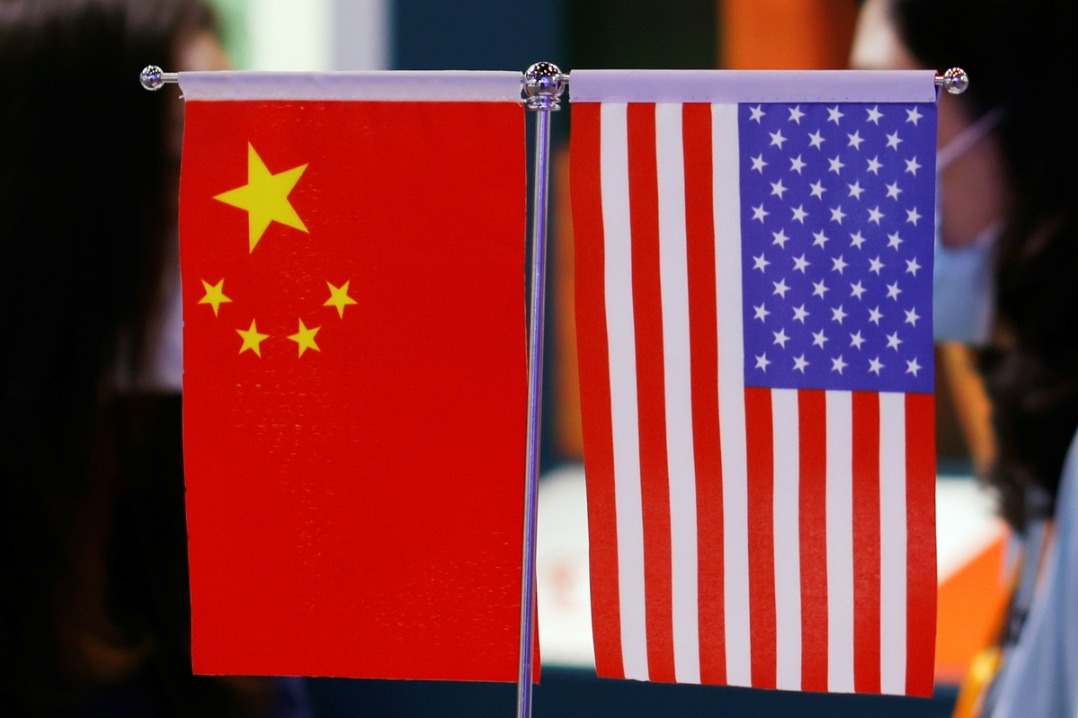
China slaps export controls on 10 US firms
In a measured but firm response to Washington’s latest unilateral expansion of its so-called list of Chinese military-linked companies, Beijing rolled out two key countermeasures on June 22, 2026: adding 10 U.S. entities to its export control roster and banning Chinese government agencies from procuring goods from 46 American firms. This action comes less than two weeks after the U.S. Department of Defense added a new batch of Chinese companies operating in cutting-edge sectors including electric vehicles, artificial intelligence, biotechnology and robotics to its blacklist.
According to an official announcement from China’s Ministry of Commerce, the 10 listed U.S. companies operate across aerospace, defense, robotics, maritime services and rare earth industries. All exports of dual-use Chinese goods and technologies — items that have both civilian and military applications — to these entities are now prohibited. The order also requires that any ongoing export activities to the listed firms be halted immediately, and bans all third-party organizations and individuals from transiting or supplying Chinese-origin dual-use items to the sanctioned entities.
A spokesperson for the Ministry of Commerce emphasized in a separate statement that the countermeasures are a necessary and proportional response to the U.S. government’s malicious expansion of the so-called “Chinese military company list.” The U.S. updated list now includes more than 180 Chinese entities, with its scope expanding far beyond traditional defense industries to cover high-growth commercial sectors including cloud computing, AI, biotechnology and advanced robotics.
Industry analysts note that Washington’s ongoing blacklisting campaign, designed to slow China’s technological development through targeted supply chain restrictions, has injected fresh uncertainty into bilateral relations that had just begun to show tentative signs of improvement following a landmark meeting between the two countries’ heads of state in Beijing one month prior.
“China does not start conflicts, but it also will not allow unilateral bullying to go unchallenged,” explained Liao Fan, director of the Institute of World Economics and Politics at the Chinese Academy of Social Sciences. “When other parties cross our national security red lines, we respond in accordance with international and domestic regulations to defend our core national interests, protect the development of our domestic industries, and uphold the rules-based order of global trade.” Liao added that the countermeasures will establish a clear deterrence mechanism, forcing U.S. policymakers to carefully consider the costs of future unilateral sanctions against Chinese entities.
Data from a recent survey released by the US-China Business Council earlier this month already underscores the economic costs of escalating trade tensions. The survey found that growing operational uncertainty for U.S. businesses in China is increasingly driven by unpredictable U.S. export control policies, and the countermeasures that inevitably follow U.S. sanctions have compounded challenges for American companies operating in the Chinese market. Respondents warned that any further expansion of Chinese export controls would force U.S. firms to undertake costly, multi-year overhauls of their global supply chains to adapt to new trade restrictions.
In the second of Monday’s countermeasures, China’s Ministry of Finance announced a government procurement ban targeting 46 U.S. companies, including major American defense contractors Lockheed Martin and Raytheon. The ban also bars all affected firms’ subsidiaries from conducting commercial operations within Chinese territory.
Cui Fan, a professor of international trade at the University of International Business and Economics in Beijing, pointed out that the targeted design of Beijing’s response — which sanctions specific entities rather than entire broad sectors, and excludes U.S.-invested enterprises that operate legally within China — signals that Beijing’s goal is to pressure Washington to reverse its unjust blacklisting policy, not to trigger a broader escalation of bilateral tensions.
“This calibrated approach makes clear that China remains open to returning to dialogue and cooperation, but will not stand idly by while its core interests are undermined,” Cui noted.