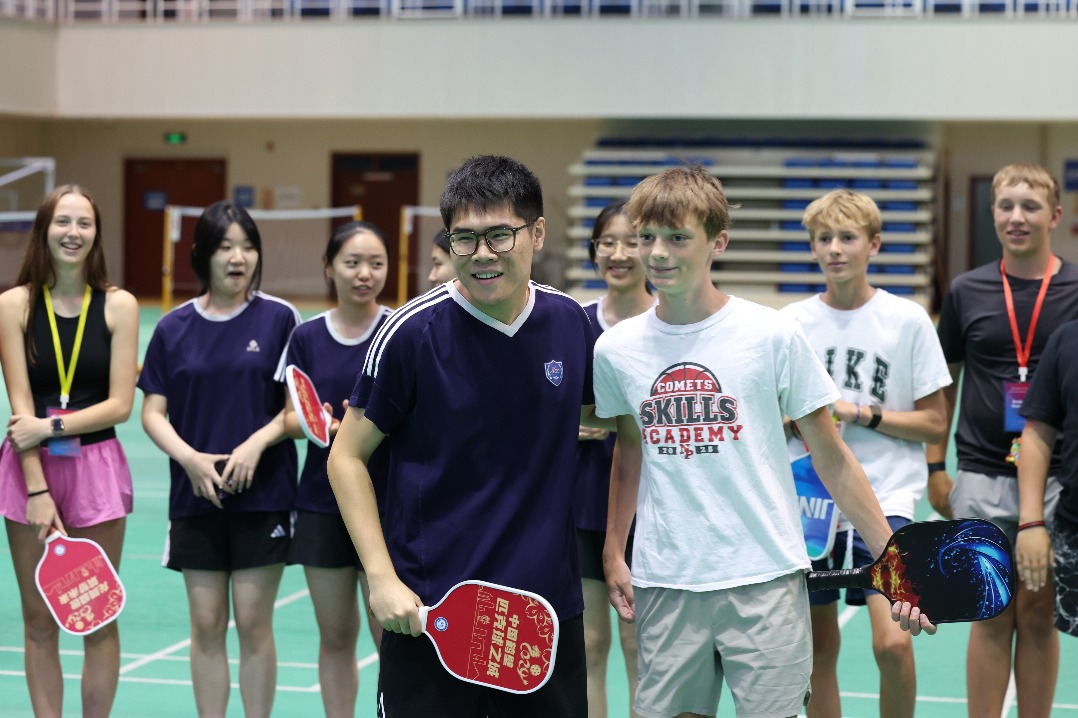
On a crisp Tuesday in Beijing, young athletes from China and the United States traded serves, laughed over quick points, and built unexpected friendships at the 2026 China-US Youth Pickleball Friendship Tournament, hosted by the University of International Business and Economics. The one-day event brought together 42 American high school students from an Iowa study tour delegation alongside Chinese student players from Shijiazhuang Foreign Language School, turning a casual recreational sport into a powerful platform for people-to-people diplomacy between the two nations.
Organizers of the tournament framed the gathering as more than just a athletic competition: they designed the event to position pickleball as an accessible, informal bridge for cross-cultural exchange, nurturing the next generation of informal ambassadors for China-US relations and laying small, solid groundwork for the long-term development of bilateral ties. Unlike formal diplomatic summits, the mixed doubles format paired Chinese and American players as teammates, forcing collaboration over competition and creating natural opportunities for connection beyond language barriers.
For 18-year-old Zuo Yining, a graduating senior from Shijiazhuang Foreign Language School, that collaboration worked far better than any formal exchange activity he had joined before. Teamed up with a teenage American partner during his matches, he recalled seamless on-court coordination that required barely any verbal communication. “We barely needed verbal communication amid intense rallies. A simple eye contact or gesture was enough for us to figure out when to run and catch the ball together,” Zuo explained.
The experience, he said, has already forged lasting personal bonds that extend far beyond the tournament court. “A single match, a casual meal or small talk can easily bring teenagers close. The US students I met are warm, sincere and outgoing,” he noted. As someone who regularly hosts foreign visitors at his school, Zuo has long kept in touch with international friends he met through past exchange programs via social media, and one of his former American guests is set to return to China this August — Zuo has already extended an invitation for him to stay at his family home. “We have cultural differences, but every teenager here, regardless of nationality, has a warm and open heart,” he added.
Laura Michelle Kelly, the high school teacher leading the Iowa student delegation, shared that every one of the 42 American teenagers on the trip is visiting China for the first time. Following the tournament, the group will spend seven days traveling across both Beijing and Shanghai, exploring the country’s cultural and urban landscapes for themselves. Kelly said she and her students have already been deeply impressed by the warmth of their reception across the capital. “Everyone here has been incredibly welcoming, making this journey fantastic,” she said.
She also echoed organizers’ praise for pickleball as the perfect activity to bring young people from different countries together. The sport has exploded in popularity across American schools and community parks over the past five years, making it a common pastime for teenagers on both sides, and its low barrier to entry makes it an ideal icebreaker. “Pickleball creates a relaxed atmosphere that combines healthy competition and teamwork. It is a lighthearted way for young people from different countries to get to know one another,” Kelly explained.
Past exchange groups from Iowa that have traveled to China have returned home with glowing reports of their trips, Kelly said, and those positive accounts have sparked growing curiosity about China among more Iowa teenagers, leading to rising demand for similar exchange opportunities. She also called for continued reciprocal exchange, extending an open invitation for Chinese student groups to visit Iowa in the future to build their own connections.
For 15-year-old Iowa student Carrigan Grace Rasmussen, the entire trip has already exceeded her expectations. An avid pickleball player herself, she said the sport is ubiquitous in her home community, where she and her friends gather regularly to play between classes and on weekends. Like Zuo, she emphasized that shared participation in sport cuts through cultural and political differences to create genuine closeness. “Competitions help us build close bonds. When either side makes mistakes, we can cheer each other up and offer support,” she said, summing up the event’s core spirit: that common ground is easier to find than many think, when you start with a ball and a shared love of play.