博客

  • Watch: BBC at site of deadly Russian attack on Kyiv flats

    Watch: BBC at site of deadly Russian attack on Kyiv flats

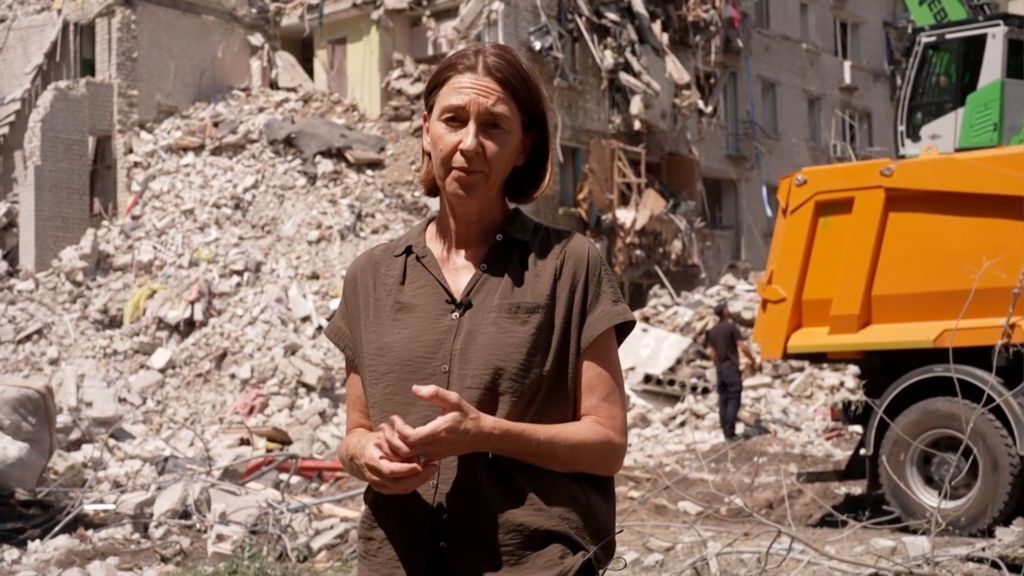
    In the wake of a devastating Russian attack that left a residential neighborhood in Kyiv shattered, BBC correspondent Sarah Rainsford has traveled to the scene of the violence to document the aftermath. The target of the strike was a nine-story apartment building, a structure that once housed dozens of ordinary Ukrainian families going about their daily lives. Today, that building stands no more; it has been reduced to a sprawling pile of twisted concrete, broken glass, and splintered rebar, a stark physical reminder of the human cost of the ongoing conflict.

    Rainsford’s on-site reporting captures the full scale of the destruction, offering audiences a first-hand look at the damage inflicted on civilian infrastructure in the Ukrainian capital. What was once a community of homes is now a scene of chaos, with rescue workers sifting through the debris in search of survivors and recovering the remains of those killed in the attack. The assault, which targeted a purely civilian site, has underscored the risks that ordinary residents of Kyiv face daily amid sustained Russian missile and drone strikes across the country.

    As one of the few international correspondents still reporting regularly from within Ukraine during the full-scale invasion, Rainsford’s dispatch from the destroyed apartment block brings unfiltered, on-the-ground context to the attack, cutting through official statements to show the real-world impact of the violence on civilian populations.

  • Top EU court dismisses Google appeal of $4.5 billion antitrust fine

    Top EU court dismisses Google appeal of $4.5 billion antitrust fine

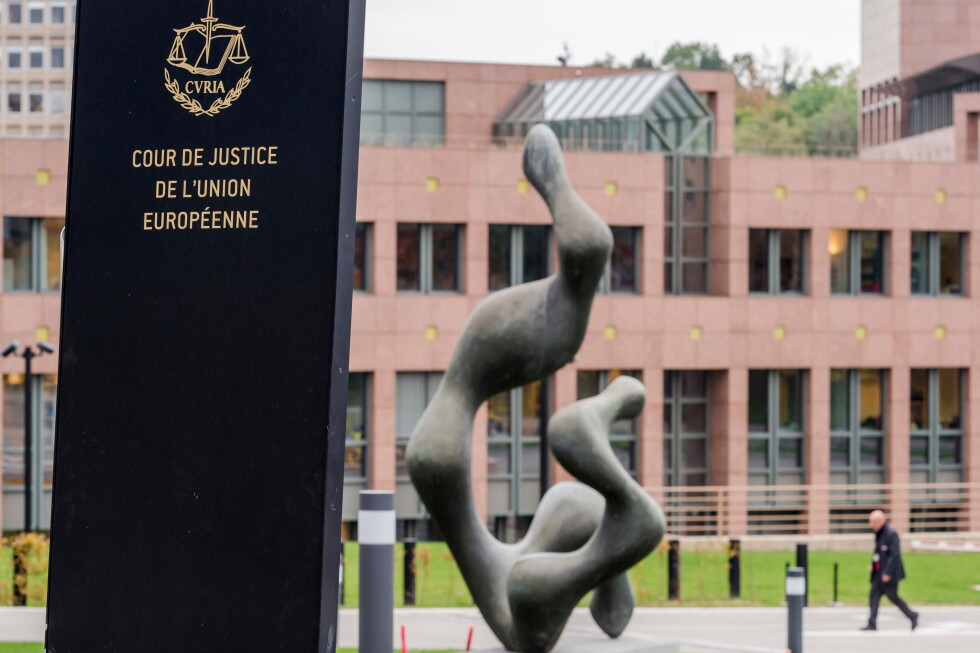
    BRUSSELS — In a landmark decision that solidifies European regulators’ leading role in reining in the power of big tech, judges at the European Union’s highest judicial body have rejected Google’s final appeal against a record 4.1 billion euro ($4.5 billion) antitrust penalty. The fine was originally issued over allegations that Google abused the dominant market position of its Android mobile operating system to stifle competition and narrow consumer options.

    The legal battle stretches back six years to 2018, when the European Commission first unveiled the penalty over Google’s business practices related to Android. Since that initial ruling, the case has wound its way through multiple layers of the EU’s judicial system, with Thursday’s judgment from the European Court of Justice bringing the long-running dispute to a definitive close.

    “The appeal filed by Google and its parent holding company Alphabet challenging the earlier ruling from the General Court is dismissed in full,” the Luxembourg-based court stated in its official ruling. This outcome formally upholds the penalty that was originally handed down for anti-competitive behavior tied to Google Search’s abuse of market power within the Android ecosystem.

    Android, an operating system Google positions as free and open-source, currently holds the title of the world’s most widely used mobile operating system, outpacing Apple’s iOS in global market share. Throughout the appeal process, Google maintained that its Android platform has driven down consumer prices for smartphones, expanded access to mobile technology, and created robust competition against its largest rival, Apple.

    This penalty against Google is just one of three major antitrust fines that the European Commission levied on the tech giant between 2017 and 2019, which together add up to more than $8 billion in total penalties. These early enforcement actions placed the 27-nation EU years ahead of other major global economies in the movement to curb anti-competitive practices by the world’s largest digital firms.

    In the years following those initial penalties, the European Commission has expanded its regulatory crackdown on big tech significantly, launching new antitrust investigations targeting other leading digital players including Amazon, Apple and Meta (formerly Facebook). It has also enacted sweeping new regulatory frameworks designed to specifically target the market power of the largest digital platforms, most notably the landmark Digital Markets Act.

    Agustín Reyna, director general of the European Consumer Organization, praised the court’s final judgment, noting that the ruling underscores the need for expanded proactive regulation like the Digital Markets Act to stop unfair corporate practices before they harm consumers and competition. “Today’s judgment sends a very clear message: dominant companies cannot use their power to shut out competition and limit consumer choice,” Reyna said. “Today is a big win for Europe.”

  • First Afcon, now World Cup – Senegal trapped in ‘football hell’

    First Afcon, now World Cup – Senegal trapped in ‘football hell’

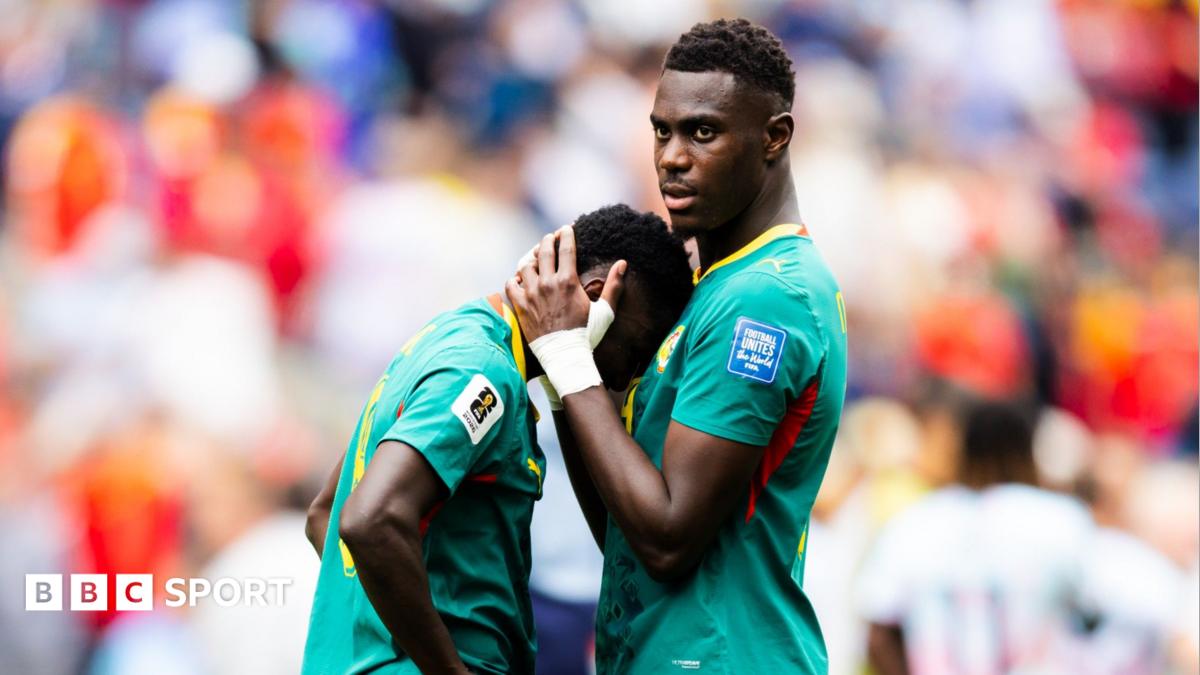
    In Seattle, the American city best known as the birthplace of rock icons Nirvana, Senegal’s World Cup dream collapsed in gut-wrenching fashion this week, as a controversial extra-time penalty awarded via VAR intervention sealed a 3-2 last-gasp victory for Belgium that eliminated the Teranga Lions. For a side that already knows all too well the pain of contentious late VAR calls, the exit carried a devastating sense of déjà vu, mirroring the chaos and heartbreak of January’s Africa Cup of Nations final that still hangs over Senegalese football.

    For 85 minutes of the round-of-16 clash, Senegal produced one of their finest performances in recent memory, cruising to a commanding 2-0 lead thanks to clinical finishes from Premier League stars Habib Diarra and Ismaila Sarr. Sarr, who has been in irrepressible form throughout the tournament and just came off a club season where he scored 21 goals to lead Crystal Palace to the UEFA Conference League title, produced a candidate for goal of the tournament: a deft chest control of a long clearance that set up a blistering strike past Belgium keeper Thibaut Courtois. The goal also saw the 28-year-old equal legendary Cameroon striker Roger Milla’s 34-year-old African record of four World Cup goals, set at the 1990 tournament in Italy. But for Sarr, the milestone will forever feel hollow — just as it did for Senegal as a whole, who never got the chance to build on their lead and advance to the quarter-finals.

    What followed was a historic comeback for Belgium, and another chapter of agony for Senegal. Romelu Lukaku cut the deficit in the 86th minute, before Belgian midfielder Youri Tielemans scored an 89th-minute equaliser, capitalizing on a misjudged rushed punch from Senegal stand-in keeper Mory Diaw that left the net unguarded. Then, deep in the 125th minute of extra time, came the decisive moment that sealed Senegal’s fate: Monaco midfielder Lamine Camara slid in to challenge Tielemans, and referee Said Martinez sided with VAR to award a penalty, ruling Camara had caught Tielemans’ heel and disrupted his attempt to play the ball. Camara was visibly distraught after the call, and was comforted by his teammates as Tielemans stepped up to fire the spot kick into the top corner, beating the stranded Diaw. Unlike the 2025 Afcon final, there was no heroics from first-choice keeper Edouard Mendy, who was sidelined with injury for the World Cup clash and could only watch on helplessly from the touchline.

    The parallels between this exit and the controversial Afcon final against Morocco in January are almost impossible to ignore. In that match, a late controversial VAR-awarded penalty also left Senegal reeling, after a late Sarr goal was ruled out for a soft foul call, before a late penalty was given to Morocco following a VAR review. Chaos erupted after the call, with Senegal players walking off the pitch in protest, fans rioted, and stewards were injured before Sadio Mane coaxed the team back to finish the match. Morocco missed the penalty, Senegal won 1-0 in extra time, only to have the title stripped by the Confederation of African Football two months later. The case is currently before the Court of Arbitration for Sport, with Senegal continuing to fight to overturn the decision.

    FIFA had tightened regulations following the Afcon final chaos to prevent any repeat of a player walk-off, and while Senegal’s side protested the penalty call loudly, they finished the match without disruption. Still, the aftermath has already brought significant unrest for the national program. Pape Gueye, the Villarreal midfielder who scored Senegal’s disputed winning goal in the Afcon final and was recently named the best African player in La Liga, announced he would take a break from international football until head coach Pape Thiaw and his entire coaching staff are removed from their posts. Gueye was substituted off in the 66th minute of the Belgium match, a tactical change that has drawn widespread criticism from Senegalese fans back home, who have also questioned Thiaw’s decision to withdraw Everton forward Iliman Ndiaye.

    Speaking after the final whistle, Thiaw — who took charge of Senegal in December 2024 — acknowledged the crushing nature of the defeat, drawing comparisons that feel all too familiar. “We had the game in hand,” he said, describing the loss as “cruel.” When asked about the penalty, he added, “Our interpretation was that there was no penalty. You have to accept, even if it’s difficult.” He also noted that after conceding the first Belgian goal, his side dropped deeper into defense, opening the space for the equalizer. “We tried to get back on our feet, but unfortunately it didn’t work,” he said. “It’s not easy to lose this kind of match. Unfortunately, it slipped away from us, but it’s football.” For Thiaw, who has now seen two major tournament runs end in controversy, the experience evokes the legend of Sisyphus — forever rolling a boulder up a hill, only to see it roll back down just before reaching the top. From Afcon champions in waiting to World Cup fall guys in six months, Senegal’s latest heartbreak has once again left one of African football’s brightest nations wondering what they have to do to outrun cruel football fate.
  • Former Spain and Arsenal playmaker Santi Cazorla retires at 41

    Former Spain and Arsenal playmaker Santi Cazorla retires at 41

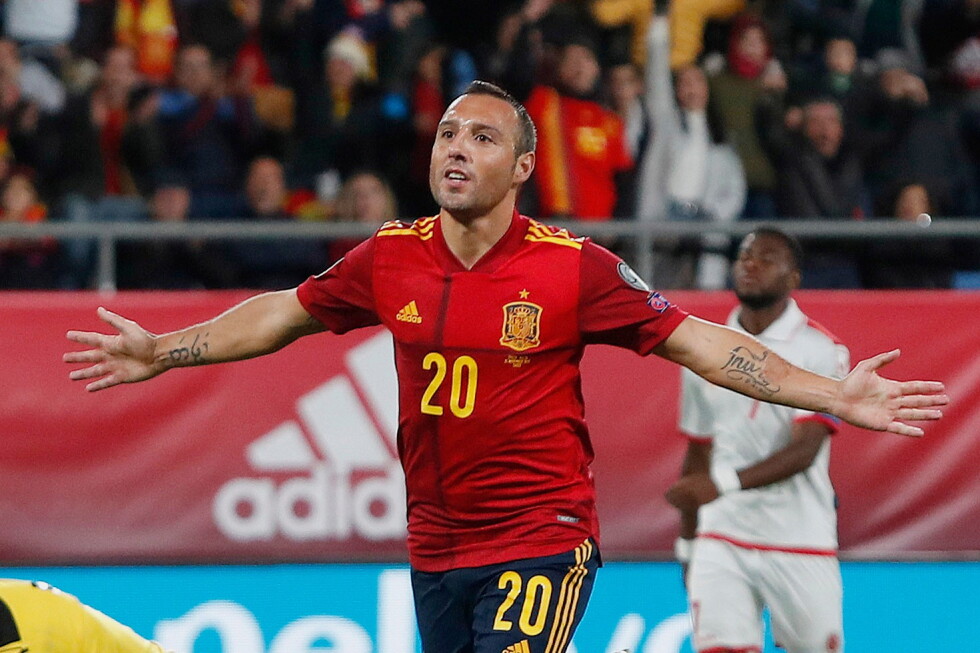
    After more than two decades of dazzling playmaking, trophies, and inspiring resilience against devastating injury setbacks, beloved former Spanish international footballer Santi Cazorla has called time on his professional career at the age of 41. The 41-year-old made the heartfelt announcement public via a reflective post on his personal Instagram account, bringing a close to one of the most memorable careers in modern Spanish football. “There are stories that don’t end…they live on forever,” Cazorla wrote in the caption of his retirement post, adding a simple note of gratitude: “Thank you for everything.”

    Most recently, Cazorla had returned to his boyhood club Real Oviedo in 2023, a homecoming that delivered immediate success: he played a key role in guiding the side to promotion to Spain’s top-flight La Liga at the end of the 2023-24 season. However, the club could not hold onto its top division status, dropping back to the Segunda Division in the most recently completed campaign.

    Cazorla built his reputation as one of the most technically gifted midfielders of his generation during successful stints at two of Europe’s most well-known clubs: Spain’s Villarreal and England’s Arsenal. During his six-year tenure at Arsenal from 2012 to 2018, he emerged as a fan favorite and a consistent creative catalyst under legendary manager Arsène Wenger, helping the club claim two FA Cup titles during his spell in North London.

    On the international stage, Cazorla’s legacy with the Spanish national team is defined by two major continental triumphs: he was part of the iconic Spanish squads that won back-to-back UEFA European Championship titles in 2008 and 2012, cementing his place in Spanish football history. A cruel injury kept him from featuring in Spain’s 2010 FIFA World Cup win, a highlight many believed he deserved to be part of after his standout performances in the years leading up to the tournament.

    Throughout his decades-long career, Cazorla faced and overcame repeated severe injury scares that many believed would end his career far earlier. Most notably, a persistent ankle injury kept him sidelined for nearly two years in the mid-2010s, requiring multiple surgeries and raising fears that he would never return to top-level football. His eventual comeback was widely hailed as one of the most inspirational stories in modern sport, showcasing his unmatched grit and love for the game.

  • Survivor buried by Venezuela quakes eight days ago is cheering rescuers on

    Survivor buried by Venezuela quakes eight days ago is cheering rescuers on

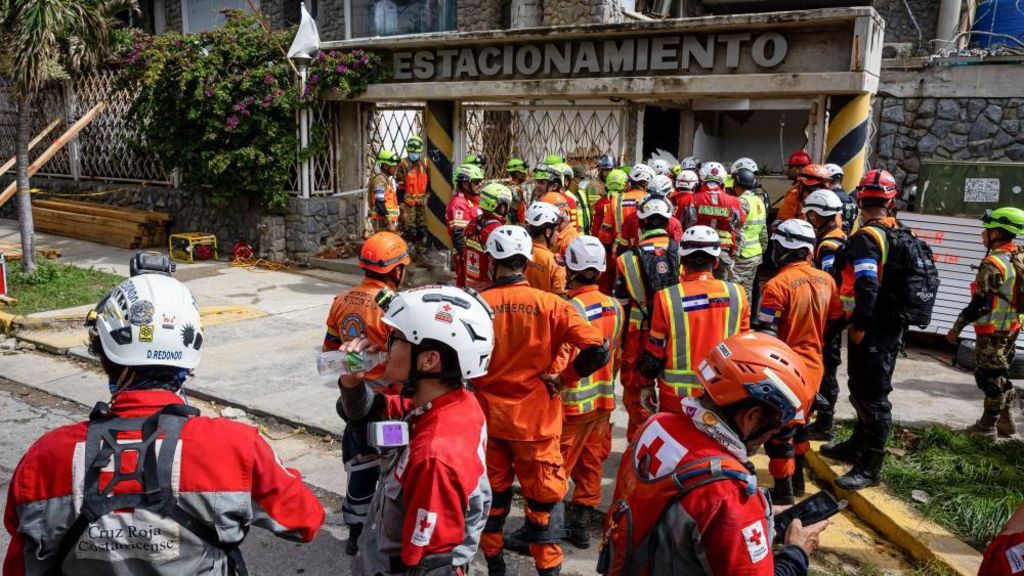
    Eight days after a pair of devastating earthquakes ripped through central Venezuela, a rare story of survival is keeping hundreds of international rescue workers pushing forward against dangerous, unstable conditions. Rescuers from seven nations have spent more than 100 hours racing against the clock to extract 40-something security guard Hernán Gil, who remains alive 9 meters beneath the collapsed ruins of a multi-story car park adjacent to Catia La Mar’s Galerias Playa Grande shopping mall.

    The international response team, with personnel from Venezuela, Chile, Costa Rica, El Salvador, Mexico, Portugal and the United States, first detected signs of life from Gil last Saturday. Wagner Leiva, head of emergency response for the Costa Rican Red Cross, recalled the moment his team confirmed the miracle: “We were cutting and removing concrete slabs when we got word there might be a survivor. We headed down to the basement, and after one of our members called out and listened closely, we heard someone answering back.”

    Gil had been on duty inside a small concrete booth in the parking lot’s basement when the twin quakes hit on June 24. The rigid booth structure acted as a protective shell, shielding him from the 140 tons of rubble that collapsed around it, leaving him uncrushed despite the catastrophic destruction above. “He told us he doesn’t even have a crushed nail,” shared Ricardo Arias of the Costa Rican Red Cross with local journalist Joan Camargo, confirming the 40-year-old’s unexpected good physical condition.

    For nearly three days after locating Gil, rescue crews worked cautiously to clear a narrow pathway to deliver his first sip of water, given the extreme instability of the surrounding debris. Access shafts dug by teams have collapsed multiple times during the operation, putting both rescuers and the survivor at constant risk. Just last night local time, crews achieved a critical milestone: they first made physical contact with Gil, and soon after established the first visual contact via a small inserted camera.

    Footage from the camera shows Gil with one bloodshot eye, wearing a dust mask that rescuers passed through a narrow opening earlier to protect him from flying debris. Rescuers have since provided him with water, intravenous hydration, and even the specific flavored electrolyte drinks he requested, with teams confirming he remains in stable condition.

    Far from being demoralized by his eight-day entrapment, Gil has become a source of motivation for the crews working to free him. “He’s a cheerful man, he even drives us on telling us to keep going,” said Marco Antonio Franco of the Mexican Red Cross told Mexican outlet Milenio. “He recognizes each team member, saying ‘how nice that you came back to be with me again.’ Rescuers and Gil have kept up steady conversation, talking about his family and the slow, challenging work of the rescue.”

    As of Tuesday, 350 rescuers are continuing their meticulous, slow-moving extraction effort, with the goal of pulling Gil to safety within the next 24 hours. The twin June 24 earthquakes have already claimed nearly 2,300 confirmed lives across Venezuela, with tens of thousands more still unaccounted for, making Gil’s survival all the more extraordinary for first responders and the victim’s family. His wife has already called his 8-day survival under the rubble “nothing short of a miracle.”

  • Beijing says China-EU trade talks set in the fall, to be held regularly each year

    Beijing says China-EU trade talks set in the fall, to be held regularly each year

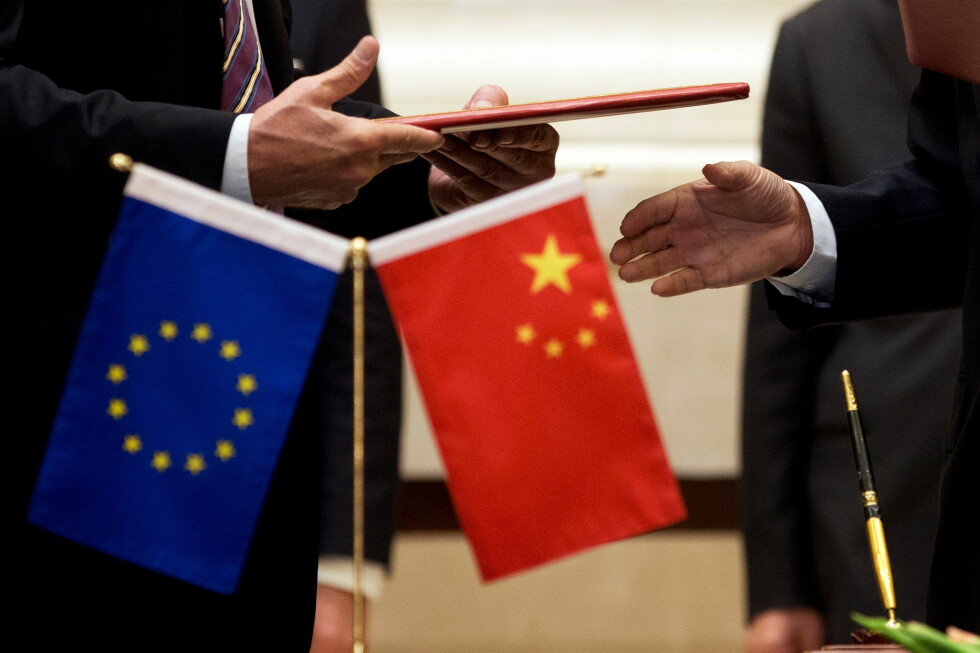
    Against a backdrop of a ballooning bilateral trade deficit and shifting global trade dynamics, China and the European Union have formalized a new framework for regular high-level trade engagement, agreeing to hold ministerial-level trade negotiations one to two times annually to grow and rebalance their commercial relationship, China’s Ministry of Commerce confirmed Thursday.

    The announcement follows a Monday meeting in Brussels between EU Trade Commissioner Maroš Šefčovič and Chinese Commerce Minister Wang Wentao, where Beijing extended a formal invitation for Šefčovič to visit China in autumn 2024, confirmed ministry spokesperson He Yadong to reporters. Under the newly launched China-EU Trade and Investment Consultation Mechanism, the two partners have also outlined plans to deepen collaborative work in two high-priority global sectors: artificial intelligence development and the global transition to renewable energy.

    The new consultation structure comes as the EU faces mounting domestic and international pressure to address its growing trade imbalance with China. Last year alone, the EU’s trade deficit with China expanded to roughly €360 billion ($410 billion), averaging nearly €1 billion per day. The surge in Chinese exports of electric vehicles and energy storage batteries to European markets has been a key driver of this widening gap, prompting increasing calls from European industry leaders for policy intervention.

    In remarks after his Brussels meeting, Šefčovič emphasized that as the trade gap grows, the bloc is committed to protecting its domestic industrial base and advancing a fair global competitive landscape, setting an October deadline for achieving tangible progress on trade rebalancing. Tensions have already escalated in recent weeks: new EU trade rules targeting Chinese imports took effect Wednesday, designed to shield the European steel sector and impose stricter controls on low-value small parcels shipped via cross-border e-commerce.

    Chinese stakeholders have pushed back on European trade restrictions, framing the imbalance as a product of EU policy choices. A post last week from Yuyuantantian, a social media account linked to Chinese state media, noted that China has signaled openness to increasing imports from the EU, but argued the bloc must ease its existing export controls on high-tech goods bound for China and stop framing trade and economic issues as geopolitical weapons.

    The current standoff also unfolds against a broader global backdrop of shifting supply chain strategy. In June 2024, G7 leaders issued a joint communique committing to building resilient alternative supply chains for critical minerals — inputs central to high-tech manufacturing and national defense production — with the explicit goal of reducing collective reliance on Chinese supplies.

  • Mickelson disputes new misconduct allegations

    Mickelson disputes new misconduct allegations

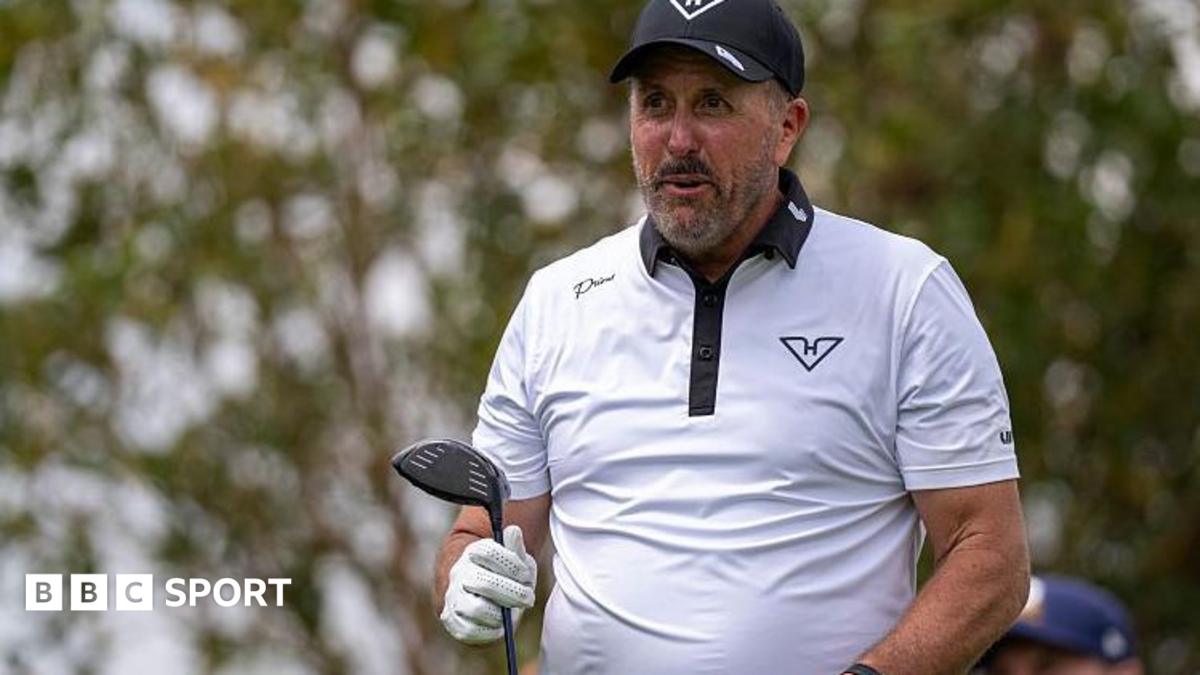
    Legendary six-time major men’s golf champion Phil Mickelson, 56, has forcefully pushed back against a series of misconduct claims published in an investigative report by golf outlet Skratch, with his legal and communications team dismissing the piece as an unfounded, anonymously sourced attack on the golfer’s reputation.

    The investigation, conducted by veteran golf journalist Alan Shipnuck, centers on two key sets of allegations: first, that Mickelson is no longer welcome at three private golf clubs across California due to repeated inappropriate behavior directed at female members and staff; second, a firsthand claim from Ashley Perez, ex-wife of PGA Tour golfer Pat Perez, that Mickelson showed her an explicit photo of himself and made a romantic advance toward her back in 2015.

    This latest report follows a separate incident last year where Mickelson resigned from another high-profile California golf club after similar allegations of inappropriate contact with a female employee, claims he has repeatedly denied. In an official statement sent to the New York Post by Mickelson’s representatives, the team addressed the specific claim from Ashley Perez, noting that Skratch’s account omitted critical context that frames the incident as a misunderstanding, one that Mickelson already apologized for years ago.

    The statement emphasized that Mickelson’s choice to apologize for the miscommunication should not be interpreted as a guilty plea to all the accusations leveled against him in the investigation. On the claim that he was forced out of multiple California golf clubs, Mickelson’s camp flatly denied the allegation, confirming that the golfer never faced expulsion or membership revocation from any club, and all decisions to end his memberships were made voluntarily by Mickelson himself.

    Mickelson’s team also raised questions about Skratch’s journalistic credibility, criticizing the outlet’s reliance on unnamed sources and pointing out the publication’s longstanding organizational ties to the PGA Tour — a relationship that takes on new significance given Mickelson’s high-profile 2022 departure from the PGA Tour to join the Saudi-backed breakaway LIV Golf league, where he remains one of the most prominent competing players.

    “Credibility is not earned by publishing the most provocative narrative,” the statement read. “It is earned through transparency, verification, and a clear distinction between fact, inference, and speculation.”

    Skratch’s leadership has stood firmly behind its work in the wake of Mickelson’s denial. Ben Boskovich, editor-in-chief of Skratch, told the New York Post that the outlet gave Mickelson, his spouse, and his legal team full opportunity to comment on and respond to the allegations before the report was published, following standard journalistic protocol.

    For much of 2025, Mickelson has been absent from competitive golf. He has only competed in one LIV Golf event this year, a March tournament hosted in South Africa, and has stepped away from the rest of the circuit to focus on an undisclosed family health matter, per his own previous announcement. Mickelson made history in 2021 when he won the US PGA Championship at age 50, becoming the oldest golfer ever to claim a major men’s championship title.

  • Eight Thai monks killed after 11-year-old drives truck into procession

    Eight Thai monks killed after 11-year-old drives truck into procession

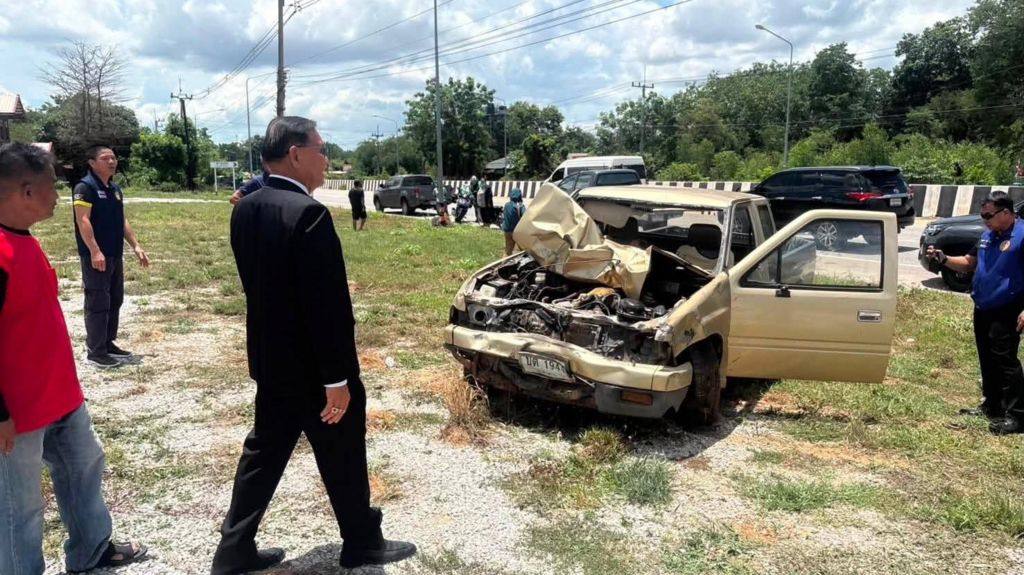
    A devastating traffic incident has shaken the Buddhist community in northeast Thailand, leaving eight monks dead and more than a dozen injured after an 11-year-old boy lost control of a stolen pickup truck and struck a walking pilgrimage procession, local law enforcement officials confirmed.

    The tragedy unfolded on a public roadway in Mukdahan province, where a group of 35 Buddhist monks and five lay devotees were traveling on foot as part of a religious pilgrimage. Without warning, the unlicensed child driver plowed into the procession, causing catastrophic harm, regional police spokesperson Major General Pairoj Thaiphutsa told reporters.

    Widespread footage of the crash site circulating on social media captures the grim aftermath: saffron-colored monk robes and personal items strewn across the roadside next to the heavily damaged pickup truck. Emergency response teams arrived quickly to triage casualties, with five of the monks pronounced dead at the scene. Three more injured monks succumbed to their wounds after being transferred to local medical facilities, according to official police updates.

    Preliminary investigations confirm the boy had taken the vehicle from his parents without permission before losing control of the truck and colliding with the procession. Law enforcement authorities have launched a full probe into the incident to determine the exact root causes of the crash, and the seized truck has been sent for forensic analysis to rule out mechanical failure or other contributing factors.

    “Our team has summoned the child’s parents for questioning to clarify who bears legal responsibility for the child’s supervision, which will allow us to move forward with the appropriate legal process,” Major General Pairoj explained in a press briefing.

    As of the latest updates, several of the more than 10 injured monks remain in critical condition. Mukdahan Hospital has issued an urgent public appeal for community blood donations to meet the massive transfusion needs of surviving victims, as local medical facilities work around the clock to stabilize those hurt in the crash.

  • Why the expected fight over the North American trade deal never kicked off

    Why the expected fight over the North American trade deal never kicked off

    For months, stakeholders across Washington’s policy, business and trade analysis communities prepared for a period of high-stakes conflict over the future of the United States-Mexico-Canada Agreement (USMCA), the landmark trade pact that underpins economic integration across North America. Predictions of a fraught spring and summer filled with open confrontation, however, have been upended by an unexpected geopolitical shift: the ongoing conflict with Iran has consumed the Biden administration’s bandwidth, draining the political urgency that was widely projected to define the pact’s renewal process.

    Rather than unfolding as a high-profile public battle over the agreement’s future, USMCA discussions have quietly receded to the background of Washington’s policy agenda. As former British Prime Minister Harold Macmillan famously observed when asked about the greatest challenge to political leadership, “Events, dear boy, events” – and the Iran conflict has proven to be exactly that unplanned event, inadvertently taking the steam out of what was expected to be a heated trade debate.

    Earlier in 2026, widespread concerns circulated that the U.S. would leverage the mandatory renewal review window to force a showdown with Ottawa and Mexico City, even going so far as to threaten a full withdrawal from the pact. President Trump, who originally signed the agreement into law, had already signaled growing ambivalence toward the deal, leaving trade observers guessing just how aggressive the U.S. negotiating position would be in the next phase of review.

    With foreign policy priorities now dominating the White House’s agenda, however, the U.S. has adopted a far more restrained approach. Officials have formally confirmed that the administration will not exercise its option to extend the current agreement for another 16 years, but has stopped short of pursuing any of the more dramatic actions that analysts once warned could roil regional trade.

    Part of this deliberate restraint stems from a core conviction within the administration: that the U.S.’s existing tariff strategy has already fundamentally reshaped North America’s economic landscape, shifting the balance of trade benefits in Washington’s favor and eliminating the need for a confrontational standoff now. U.S. Trade Representative Jamieson Greer has argued that the White House’s approach to trade policy over the last term has already rewired economic ties between the three nations, making aggressive renegotiation unnecessary at this juncture. Still, political observers warn that if future negotiations become overly politicized, the U.S. auto industry – which relies heavily on integrated cross-border supply chains – could face the most severe damage.

    The muted approach to USMCA also aligns with Washington’s broader global strategy. The administration’s ongoing efforts to recalibrate U.S. economic and diplomatic relations with China depend significantly on close, stable cooperation with Canada and Mexico, the U.S.’s two largest trading partners. Injecting unnecessary uncertainty into the foundational North American trade framework would directly undermine that larger geopolitical goal. As Arturo Sarukhan, Mexico’s former ambassador to the United States, framed it: pursuing a confrontational approach on USMCA right now would be “a huge own goal” – equivalent to scoring against one’s own team in the World Cup.

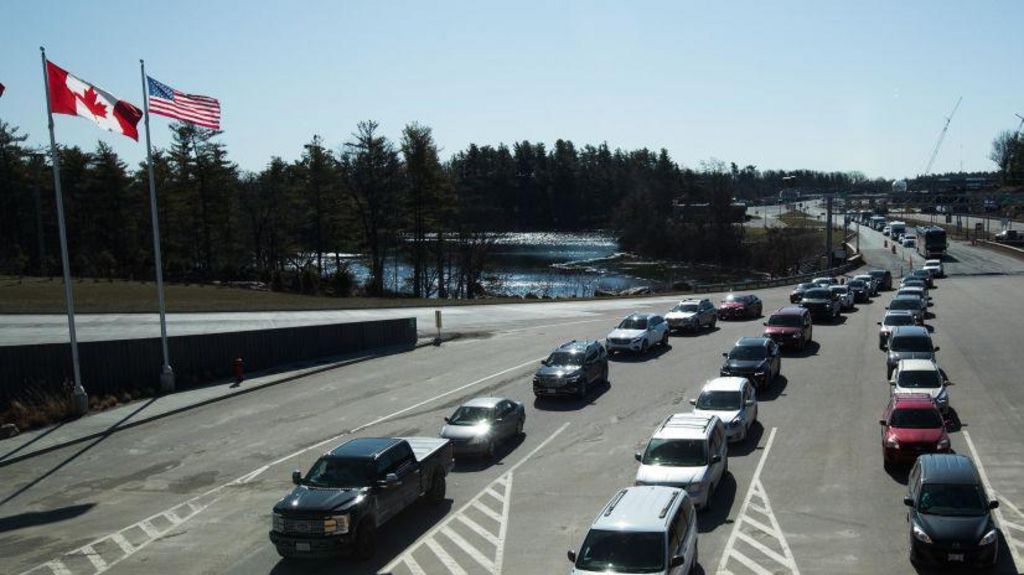
    This low-tension dynamic played out publicly during the 1 July virtual meeting of trade officials from all three nations. Once billed by analysts as a potential flashpoint for open disagreement, the meeting proceeded with little fanfare and no public acrimony. The U.S. has launched formal bilateral talks with Mexico, while maintaining constant working-level communication with Canadian officials, a sign that negotiations are moving forward without the political fireworks that many experts predicted just a few months ago. With U.S. midterm elections on the horizon, most political analysts expect this calmer, more low-key approach to USMCA discussions to remain in place through the end of the year.

    The administration’s decision to forgo an immediate 16-year extension triggers a mandatory 10-year countdown clock for the pact. If no new extension agreement is reached by the end of that decade-long window, the USMCA will automatically expire. For the time being, however, the high-stakes brinkmanship that many trade watchers once forecast has been replaced by routine annual reviews and steady, quiet diplomacy between the three North American neighbors.

  • German prosecutors charge a Ukrainian over Nord Stream pipeline explosions

    German prosecutors charge a Ukrainian over Nord Stream pipeline explosions

    Four years after coordinated undersea blasts tore through the Nord Stream natural gas pipeline network linking Russia and Germany, German federal prosecutors have officially brought criminal charges against a former Ukrainian army officer in connection with the attack, the office confirmed Thursday.

    Per German privacy regulations, authorities are only identifying the suspect as Serhii K. The charges leveled against him include explosive endangerment, intentional property damage, disruption of public infrastructure, and acting as an accomplice to war crimes through the deliberate targeting of civilian assets, prosecutors outlined in an official public statement.

    The September 26, 2022 bombings damaged both strands of the Nord Stream system, which were constructed to carry Russian natural gas to Western Europe via the Baltic Sea. The sabotage came at a moment of already sky-high global energy and geopolitical tension, just seven months after Russia launched its full-scale invasion of Ukraine. At the time of the attack, European nations were already racing to sever their long-standing energy ties to Moscow to cut off a key source of revenue for the Kremlin and pressure Russia to end its military campaign.

    Prosecutors’ investigation confirms the alleged plot’s core objective was to permanently disable the pipeline network, cutting off Russia’s ability to earn critical foreign currency from gas exports to fund its military operations in Ukraine.

    The case has progressed rapidly since authorities first took Serhii K. into custody. He was arrested in August during a raid on a vacation bungalow in a small Italian village, where he had been staying with family members. Law enforcement officials confirm he surrendered peacefully to arresting officers, and he was extradited to German custody to face investigation in November 2024.

    Investigative findings show Serhii K. and other co-conspirators used a private yacht to carry out the attack, launching the vessel from the northern German port of Rostock. The yacht was rented from a German maritime company using forged identification documents and coordinated through a network of intermediaries, according to evidence gathered by prosecutors.

    Of the two affected pipelines, the 2022 blasts ruptured Nord Stream 1 — for years Russia’s primary natural gas export route to Germany, which had already been shut off by Moscow just one month before the attack. The bombing also damaged the never-operational Nord Stream 2, which had its German certification halted by Berlin just weeks before Russia’s full-scale invasion, following widespread international pressure.

    The Nord Stream project had drawn fierce criticism from the United States and many of its allies for years before the attack, with Western leaders repeatedly warning that the pipelines would increase Europe’s political and economic dependence on Russian energy. In the years following the blasts, Russia has leveled unsubstantiated accusations that the U.S. orchestrated the attack, claims Washington has repeatedly and firmly denied.