In Seattle, the American city best known as the birthplace of rock icons Nirvana, Senegal’s World Cup dream collapsed in gut-wrenching fashion this week, as a controversial extra-time penalty awarded via VAR intervention sealed a 3-2 last-gasp victory for Belgium that eliminated the Teranga Lions. For a side that already knows all too well the pain of contentious late VAR calls, the exit carried a devastating sense of déjà vu, mirroring the chaos and heartbreak of January’s Africa Cup of Nations final that still hangs over Senegalese football.
For 85 minutes of the round-of-16 clash, Senegal produced one of their finest performances in recent memory, cruising to a commanding 2-0 lead thanks to clinical finishes from Premier League stars Habib Diarra and Ismaila Sarr. Sarr, who has been in irrepressible form throughout the tournament and just came off a club season where he scored 21 goals to lead Crystal Palace to the UEFA Conference League title, produced a candidate for goal of the tournament: a deft chest control of a long clearance that set up a blistering strike past Belgium keeper Thibaut Courtois. The goal also saw the 28-year-old equal legendary Cameroon striker Roger Milla’s 34-year-old African record of four World Cup goals, set at the 1990 tournament in Italy. But for Sarr, the milestone will forever feel hollow — just as it did for Senegal as a whole, who never got the chance to build on their lead and advance to the quarter-finals.
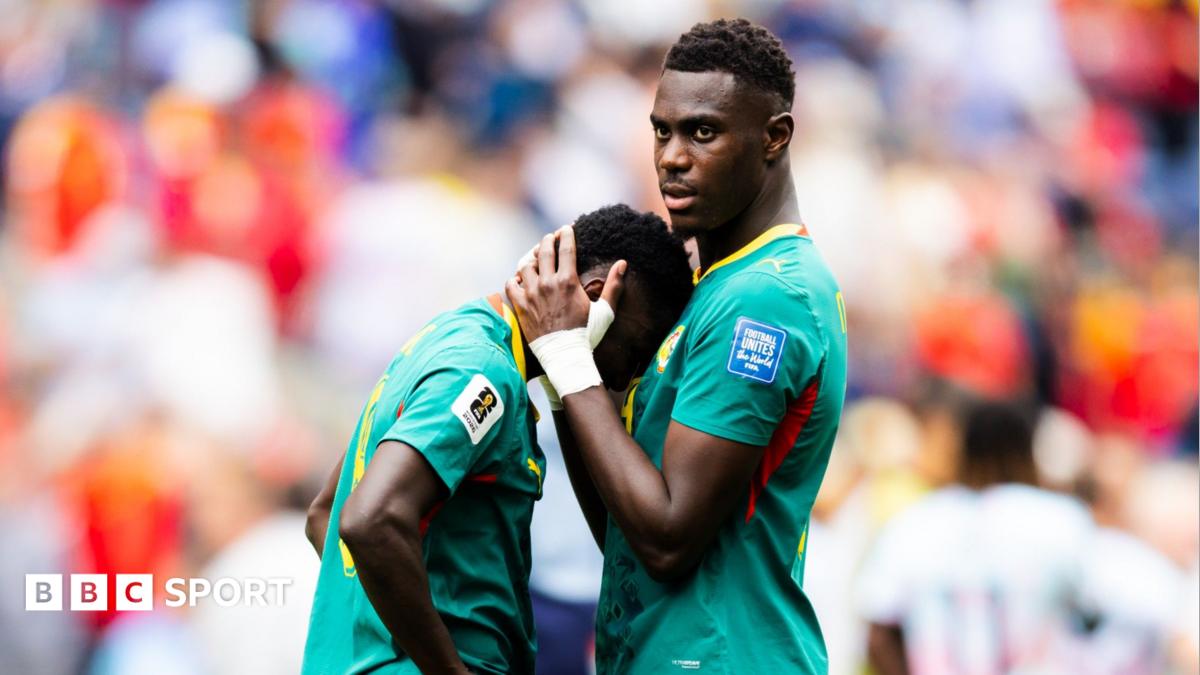
What followed was a historic comeback for Belgium, and another chapter of agony for Senegal. Romelu Lukaku cut the deficit in the 86th minute, before Belgian midfielder Youri Tielemans scored an 89th-minute equaliser, capitalizing on a misjudged rushed punch from Senegal stand-in keeper Mory Diaw that left the net unguarded. Then, deep in the 125th minute of extra time, came the decisive moment that sealed Senegal’s fate: Monaco midfielder Lamine Camara slid in to challenge Tielemans, and referee Said Martinez sided with VAR to award a penalty, ruling Camara had caught Tielemans’ heel and disrupted his attempt to play the ball. Camara was visibly distraught after the call, and was comforted by his teammates as Tielemans stepped up to fire the spot kick into the top corner, beating the stranded Diaw. Unlike the 2025 Afcon final, there was no heroics from first-choice keeper Edouard Mendy, who was sidelined with injury for the World Cup clash and could only watch on helplessly from the touchline.
The parallels between this exit and the controversial Afcon final against Morocco in January are almost impossible to ignore. In that match, a late controversial VAR-awarded penalty also left Senegal reeling, after a late Sarr goal was ruled out for a soft foul call, before a late penalty was given to Morocco following a VAR review. Chaos erupted after the call, with Senegal players walking off the pitch in protest, fans rioted, and stewards were injured before Sadio Mane coaxed the team back to finish the match. Morocco missed the penalty, Senegal won 1-0 in extra time, only to have the title stripped by the Confederation of African Football two months later. The case is currently before the Court of Arbitration for Sport, with Senegal continuing to fight to overturn the decision.
FIFA had tightened regulations following the Afcon final chaos to prevent any repeat of a player walk-off, and while Senegal’s side protested the penalty call loudly, they finished the match without disruption. Still, the aftermath has already brought significant unrest for the national program. Pape Gueye, the Villarreal midfielder who scored Senegal’s disputed winning goal in the Afcon final and was recently named the best African player in La Liga, announced he would take a break from international football until head coach Pape Thiaw and his entire coaching staff are removed from their posts. Gueye was substituted off in the 66th minute of the Belgium match, a tactical change that has drawn widespread criticism from Senegalese fans back home, who have also questioned Thiaw’s decision to withdraw Everton forward Iliman Ndiaye.
Speaking after the final whistle, Thiaw — who took charge of Senegal in December 2024 — acknowledged the crushing nature of the defeat, drawing comparisons that feel all too familiar. “We had the game in hand,” he said, describing the loss as “cruel.” When asked about the penalty, he added, “Our interpretation was that there was no penalty. You have to accept, even if it’s difficult.” He also noted that after conceding the first Belgian goal, his side dropped deeper into defense, opening the space for the equalizer. “We tried to get back on our feet, but unfortunately it didn’t work,” he said. “It’s not easy to lose this kind of match. Unfortunately, it slipped away from us, but it’s football.” For Thiaw, who has now seen two major tournament runs end in controversy, the experience evokes the legend of Sisyphus — forever rolling a boulder up a hill, only to see it roll back down just before reaching the top. From Afcon champions in waiting to World Cup fall guys in six months, Senegal’s latest heartbreak has once again left one of African football’s brightest nations wondering what they have to do to outrun cruel football fate.