博客

  • Volkswagen sales plunge as German automaker lays out plan to slash number of brands

    Volkswagen sales plunge as German automaker lays out plan to slash number of brands

    BERLIN — Global automotive giant Volkswagen has disclosed steep second-quarter sales declines, headlined by a dramatic 30%-plus drop in its largest single market, China, just one day after announcing sweeping restructuring plans that could cut its model lineup by nearly half to counter slumping demand. Headquartered in Wolfsburg, Germany, the company reported Friday that total group deliveries fell 8.6% year-over-year in the three months ending June, reaching just under 2.1 million vehicles. Most of its major premium and mass-market brands recorded double-digit or notable single-digit declines: the core Volkswagen brand saw deliveries drop 14% to just over 1 million units, Audi slipped 8%, and Porsche fell 18%. Outliers included its supercar brand Lamborghini, Czech automaker Skoda, and its commercial trucks division, which all posted modest delivery gains. Regionally, sales also grew across the Americas and Europe, but these gains were not enough to offset the collapse in Chinese demand.

    The restructuring announcement came Thursday following a meeting of Volkswagen’s board of directors, marking the next stage of a three-year company-wide “fundamental realignment” designed to adapt to a rapidly shifting global auto market. CEO Oliver Blume outlined that the overhaul will focus on cutting operational complexity, concentrating investment on core automotive technologies, aligning product strategies more closely to regional market needs, and trimming excess production capacity. Blume framed the changes as a necessary response to what he called an “increasingly demanding environment” for global automakers.

    Volkswagen specifically called out a series of interconnected industry pressures that have built up over the past 12 months: escalating geopolitical tensions, rising input and operational costs driven largely by new tariffs, stricter emissions and regulatory requirements around the world, and intensifying competition from both established and new market players. As recently as last December, the company was making large, high-stakes investments in China to grow its market share, but local electric vehicle manufacturers have rapidly captured growing market share, leaving Volkswagen scrambling to catch up amid cutthroat competition.

    Industry analysts have reacted with skepticism to the company’s restructuring claims. Research firm BernsteinSG noted in a client note published after Thursday’s announcement that Volkswagen’s claim to be extending its technology leadership is likely to draw doubt, given the far faster pace of innovation from the Chinese EV manufacturers that are displacing it in its once-secure Chinese market.

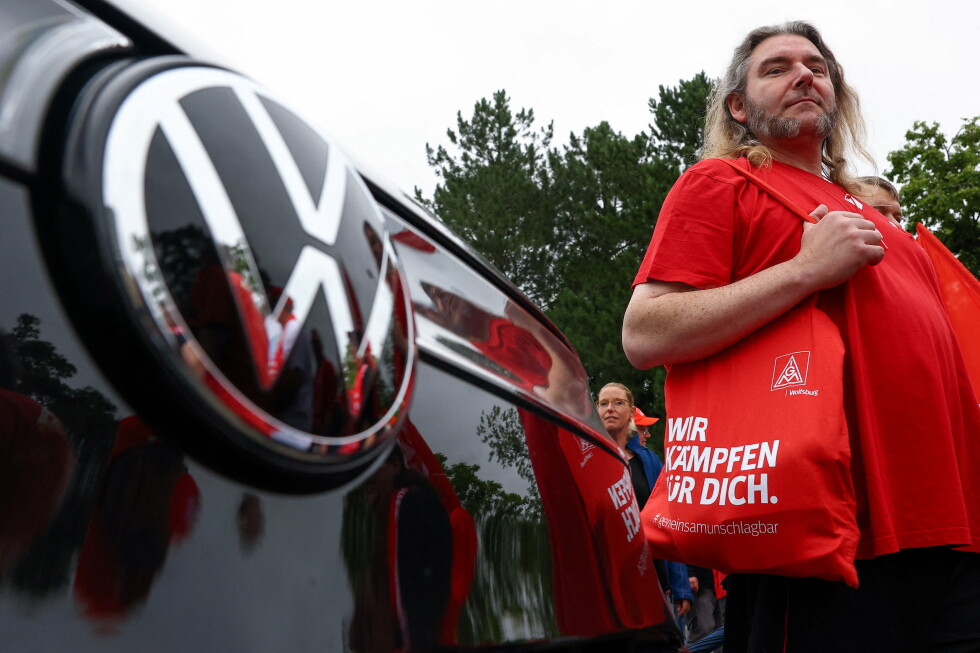
    The restructuring plans have also sparked pushback from Volkswagen’s workforce. Hundreds of employees gathered outside the company’s EV-only plant in Zwickau on Thursday to protest the proposed changes, demanding formal job protections and opposing rumored plans to shut down the facility.

  • Melody from the depths strikes global chord

    Melody from the depths strikes global chord

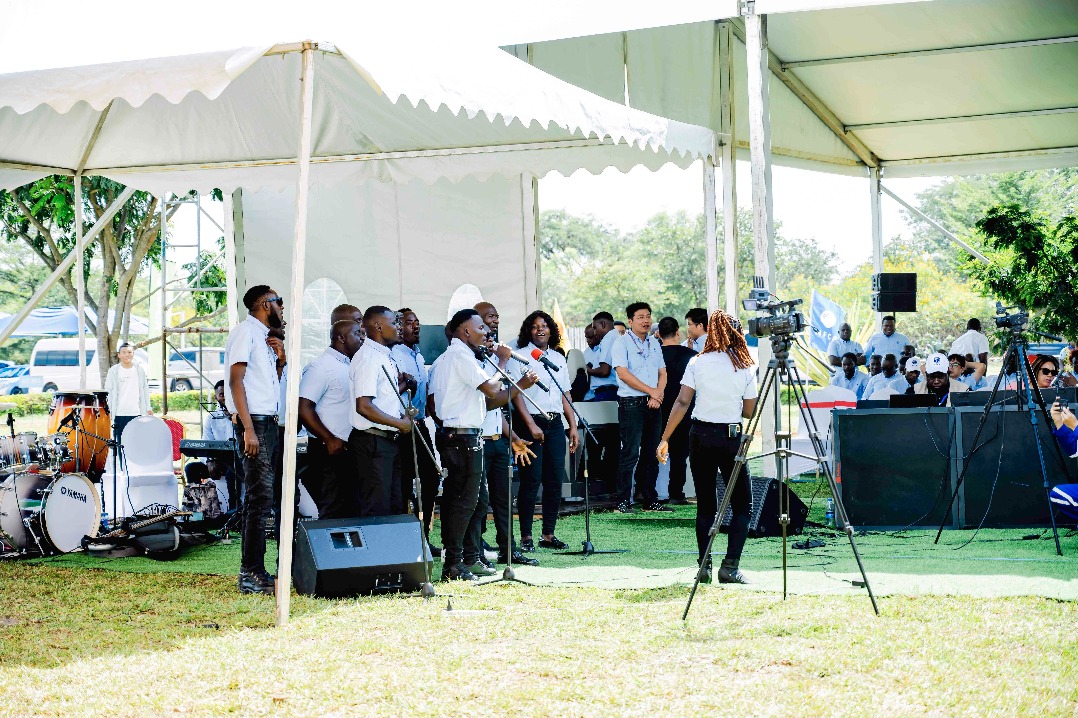
    In mid-May, when 43-year-old Nkhoma Blessings, a cost control officer at Zambia’s Chambishi Copper Mine, opened his Google browser, a recommended World Cup-style music video immediately caught his eye. Curious, he clicked the link — only to sit back in stunned delight: the upbeat, stadium-filling anthem blasting from his speakers was created by his own colleagues, performed by a band of fellow mine employees.

    Blessings was far from the only person caught off guard by the song’s sudden viral success. Katongo Chipasha, a logistics worker at the mine and the track’s lead vocalist, received an ecstatic phone call from her brother, who had stumbled across the video on YouTube and could barely contain his excitement. “That was an amazing feeling. I am doing something that brings people together,” Chipasha said of the moment.

    Released in early May at a company ceremony marking the launch of a new tunnel boring machine (TBM), the self-titled *Chambishi Copper Mine* anthem quickly spread across global social media platforms, racking up hundreds of thousands of likes from listeners drawn to its infectious, high-energy rhythm. Online fans even rebranded it as a playful unofficial World Cup anthem, reworking its chorus to the catchy line “Championship Will Be Mine”.

    At the heart of this online sensation is the NFCA Band, a 20-member group made up entirely of non-professional musicians who work across every department of the mine, from heavy-duty underground miners to office-based administrative staff. NFCA, short for NFC Africa Mining Plc, is a China-Zambia joint venture that operates the Chambishi site, founded in 1998 as China Nonferrous Metal Mining Group’s first overseas nonferrous metal investment. The band was formed in 2025, with the company covering all costs for instruments including bass guitars, keyboards and drums to support workers’ shared passion for music.

    The idea for the anthem came to NFCA Deputy Manager Xu Laixiang, a self-described lifelong music fan, while he was in his staff dormitory on site. “I looked at the long history of this mine and thought, ‘Why not write our own anthem?’” Xu recalled. With assistance from an AI tool for lyric drafting and arrangement, he composed the track on his office desk, blending the mine’s decades-long legacy with traditional African rhythmic motifs to create a sound that felt both personal and broadly resonant. Originally created only for the TBM commissioning ceremony, the track’s explosive viral success was entirely unanticipated.

    The song’s popularity extends far beyond social media, earning acclaim as a powerful grassroots symbol of China-Zambia cooperation. Zambia’s Ambassador to China Ivan Zyuulu praised the track at a recent cultural event, calling it “danceable and engaging” and a powerful testament to collaborative mining partnership and people-to-people exchange between the two nations. “Chinese and Zambian workers worked together to produce the song, which is very informative and encouraging, reflecting the spirit of people-to-people exchanges between China and Africa,” he said.

    The anthem’s lyrics carry deep meaning rooted in the mine’s own journey from abandonment to revival: “Chambishi Copper Mine, rise again, rise again; Chambishi Copper Mine, we build, we bend, we mend. Chambishi Copper Mine, from the dark to the shine …” For Stephen Ndegwa, executive director of African think tank South-South Dialogues, these lines strike a profound emotional chord that reflects lived experience, not just rhetoric.

    “When Zambian workers sing about rising again, they are singing their own history. These are the lived experiences of workers who have watched a dormant mine come back to life through their own sweat and cooperation,” Ndegwa explained.

    Chambishi’s story is one of dramatic transformation. First discovered in the late 19th century, the mine was abandoned by Western operators decades ago, after they pulled out due to insurmountable technical challenges and financial struggles. In the years that followed, equipment rusted away, thousands of local miners lost their jobs, and hope faded across surrounding communities.

    The turning point came in 1998, when China Nonferrous Metal Mining Group acquired the idle site. After five years of rehabilitation work, the silent tunnels roared back to life in 2003, when the mine produced its first batch of copper concentrate following its restart. Today, Chambishi is a global leader in innovative mining, and the recent launch of Africa’s first ultra-small turning-radius TBM for underground mining marked a major milestone for Zambia’s entire mining sector.

    Zambian Minister of Mines and Minerals Development Paul Kabuswe noted at the TBM launch ceremony that the new technology represents a critical step forward for Zambia’s goal of building an “intelligent and green” mining industry. The advanced equipment, custom-built for Chambishi’s geological conditions, has an excavation diameter of 5.63 meters and a minimum turning radius of 50 meters, operating three times more efficiently than traditional drill-and-blast excavation methods. The technology is core to Zambia’s national target of producing 3 million metric tons of copper by 2031, while also improving local livelihoods and driving broad economic growth.

    Chambishi is now the site of Africa’s first fully digital intelligent mine, developed through China-Zambia collaboration. Remote control systems, real-time smart monitoring, and automated safety warning technologies have been fully deployed, cutting down on high-intensity, high-risk manual labor and revolutionizing traditional mining operations through Chinese technical expertise.

    For local workers, the mine’s revival has transformed personal as well as economic prospects. More than 6,000 jobs have been created at Chambishi, with over 90 percent of the workforce drawn from local Zambian communities. Runny Kaunda, a 30-something housekeeper who has worked at NFCA for two years and is one of the band’s lead vocalists, says the mine pulled her out of hardship. “There is a line in the lyrics that encourages me — ‘there are some scars that turn into sweets’. Before I joined NFCA, my life was difficult. After joining NFCA, my life has improved,” she said.

    Daniel Mukulumoya, a 38-year-old materials coordinator with seven years at the company, says the line “we build, we bend, we mend” echoes both his professional work and personal journey. The song, he argues, is far more than a mining anthem: “It shows how NFCA’s copper production has transformed lives, not just inside the mine, but also in surrounding communities.”

    That community impact extends well beyond job creation. NFCA has invested heavily in local social infrastructure, supporting local schools with supplies, assisting orphanages and medical facilities, and upgrading public services. In late May, new sanitation facilities donated by the company were commissioned for the Fitanda community, and recent corporate social responsibility projects include a new girls’ dormitory for a local boarding school, new classrooms for a primary school, and a new water well for a secondary school. Local community representative Bertha Mulenga noted that the company has built housing, churches, schools and clinics across the region, and addressed chronic local water shortages by drilling new wells, installing pumping infrastructure, and providing fuel to guarantee consistent daily water access.

    The Chambishi investment has also catalyzed broader regional development: it helped lay the foundation for the Zambia-China Economic and Trade Cooperation Zone, China’s first overseas economic and cooperation zone in Africa. According to Zambia’s *Daily Nation*, by 2025 the zone had attracted more than $2.7 billion in total investment, hosted nearly 100 enterprises, and created more than 10,000 local jobs. Ndegwa notes that the “anchor investment” model pioneered at Chambishi has been replicated across the African continent, from Kenya’s Standard Gauge Railway, which revolutionized freight logistics and created thousands of engineering jobs, to Nigeria’s Lekki Deep Sea Port, which is reshaping regional trade routes.

    Ndegwa pushed back against Western narratives that frame Chinese investment in Africa as a form of neocolonialism, arguing that the colonial model was defined by extractivism and inequality, where foreign powers pulled resources out while leaving local communities marginalized and excluded. “The viral song performed by proud, joyful Zambian workers is human testimony that carries a different kind of persuasive force,” he said.

    For Xu, the most meaningful moment of the entire experience was watching Zambian workers dance and sing along to the anthem he composed. It was, he said, the most profound experience he has had of the shared future that binds China and Africa together, rooted in daily grassroots cooperation rather than formal diplomacy. Local worker Blessings Kamanga, a 30-year-old mechanical fitter and amateur singer, says he feels lucky to work at a mine that supports workers’ creative passions — even singing verses of the anthem during underground breaks, where the tunnel’s natural acoustics create the perfect backing echo.

    “Development that does not produce human connection remains fragile. Cooperation that produces a band of miners singing proudly about their workplace is cooperation with roots. It cannot easily be disrupted by geopolitical winds or hostile media narratives, because it lives in people’s memories and identities,” Ndegwa said.

    2026 marks a landmark year for China-Africa relations: it is the China-Africa Year of People-to-People Exchanges, and the 70th anniversary of formal China-Africa diplomatic relations. Over seven decades, formal diplomatic ties have built the framework for cooperation, investment and infrastructure development across the continent. For the NFCA Band, the viral success of their anthem has brought an exciting new opportunity: the group has been invited to perform on a Chinese television program later this year, with many members set to visit China for the first time.

    Ndegwa summed up the deeper meaning of the Chambishi story: “The Chambishi song reveals that beneath that scaffolding, something more intimate has been quietly growing — a genuine mutual curiosity and respect between ordinary people on both sides, and a durable bond built not only in conference rooms, but also in shared daily experience. That is the lesson Chambishi offers at 70 years.”
  • AFL star Josh Worrell involved in accidental collision with pedestrian

    AFL star Josh Worrell involved in accidental collision with pedestrian

    A top-ranked Australian Football League (AFL) player has been confirmed involved in an accidental collision between his vehicle and a pedestrian, an incident that unfolded just one day before his team’s critical upcoming match. Josh Worrell, a key defender for the Adelaide Crows, voluntarily reported to a local police station Friday following the crash on Port Road in the suburban Adelaide area of Woodville. According to local reports, the accident occurred as Worrell was making his daily commute to team training, ahead of Saturday’s highly anticipated match against Gold Coast at the Adelaide Oval.

    Multiple official sources have confirmed that the collision was accidental, with no immediate indication of foul play or dangerous driving on the part of the player. South Australia Police (SA Police) launched an official investigation into the incident shortly after it was reported. In an official statement to media outlets, SA Police confirmed: “Police can confirm they are investigating a collision involving a car and pedestrian on Port Road, Woodville, this morning. Both parties attended police stations this afternoon to report the collision. Police did not attend the scene and are investigating.”

    The Adelaide Football Club also publicly acknowledged the incident in a statement posted to its official website, noting that it would not release further details while the police probe is ongoing. “The Adelaide Football Club can confirm one of its players was in a vehicle accident involving a pedestrian this morning,” the club’s statement reads. “The matter has been reported to South Australia Police and at this stage, the club is not in a position to provide any further comment.”

    As a result of the incident and subsequent reporting requirements, Worrell missed his scheduled training session on Friday. Despite the disruption, club insiders confirm he remains on track to suit up for the Crows in their Saturday clash at Adelaide Oval. The male pedestrian who was involved in the collision has declined all requests for comment from local media, including *The Advertiser*, which first broke details of the incident. To date, no charges have been filed against any party connected to the collision, and the investigation remains in its early stages.

  • East Asia braces for destructive typhoon as landslides kill 15 in Philippines

    East Asia braces for destructive typhoon as landslides kill 15 in Philippines

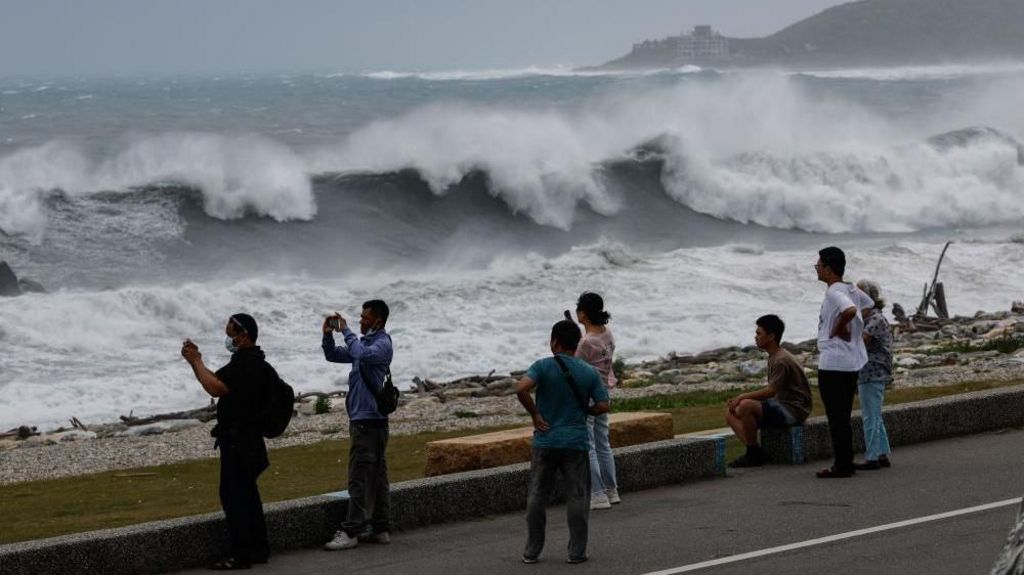
    One of the most powerful tropical cyclones to form in the western Pacific in decades has already left a trail of fatal devastation in the southern Philippines, and is now barreling toward multiple East Asian regions, prompting widespread emergency preparations. With a maximum diameter of 1,000 kilometers – nearly equal to the entire width of mainland France – Typhoon Bavi is currently tracking across open Pacific waters, with its projected path taking it directly toward Taiwan before a forecasted landfall in southeastern China this weekend.

    The storm’s first major impact hit the southern Philippines earlier this week, where intense rainfall from Bavi’s outer bands triggered catastrophic landslides on the island of Mindanao. The overnight mudslides buried residential areas, killing at least 15 people and leaving an unknown number of residents still unaccounted for, as rescue teams work around the clock to reach trapped and missing survivors. Philippine weather officials have cautioned that moderate to heavy downpours will continue to pelt multiple regions of the country through the end of the weekend, raising the risk of additional flood and landslide events.

    As Bavi advances, authorities across East Asia have activated full emergency response protocols to mitigate potential damage. For Taiwan, the typhoon is on track to become the largest storm to hit the island since 1987, according to the Central Weather Administration, with forecasts predicting up to one full meter of rainfall in northern and eastern coastal areas. The island’s defense ministry has placed 29,000 military personnel on standby to support emergency relief and rescue operations, while local governments have distributed thousands of sandbags to vulnerable, flood-prone neighborhoods. Earlier Friday, farmers hurried to harvest mature crops and secure their fields ahead of the storm’s arrival, while fishermen across the island’s harbors reinforced moorings for their vessels. “Don’t be fooled by the nice and calm weather now. A storm like this could be the most terrifying,” 60-year-old fisherman Chen Ming-hui told reporters, echoing official warnings for residents to take the threat seriously.

    Commercial air travel across the region has already been severely disrupted, with dozens of flights to and from Taiwan canceled, and major Japanese carriers scrapping more than 260 flights through Sunday across the country. The remote Sakishima Islands, which lie directly in Bavi’s projected path, have been placed on high alert, with local residents seen reinforcing home and shop windows with tape and protective wind netting. Japan Airlines has canceled over 100 flights for Friday and Saturday, disrupting travel plans for nearly 20,000 passengers, while All Nippon Airways has axed more than 160 flights through Sunday, affecting a similar number of travelers. Both Thai Airways and Malaysia Airlines have also suspended all flights to and from Taipei ahead of the storm. Schools across at-risk areas of Taiwan and Japan have already suspended classes, and grocery store shelves have been cleared out as local residents stock up on emergency water, food and supplies.

    Across the Taiwan Strait, Chinese authorities are bracing for what they warn could be a “significant impact” from Bavi, which is forecast to make landfall in Fujian Province before moving northward. Experts warn that the storm’s unusually large size and high residual energy means its rain bands will reach far inland, reaching as far north as the Bohai Sea region after passing through eastern Jiangsu and Anhui provinces. Ma Jun, director of China’s Institute of Public and Environmental Affairs, noted that northern provinces, which have far less experience dealing with full-scale typhoons than their southern counterparts, must prioritize stepped-up preparedness measures. Some forecasting models even predict Bavi could make two separate landfalls across southern China.

    The approaching storm comes as parts of southern China are still recovering from the deadly devastation of Typhoon Maysak, which hit the region earlier this week. Maysak has already killed at least 39 people, with rescue crews still searching rubble for missing residents, and forced the evacuation of more than 130,000 people, most in Guangxi Zhuang Autonomous Region. The earlier storm wiped out large numbers of livestock, caused hundreds of millions of dollars in agricultural damage, and even sparked two rare tornadoes in central China’s Hubei Province, compounding the challenge for disaster response teams now preparing for Bavi. Climate scientists have noted that increasing ocean temperatures driven by climate change are leading to more intense and larger tropical cyclones across the western Pacific, raising the risk of extreme storm events in the region.

  • How football has helped immigrants make a home in the US

    How football has helped immigrants make a home in the US

    Far from the packed stadiums and global spotlight of the 2026 FIFA World Cup being hosted across North America, a rough asphalt pitch in Portland, Maine’s Kennedy Park is demonstrating just how transformative football’s unifying power can be for vulnerable communities. For hundreds of immigrants and refugees who gather here for informal pick-up matches, the beautiful game has become far more than a pastime: it is a lifeline, a common language, and the foundation of a tight-knit support network that has sustained its members through one of the strictest immigration crackdowns in recent U.S. history.

    What began as a casual weekly gathering in 2021 has grown into a diverse community connecting players from more than 40 countries, all bound by their shared love of football and experiences of building new lives in a foreign country. For teenagers like George Lusolo, who arrived in the U.S. from the Democratic Republic of Congo in 2018 with his mother to seek asylum, the Kennedy Park pitch offered a sense of belonging when everything else felt unfamiliar. After being held in immigration detention in Texas and staying at a New York shelter before resettling in Portland, Lusolo stumbled on a social media post about the pick-up games and immediately found his people.

    “I really didn’t know the language. I didn’t know anyone here,” Lusolo, now 19, recalled. “Everything was so hard for me and my mom when we first arrived. But when I got to the pitch, I saw people who had gone through the same struggles as me. Soccer has always been my therapy – I’ve played since I was a little kid growing up in Kinshasa. Playing alongside people who understand what you’ve been through? It feels like home.”

    Fellow Congolese immigrant Deji Kuribanza, who resettled in the U.S. after passing through Angola, echoed that sentiment, noting that football acts as a universal bridge that eliminates language barriers. “You don’t need to speak the same language to play,” the 18-year-old explained. “Just point to your feet, gesture for the ball, and you’re connected. It’s such a simple, beautiful thing.”

    That tight bond has been put to the test in recent months, as the second Trump administration has ramped up enforcement actions by U.S. Immigration and Customs Enforcement (ICE). The independent Migration Policy Institute estimates that ICE has arrested at least 400,000 people nationwide since January 2025. While the federal government maintains that only people who threaten public safety and national security are targeted, and says legal residents face no risk, immigrant communities across Maine have been thrown into panic by widespread raids that rights groups say have swept up dozens of innocent people with no criminal records.

    For the Kennedy Park community, the fear hit close to home last year, when 17-year-old regular player Joel Andre and his entire family were detained by ICE. After their initial asylum application from DR Congo was denied, the family tried to cross into Canada to file a new claim, unaware of a bilateral agreement that forces asylum seekers to file their claim in the first safe country they enter. That technicality led to their detention when they returned to the U.S.

    In the wake of the raids, many players and their families were too afraid to leave their homes, with several immigrant students missing weeks of school, said Anthony Fiori, the local photographer and community organizer who coordinates the Kennedy Park pick-up games. But rather than fracture the community, the crisis brought its members closer together. Organizers arranged more than 70 grocery deliveries to housebound families, and the entire community rallied behind a public campaign to secure Andre’s release from detention. After four months of advocacy, they won the teenager’s release, though he still carries lasting psychological trauma from his time in custody.

    “The conditions in those detention facilities are terrible – the food is inadequate, and some holding cells are kept freezing,” said Todd Pomerleau, the attorney who represented Andre’s family. “Joel is a talented young footballer, a bright kid with so much going for him. But this experience changed him. Anyone who goes through that never comes out the same – he and his family need ongoing support to heal.” Andre and his family are now continuing to fight their asylum case in U.S. federal court.

    Despite the fear and uncertainty that hang over the community, many players see their regular matches on the Kennedy Park asphalt as a way to challenge negative stereotypes about immigrants and build acceptance in their new home. “A lot of people here only see immigrants as stereotypes, that we come here and take things and don’t contribute,” Kuribanza said. “But when locals walk past the park and see us laughing, playing, enjoying the game together, it changes how they see us. It shows we’re just people who want the same things everyone else wants.”

    Fiori, whose own family has lived in Maine for nine generations, notes that the community fills a unique gap in a state that remains one of the least demographically diverse in the country. “To have a space where people from every background, every country, every generation can come together, play, and become friends? That’s really special,” he said.

    With the 2026 FIFA World Cup taking place just a few states away, the community has been swept up in tournament excitement, especially after DR Congo – the home country of many Kennedy Park players – reached the last 16 of the competition, its first World Cup knockout stage appearance in more than 50 years. For many of the young players, the tournament has stoked big dreams for their own futures. Kuribanza says he harbors a dream of one day playing on the World Cup stage himself, while Lusolo hopes to turn his love of football into a professional career representing DR Congo internationally.

    Whether they make it to the global stage or not, the players of Kennedy Park already embody the core message of the World Cup: football transcends borders, backgrounds, and hardship to bring people together. For these immigrants and refugees, a simple asphalt pitch in a small Maine park has become a place to call home.

  • Eleven dead, 19 missing as wildfire roars through southern Spain

    Eleven dead, 19 missing as wildfire roars through southern Spain

    A devastating out-of-control wildfire ripping through rugged, forested terrain in Spain’s southern Andalusia region has left 11 people dead and 19 others unaccounted for, regional authorities confirmed Friday. Among the fatalities, four are suspected to be British nationals, in what is already one of the deadliest wildfire events to hit Spain in recent years.

    Most of the victims are believed to be foreign nationals visiting or residing in Bédar, a quiet whitewashed village located just 15 kilometers inland from Spain’s popular Mediterranean coast. A favorite getaway for travelers seeking a more low-key alternative to crowded nearby beach resorts, Bédar also draws a large community of foreign permanent residents. Many victims died while attempting to outrun the rapidly advancing blaze across the region’s steep, uneven landscape, emergency officials confirmed.

    Juan Manuel Moreno Bonilla, president of the Andalusia regional government, told Spanish broadcasters that four of the deceased were found inside a right-hand drive vehicle, burned to death as the fire overtook their escape route. Local mayor Angel Francisco Collado shared that while emergency teams urged all at-risk residents to evacuate immediately — even those reluctant to leave their homes — seven people lost their lives trying to flee on foot, and two more were transported to local hospitals for treatment.

    Antonio Sanz, Andalusia’s emergency management minister, released an official update via the social platform X confirming the rising death toll and the scope of the disaster. “At the moment, we have confirmed that 11 people have lost their lives in the Los Gallardos fire; there are no words for such grief,” he said. “Everything indicates that the deceased are, mostly or entirely, foreign nationals,”,”.”
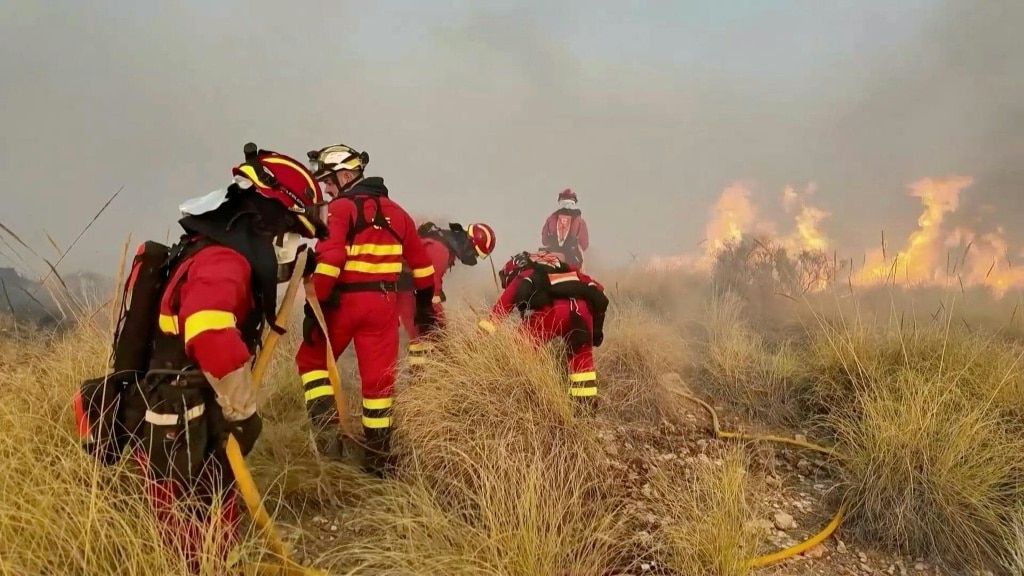
    Emergency responders have described the fire as uniquely challenging to contain. The blaze is burning across a landscape crisscrossed by deep ravines, which prevents the use of heavy firefighting equipment to clear fire breaks, and many residential properties are scattered across isolated forested plots. Approximately 500 firefighters and military troops have been deployed to battle the inferno, with Spain’s Military Emergency Unit (UME) called in to support ground and air operations.

    Strong overnight winds fanned the fire’s rapid spread across more than 3,150 hectares of forest and agricultural land, though winds had calmed by Friday morning. Forecasters warn that wind speeds are expected to pick up and shift direction later in the day, potentially creating new challenges for containment crews. Eight people have been injured in the fire, four of them seriously, and roughly 800 local residents and visitors have been evacuated. Around 200 of those displaced are being housed in emergency shelters, with 150 more accommodated at a local cultural center. Emergency services received more than 150 distress calls in the first hours of the blaze, and flames were visible from a major highway running near Bédar, prompting immediate road closures.

    Witnesses have told investigators the fire likely started when a falling power line ignited dry scrub vegetation, though regional authorities have not yet officially confirmed the cause. The outbreak coincided with an extreme heatwave baking both Spain and Southern France, with forecasted temperatures hitting 40 degrees Celsius across wide swathes of both countries on Friday. Southern Spain has been under an orange heat warning — the country’s second-highest alert level — for several days amid the sustained extreme heat.

    Spanish Prime Minister Pedro Sánchez posted his reaction to the disaster on X, writing that he was “deeply saddened and devastated by the terrible consequences of the wildfire.” Sánchez previously announced in May that Spain would deploy its largest ever summer wildfire response for 2024, in a bid to prepare for what climate scientists warn will be an increasingly severe fire season.

    Climate scientists have repeatedly warned that human-caused fossil fuel emissions are driving global warming that makes extreme weather events like heatwaves more frequent and more intense. In recent years, Spain has seen a sharp rise in the length and severity of seasonal heatwaves, with regular temperatures exceeding 40C creating tinder-dry conditions that are ideal for large wildfire outbreaks. Last year alone, deadly wildfires burned almost 400,000 hectares of land across Spain — the highest annual total recorded by the European Forest Fire Information System in the country’s history.

  • EU demands Facebook and Instagram dismantle design features it calls addictive for users

    EU demands Facebook and Instagram dismantle design features it calls addictive for users

    On Friday, the European Commission, the European Union’s executive governing body, issued formal preliminary charges against Meta Platforms, accusing the social media giant of violating the bloc’s landmark Digital Services Act (DSA) by intentionally designing Facebook and Instagram to drive compulsive user engagement and harm consumer mental health. The regulator is demanding Meta immediately disable high-risk addictive design features that are enabled by default across its platforms.

    This latest enforcement action comes as part of an ongoing DSA investigation launched earlier in 2024, focused on widespread failures by Meta to protect minors from harm on its two largest platforms. The DSA, the EU’s sweeping new regulatory framework for large digital platforms, requires all major tech services operating in the bloc to conduct rigorous risk assessments of their product designs and mitigate documented harms to users — with non-compliant companies facing fines of up to 6% of their total global annual revenue.

    In its official statement of preliminary findings, the Commission outlined that Meta has failed to carry out adequate, transparent assessments of how core product features on Facebook and Instagram damage the physical and mental health of all users, and particularly children and adolescents. Regulators found that while Meta does offer optional tools and parental controls to manage user screen time, these safeguards are poorly designed: they are easy for users to override or dismiss, require significant technical knowledge to activate, and do not create meaningful reductions in excessive platform use.

    The Commission specifically called out two ubiquitous default features as high-risk addictive design elements: infinite scroll, which delivers an unending stream of content to users without requiring an active choice to load more posts, and automatic video autoplay. Regulators argue these features, alongside personalized content recommendation algorithms and constant push notifications, push users’ brains into passive “autopilot” mode that encourages compulsive, unchecked scrolling. The regulator also proposed additional required changes, including building more prominent prompts to encourage users to take regular screen time breaks, and restructuring Meta’s content recommendation system to reduce its overfocus on maximizing user engagement at the cost of user well-being.

    Henna Virkkunen, European Commission Executive Vice-President leading tech policy enforcement, emphasized the bloc’s commitment to holding large platforms accountable for harmful product design. “Protecting the physical and mental health of Europeans must be a priority for social media platforms,” Virkkunen said in a written statement, noting that the EU will consistently enforce its rules to force meaningful change.

    This is not the first time regulators have flagged Meta’s failures to protect minors this year. Earlier in 2024, the EU issued preliminary charges finding that Meta had failed to block children under the age of 13 — the company’s own stated minimum age for service access — from creating accounts on Facebook and Instagram, and had not put effective systems in place to identify and remove underage accounts after they are created.

    Meta now has the opportunity to formally respond to the new charges and present its defense before the Commission issues a final binding decision. In a prepared statement released Friday, Meta pushed back on the regulator’s findings, arguing the Commission failed to acknowledge proactive changes the company has already implemented to protect teen users.

    “Since this investigation began, we rolled out Teen Accounts that automatically protect teens and put parents in control – allowing them to block access to Instagram at night and cap daily screen time at just 15 minutes,” Meta said. The company added that it shares the Commission’s goal of delivering safe, positive online experiences for teens and plans to continue constructive engagement with regulators on the issue.

  • Man nearly sucked out of ‘detached’ window on Ryanair flight

    Man nearly sucked out of ‘detached’ window on Ryanair flight

    A shocking mid-flight incident on a Ryanair passenger jet left a Serbian tourist fighting for his life Friday, after a cabin window detached mid-air while the plane was traveling from Greece to Germany, pulling the man partially out of the aircraft before fellow passengers dragged him back to safety.

    The event unfolded shortly after the flight departed Thessaloniki, Greece, bound for Memmingen, Germany. According to eyewitness accounts shared with local media, most passengers had already settled in for the short journey and many had fallen asleep when a sudden, explosive noise similar to a bursting tire jolted the entire cabin awake. Within seconds, the plane suffered rapid cabin decompression, oxygen masks deployed across the aircraft, and panicked screams filled the cabin. Many passengers initially feared that an emergency door had been accidentally opened, one traveler told Radio Thessaloniki.

    In the chaos, passengers realized that the window next to the Serbian tourist had completely detached from the fuselage. The force of the outward air pressure had pulled the man’s head and shoulders out of the opening, leaving him hanging mid-air at thousands of feet above the ground. Miraculously, the passenger had kept his seat belt fastened, which stopped him from being fully sucked out of the plane. Travelers sitting nearby immediately rushed to grab the man and pulled him back into the cabin, saving his life.

    Greek media reports indicate the incident took place over North Macedonia, and that the window was shattered when a piece of debris broke loose from one of the plane’s engines. Following the emergency, the flight crew made an immediate decision to turn the aircraft around and return to Thessaloniki for an emergency landing. Ryanair confirmed the incident in an official statement, noting that the plane landed normally without further complications, and all passengers were safely evacuated to the terminal.

    The injured tourist was transferred to a local hospital for treatment. Authorities confirmed he suffered friction burns from the incident, but is otherwise in stable condition. Ryanair, the Irish low-cost carrier, arranged for a replacement aircraft to be deployed to Thessaloniki to transport the remaining passengers to their original destination in Memmingen after the incident was resolved.

  • Safety recall made on Chickadees after rubber found in packets

    Safety recall made on Chickadees after rubber found in packets

    Australia’s national food safety regulator has launched an urgent product recall targeting specific batches of a widely distributed chicken-flavored snack, after producers confirmed the presence of rubber contamination in affected packaging. Food Standards Australia (FSA) announced the recall Wednesday for certain production runs of Snackbrands Chickadees, a popular corn and rice-based snack sold across the country. The contamination was first identified by the snack’s manufacturer during routine quality checks, prompting the immediate nationwide recall notice. Affected products have been stocked at all major Australian grocery chains, including Woolworths, Coles, and independent IGA locations, making the recall relevant to consumers across every state and territory. The FSA has published a full list of affected batches to help customers identify potentially contaminated products: 6-pack multipacks of 19-gram single-serve bags with best-before dates of August 1, August 8, and August 12; 190-gram bulk bags with an August 15 best-before date; and both 90-gram and 45-gram sized bags with a December 12 best-before date. In an official public notice posted to its website, FSA is urging all consumers who have purchased any of the affected batches to avoid consuming the product immediately. Instead, customers are instructed to return the snack to their original point of purchase to receive a full refund, no receipt required per most retail chains’ recall policies. For consumers who may have already eaten portions of the affected snack, FSA advises that anyone experiencing adverse health effects or unusual symptoms should contact a medical professional promptly for assessment. Rubber contamination in food products poses a choking hazard and can cause internal damage if consumed, making this recall a high-priority public safety alert. This recall comes as Australian food safety officials continue to ramp up checks for foreign material contamination across popular snack lines, following a small uptick in similar incidents over the past 12 months.

  • At least 1 million women have lost access to aid after funding cuts, UN says

    At least 1 million women have lost access to aid after funding cuts, UN says

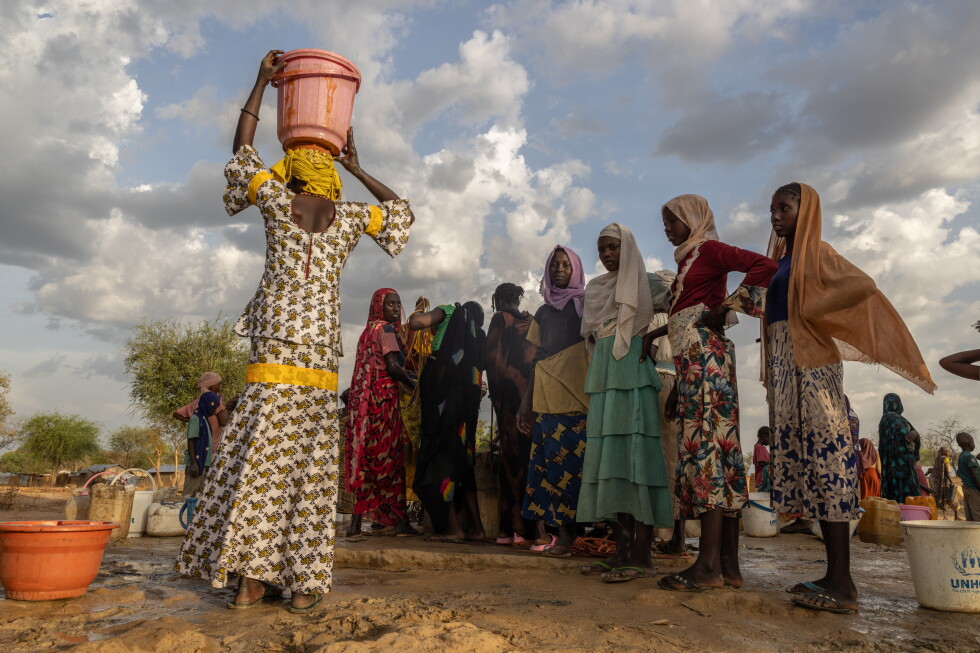
    GENEVA – In a stark briefing held Friday, the United Nations Entity for Gender Equality and the Empowerment of Women (UN Women) delivered alarming findings showing that widespread funding cuts over the past 18 months have stripped at least 1 million women and girls of access to life-saving humanitarian aid and essential support services.

    The crisis traces directly to policy shifts implemented after the Trump administration took office in January 2025. As the United States remains the single largest contributor to the United Nations’ overall budget, the administration’s rollback of global foreign assistance has triggered cascading disruptions across U.N. humanitarian programs. Eighty-four percent of women’s organizations surveyed by UN Women confirmed that demand for their services has risen sharply since the new U.S. policy took effect, even as their operating budgets have shrunk.

    “Every dollar pulled out of women’s organizations is a dollar taken away from survivors of conflict-related sexual violence, displaced mothers, girls forced out of school, and communities fighting to stay alive,” stated Sofia Calltorp, UN Women’s head of humanitarian action, during a press conference in Geneva.

    UN Women’s research drew responses from 855 women’s organizations operating across 52 countries, painting a grim portrait of systemic breakdown. The data shows 89% of these groups can no longer meet the growing demand for services from vulnerable women and girls, forcing frontline organizations to turn away people in need. One out of every five surveyed groups warned they will likely suspend operations permanently or temporarily within the next 12 months.

    Calltorp emphasized that the recorded figure of 1 million women affected is almost certainly an underestimate of the true scale of harm. “We know that this number, at least 1 million women and girls, is just the tip of the iceberg,” she said.

    The report arrives amid broader global aid contraction that is worsening already dire conditions for at-risk populations globally. UN Women noted that conflict-related sexual violence incidents doubled worldwide over the past year, just as OECD data revealed a 24% drop in global development assistance—from previous levels to $174 billion, marking the largest single-year decline in development aid on record. The OECD is a research and policy collective made up of 38 primarily developed nations.

    “Without immediate action to reverse these cuts, the organizations that have kept women and girls alive through the world’s worst crises risk becoming another casualty of war,” Calltorp added.

    Funding shortfalls triggered by U.S. cuts and reductions from other major donor nations have already forced multiple U.N. agencies to slash thousands of staff positions and scale back life-saving aid programs across every region of the world. Amid a broader U.N. restructuring effort labeled UN80, top U.N. officials are currently evaluating a proposal to merge UN Women with the United Nations Population Fund (UNFPA), the agency focused on global sexual and reproductive health rights.