BERLIN — Global automotive giant Volkswagen has disclosed steep second-quarter sales declines, headlined by a dramatic 30%-plus drop in its largest single market, China, just one day after announcing sweeping restructuring plans that could cut its model lineup by nearly half to counter slumping demand. Headquartered in Wolfsburg, Germany, the company reported Friday that total group deliveries fell 8.6% year-over-year in the three months ending June, reaching just under 2.1 million vehicles. Most of its major premium and mass-market brands recorded double-digit or notable single-digit declines: the core Volkswagen brand saw deliveries drop 14% to just over 1 million units, Audi slipped 8%, and Porsche fell 18%. Outliers included its supercar brand Lamborghini, Czech automaker Skoda, and its commercial trucks division, which all posted modest delivery gains. Regionally, sales also grew across the Americas and Europe, but these gains were not enough to offset the collapse in Chinese demand.
The restructuring announcement came Thursday following a meeting of Volkswagen’s board of directors, marking the next stage of a three-year company-wide “fundamental realignment” designed to adapt to a rapidly shifting global auto market. CEO Oliver Blume outlined that the overhaul will focus on cutting operational complexity, concentrating investment on core automotive technologies, aligning product strategies more closely to regional market needs, and trimming excess production capacity. Blume framed the changes as a necessary response to what he called an “increasingly demanding environment” for global automakers.
Volkswagen specifically called out a series of interconnected industry pressures that have built up over the past 12 months: escalating geopolitical tensions, rising input and operational costs driven largely by new tariffs, stricter emissions and regulatory requirements around the world, and intensifying competition from both established and new market players. As recently as last December, the company was making large, high-stakes investments in China to grow its market share, but local electric vehicle manufacturers have rapidly captured growing market share, leaving Volkswagen scrambling to catch up amid cutthroat competition.
Industry analysts have reacted with skepticism to the company’s restructuring claims. Research firm BernsteinSG noted in a client note published after Thursday’s announcement that Volkswagen’s claim to be extending its technology leadership is likely to draw doubt, given the far faster pace of innovation from the Chinese EV manufacturers that are displacing it in its once-secure Chinese market.
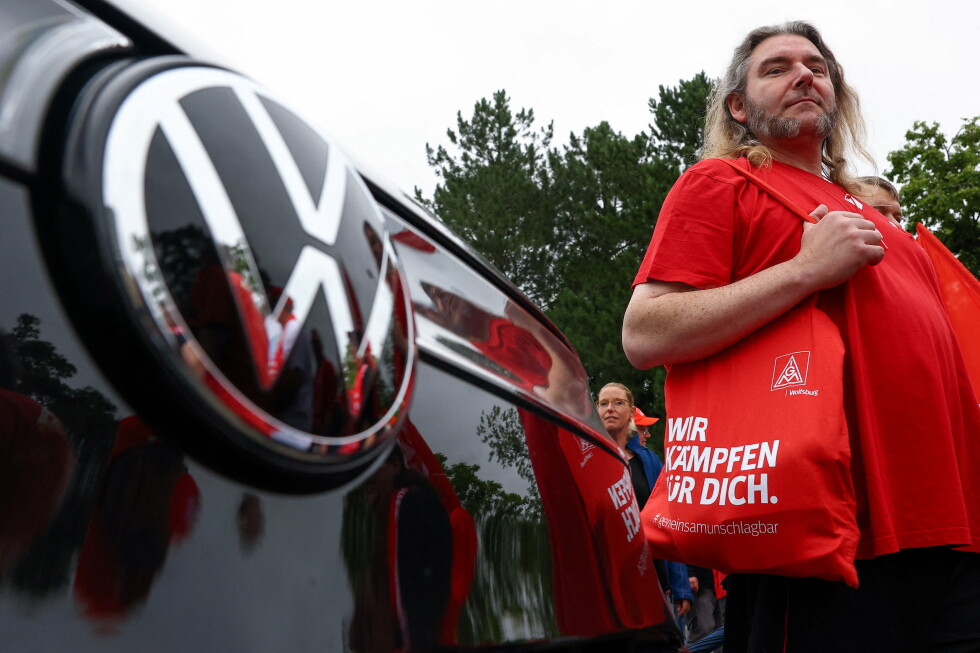
The restructuring plans have also sparked pushback from Volkswagen’s workforce. Hundreds of employees gathered outside the company’s EV-only plant in Zwickau on Thursday to protest the proposed changes, demanding formal job protections and opposing rumored plans to shut down the facility.