博客

  • Fery’s Wimbledon run ended by Zverev in semi-finals

    Fery’s Wimbledon run ended by Zverev in semi-finals

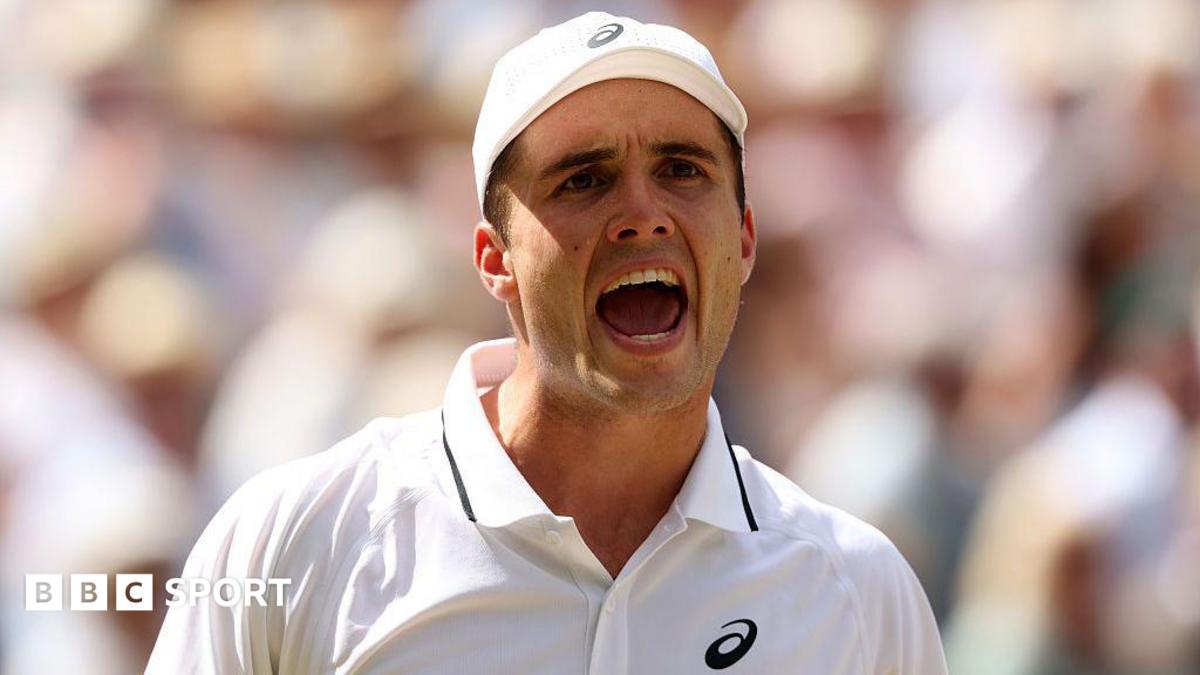
    For British wildcard Arthur Fery, the dream run at this year’s Wimbledon has come to a close, but the 24-year-old (who celebrates his birthday in just two days) leaves the All England Club with his head held high, a massive career breakthrough, and no regrets about skipping a Greek vacation with friends to chase glory on home soil.

    Coming into the Championships ranked world No. 114, with never a Grand Slam third-round appearance to his name, Fery defied every pre-tournament prediction to march all the way to the men’s singles semi-finals, becoming the first men’s wildcard to reach this stage of Wimbledon since legendary champion Goran Ivanisevic’s iconic title run in 2001. His run captivated the British crowd after a brutal opening week that saw 15 of his fellow British players crash out in the first round, leaving Fery to carry the home nation’s singles hopes far further than any pundit had dared to imagine.

    Fery’s path to the semi-final was nothing short of dramatic. The French-born Brit, who grew up just a short walk from the Wimbledon grounds, clawed back from a set down to win his first three matches, stunned former world No. 3 Grigor Dimitrov in a marathon five-set thriller on his Centre Court debut, and blew past French Open runner-up and ninth seed Flavio Cobolli in the quarter-finals to cement his place in tournament history. His relentless never-say-die attitude and unshakable self-belief won over fans across the grounds, from Centre Court to the crowds packed on Henman Hill.

    Looking back on the choice that changed his career trajectory, Fery laughed off the near-miss of his planned holiday: “I was meant to be going to Greece with some friends. One of my friends went ahead early, hoping I would lose so I could join him. He ended up coming back two days later to cheer me on. I’m so glad I stuck with this tournament and kept fighting.” It would have been easy to fold in his third-round clash against Zizou Bergs, when Bergs claimed two breaks in the fourth set, but Fery refused to let the moment slip. “I just kept fighting, came back to the court every time and gave my best. I was mentally locked in the whole way,” he said.

    That mental grit ran out just one step short of the final on Friday, as second seed Alexander Zverev of Germany – the recently-crowned French Open champion – proved too strong in a straight-sets 7-6(7-0), 6-2, 6-4 win. Though Fery matched Zverev stroke for stroke through the opening set, the German shifted into another gear in the tie-break, reeling off seven consecutive points to take the set without dropping a single point. From there, Zverev never looked back, dominating his service game through the final two sets to secure his place in his first ever Wimbledon final.

    After the final point, the 14,979 fans packed into Centre Court rose as one for a standing ovation for Fery, who shared a warm post-match embrace with Zverev at the net. Fery admitted after the match that the run had caught up with him, and that he lacked his usual sharp energy against a top-tier opponent. “It might have been just a step too far. The opponent was a step up again,” he acknowledged. “I lacked a bit of that fight I had through the rest of the tournament today.”

    Even in defeat, Fery leaves Wimbledon with a career-changing haul. On Monday, he will be crowned the new British No. 1 and jump to world No. 36 in the ATP rankings – an astronomical rise for a player who had never cracked the top 100 before the tournament. He also takes home £900,000 in prize money, a sum £240,000 larger than his entire career earnings before this Championships. The new ranking guarantees him direct entry into all future Grand Slams for the foreseeable future, a massive boost for his young career.

    Speaking about the changes ahead, Fery said: “It’s going to change things, for sure. It will be interesting to see how I handle this new chapter, and the new expectations from myself and the public.”

    For Zverev, the win marks a historic milestone of his own. The 29-year-old, who had never advanced past the fourth round at Wimbledon in his career before this year, will face defending champion Jannik Sinner in Sunday’s final, and will rise to world No. 2 in the rankings after the tournament, overtaking Carlos Alcaraz. Fresh off claiming his first ever Grand Slam title at the French Open last month, Zverev will now chase a second major trophy at SW19.

    Heaping praise on his young opponent after the match, Zverev said: “I have to give all the credit to Arthur. He’s an unbelievable player, and this is just the beginning of his career. I think he will be a staple on our tour for the next 15-plus years.” Zverev added of his own breakthrough: “This Grand Slam has always been the one that I struggled with the most, and all of a sudden I am in the final, so I am incredibly happy.”

  • ‘Honoured and grateful’ – Morocco fan reflects on World Cup

    ‘Honoured and grateful’ – Morocco fan reflects on World Cup

    After Morocco’s memorable 2022 FIFA World Cup campaign came to a close with a narrow quarter-final defeat to eventual champion France, one dedicated fan has opened up about what the underdog team’s historic run meant to him and the entire African continent. Raja Aderdor, a lifelong supporter of the Moroccan men’s national team, shared that he feels overwhelmingly honoured and grateful to have witnessed his country’s unprecedented journey on football’s biggest global stage.

    Morocco’s performance at that tournament made history as the first African nation to ever reach the World Cup quarter-finals, breaking decades of barriers and capturing the hearts of football fans across the world. Even as their run ended against France, the team’s defensive grit, tactical discipline, and unbreakable team spirit turned them into global fan favourites, uniting communities across Africa and the Arab world behind their underdog story. In his reflection, Aderdor emphasized that the team’s achievements go far beyond wins and losses, marking a cultural milestone that has inspired a new generation of young football talent across the continent.

    This reflection comes as football continues to build toward the 2026 FIFA World Cup, set to be co-hosted by the United States, Mexico, and Canada, with new content and highlights from past and upcoming tournaments rolling out to fans globally. For Morocco and its supporters, the 2022 run remains a source of national pride that has reshaped global perceptions of African football, proving that underdog sides can compete with and even beat the world’s top-ranked teams.

  • Barbados leader rejects ‘asinine’ claim by former UK minister that ex-colonies should repay Britain

    Barbados leader rejects ‘asinine’ claim by former UK minister that ex-colonies should repay Britain

    A fiery debate over colonial-era reparations has erupted after a senior former British official triggered widespread backlash across the Caribbean with her extraordinary claim that former British colonies should repay the United Kingdom for supposed historical investments made during imperial rule.

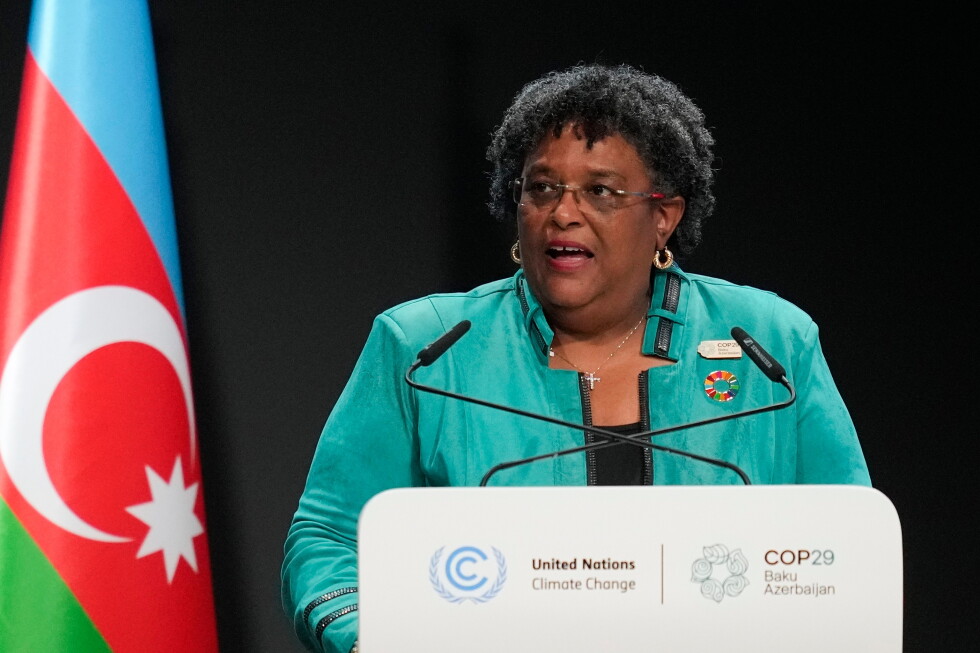
    Mia Mottley, the widely respected prime minister of Barbados, delivered a scathing rebuke of the comments this week, labeling the suggestion as nothing short of “asinine” in a public post on the social platform X Thursday evening. In her response, Mottley pushed back forcefully against the narrative that has been put forward, arguing that the idea that descendants of enslaved African people should be expected to compensate former colonial powers for the systems that brutalized and exploited their ancestors is unfathomable.

    “The Caribbean does not owe Britain for slavery, for colonial extraction, or for laws that treated African people as chattel,” Mottley wrote. “We are not asking for charity. We are asking for justice, and history itself has already told the truth.”

    The controversy stems from remarks made earlier this month by Suella Braverman, a former British Home Secretary who now holds a position with the right-wing, anti-immigration Reform UK party. Braverman made her original comments in a July 3 X post reacting to news that Jamaica intends to file a formal official petition for slavery reparations before the end of 2024. In her post, Braverman claimed the British Empire left a largely positive legacy across the globe, and argued that if the current UK government moves forward with any consideration of reparations claims, former colonies should reimburse Britain for the infrastructure, institutional development and resources the empire put in place that she claims underpin modern democratic systems in former colonies today.

    Mottley’s public pushback comes directly on the heels of a key regional gathering this week in St. Lucia, where Caribbean leaders from the Caribbean Community (Caricom), the region’s primary intergovernmental trade and policy bloc, convened to coordinate their collective push for reparations for the transatlantic slave trade and centuries of colonial rule.

    The Barbadian leader also suggested that Braverman’s comments are rooted in domestic UK political posturing rather than good-faith engagement with the history of colonialism. “I do not doubt there are some British parliamentarians who want to distract people from the domestic politics of the United Kingdom,” she said. “Those who wish to speak on this matter should first take the time to read enough history to understand it. The Caribbean will not be used as a prop for anyone’s politics.”

    Mottley has emerged as one of the most prominent global voices pushing for reparations for colonial-era harms. Just last month, she led a special subcommittee of Caribbean leaders to launch an updated formal reparations manifesto during an international reparations conference held in Accra, Ghana. Under her leadership, Barbados made historic changes to its constitutional status in 2021, formally severing its final ties to the British monarchy as the country transitioned to a full republic. A globally recognized advocate for climate justice as well as reparatory justice, Mottley won a third consecutive term as prime minister in national elections held this past February.

    For years, the UK government has maintained a firm stance refusing to offer reparations or formal apologies for the harms of the transatlantic slave trade and colonial rule. In contrast, Caribbean leaders have continued their diplomatic push, calling for a full formal apology from the British Crown and government alongside tangible remedial measures including full cancellation of outstanding sovereign debt held by former colonial states.

    Global human rights leaders have backed the Caribbean reparations movement, with United Nations High Commissioner for Human Rights Volker Türk confirming that an estimated 25 million to 30 million African people were forcibly displaced from their home continent during the transatlantic slave trade. Millions of those displaced were sent to Caribbean and American nations to work as chattel labor on colonial plantations, building wealth for European imperial powers while leaving generations of Black communities facing systemic intergenerational harm that persists today.

  • Pakistani forces say they killed 75 insurgents after attacks in Balochistan

    Pakistani forces say they killed 75 insurgents after attacks in Balochistan

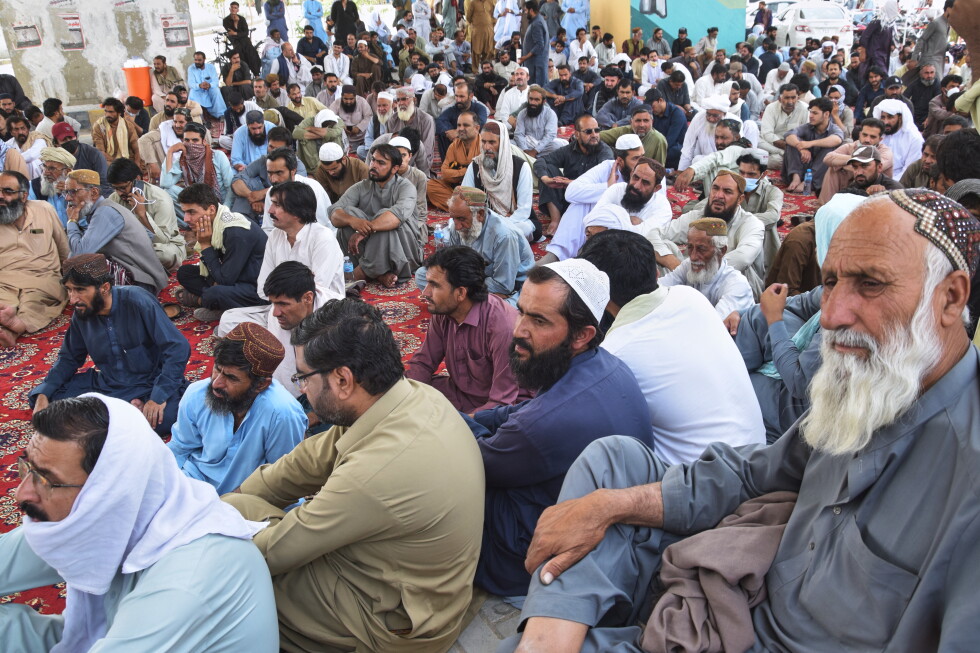
    ISLAMABAD – Pakistani security forces, supported by military aviation, have eliminated 75 insurgents during multi-day counterinsurgency operations targeting a banned separatist faction that carried out a string of lethal attacks on security personnel, law enforcement, and civilian populations in Pakistan’s restive Balochistan province, senior government officials confirmed Friday.

    The official announcement came 24 hours after Pakistani Prime Minister Shehbaz Sharif traveled to Quetta, Balochistan’s provincial capital, to meet with families of the 42 people killed in the recent wave of attacks. During the visit, Sharif assured the grieving families that the lives lost would not be forgotten, pledging that all those responsible for the violence would face justice.

    The surge of violence this week has sparked growing regional and international security concerns, as analysts warn that separatist groups once dismissed as small, fragmented factions are rapidly expanding their operational capacity and geographic reach across Balochistan.

    According to official statements from the Balochistan provincial government, the joint counterinsurgency operations – which involve regular army units, the Frontier Corps paramilitary force, and local law enforcement – were launched late Monday, following a large-scale coordinated assault on a police outpost near Mangi Dam by dozens of fighters from the Baloch Liberation Army (BLA), a group outlawed by the Pakistani government. Mangi Dam is a critical infrastructure site that supplies drinking water to millions of residents in Quetta and surrounding neighboring districts.

    Nine police officers and 15 attacking insurgents were killed in the initial opening assault on the outpost. During the attack, BLA fighters abducted 18 additional police officers, who were later found executed with blindfolds after the insurgents retreated into nearby mountainous terrain.

    Pakistan has long alleged that both the BLA and the Tehrik-i-Taliban Pakistan (TTP) maintain insurgent training and staging sanctuaries on Afghan territory, and receive material and political support from India. Both the Afghan government and Indian authorities have repeatedly denied these accusations.

    In addition to launching the sweeping counterinsurgency operations, the Pakistani federal government has approved 11.1 million Pakistani rupees (approximately $39,000) in compensation for the immediate family of each police officer killed in last week’s attacks.

    Balochistan, Pakistan’s geographically largest province by area, is also the country’s least densely populated region. It has faced a decades-long low-level separatist insurgency led by ethnic Baloch armed groups that demand greater political autonomy or full independence from Islamabad. The province also faces frequent attacks from the TTP, a militant faction separate from the Afghan Taliban but aligned with the group ideologically and operationally.

  • A US license could let Ukraine produce Patriot missiles, but it won’t be simple or quick

    A US license could let Ukraine produce Patriot missiles, but it won’t be simple or quick

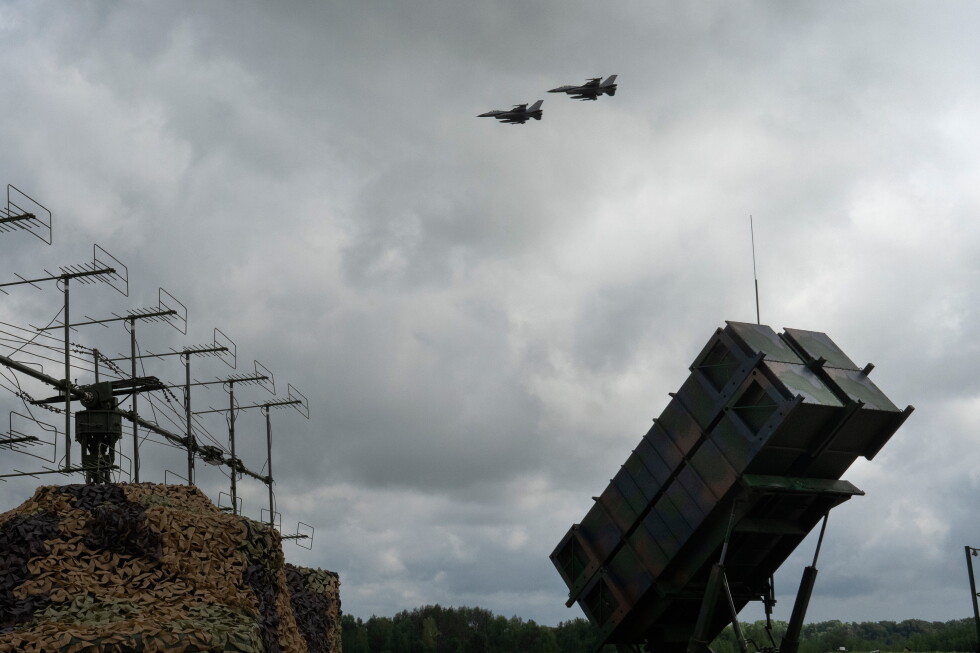
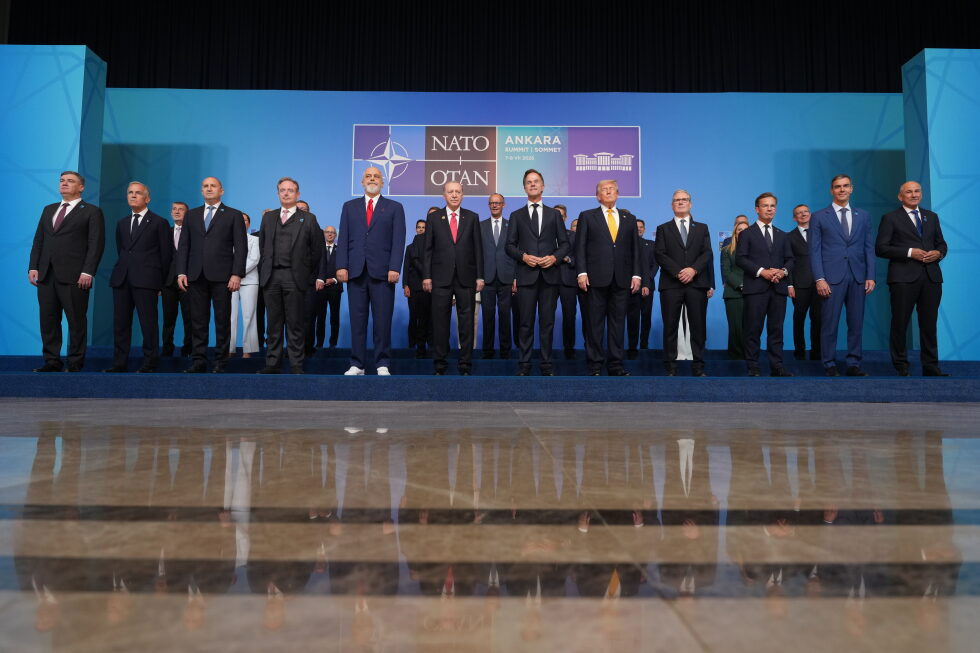
    At the NATO summit held in Ankara, Turkey, alongside Ukrainian President Volodymyr Zelenskyy on Wednesday, former U.S. President Donald Trump made a landmark announcement: the United States would grant Ukraine a manufacturing license to produce American-designed Patriot air defense systems, the critical defensive capability Kyiv has pursued for years to shield its population, cities and critical infrastructure from relentless Russian missile and drone attacks.

    “We’ll give them the right to make Patriots. We’ll show them how to do it,” Trump told attendees, adding that he believed domestic production could be stood up relatively quickly. But the announcement left a critical detail unresolved: exactly what components or full systems Ukraine would be permitted to manufacture under the license. Zelenskyy framed the announcement as a symbolic and strategic win Thursday, telling reporters that Washington now recognizes Ukraine’s capacity to take on this manufacturing work, and that Ukrainian and U.S. diplomatic and defense teams will begin immediate work to finalize all licensing terms and arrangements.

    Patriot air defense systems, and their interceptor missiles specifically, are currently manufactured by major U.S. defense contractors Lockheed Martin and Raytheon, a subsidiary of RTX. Defense analysts and Ukrainian officials emphasize that a general production license does not automatically grant Ukraine the right to build an entire Patriot battery from scratch, which includes launch systems, advanced radar arrays, command and control centers, and interceptor missiles. Instead, the license could be limited to narrower production scopes, such as manufacturing interceptor missiles alone, conducting final assembly from imported component kits, or producing only non-sensitive individual components.

    Serhii Beskrestnov, an advisor to Ukraine’s minister of defense, explained that standard U.S. defense manufacturing licenses typically include access to full technical documentation, specialist training, connections to approved parts suppliers, and on-site support from foreign consultants to help launch domestic production. Even so, many experts warn that the first phase of any production will be far more limited than full domestic manufacturing of complete systems.

    Anatolii Khrapchynskyi, development director of Ukraine-based defense firm Fly Group Ukraine, notes that Trump’s original announcement was intentionally ambiguous, referencing broad production of “Patriots” without clarifying whether the license covers missiles, launchers, radar, command centers or individual components. Even manufacturing Patriot interceptors alone requires an extensive, interconnected global supply chain, with hundreds of separate suppliers producing specialized parts ranging from control surfaces and rocket engines to precision guidance systems and military-grade communications electronics.

    While the Trump administration has not released official details about the scope of the proposed license, an anonymous senior administration official confirmed that the U.S. is already drastically accelerating and expanding its own domestic Patriot production to meet surging global demand, and is forging new industrial partnerships with allied nations around the world to boost output of the systems. The war in Ukraine has already demonstrated how rapidly domestic weapons production can scale when a country gains access to design documentation, technical support, and a steady flow of core components: Ukraine has already become a global leader in low-cost, mass-produced expendable attack drones, while Russia has scaled up its own domestic production of Iranian-designed Shahed-type attack drones (rebranded as Gerans in Russia) at a dedicated facility in Tatarstan. But experts stress that Patriot systems are orders of magnitude more complex than these unmanned vehicles, requiring cutting-edge precision guidance, advanced radar technology, high-performance solid-fuel rocket motors, military-grade microelectronics, and rigorous quality certification standards that Ukraine’s existing defense industrial base cannot yet meet.

    Yehor Chernev, deputy chairman of Ukraine’s parliamentary committee on national security, defense and intelligence, projects that while the bureaucratic and legal process for finalizing the license could begin within a few months, actually launching full production will take multiple years. Even if Ukraine receives fully assembled component kits from foreign suppliers, Chernev estimates it would take at least 18 to 24 months to launch the first pilot production line, with additional time required to roll out the first completed finished weapons. The PAC-3 MSE interceptor, the most modern variant designed to shoot down incoming ballistic missiles, takes roughly 24 months to produce in the U.S. alone, with the solid-fuel rocket motor alone requiring around 30 months of manufacturing work. Chernev added that the most sensitive technologies, particularly the interceptor’s active radar seeker, are unlikely to have their full design documentation transferred to Ukraine for domestic manufacturing, meaning Ukraine will almost certainly have to import the most complex high-tech components and focus initial efforts on final assembly, systems integration, or production of less sensitive parts.

    Dr. Thomas Withington, an electronic warfare, radar and military communications analyst at the London-based Royal United Services Institute, emphasized that public expectations for quick results need to be tempered. While Ukraine’s existing defense industrial base can support early steps toward production, the country still requires significant time to construct specialized manufacturing facilities, train a skilled domestic workforce, and secure stable, uninterrupted supply chains for all required components. “This is not going to be a fix for the air-defense threats Ukraine is going to face tomorrow,” Withington noted.

    The U.S. has a history of allowing allied nations to produce Patriot components under license, and these past examples illustrate that while licensed production is achievable, it proceeds far slower than many observers hope. Japan has produced Patriot missiles under U.S. license for decades: Mitsubishi Heavy Industries has assembled PAC-3 interceptors under an agreement with Lockheed Martin, and Japan relaxed its post-World War II arms export restrictions several years ago to allow for the export of U.S.-designed Patriot missiles back to the U.S., a shift that could indirectly help replenish American stocks drawn down by support to Ukraine. A more recent example comes from Germany, where Raytheon and MBDA Deutschland announced a licensed Patriot GEM-T missile production plan in 2022. A major NATO procurement contract for up to 1,000 missiles followed in 2024, with a new production facility in Schrobenhausen set to supply both Ukraine and replenish depleted European alliance stockpiles.

    But Ukraine faces a unique challenge that neither Japan nor Germany has had to contend with: constant, large-scale Russian strikes on Ukrainian industrial and infrastructure targets. Khrapchynskyi explained that any Patriot production facility in Ukraine would immediately become a top priority targeting for Moscow, meaning all production operations would have to be moved to heavily protected locations, likely underground or inside hardened blast shelters. This reality frames the license agreement as a long-term strategic investment rather than an immediate solution to Ukraine’s urgent frontline air defense needs. If successfully implemented, the licensing deal would position Ukraine as a future major producer of air defense weapons, reducing its reliance on Western allies that have already seen their own weapons stockpiles severely strained by months of donations to Kyiv. As Khrapchynskyi put it: “It would not solve the current missile shortage in 2026, but it would lay the foundation for Ukraine to become one of Europe’s leading producers of air-defense systems in the future.”

  • Watch: Typhoon Bavi forecast to bring heavy rains and floods to Taiwan, Japan and China

    Watch: Typhoon Bavi forecast to bring heavy rains and floods to Taiwan, Japan and China

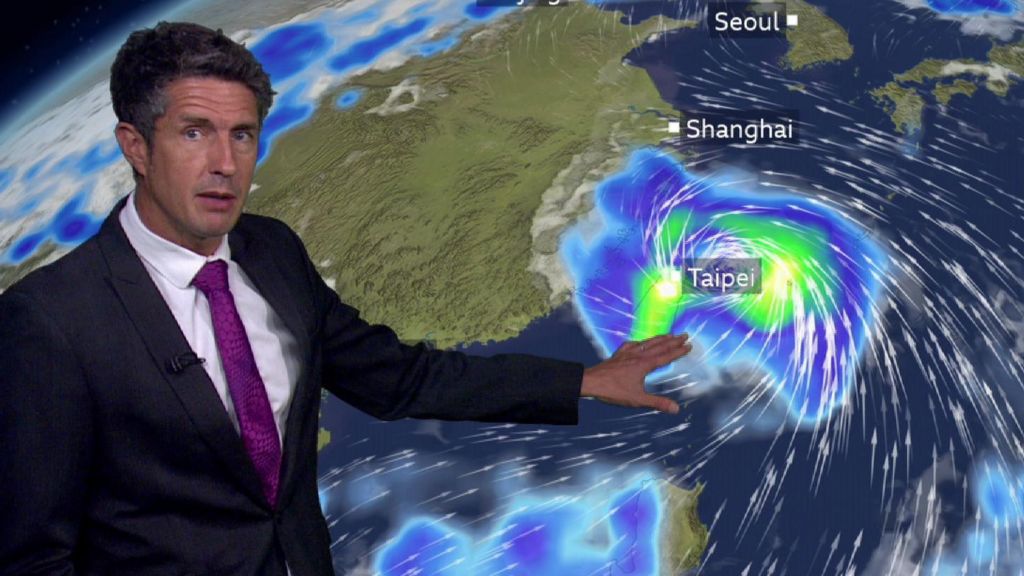
    A powerful tropical cyclone, Typhoon Bavi, is on track to sweep through key regions of East Asia this Saturday, bringing life-threatening heavy downpours and widespread flooding to parts of Taiwan, Japan, and mainland China, meteorological agencies have warned. Weather tracking models currently show the storm system moving steadily across the East China Sea after forming in the western Pacific basin, with its projected path taking it directly through heavily populated coastal areas that are no stranger to extreme typhoon-season weather.

    Local and regional weather authorities have already begun issuing preliminary warnings, urging residents in low-lying and flood-prone zones to prepare for potential evacuations, secure outdoor property, and stock up on essential supplies ahead of the storm’s arrival. Forecasters note that Bavi’s strong wind speeds, combined with sustained heavy rainfall, could also trigger landslides in hilly and mountainous areas, disrupt regional air and sea travel, and damage critical infrastructure across the impacted regions.

    As of the latest update, meteorological teams are continuing to monitor the typhoon’s trajectory and intensity closely, updating forecasts regularly to reflect any shifts in its path that could alter the scope of expected impacts. Residents across the warned areas are advised to stay tuned to official emergency announcements and follow instructions from local disaster management authorities in the coming hours.

  • Man fatally shot by ICE in Houston was not intended target, DHS says

    Man fatally shot by ICE in Houston was not intended target, DHS says

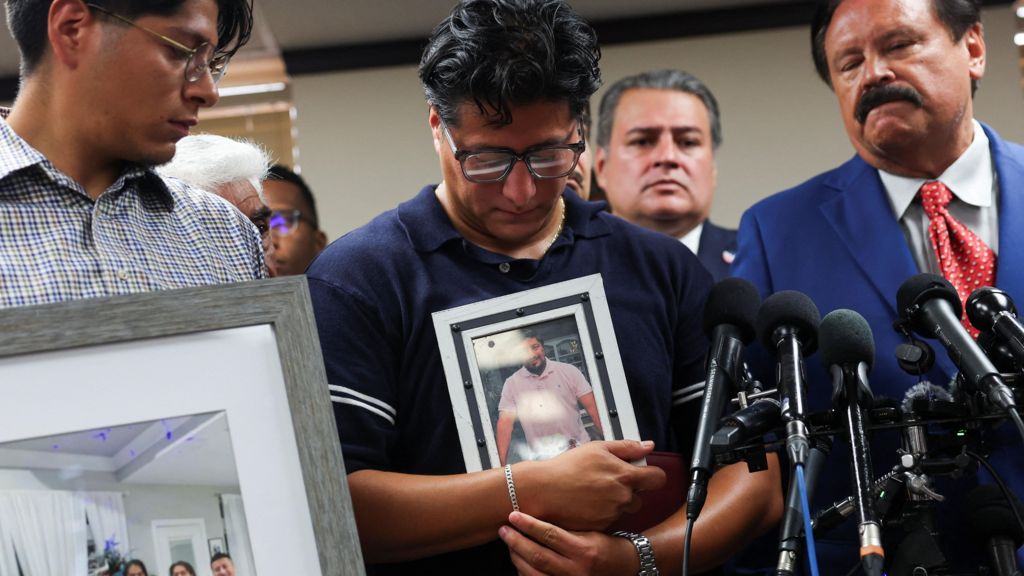
    A fatal shooting by U.S. Immigration and Customs Enforcement (ICE) agents in Houston, Texas has sparked widespread public anger and diplomatic tension after federal officials confirmed the 52-year-old victim, Mexican national Lorenzo Salgado Araujo, was not the target of the planned enforcement operation.

    The incident unfolded at approximately 7 a.m. on Tuesday, when Salgado was en route to a construction job with three of his co-workers. According to Department of Homeland Security (DHS) statements, agents initiated the traffic stop after identifying a white van matching the description of the suspect vehicle, and a driver who physically resembled the target of their pre-planned arrest operation. The encounter ended with an agent opening fire, killing Salgado, who was pronounced dead at a nearby hospital.

    In the days following the shooting, DHS has walked back its initial narrative. The agency’s first statement on Tuesday claimed Salgado had attempted to evade arrest and rammed an ICE vehicle, justifying the agent’s use of deadly force on the grounds of self-defense. Two days later, officials acknowledged the fatal stop was a case of mistaken identity. Further controversy has emerged over the fact that none of the participating agents were wearing body cameras, and no photographic or video evidence of the encounter has been released to the public. A DHS spokesperson told CBS News, the BBC’s U.S. partner, that currently only half of the agency’s field officers are equipped with body cameras, and the remaining personnel are not expected to receive the devices for another 60 days.

    Salgado’s family has pushed back against the official narrative, saying the 52-year-old had worked as a builder in the Houston area for 30 years after entering the U.S. as an undocumented migrant. They added he had no criminal record, was on the verge of securing a legal work permit, and posed no threat to the agents involved in the stop.

    News of the mistaken identity killing drew hundreds of protestors to Houston streets on Wednesday, demanding accountability for Salgado’s death. Four Democratic members of the U.S. House of Representatives have formally called for a full independent investigation into the shooting. In a joint letter addressed to DHS leadership, Representatives Sylvia Garcia, Al Green, Lizzie Fletcher and Christian Menefee noted that this killing is far from an isolated incident, writing that “this is not the first time ICE agents have used unnecessary, deadly force.” The lawmakers reminded DHS Secretary Markwayne Mullin of two earlier fatal incidents: the January shooting deaths of U.S. citizens Renee Good and Alex Pretti at the hands of federal agents in Minneapolis. They criticized DHS and ICE’s repeated pattern of justifying fatal shootings with claims of self-defense after encounters where suspects allegedly attempt to evade arrest, calling for full transparency and accountability rather than the same unsubstantiated excuses that have followed previous deadly encounters.

    The killing has also drawn a formal response from the Mexican government, which announced it would file criminal complaints in the U.S. over the deaths of 17 Mexican citizens connected to ICE custody and operations. Mexican Foreign Minister Roberto Velasco said 14 Mexican nationals have died while held in ICE custody, and an additional three have been killed during ICE arrest operations. Velasco confirmed he received direct instructions from Mexican President Claudia Sheinbaum to file the complaints, with the goal of forcing U.S. authorities to open full criminal investigations into each of these deaths.

    The BBC has reached out to DHS for additional comment on the incident and the demands for an independent probe, but has not yet received a response.

  • How do England stop Norway – and Haaland?

    How do England stop Norway – and Haaland?

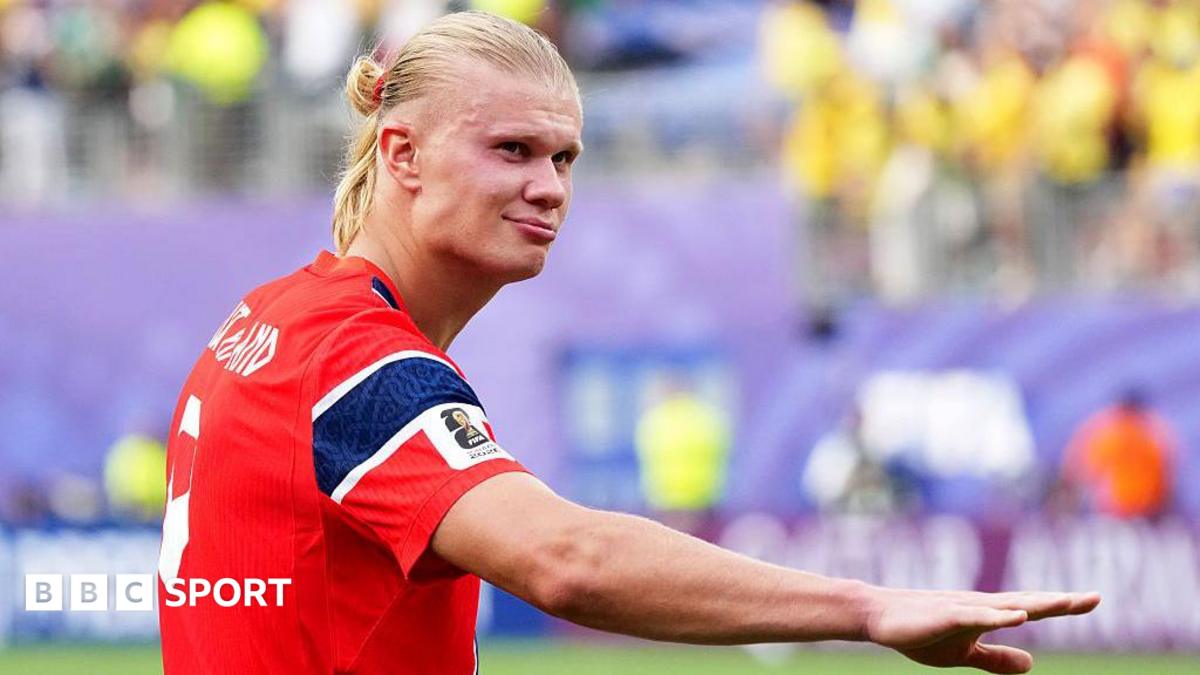
    Ahead of one of the most anticipated quarterfinal matches of the 2026 FIFA World Cup, European dark horse Norway has defied pre-tournament expectations to reach the final eight, and all eyes are now on how Thomas Tuchel’s England side can shut down Stale Solbakken’s in-form attacking unit led by lethal striker Erling Haaland.

    Few predicted Norway would advance this far, even with their status as an early dark horse pick. After finishing second in Group I ahead of Senegal, the Scandinavian side has knocked out both Ivory Coast and Brazil, netting 12 goals across five matches with Haaland already notching seven tournament goals to his name. Their success stems from a flexible, multi-faceted attacking system built around intelligent build-up play and dynamic off-ball movement that has confounded every opponent they’ve faced so far.

    At the root of Norway’s offensive efficiency is their varied approach to playing out from the back. Starting with goalkeeper Orjan Nyland, who has turned in elite distribution throughout the tournament, Norway typically opens with a short build-up: Nyland joins a wide four-man backline to create a numerical overload in the defensive third, while two holding midfielders drop into central spaces to offer passing options. When short passing lanes are closed off, Nyland has a reliable backup: playing long diagonal balls to 6ft 5in target man Alexander Sorloth, who lines up on the right wing to win aerial duels and bring the ball under control. This puts England’s left-back Nico O’Reilly, a 6ft 4in physical defender, in a far more evenly matched aerial battle than Sorloth has enjoyed in previous rounds.

    To disrupt this well-oiled build-up structure, Tuchel has two primary tactical options, each carrying distinct trade-offs. The most straightforward approach is a full-pitch man-to-man press, which eliminates Norway’s numerical advantage and puts O’Reilly in position to win physical battles against Sorloth. The major risk of this approach, however, is that it leaves Haaland one-on-one with a single center-back in open central space, a matchup nearly any striker in the world would favor. Most coaches would opt to leave an extra defender near Haaland to crowd him out, but that leaves England outnumbered in the press against Norway’s three-man central build-up.

    The second option is a dropped defensive block that prioritizes cutting off passing lanes and limiting space. This approach also carries downsides: it runs counter to Tuchel’s preferred front-foot, aggressive identity, and it allows Norway to control possession, slow the match tempo, and frustrate opponents with patient circulation—something they executed masterfully against Brazil, with playmaker Martin Odegaard dropping deep to dictate play and make it nearly impossible for opponents to win the ball back. This intelligent game management has become a hallmark of Norway’s tournament run.

    Drawing lessons from Brazil’s largely successful tactical approach against Norway could give England an edge. The Seleção successfully forced Nyland onto his weaker left foot by cutting off passing options on the right half of the pitch, positioning wingers to pressure Norway’s full-backs and central attackers to mark holding midfielders and free center-backs. Even with Nyland reliably finding Sorloth from long left-footed passes, forcing this pass and committing players to win the second ball around Sorloth could disrupt Norway’s rhythm. For England, which typically lines up with a front two of Harry Kane and Jude Bellingham, pushing holding midfielder Declan Rice higher up the pitch to add extra pressing numbers can create chaotic, high-turnover situations that play to England’s strengths.

    While disrupting build-up is important, the biggest challenge remains stopping Haaland, who has already proven unmarkable for most defenses this tournament. The most effective strategy to mute Haaland is cutting off his service rather than trying to mark him one-on-one, and Norway creates most of his chances through intelligent wide movement and overlapping runs. Left-back David Moller Wolfe makes regular underlapping runs that pull opposition midfielders deep, opening up space for left wingers Antonio Nusa and Andreas Schjelderup to cut inside and deliver deep in-swinging crosses to the back post—one of Haaland’s favorite goal-scoring scenarios, alongside runs onto through balls on the left and attacking cut-backs against retreating defenses.

    Crowding Haaland out with multiple defenders is one of the only proven ways to limit his influence, as West Ham demonstrated in a 1-1 draw against Haaland’s Manchester City last season, when they used three center-backs and a holding midfielder to man-mark him closely. For England, the challenge is that doubling up on wide players to stop crosses leaves Moller Wolfe free to receive the ball and deliver his own cross into the box—a tricky tactical puzzle that Tuchel must solve.

    It would not be surprising to see Bellingham drop deeper into a five-man midfield when England is out of possession to add extra defensive cover, matching the dynamic attacking structure that Norway uses. Beyond defense, one of England’s best tools to neutralize Norway is sustained possession: keeping the ball pins Norway back and allows England to create their own chances using similar wide attacking dynamics that Norway relies on. Just as Moller Wolfe’s underlaps open space for Norway’s wingers, England’s Nico O’Reilly can use the same runs to create 2v1 opportunities against Norway’s full-backs, with pacy wingers drawing defenders deep and cutting the ball back for late arriving attackers— a tactic that has worked for Anthony Gordon throughout the tournament.

    Finally, Norway’s commitment to attacking possession often leaves them short of defenders when they turn the ball over. Brazil created multiple high-quality chances on the counter-attack after winning the ball back against Norway, and England’s pacey attacking options including Gordon, Bellingham, Rice and Noni Madueke are well-suited to exploit the open spaces left by Norway’s high pushing defense.

    With a spot in the World Cup semifinals on the line, both sides will look to impose their tactical identity, with England tasked with solving a complex puzzle to neutralize one of the most dangerous attacking sides in this year’s tournament.

  • NATO leaders came to Turkey to discuss security. Erdogan gave them each an engraved revolver

    NATO leaders came to Turkey to discuss security. Erdogan gave them each an engraved revolver

    When Western heads of state and senior leaders gathered in Ankara, Turkey for a high-stakes NATO summit focused on mounting global security threats, few could have predicted the most talked-about takeaway from the event would be a personalized engraved revolver and six rounds of ammunition, gifted by Turkish President Recep Tayyip Erdogan.

    The unusual gesture was crafted as a deliberate showcase of Turkey’s rapidly expanding domestic defense industry, a sector that has undergone a dramatic transformation in recent decades. Once heavily reliant on imported military hardware, Turkey has emerged as a self-sufficient producer of advanced defense technologies, from combat drones and naval warships to an in-development next-generation domestic fighter jet. The revolvers distributed to attendees were identified by Turkish media as Gumusay .357 Magnum six-shot models manufactured by MKE, Turkey’s state-owned arms producer. Alongside the firearm, summit guests also received a more traditional souvenir: a copy of Erdogan’s biography, *The Politics of Courage: Erdogan and the Rise of Türkiye*.

    While the gift landed with little domestic controversy — gun culture has long been deeply embedded in Turkish public life — it immediately left alliance officials scrambling to navigate conflicting national firearms regulations, triggering a wave of unexpected logistical challenges. Many leaders were forced to abandon the souvenir entirely, while others arranged for immediate decommissioning or museum donation to comply with their home countries’ strict gun laws.

    Canadian Prime Minister Mark Carney joked to reporters that his own planned gift of maple syrup paled in comparison to Erdogan’s offering, noting that the revolver had already been turned over to Canadian law enforcement. “I would like to reassure Canadians, they keep guns away from me,” Carney said.

    Hungary’s newly inaugurated Prime Minister Péter Magyar was one of the first leaders to publicly confirm the unusual gift, posting a photograph of the name-engraved revolver and its display box on the social platform X. It remains unclear what Magyar ultimately did with the firearm after leaving the summit.

    For Ursula von der Leyen, President of the European Commission, a spokesperson confirmed the leader thanked Erdogan for the gesture before arranging for the gun to be deactivated and donated to a military museum. British Prime Minister Keir Starmer told reporters his gift came with a note that waived domestic export restrictions, but he still opted to leave the revolver in Turkey for decommissioning, as importing a personal firearm would violate United Kingdom law.

    Belgian Prime Minister Bart De Wever turned his revolver over to airport police immediately upon returning home, officials confirmed. The firearms gifted to German Chancellor Friedrich Merz and Dutch Prime Minister Rob Jetten remain at their respective national embassies in Ankara, where they are set to be permanently deactivated. In Italy, the revolver delivered to Prime Minister Giorgia Meloni has been formally logged as an official state gift at Palazzo Chigi, the prime minister’s official residence. Greek officials announced their country’s revolver will be donated to the national War Museum, while Croatian authorities plan to hand their country’s firearm over to a police museum.

    Croatian President Zoran Milanović made light of the situation, telling reporters he did not even learn he had received the gift until he returned home from the summit. “I didn’t take it. I shoot from different weapons,” Milanović said, referencing his own approach to politics.

    The White House has not yet issued any public comment on whether U.S. representatives at the summit received the same gift, or what became of it if it was distributed. Erdogan’s own office has also not released any formal statement addressing the unusual gifting choice.

    Within Turkey, the gesture drew little public pushback, but gun control advocates have pointed to the gift as a stark contrast to the country’s growing public safety crisis. Umut Vakfi, a leading Turkish gun control advocacy foundation, reports that armed violence incidents reached alarming levels last year, with more than 2,700 recorded attacks across the country of 86 million people.

  • EU threatens Meta with fines over ‘addictive’ Facebook and Instagram

    EU threatens Meta with fines over ‘addictive’ Facebook and Instagram

    The European Commission has issued a stark preliminary warning to Meta, demanding the tech giant overhaul addictive design features on its Facebook and Instagram platforms or face substantial penalties that could reach as high as 6 percent of the company’s total annual global turnover.

    In its preliminary investigation findings, EU regulators flagged several core platform features as key contributors to potential compulsive social media use, especially among children and adolescent users. These high-risk design elements include infinite content scrolling, automatically playing video streams, and algorithm-driven personalized content recommendation systems. Regulators argue that the unending flow of content pushes human brains into passive autopilot mode, directly fostering unhealthy digital consumption habits that can spiral into excessive, uncontrolled screen time.

    Regulators specifically highlighted Meta’s short-form video feature Reels and ephemeral content format Stories as particularly problematic, noting that the formats are intentionally engineered to encourage extended, non-stop scrolling. The Commission also called out gaps in Meta’s existing safety frameworks, arguing that the company failed to conduct thorough, transparent risk assessments of how its platform design impacts youth users, including the significant amount of time children spend on the apps, often late at night.

    Even Meta’s existing youth safety tools came under sharp criticism from regulators. Time management features, including those that are supposed to be enabled by default for teenage users, can be easily overridden by users and do not deliver meaningful reductions in overall screen time, the Commission found. Parental control tools offered by the platforms are also only effective if caregivers have enough free time and advanced technical knowledge to set them up and use them correctly, putting less resourced families at a disadvantage, regulators added.

    In response to the findings, a Meta spokesperson pushed back against the Commission’s conclusions, telling the BBC that the preliminary assessment does not accurately account for the substantial steps the company has already taken to protect teen users. Meta countered that it has already rolled out dedicated Teen Accounts, which automatically activate default protections for younger users and give parents direct control over usage: the tools allow caregivers to block Instagram access during overnight hours and cap daily teen screen time at just 15 minutes. The spokesperson added that Meta shares the European Commission’s commitment to delivering safe, positive online experiences for teens and will continue to engage constructively with regulators throughout the process.

    It is important to note that these preliminary findings do not represent a final regulatory decision. Meta now has the opportunity to review all evidence submitted against the company and deliver a formal response to the Commission before any final ruling is issued.

    This action is part of a broader ramp-up of EU regulatory action targeting large technology companies over the past year, as policymakers push major platforms to strengthen online protections for all users, with a particular focus on children and teens. The preliminary findings also come ahead of a highly anticipated set of recommendations due Monday from a special expert panel, which is tasked with proposing new policy frameworks to better shield minors from harmful online content.

    Policymakers across the EU are facing growing public and political pressure to take stricter action on youth social media use. A number of EU member states, including France, have already pushed for formal social media bans for minors, following the lead of Australia, which implemented new restrictions for all users under the age of 16 earlier this year.