博客

  • ‘This landscape is completely charred’: Inside the village at epicentre of Spain’s wildfires

    ‘This landscape is completely charred’: Inside the village at epicentre of Spain’s wildfires

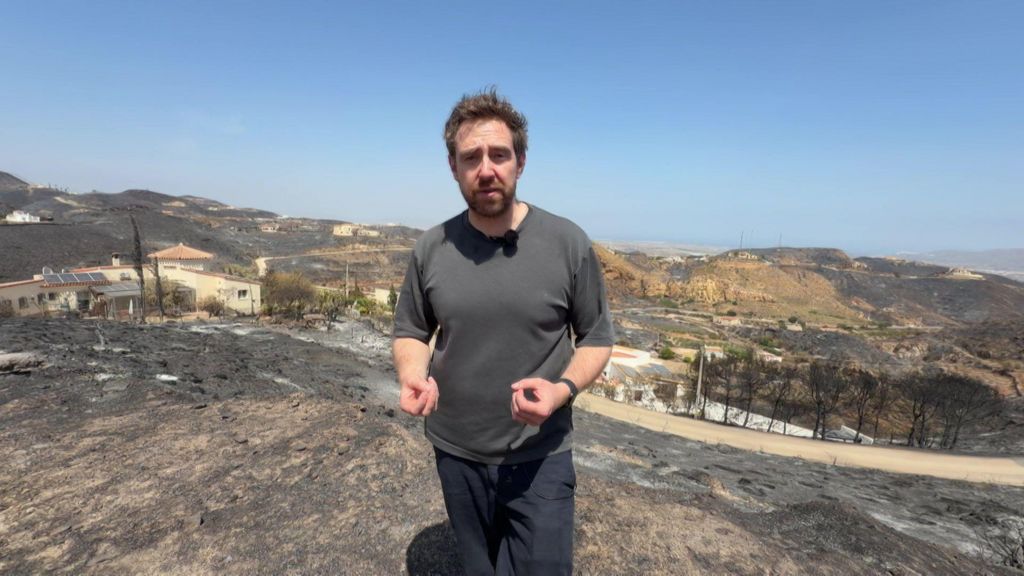
    When BBC correspondent Nick Beake stepped into the small Andalusian village of Bédar this week, the first thing that hit him was the overwhelming silence — and the uniform layer of black that stretched as far as the eye could see. Once a picturesque rural settlement dotted with terracotta-roofed homes and rolling Mediterranean scrubland, Bédar now stands as the epicenter of one of Spain’s most destructive recent wildfire outbreaks, leaving little trace of the lush landscape that defined the community for generations.

    Beake’s on-the-ground reporting reveals a scene of total destruction: dozens of residential properties have been reduced to nothing more than smoldering ash and twisted metal, with entire neighborhoods leveled by the fast-moving blaze. “This landscape is completely charred,” Beake described from the ground, surveying a vista that has been transformed from a thriving rural village into what he calls an endless “sea of black.” What were once green hillsides dotted with olive groves and native oak trees are now barren, blackened stretches of earth, with even deep-rooted vegetation consumed by the extreme heat of the fire.

    The wildfire, which was fanned by record-breaking early summer heat waves and strong gusty winds that have gripped southern Spain in recent weeks, spread rapidly across the Almería region, forcing hundreds of local residents to evacuate their homes with little more than the clothes on their backs. Firefighting crews have been working around the clock to contain the blaze, but dry conditions and unseasonably high temperatures have hampered containment efforts, allowing the fire to expand across thousands of hectares of land.

    As crews continue to battle the blaze, Bédar’s destruction offers a stark reminder of the growing wildfire risk facing Mediterranean nations amid accelerating climate change. Regional officials have already warned that this fire season could be one of the worst on record, as higher average temperatures and prolonged drought create tinder-like conditions across much of southern Spain.

  • Brothers who ran 33 marathons to spotlight dementia spend a day in the Royal Box at Wimbledon

    Brothers who ran 33 marathons to spotlight dementia spend a day in the Royal Box at Wimbledon

    For two British brothers facing a near-certain future of neurodegeneration, a dream invitation to Wimbledon’s iconic Royal Box was more than a VIP experience — it was a chance to build tangible, lasting memories that their loved ones will cherish long after symptoms of their genetic condition set in. Thirty-one-year-old Jordan Adams and 25-year-old Cian Adams carry a rare MAPT gene mutation that gives them a 99.9% chance of developing frontotemporal dementia (FTD), a cruel, incurable brain disease that already claimed their mother Geraldine at 52 in 2016, and has killed 12 members of their mother’s Irish family.

  • David Willey, esteemed BBC foreign correspondent, dies aged 93

    David Willey, esteemed BBC foreign correspondent, dies aged 93

    Pioneering British journalist David Willey, whose more than 50-year career as a BBC foreign correspondent spanned global conflicts, historic diplomatic milestones and five papal reigns, has died of heart failure at his adopted home in Italy at the age of 93.

    Willey’s career in international news began shortly after World War II, when he joined Reuters as a trainee. One of his earliest and most consequential assignments came in 1957, when he witnessed the signing of the Treaty of Rome – the foundational agreement that created the European Economic Community, the precursor to the modern European Union. Writing on the 50th anniversary of the historic accord in 2007, Willey recalled the atmosphere inside the frescoed Roman hall where the document was signed, noting the unexpected presence of a single red-hatted Vatican cardinal among crowds of politicians, civic leaders and journalists.

    After cutting his teeth at Reuters, Willey launched his freelance career with a posting to Algeria before joining the BBC full-time as East Africa correspondent in 1964. Over the following decades, he filed on-the-ground reports from some of the most high-profile global beats of the 20th century: he covered the height of the Vietnam War from Southeast Asia, and was one of the few Western journalists to report from post-revolution China. But it was his decades-long tenure as the BBC’s Vatican correspondent in Rome that cemented his legacy as one of the most authoritative journalistic voices on the Catholic Church.

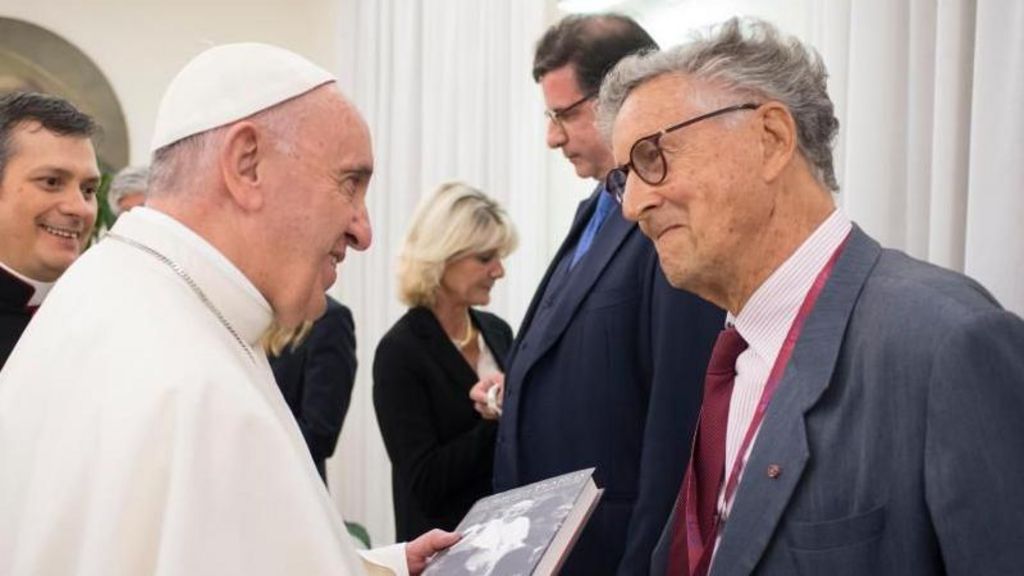
    Over his decades in Rome, Willey covered the tenures of five popes, from the mid-20th century through the 2020s. One of his most high-profile assignments was the 1981 assassination attempt on Pope John Paul II, which he covered as it unfolded. He shared a 2002 flight from Bulgaria to Rome with John Paul II, and in 2016, he presented Pope Francis with a copy of his full-length book *The Promise of Francis: The Man, the Pope, and the Challenge of Change* during a private audience. Even after turning 90, Willey continued working: following the death of Pope Francis last year, he published a widely read reflection on the institutional shifts the Vatican underwent during Francis’ papacy, and met newly elected Pope Leo shortly after his appointment.

    In that 2025 reflection, Willey marveled at the span of his own life and career, writing: “I have suddenly realised with something of shock that I am already not only four years older than the late Pope Francis, but that my own life now extends through no fewer than eight successive papal reigns.” He also recalled the early days of Vatican reporting in the 1950s, when journalists relied on underground connections to advance access to papal texts. He described one Easter Sunday morning, when he traveled by bus to a café opposite Vatican City’s main workers’ entrance to secretly pick up a smuggled copy of an important papal speech from a corrupt Vatican insider.

    Colleagues across the industry have remembered Willey not just for his journalistic rigor and institutional expertise, but for his mentorship of younger reporters. Mark Lowen, a current BBC correspondent and presenter who began his own Rome posting in 2019, wrote that Willey was “an incredible authority on the Vatican, reporting and travelling with five Popes, and was so kind, giving me insight and encouragement when I started.”

    For his decades of contributions to international broadcast journalism, Willey was awarded an OBE (Officer of the Order of the British Empire). He remained a sharp incisive analyst and generous mentor to emerging journalists until his death, leaving behind a decades-long legacy of accurate, insightful reporting on some of the most important global and religious events of the modern era.

  • McCullum sacked as England Test coach but retains white-ball role

    McCullum sacked as England Test coach but retains white-ball role

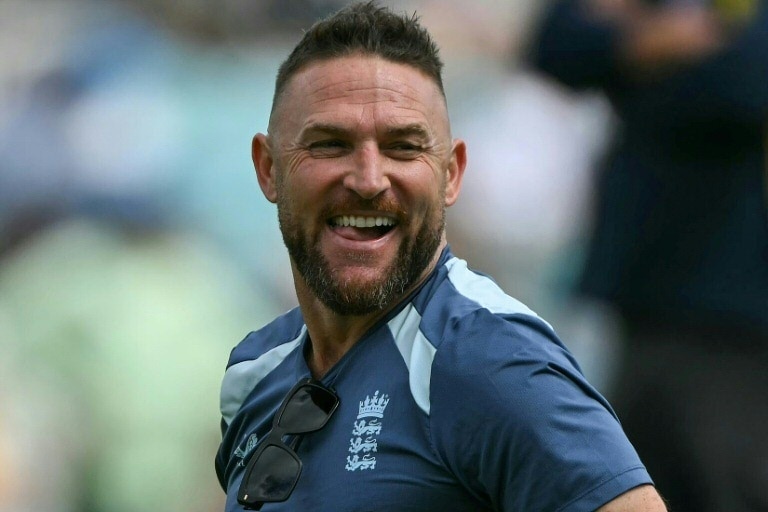
    The England and Wales Cricket Board (ECB) made a major leadership announcement Sunday, confirming that Brendon McCullum has stepped down from his position as head coach of England’s men’s Test cricket team, while he will retain his role leading the national limited-overs white-ball squads.

    The departure comes on the back of a disastrous slump in form for the red-ball side: England have dropped seven of their nine most recent Test matches under McCullum’s watch. The poor results include a lopsided 4-1 Ashes defeat during the 2025-26 tour of Australia, and a 2-1 home series loss to New Zealand just last month. Both campaigns were also marred by off-field controversy surrounding allegations of an unregulated team drinking culture.

    In a statement released by the ECB, McCullum expressed his affection for the Test coaching role and pride in the squad’s shared early accomplishments. “I’ve absolutely loved coaching the Test side and I’m incredibly proud of what we’ve achieved together,” he said, adding, “Of course I’m gutted not to be continuing, but I respect the decision.”

    McCullum’s final match in charge of the Test team overlapped with a landmark announcement from star captain Ben Stokes, who retired from international red-ball cricket mid-series during England’s heavy defeat in the third and final Test against New Zealand at Trent Bridge.

    McCullum’s tenure as Test coach got off to a sensational start. Alongside Stokes, he revolutionized England’s playing style with an aggressive, high-octane batting approach that delivered immediate success: the team notched 3-0 clean-sweep series wins over New Zealand and Pakistan, where they scored 500 runs in a single day of Test cricket, followed by a thrilling drawn 2-2 home Ashes series in 2023 that won global acclaim.

    But cracks began to show early on. A crushing 4-1 loss in India two years after McCullum took charge exposed fundamental flaws in England’s “one-size-fits-all” aggressive strategy, when the team was unable to bat its way out of challenging pitch conditions. The writing for his tenure became clear after the disastrous Ashes tour of Australia, where the series was wrapped up in a mere 11 days of play with a lopsided England defeat.

    Off-field issues compounded the poor on-field results during the recent home New Zealand series. After an opening win, captain Ben Stokes and fast bowler Gus Atkinson were dropped from the second Test for breaking a midnight curfew during a night out at a London bar, reigniting criticism of the team’s lax culture.

    With less than a month to go before England’s upcoming home Test series against Pakistan, the ECB has launched a search for both a new Test head coach and a new full-time captain. ECB chief executive Richard Gould paid tribute to McCullum’s contributions in his statement, noting: “Brendon breathed new life into England men’s Test team during an exciting period which saw some amazing victories and we’re grateful for all he has given to the role.” Gould added that the board views a change in leadership as necessary to position the team for an Ashes victory on home soil in summer 2027.

    Of the original Test leadership trio made up of McCullum, Stokes and managing director Rob Key, only Key remains in his post. Key has faced heavy public criticism for his role in England’s inadequate preparation for the 2025-26 Ashes tour, but he nonetheless praised McCullum’s legacy, saying the departing coach had left the red-ball program “well-set and poised to achieve great things.”

    Reaction to the leadership change from former England captains has been largely mixed but broadly supportive of the ECB’s decision. Ex-skipper Nasser Hussain credited McCullum for transforming the culture of the Test side early in his tenure, but agreed that a change was overdue given the recent run of poor results. “In recent times, with the Ashes and losing seven of their last nine Test matches, and the manner of those defeats, I think it is about the right time,” Hussain told Sky Sports.

    Notably, Sunday’s dismissal came just 24 hours after McCullum led England’s white-ball side to a dominant 56-run win over India in Southampton, completing a resounding 4-0 T20 series sweep over the current T20 world champions. McCullum, 44, took over the limited-overs coaching role in 2024, and says he will now turn his full attention to the white-ball program. “My focus now is on giving everything I’ve got to the white-ball teams and helping England keep moving forward,” he said.

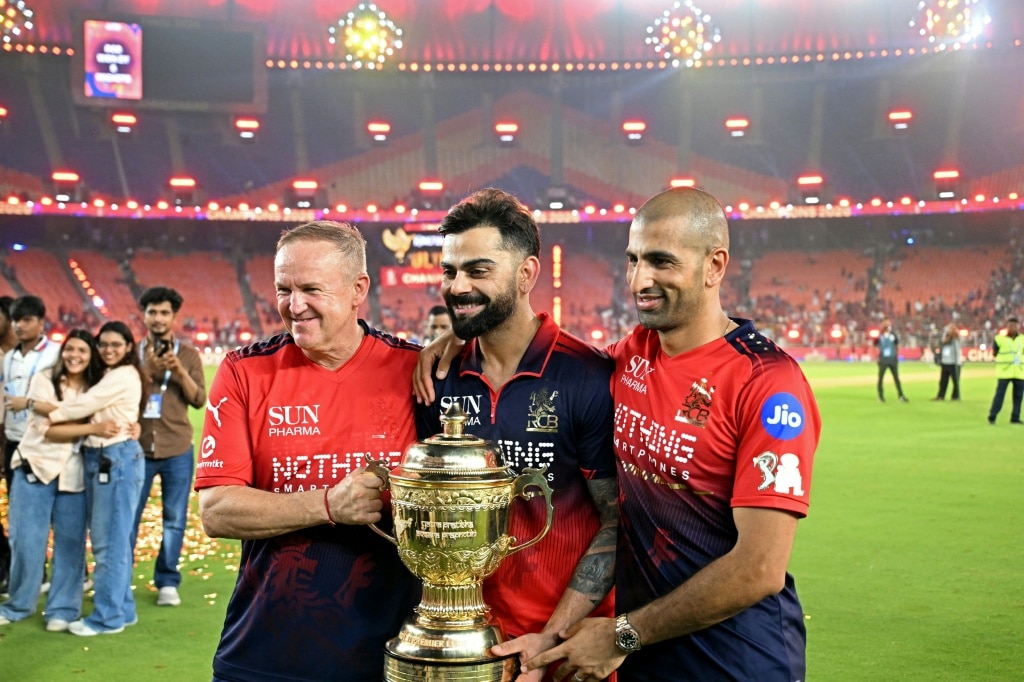
    Speculation over McCullum’s replacement has already begun, with former England coach Andy Flower emerging as a popular candidate for a second stint in the role. The Zimbabwean cricket legend led England from 2009 to 2014, oversaw three successful Ashes campaigns including England’s most recent away Ashes win in 2010-11, and is renowned for his meticulous attention to detail. Hussain backed Flower for the role, noting that the meticulous preparation Flower brings is exactly what has been missing from the current England Test set-up. “Flower took England to number one in the world, pushed his team hard, some say at times too hard, but I loved Flower’s coaching ability,” Hussain said. “Everything (was) meticulous…and that is what has been lacking in this England Test match side –- the meticulous nature of what is needed behind the scenes.”

    Another former England Ashes-winning captain, Michael Vaughan, has called for far more sweeping change across the entire Test program, arguing that the current leadership has failed to get the best out of the squad’s talented player pool. “Enough is enough,” he told the *Stick to Cricket* podcast. “There is no way in a million years that this management group is maximising… and I hate using the word talent now because talent only takes you so far, and we keep saying there are a talented group of players –- well, they keep losing.”

  • McCullum stands down as England Test cricket coach

    McCullum stands down as England Test cricket coach

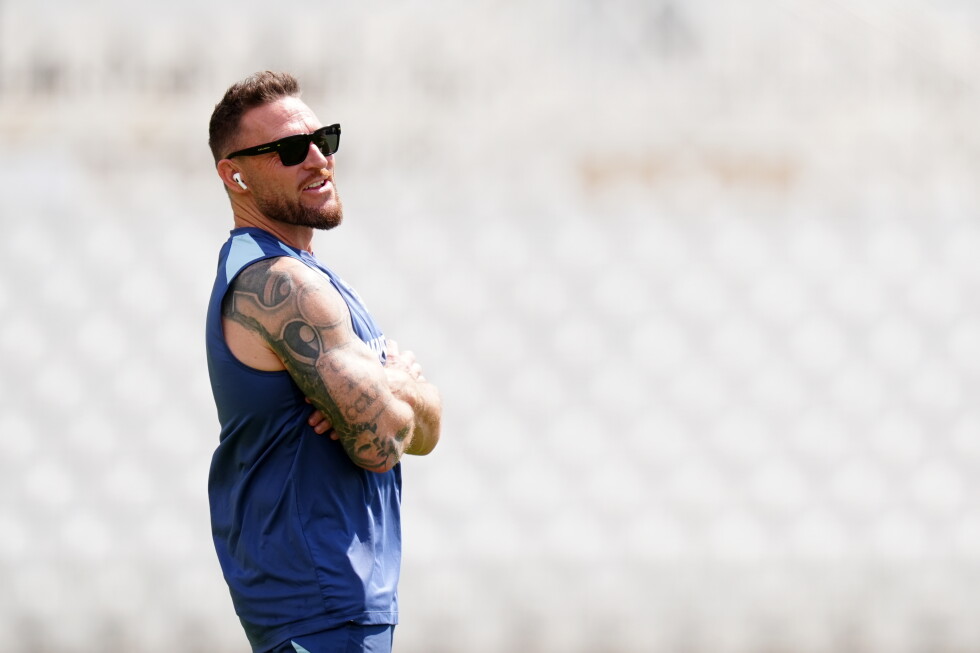
    The England and Wales Cricket Board (ECB) made a major leadership announcement Sunday, confirming that Brendon McCullum has stepped down from his post as England men’s Test cricket head coach. The 44-year-old will retain his position leading England’s limited-overs white-ball national teams, a role he first took on in 2024.

    McCullum’s tenure in charge of red-ball cricket got off to a sensational start when he took the helm alongside captain Ben Stokes. The pair revolutionized England’s Test cricket approach with a bold, ultra-aggressive batting philosophy that became known globally as ‘Bazball’. Early results backed up the revolutionary style: England stormed to a 3-0 clean sweep over New Zealand in McCullum’s first series in charge, followed by another dominant 3-0 victory on tour in Pakistan, where the side hit an extraordinary 500 runs in a single day of play. The 2023 home Ashes series against Australia also delivered a thrilling drawn 2-2 result that won praise worldwide for the brand of entertainment the new approach brought to the longest format of the game, with McCullum claiming 25 wins from his 44 Tests in charge overall.

    But the tide began to turn sharply for McCullum and England’s Test setup two years ago, when a crushing 4-1 away defeat in India exposed critical flaws in the team’s ‘one-size-fits-all’ aggressive approach. England proved unable to batter their way out of challenging spin-friendly conditions, revealing that the revolutionary strategy had clear limits on unfriendly pitches. Those struggles intensified in recent months: England have now lost seven of their most recent nine Test matches, including a dismal 4-1 Ashes defeat on Australia’s 2025/26 tour. The series was wrapped up by Australia in just 11 days of play, effectively ending any remaining public confidence in McCullum’s leadership. Last month, a 2-1 home series loss to New Zealand compounded the poor run of results, and both the Australian and New Zealand campaigns were overshadowed by persistent allegations of an unhealthy drinking culture within the squad. Off-field controversy hit a new peak when captain Ben Stokes and fast bowler Gus Atkinson were dropped from the second Test of the New Zealand series after breaking a midnight team curfew during a night out at a London bar.

    Stokes’ exit from the role followed days later. The former captain announced his full retirement from international cricket midway through the third and final Test against New Zealand at Trent Bridge, which ended in another heavy England defeat — that match would also prove to be McCullum’s final fixture in charge of the Test side.

    In a statement released following the announcement, McCullum expressed gratitude for his time leading the Test program. “I’ve absolutely loved coaching the Test side and I’m incredibly proud of what we’ve achieved together. Of course I’m gutted not to be continuing, but I respect the decision,” he said. The outgoing coach added that his full focus would now shift to defending England’s success in white-ball cricket, just one day after he led the side to a dominant 4-0 T20 series sweep over reigning T20 world champions India, a 56-run victory in Southampton. “My focus now is on giving everything I’ve got to the white-ball teams and helping England keep moving forward. I wish the Test team nothing but success. There’s a hell of a lot of talent in that dressing room and they’re a special bunch of lads,” he added.

    ECB chief executive Richard Gould praised McCullum’s transformative impact on the Test program. “Brendon breathed new life into England men’s Test team during an exciting period which saw some amazing victories and we’re grateful for all he has given to the role,” Gould said. He explained that the change in leadership was made to prepare for a critical 2027 home Ashes series, where the board is targeting a tournament victory: “We now believe that the time is right to make a change for the Test team as we target victory in the Ashes in England next summer.”

    With McCullum and Stokes both gone from the Test leadership setup, only England men’s cricket managing director Rob Key — who has faced heavy criticism for poor preparation ahead of the 2025/26 Australian Ashes — remains from the original leadership trio. Despite the criticism, Key offered a positive assessment of McCullum’s legacy, saying the coach had left the Test team “well-set and poised to achieve great things”.

    The ECB has now launched a search for a new Test head coach and a new captain, ahead of England’s home series against Pakistan next month. Several high-profile names have already been linked to the vacant role: former Australia captain Ricky Ponting has been cited as a potential candidate, while many cricket fans and analysts have called for a second tenure for former England coach Andy Flower. The Zimbabwean coaching great led England between 2009 and 2014, overseeing three successful Ashes campaigns including England’s most recent away Ashes victory in 2010/11.

  • Heat dome spreads across US, bringing dangerous days, little relief at night

    Heat dome spreads across US, bringing dangerous days, little relief at night

    A brutal, high-pressure heat dome has settled across wide swathes of the western and central United States, unleashing a prolonged period of life-threatening extreme temperatures that show little sign of abating through the first half of next week, federal forecasters confirmed Saturday.

    The National Weather Service’s Weather Prediction Center stated that a strong upper-level atmospheric ridge stretching from the West Coast deep into the Midwest will trap hot air across multiple regions, keeping temperatures far above the average mid-July baseline for days on end. The affected areas, ranging from the Intermountain West to the Northern Plains and Upper Midwest, face major to extreme heat risks, with forecasts calling for both record-breaking daytime highs and unusually warm overnight lows that offer almost no reprieve from sweltering conditions.

    Across much of the north-central U.S., Sunday will bring even hotter conditions than Saturday. In central and eastern Montana and North Dakota, forecast highs sit between 100 and 110 degrees Fahrenheit (38 to 43 degrees Celsius) — 8 to 14 degrees Celsius above the seasonal average — and local communities could see even higher readings. Forecasters warn that long-standing all-time temperature records are at risk of being broken in multiple cities, including Salt Lake City’s current record of 41.6 C and Billings, Montana’s 42.2 C.

    While a cold front is projected to push slightly cooler air into Montana starting late Sunday and continuing through Monday, the heat dome will simply shift east, intensifying across the Northern Plains and Upper Midwest after Monday. In Southern California, the National Weather Service’s Los Angeles office warned that most of the region will see temperatures climb to 35 to 41 C or higher through the coming week, with cooler conditions limited to coastal communities. In the San Diego region, temperatures will begin climbing again Tuesday and peak Wednesday, bringing minor to moderate heat risk to inland valleys and mountains and moderate to major risk for desert areas.

    The combination of extreme heat, bone-dry conditions and gusty winds has already complicated wildfire response efforts in Los Angeles County. The Summit Fire, which ignited Friday afternoon near Llano, had charred 2,690 acres of land and was only 8 percent contained by Saturday evening, according to the California Department of Forestry and Fire Protection. Mandatory evacuation orders and warnings remain in effect for affected communities. Cal Fire reported that near-38 C temperatures, single-digit humidity, and gusty winds along mountain ridges are creating ideal conditions for rapid fire spread and aggressive fire behavior. The cause of the blaze remains under active investigation.

    Even Arizona, a state accustomed to extreme summer heat, remains blanketed by widespread heat alerts. On Saturday, an extreme heat warning covered the Phoenix metropolitan area and surrounding desert regions, with warnings extending through Sunday for the Grand Canyon below 4,000 feet (1,219 meters) and covering Marble Canyon, Glen Canyon, and Page through the weekend. These conditions pose disproportionate risk to hikers and other outdoor visitors, who often find themselves in exposed terrain with limited access to shade, clean drinking water, and emergency medical care. The National Weather Service has urged all residents and visitors in heat-affected zones to stay consistently hydrated, take frequent cool-down breaks, and limit non-essential outdoor activity whenever possible.

    One of the most pressing public health concerns surrounding this heat event is the lack of overnight cooling. Unusually warm overnight temperatures leave homes and indoor spaces dangerously hot for extended periods, a particular hazard for households that lack access to affordable, functional air conditioning.

    The U.S. Centers for Disease Control and Prevention notes that three groups face the highest risk of heat-related illness and death: older adults, young children, and people living with chronic health conditions. People who work outdoors or in uncooled indoor spaces are also disproportionately vulnerable, as elevated surrounding temperatures cause body heat to build up rapidly, leading to life-threatening conditions if left untreated.

    This latest heat wave comes on the heels of a deadly extreme temperature event over the July Fourth holiday weekend. Between July 2 and July 6, New Jersey health officials reported 29 suspected heat-related deaths across the state.

    The current heat surge also represents a major test for Arizona, which has made incremental progress in reducing its historically high annual heat death toll in recent years. Maricopa County, home to Phoenix, recorded roughly 430 heat-related deaths in 2025, down from 608 in 2024 and an all-time record of 645 in 2023. Despite that progress, the Maricopa County Department of Public Health reports that the county has already confirmed 18 heat-related deaths so far in 2026, with another 215 cases still under investigation. That puts the county on pace to exceed last year’s premature death toll from heat by this point in the summer.

  • US senator and Trump ally Lindsey Graham dies aged 71

    US senator and Trump ally Lindsey Graham dies aged 71

    Veteran Republican Senator Lindsey Graham of South Carolina, a polarizing but deeply influential figure in American politics whose career shifted from fierce critic to close ally of former President and current President-elect Donald Trump, has died suddenly at the age of 71 following a brief unanticipated illness, his office confirmed. Emergency response records obtained by major U.S. media outlets including NBC News indicate first responders were called to Graham’s Capitol Hill residence Saturday night for a reported cardiac arrest.

    Graham’s four-decade political career began with his election to the U.S. House of Representatives in the 1994 Republican wave, before he moved to the Senate in 2002. A lifelong foreign policy hawk shaped by his service as an Air Force military lawyer (where he retired with the rank of colonel), Graham built his reputation as an unapologetic interventionist. He backed the 2002 invasion of Iraq, supported a long-term U.S. military presence in Afghanistan, and was a leading voice pushing for robust U.S. military backing for Ukraine following Russia’s 2022 full-scale invasion, a cause he championed through both the Trump and Biden administrations. He was also one of the most vocal proponents of a hardline stance against Iran and a staunch lifelong ally of Israel, repeatedly pushing for expanded U.S. military and diplomatic support for the Jewish state.

    Graham’s political trajectory with Donald Trump remains one of the most notable chapters of his later career. A decade ago, Graham emerged as one of Trump’s most outspoken Republican critics during the 2016 presidential primary, where he launched his own unsuccessful bid for the Republican nomination and infamously labeled Trump a “race-baiting, xenophobic, religious bigot.” Following Trump’s election, however, Graham gradually aligned with the former president, ultimately becoming one of his most reliable and high-profile allies in Congress. Even after the January 6, 2021 Capitol riot – where a pro-Trump mob stormed the Capitol, forcing lawmakers to evacuate for their safety – Graham initially condemned the violence, saying “enough is enough” and saying he would break with Trump. But he ultimately reversed course, voting against convicting Trump in his second impeachment trial, reconciling with the former president, and endorsing his 2024 re-election bid. Just months before his death, Graham won the Republican primary to seek a fourth Senate term in the upcoming November general election.

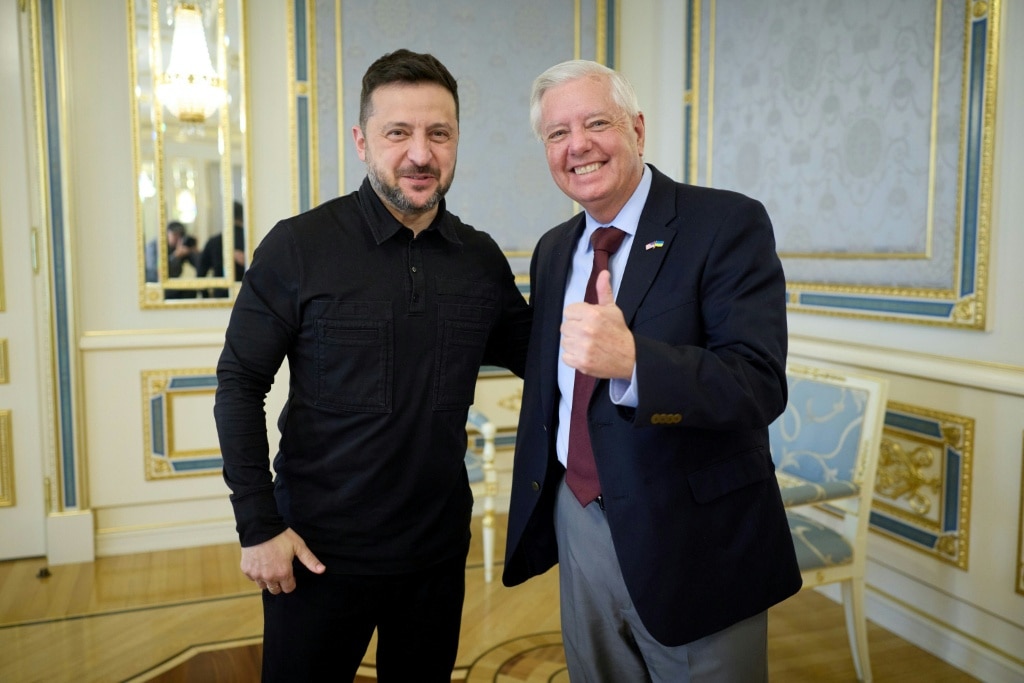
    World leaders have been quick to pay tribute to the senator following the news of his passing. President Trump honored Graham in a post on his Truth Social platform, calling him “one of the greatest people” and “a true American Patriot.” Israeli Prime Minister Benjamin Netanyahu described Graham as “a great friend of Israel and a cherished friend of mine,” adding that the senator “understood that the security of Israel and America are inseparable. He devoted his life to defending America, strengthening our alliance and standing up for the free world.” Ukrainian President Volodymyr Zelenskyy, who met Graham in Kyiv just this past Friday, expressed deep sorrow over the loss, noting that Graham had visited Ukraine 10 times since Russia launched its full-scale invasion, always arriving when Ukraine needed international support most. “America and the world have lost a determined leader,” Zelenskyy said in a statement.

    Graham’s sudden death comes at a tense moment for Senate Republicans, who already hold a narrow 53-47 majority in the chamber and have been without long-time leader Mitch McConnell, who has been hospitalized for weeks and has not cast a vote since June 11. To fill Graham’s seat for the remainder of his current term, South Carolina Governor Henry McMaster will appoint an interim successor, and a new primary will be held to determine the Republican nominee for the open seat in November.

    Raised in a working-class family in Central, South Carolina, where his parents owned and operated a local restaurant and pool hall, Graham was the first member of his family to attend college, according to his official Senate biography. At the time of his death, he was serving as chairman of the Senate Budget Committee, and had previously held a number of key committee assignments throughout his Senate tenure.

  • Marc Marquez cruises to Germany MotoGP Grand Prix victory

    Marc Marquez cruises to Germany MotoGP Grand Prix victory

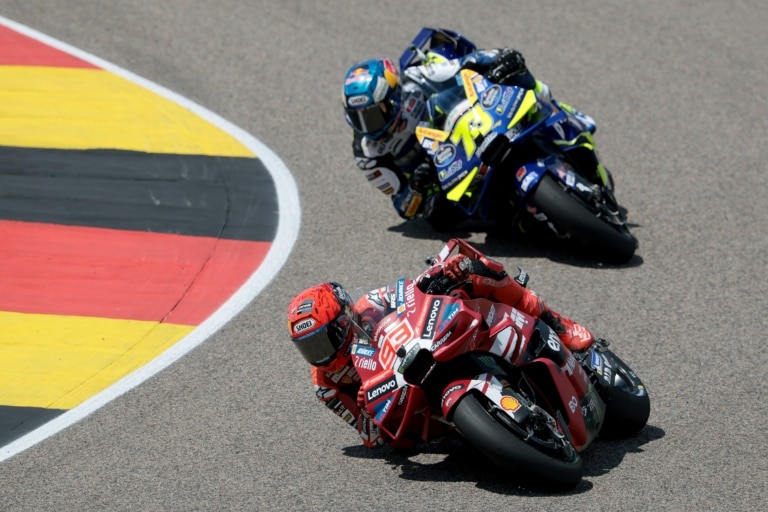
    Motorcycle racing legend Marc Marquez delivered a masterclass performance at the Sachsenring circuit on Sunday, claiming a commanding victory at the German MotoGP Grand Prix and etching his name deeper into the sport’s history books by equaling Giacomo Agostini’s long-standing record of 10 premier-class wins at a single venue.

    The 33-year-old Spanish racer, a seven-time MotoGP world champion, entered the weekend starting from pole position and never looked threatened for the top spot throughout the 10-lap contest. He crossed the finish line with a comfortable 1.996-second gap over second-place finisher Ai Ogura of Aprilia-Trackhouse, with Ogura’s Spanish teammate Raul Fernandez rounding out the top three to complete the podium.

    Marquez’s dominant weekend did not end with Sunday’s main race victory: he also took the checkered flag in Saturday’s sprint event, a result that only reinforces his widely accepted nickname as the “King of the Ring” among fans and competitors alike for his unrivaled success at the German track.

    In a post-race interview, Marquez expressed his elation over the historic milestone, saying, “Super, super happy. You know, it was a special weekend. I was super concentrated because… if I want to have any chance to win the championship, I need to attack here. It’s what we did these last races. And yes, super happy to achieve 10 victories in MotoGP class here in the Sachsenring.”

    The victory has reignited Marquez’s title push heading into the sport’s summer break, putting him firmly back in contention for the 2024 crown. He has now closed the points gap to just 18 points behind standings leader Jorge Martin, his fellow Spaniard who finished fifth in Sunday’s race.

    The early stages of the grand prix saw a tight on-track battle between Marquez and his younger brother Alex Marquez, who started the race from second position on the grid. The fight for the lead ended abruptly after 10 laps, when Alex Marquez, riding for Ducati-Gresini, suffered a crash and slid off the track, exiting the race early.

  • McCullum fired as England test coach but will continue with T20 and ODI teams

    McCullum fired as England test coach but will continue with T20 and ODI teams

    Southport, England – In a significant shake-up to English cricket leadership announced Sunday by the England and Wales Cricket Board (ECB), Brendon McCullum will step down from his position as head coach of England’s men’s Test cricket team after four years in the role. The New Zealand-born coach will, however, retain his leadership posts for England’s T20 and One Day International (ODI) white-ball sides.

    McCullum’s departure comes on the heels of back-to-back disappointing Test results for the national side, beginning with a 4-1 Ashes series loss to Australia last winter, where the team faced widespread public scrutiny over questions of inconsistent professionalism. Just two weeks before the ECB’s announcement, England suffered a home Test series defeat to New Zealand – that result marked England’s first home series loss in a three-Test or longer format since 2012. The shake-up also comes shortly after former Test captain Ben Stokes announced his retirement from international cricket following the New Zealand series, closing the chapter on the aggressive, high-risk style of play coined “Bazball” that defined McCullum and Stokes’ tenure together.

    In the official ECB statement, McCullum expressed clear disappointment over the decision to part ways with the Test program, saying he was “gutted not to be continuing” with the side – a phrasing that indicates the change was initiated by ECB leadership, not McCullum himself. “But I respect the decision,” he added. “My focus now is on giving everything I’ve got to the white-ball teams and helping England keep moving forward.”

    Even as the governing body opted for a change ahead of the 2025-26 Ashes series in Australia, ECB leaders were unanimous in praising McCullum’s transformative impact on English Test cricket. ECB CEO Richard Gould highlighted the New Zealander’s role in revitalizing the national program: “Brendon breathed new life into England men’s test team during an exciting period which saw some amazing victories, and we’re grateful for all he has given to the role.” Gould added that the decision to make a change now was rooted in the board’s goal of securing Ashes victory next summer.

    The ECB described the Bazball era, defined by McCullum’s emphasis on aggressive, fearless batting and match-risking strategy, as one of the most exciting and progressive periods in the history of England’s Test cricket. Rob Key, ECB’s men’s cricket director, echoed that praise, noting McCullum’s lasting legacy in reshaping the team’s mentality and developing a new cohort of young cricketing talent that will lead England’s program for years to come. “He leaves the test team well-set and poised to achieve great things,” Key said.

    Reflecting on his four-year tenure leading the Test side, McCullum struck an optimistic tone about his time in the role. “It’s been an absolute privilege to watch him shape the mentality of the team, to one the players have loved, and see him develop a new generation of talent who will be at the heart of England men’s teams for years to come,” he said. “There have been some unbelievable highs and a few tough days along the way, but that’s all part of taking on a challenge like this. I wish the test team nothing but success. There’s a hell of a lot of talent in that dressing room and they’re a special bunch of lads. I’ll always be backing the boys, with a smile on my face, and hoping they keep taking the game on. I know they’ll continue to make people proud.”

    McCullum has held combined red-ball (Test) and white-ball coaching roles for England since January 2025. Notably, his white-ball regime has just delivered a standout result: England’s T20 side completed a dominant 4-0 home series sweep over India earlier this month, catapulting the team to the top of the ICC men’s T20 world rankings. England’s next Test match campaign is scheduled to begin next month against Pakistan, with the ECB expected to name McCullum’s replacement for the Test role in the coming weeks.

  • Ukraine’s Zelensky orders government reshuffle, new PM

    Ukraine’s Zelensky orders government reshuffle, new PM

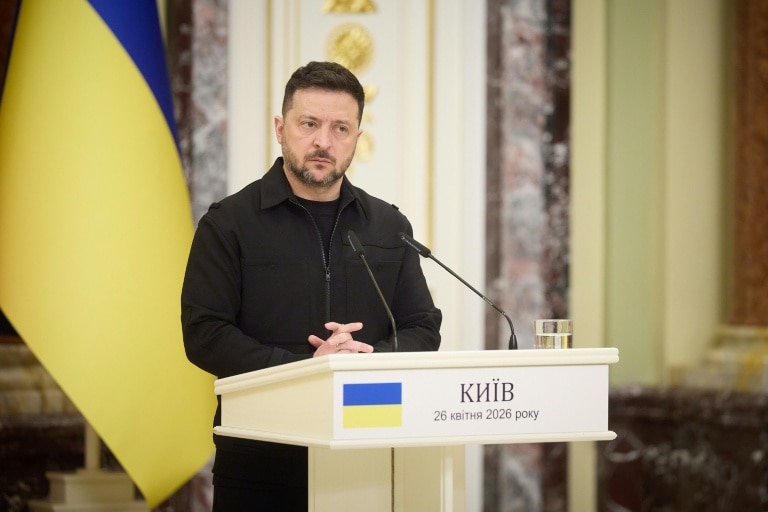
    In a surprise announcement made public on Sunday, Ukrainian President Volodymyr Zelensky has confirmed plans for a sweeping restructuring of his national government, including a proposal to replace incumbent Prime Minister Yulia Svyrydenko and shake up leadership at several top law enforcement agencies.

    As of the announcement, Zelensky has not disclosed the identity of Svyrydenko’s successor nor provided detailed public reasoning for the planned leadership changes. In a post on the social platform X, the Ukrainian leader expressed public gratitude for Svyrydenko’s tenure in office, praising her for what he called clear, steady, and effective leadership as prime minister and years of productive work as part of Ukraine’s governing team.

    Zelensky added that he has offered Svyrydenko a new, high-stakes position leading diplomatic relations with a key international partner, though he did not specify which partner or the exact title of the new role. Nominated to the prime minister post by Zelensky only last year, Svyrydenko has overseen Ukrainian governance through a period of ongoing wartime challenge and growing alignment with Western European institutions.

    “I expect that, together with MPs, we will make the corresponding changes in the Government of Ukraine. There will also be changes among the heads of law enforcement agencies,” Zelensky added in his post. Outlining the core priorities that drove the decision to restructure his cabinet, Zelensky cited pressing national goals: advancing Ukraine’s accession negotiations for European Union membership, shoring up security along the country’s vulnerable border regions, and reorganizing management of different strands of Ukraine’s foreign policy to better meet these goals.

    “We determined that these changes require a renewal of the Cabinet of Ministers,” Zelensky said, offering no further details on the timing or full scope of the upcoming leadership shakeup.

    Per Ukrainian constitutional procedure, all cabinet-level changes require formal approval from the country’s parliament. However, since the full-scale Russian invasion of Ukraine in 2022, legislative lawmakers have overwhelmingly united behind Zelensky’s policy and leadership agenda, and major cabinet changes proposed by the president are rarely blocked.