博客

  • Ship at centre of record cocaine seizure finally leaves Cork

    Ship at centre of record cocaine seizure finally leaves Cork

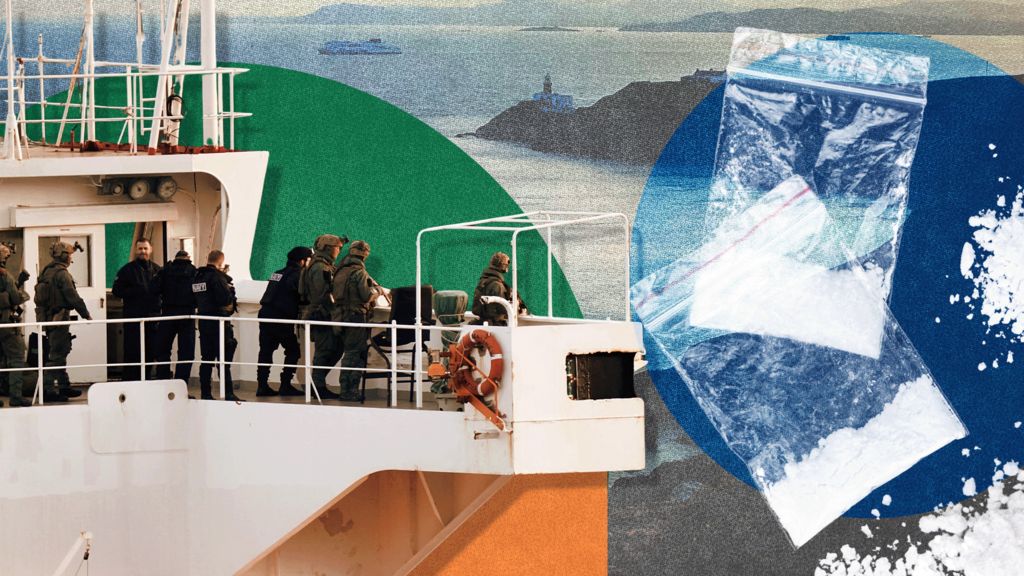
    After nearly 10 months of detainment at Ireland’s Cork Harbour following one of the country’s largest ever cocaine seizures, the Panama-registered cargo vessel MV Matthew has finally exited Irish waters. The 28,000-tonne freighter was first seized by Irish authorities in September 2023, when officials found 2.2 tonnes of unprocessed cocaine hidden onboard. The illicit drug shipment was estimated to have a street value of roughly €157 million, or approximately £133.5 million, marking a historic bust for Irish law enforcement.

    For the entire duration of its detention, the MV Matthew was retained as critical evidence for ongoing criminal proceedings connected to the smuggling plot. Irish legislation and judicial rules required the vessel to remain in state custody until all legal processes wrapped up, which did not conclude until December 2024. Over the 10-month period, maintaining the idle cargo ship imposed a significant financial burden on Irish taxpayers. Running and upkeeping essential onboard systems including the main engine, electrical networks, and ventilation infrastructure pushed total state costs for the vessel to roughly €17 million.

    Last summer, the legal process against the individuals behind the smuggling operation concluded, with eight men convicted on drug trafficking charges. The group received a combined total prison sentence of 129 years for their roles in the plot, bringing the criminal prosecution phase of the case to a close. Once the vessel was no longer required as evidence, Irish authorities opened a process to dispose of the ship, ultimately agreeing to sell it to an international shipping company for the nominal price of just $1. As part of the sales agreement, the new owner is responsible for towing the vessel to the Bulgarian port of Varna for its next phase of use or refitting.

    The Republic of Ireland’s Revenue service, which leads customs and drug enforcement operations in the country, officially confirmed the MV Matthew’s departure from Cork Harbour on Saturday. The seizure and subsequent detention of the vessel highlighted the persistent threat of large-scale drug smuggling operating through European Atlantic ports, while also drawing attention to the unexpected public costs that can come with major law enforcement busts.

  • New Zealand beats Ireland 40-21 to stay unbeaten in the Nations Championship

    New Zealand beats Ireland 40-21 to stay unbeaten in the Nations Championship

    AUCKLAND, New Zealand – Decades of unbroken dominance at Auckland’s iconic Eden Park stretched further Saturday, as the New Zealand All Blacks delivered a clinical 40-21 defeat to a confidence-high Ireland side. The victory, which marked the All Blacks’ 53rd consecutive win at the venue across 32 years, validated head coach Dave Rennie’s tactical push for an aggressive, ball-in-hand playing style that had been inconsistent earlier in the Nations Championship tournament.

    Rennie’s young squad had previously secured wins over France and Italy while trialing this open, attack-focused approach, but those performances were marked by spotty execution, costly disciplinary lapses, and inconsistent momentum. Against Ireland, however, the team translated their practice-field preparation into polished, decisive action that kept the opposition off-balance for most of the 80 minutes.

    From the opening whistle, the All Blacks corrected a recurring flaw that plagued their earlier matches: slow starts that forced them to climb back from early deficits. Ireland did not push into New Zealand’s 22-meter line until the 12th minute, and that venture came to nothing when Tadhg Beirne was called for offside. New Zealand opened the scoring in the 15th minute, after a powerful break from Tupou Vaa’i – who impressed following a positional shift from lock to backrow – put the All Blacks deep in Irish territory. Sustained possession and smart distribution opened space for Patrick Tuipulotu to cross the line, scoring his first test try of the 2024 Nations Championship.

    The home side doubled their lead seven minutes later, turning down a straightforward penalty kick at goal to opt for a 10-meter scrum. Caught off-guard by the choice to prioritize a try rather than three points, Ireland’s defense split as they expected a wide pass to the All Blacks backline. Instead, Ardie Savea broke directly from the back of the scrum to score New Zealand’s second try. By the 25-minute mark, Ireland had already missed 19 tackles, with visible fractures starting to appear in their defensive structure.

    A brief disruption came for New Zealand in the 28th minute, when backrower Luke Jacobson was sin-binned for a dangerous cleanout at the ruck. Ireland capitalized quickly, with Jack Conan finishing off a structured attack to score his side’s first try off a short pass from Jamison Gibson-Park. But the All Blacks responded almost immediately off the subsequent restart: a loose Irish pass in their own 22 was intercepted by Will Jordan, who crossed for his 51st test try in the 35th minute. Four minutes later, Asafo Aumua scored his first try of the match on his second carry over the Irish line, sending the All Blacks into halftime with a commanding 28-7 lead that left Ireland playing perpetual catch-up.

    Ireland struck back early in the second half, with Joe McCarthy driving over the line to score after a well-worked lineout following a break from Gibson-Park. Just as they had earlier, however, the All Blacks quashed the comeback attempt almost instantly. A sustained attacking sequence earned New Zealand a penalty, and after multiple forward carries opened the Irish defense, a long pass to Ruben Love was stopped short of the line – only for Damian McKenzie to pick up the loose ball and score. Ireland rallied once more, with fullback Hugo Keenan crossing for a try in the 63rd minute, but could not close the substantial gap.

    Even after holding out against more than 20 consecutive phases of All Blacks attack near the 70-minute mark, Ireland’s tired defense broke one final time. Center Anton Lienert-Brown crossed for the All Blacks’ sixth try in the 79th minute, closing out a comprehensive six-tries-to-three victory.

    Individual performances highlighted the All Blacks’ strength across the pitch. Midfielder Quinn Tupaea was a relentless dynamic force in the center of the park, while McKenzie proved consistently dangerous both in his starting role at fullback and when shifting to flyhalf later in the match. Speaking after the final whistle, McKenzie emphasized the team’s tactical balance that won out over Ireland’s attempt to slow the pace of play.

    “We wanted to start well and we did,” McKenzie said. “We had a pretty good balance between our kick game and our run game.”

    Tactically, New Zealand’s edge was clear across all areas of the pitch. Strong set piece work, aggressive physical play at the breakdown, and consistent ability to win front-foot ball allowed the All Blacks to maintain their expansive attacking structure. When Ireland attempted to slow the match tempo to disrupt New Zealand’s rhythm, the All Blacks adapted effectively, forcing frequent turnovers and limiting their kicking to keep pressure on the Irish defense. Backline play was also far more precise than in earlier tournament matches, while aggressive pressure forced Ireland into repeated unforced errors in the opening half.

  • The challenges facing UK’s next PM Andy Burnham

    The challenges facing UK’s next PM Andy Burnham

    When Andy Burnham accepts the keys to 10 Downing Street on Monday, he will step into a role that has seen rapid turnover: he will become the United Kingdom’s seventh prime minister in just 10 years. The former Greater Manchester mayor secured an overwhelming vote to take over as leader of the Labour Party this Friday, following Keir Starmer’s resignation last month. Political and economic analysts widely agree that Burnham inherits a lengthy, high-stakes to-do list, with many of the unresolved issues that forced his predecessors out of office now falling to his new administration.

    First on the agenda is addressing the persistent cost-of-living crisis that has left millions of UK voters struggling to cover basic expenses. Skyrocketing energy and food prices, spurred by the ongoing Russia-Ukraine war, have eroded household purchasing power for years, and voters are demanding urgent action to make daily life more affordable. Burnham’s room for policy maneuver is tightly constrained, however: the UK is grappling with stagnant economic growth, sky-high public debt, and binding fiscal rules that require the government to balance spending against tax revenue.

    In his first speech after being confirmed as Labour leader, Burnham laid out his core economic vision, promising to build a nation “where life is more affordable”. A central pillar of his growth strategy is devolving more governing power to regional economic hubs, a policy designed to unlock local potential that can drive national growth. As Philip McCann, a senior researcher at the Productivity Institute, explained, this approach shifts growth leadership outside London, turning underperforming regional economies into national growth engines. Burnham has also outlined plans to back small and medium-sized businesses, drive “reindustrialization” across former industrial regions, and expand public ownership of key public services including water, public transport, and energy. Early reporting from the *Financial Times* indicates he may loosen long-standing restrictions on new oil and gas drilling in the North Sea as a short-term measure to cut domestic energy bills for consumers. The ideological direction of his economic agenda will largely hinge on his upcoming pick for finance minister, a decision that has not yet been announced.

    A second major challenge is tackling the UK’s rapidly ballooning welfare budget, a problem Burnham has publicly acknowledged requires targeted reduction. His predecessor Starmer faced fierce backlash from both the public and his own party over proposed welfare reforms that included cutting winter fuel payments for low-income elderly pensioners. Starmer ultimately was forced to backtrack on the changes, a policy reversal that significantly eroded his public approval and contributed to his resignation. As a member of Labour’s soft left faction, Burnham faces intense internal pressure to avoid deep cuts to working-age and pensioner benefits, even as he must address the growing cost of the welfare system. He has also pledged to fix long-standing underfunding in the social care sector, a portfolio he first attempted to overhaul during his tenure as UK health secretary in 2009. With personal experience caring for a father living with Alzheimer’s, Burnham said in his Friday speech that he was “prepared to grasp the nettle” of reform, adding that the current social care system “is broken”.

    On the defence front, Burnham inherits a critical £4.7 billion (US$6.3 billion) funding gap in the Labour government’s four-year defence investment plan. The long-delayed strategy was published by Starmer’s government last month, but full delivery of the plan now falls to Burnham’s new administration. Beyond closing the funding gap, he faces growing pressure from within Labour and from key allies including the United States to further increase defence spending to meet NATO’s new target of devoting 3.5 percent of GDP to defence by 2035. Burnham has previously committed to taking full “responsibility” for funding the defence plan and making “no compromise” on UK national security.

    One of Burnham’s most pressing political challenges is reversing the flow of Labour voters to rival fringe parties, particularly the surging support for Nigel Farage’s hard-right, anti-immigration Reform UK. Labour has also lost support to the left-wing Green Party in recent years, with both parties making major gains in 2024 local elections — a shift that piled increasing pressure on Starmer to step aside for a leader who could reverse these losses. In his Friday speech, Burnham laid out a clear new political strategy, promising to build a “distinctly Labour” policy direction that is independent of both fringe parties. “We win by being us,” he said. “We won’t try to out-Green the Greens, or out-Reform Reform, or doing what we’ve done in the past of wearing too many Tory clothes.” London School of Economics politics professor Tony Travers said this signals a clear break from Starmer’s centrist approach. “What this signals is that the Labour Party under Burnham will want to try to win back voters from Reform and the Greens with a different offer,” Travers told Agence France-Presse.

    In foreign policy, Burnham will need to quickly navigate a complex and volatile global landscape. Top of the international agenda is building a working relationship with unpredictable U.S. President Donald Trump, who has already publicly labeled Burnham “extremely liberal”. According to Travers, Starmer maintained a relatively cooperative relationship with Trump until the escalation of the U.S.-Iran conflict, leaving Burnham to chart a new course for the special relationship. Beyond U.S.-UK relations, Burnham must manage the ongoing wars in Ukraine and the Middle East, two conflicts that have significant ripple effects on UK energy prices and domestic stability. So far, Burnham has signaled he will maintain broad continuity with Starmer’s widely praised foreign policy, retaining close ties to NATO and all key UK allies. “Our relationship with the US will remain critical as our most important defence and security ally. And Britain’s support for Ukraine will not waver,” Burnham wrote in a recent op-ed for *The Times*.

  • Laos says it can’t determine cause of  tourist deaths linked to methanol

    Laos says it can’t determine cause of tourist deaths linked to methanol

    A 2024 tragedy that claimed the lives of six foreign backpackers in the popular Laotian tourist town of Vang Vieng has left international authorities frustrated after Laotian officials announced they cannot formally assign blame or confirm the exact cause of the deaths, all linked to locally produced alcohol contaminated with dangerous levels of methanol.

    The fatal incident unfolded in mid-November 2024, when a group of international travelers fell ill after a night out drinking at local establishments. The victims have been identified as 28-year-old British national Simone White, 19-year-old Australian Bianca Jones, 19-year-old Australian Holly Morton-Bowles, 20-year-old Danish citizen Anne-Sofie Orkild Coyman, 21-year-old Dane Freja Vennervald Sorensen, and 57-year-old American James Louis Hutson.

    In an official statement released Saturday by the Laos Ministry of Public Security, authorities confirmed that investigators lack the forensic evidence required to definitively tie the deaths to methanol poisoning or the actions of any specific individual. The gap in evidence stems from the fact that no autopsies were performed on the victims’ remains, a restriction that prevented officials from reaching a formal conclusion on cause of death. Despite this limitation, the ministry did confirm that testing found excessive concentrations of methanol in vodka produced by a local distillery connected to the incident.

    Methanol is a cheap toxic chemical most commonly used in products like paint thinner. Unethical alcohol producers sometimes illegally add it to homemade spirits to cut production costs, as it shares a similar taste and appearance to ethanol. Even small doses of the chemical can be fatal: after being absorbed into the bloodstream through the gut, the body’s natural metabolic process breaks methanol down into formaldehyde and formic acid, toxic compounds that can cause organ failure and death within hours or days. Early symptoms of poisoning include vomiting, impaired decision-making, loss of coordination and drowsiness, while advanced cases develop within 12 to 48 hours, bringing abdominal pain, breathing difficulty, vision damage that can lead to permanent blindness, coma, and convulsions.

    In the weeks following the tragedy, legal action has been taken, but the limited scope of charges has drawn sharp criticism from foreign governments. The owner of the implicated distillery is currently facing two charges: selling harmful food products and operating an unlicensed business. Notably, the charges do not reference the six deaths, and carry a maximum penalty of just one year in prison and a fine equivalent to roughly $1,100 USD. Earlier this year, 10 staff members connected to the Nana Backpacker Hostel, where many of the victims were staying, were charged with destroying evidence, each receiving suspended sentences and a fine of around $185 USD.

    The Australian government has publicly condemned the limited legal action, saying it is “deeply frustrated and bitterly disappointed” that more severe charges have not been filed over the deaths of the two Australian backpackers. In response to the outcome, Australian foreign ministry officials summoned Laos’ ambassador to Canberra to discuss the case. The British government has also responded by launching a new public awareness campaign to warn British travelers visiting Southeast Asia of the severe risks of unregulated methanol-tainted alcohol, publishing a full list of poisoning symptoms to help tourists seek urgent care if exposed.

    Vang Vieng, a scenic riverside destination in central Laos, has long been a key stop on the Southeast Asian backpacker trail, drawing thousands of young international travelers every year. The tragedy has highlighted ongoing risks of unregulated alcohol production in popular tourist regions, and raised questions about accountability for incidents that harm foreign visitors.

  • White House tightens rules for visa holders

    White House tightens rules for visa holders

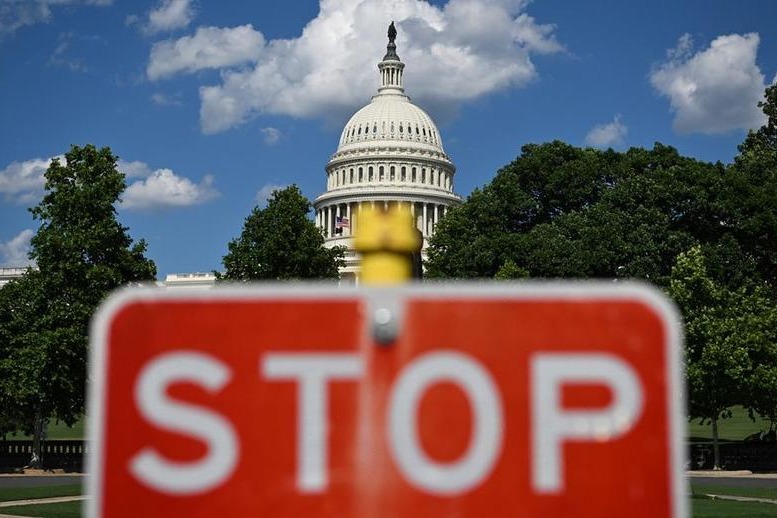
    In a sweeping policy shift announced Thursday, the second Trump administration will end a nearly 50-year-old immigration provision by imposing strict fixed-duration stay limits on non-immigrant visa holders including international students, cultural exchange participants and foreign journalists.

    The final amended rule, released by the U.S. Department of Homeland Security (DHS), replaces the long-standing “Duration of Status (D/S)” admission system that allowed F-class student visa holders and J-class exchange scholar visa holders to remain in the U.S. for the full duration of their academic programs or exchange appointments, regardless of how long that took. Under the new framework, all F, J, and I-class journalist visa holders will only receive fixed-period admission capped at a maximum of four years total.

    Additional restrictions in the rule bar graduate students from changing their academic goals or transferring to a new institution without explicit government approval. It also cuts the post-program grace period that allows visa holders to wrap up their affairs and depart the country from 60 days to just 30 days. For journalists holding I visas, the caps are far stricter: most are limited to 240-day stays, while Chinese journalists face an even shorter limit of 90 days.

    DHS officials justified the overhaul, arguing the 1978-era D/S policy had become outdated, was regularly abused for immigration fraud, and posed unacceptable risks to U.S. national security. “By implementing clear, finite limits on these visas, the United States is reclaiming its ability to properly screen, vet, and monitor individuals within our borders,” DHS Secretary Markwayne Mullin said in a statement. “This final rule ensures that foreign students remain focused on their primary purpose: completing their studies and returning home.”

    China swiftly condemned the new restrictions Friday, with Chinese Foreign Ministry spokesman Lin Jian calling on the U.S. to immediately reverse the discriminatory policy targeting Chinese journalists. Lin noted that Washington’s new barriers to people-to-people exchanges offer no benefit to either country, and confirmed China retains the full right to implement reciprocal countermeasures in response to the move.

    Within U.S. academic communities, the policy change has already triggered widespread chaos, anxiety, and uncertainty among the more than 1.1 million international students and 220,000 international scholars currently residing in the U.S. Lihua He, an immigration attorney based in California’s San Francisco Bay Area, told China Daily her office has been inundated with hundreds of calls and emails from visa holders desperate to secure information about how to maintain their legal status.

    While the DHS rule does allow students and scholars in good standing to apply for extensions to complete their programs, there is no guarantee extensions will be approved. “It creates uncertainty for the future of international students, and became an emotional burden for their families,” He explained.

    Jade Wen, who works in the international student services office at a San Francisco community college, said she has also been flooded with inquiries from panicked students. “They are very concerned about deportation or removal from the United States if they can’t finish their degree as scheduled,” Wen said.

    Russell Jeung, a professor of Asian American Studies at San Francisco State University, argued the new rule is part of a broader pattern of escalating anti-immigrant policy pushed by the Trump administration, which has framed restrictive measures as necessary to protect U.S. national security and advance its “America First” agenda. Jeung called the restrictive visa framework an extension of long-running racial exclusion policies targeting Asian and non-Western visitors to the U.S.

    The new rule is scheduled to enter into force on September 15, and will undergo a mandatory congressional review period before taking full effect.

  • Massive fire destroys 100 homes in Norway and forces hundreds to evacuate

    Massive fire destroys 100 homes in Norway and forces hundreds to evacuate

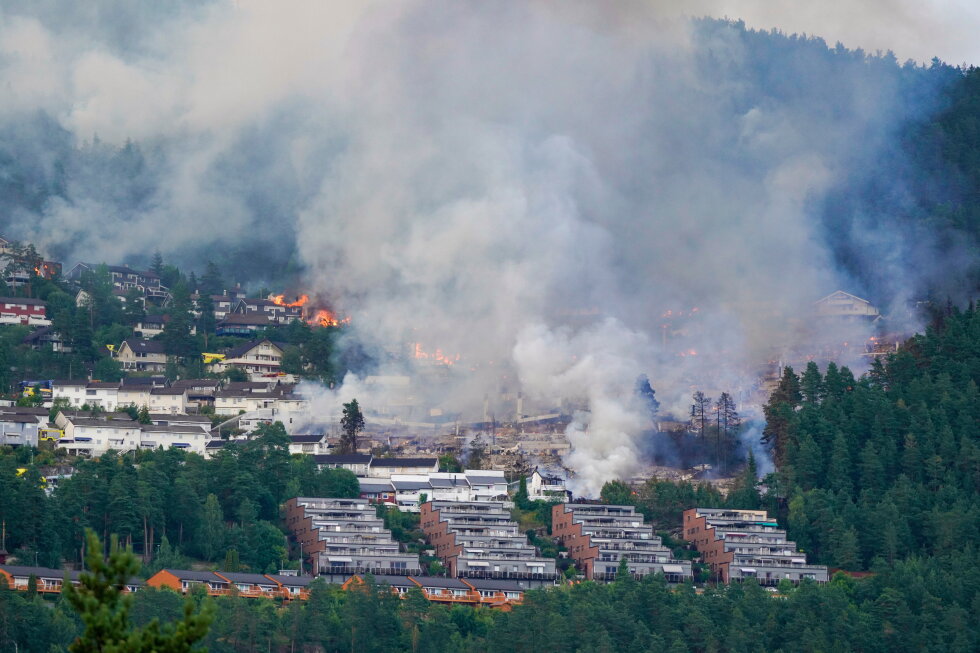
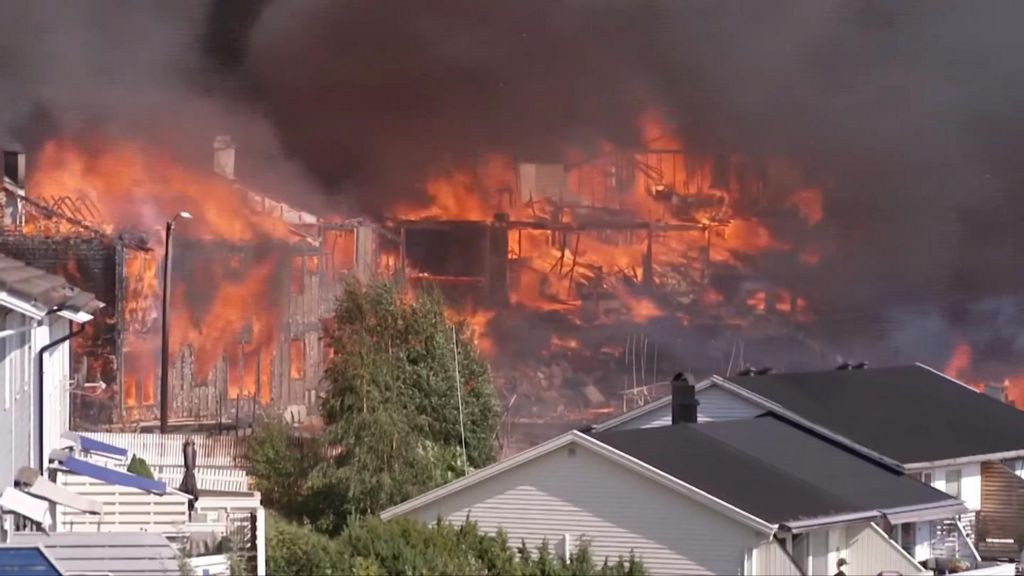
    A devastating large-scale wildfire-urban blaze has swept through a residential area in southern Norway, leaving more than 100 homes completely destroyed and prompting emergency evacuation orders for hundreds of local residents, Norwegian law enforcement and national public broadcasting confirmed Friday.

    According to official police statements, the destructive inferno ignited in a private townhouse located in the city of Drammen at approximately 3:30 p.m. local time Friday. What started as a contained residential fire quickly accelerated, spreading rapidly across the dense neighborhood before jumping into adjacent forested areas, amplifying the challenge for emergency response teams.

    As of Saturday morning, firefighting crews remained on the scene working around the clock to corral the out-of-control blaze and prevent it from spreading to additional populated areas. Norway’s national public broadcasting network, NRK, reported that hundreds of displaced residents have sought temporary shelter at official evacuation centers set up by local authorities.

    In an update released Friday, police confirmed that no residents have been reported missing following the mass evacuation, a small glimmer of good news amid the widespread destruction. At this early stage of the investigation, officials have not yet been able to identify the root cause of the fire, and a full probe into the incident is ongoing.

    Drammen, the city impacted by the disaster, sits roughly 34 kilometers, or 21 miles, southwest of Norway’s capital city of Oslo, a relatively short distance from the country’s most populous urban center.

  • 7 killed and more than 50 wounded in Ukrainian drone attack on Russian regions

    7 killed and more than 50 wounded in Ukrainian drone attack on Russian regions

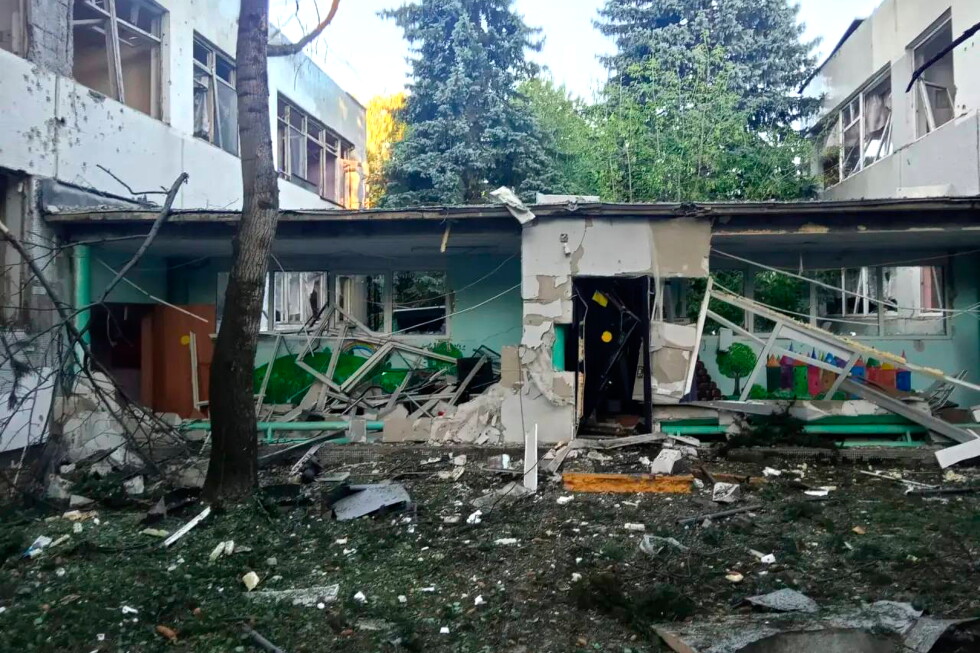
    In a significant escalation of Ukraine’s long-range aerial offensive against targets inside Russian territory, seven people were killed and 51 more injured in a wave of overnight drone attacks, Russian regional and federal officials confirmed Saturday. The strikes mark a continued push by Kyiv to bring the costs of the Kremlin’s full-scale invasion of Ukraine, now in its third year, home to Russian civilians and disrupt Moscow’s military supply chains.

    Multiple sites across central and western Russia were targeted, including two large storage warehouses operated by Wildberries, Russia’s largest e-commerce retailer. One warehouse was located in Kotovsk, a town in the Tambov region roughly 360 kilometers (220 miles) north of the Ukraine-Russia border, while the second sat in Elektrostal, an industrial city just 50 kilometers (30 miles) east of the Russian capital.

    Ukrainian President Volodymyr Zelenskyy confirmed the strikes in a social media post on Telegram Saturday, noting the two targeted logistics hubs were being used by Russian forces to source sanctioned electronic components for Russian drone manufacturing and navigation systems. He added that an oil processing and storage facility was also hit in the coordinated attacks, alongside additional strikes against Russian military targets in the Sea of Azov and Russian-occupied Ukrainian territory.

    Casualty reports released by regional officials confirm all seven fatalities were night shift workers at the Kotovsk Wildberries facility, where 25 additional people were wounded. In Elektrostal, 24 people were injured in the strike on the second warehouse, according to Moscow region governor Andrei Vorobyov. A separate drone attack on an oil depot in Noginsk, a city north of Elektrostal, sparked a large fire that forced precautionary evacuations of a nearby maternity hospital and one adjacent residential building, with two additional people wounded in that incident.

    Further east in Vladimir, a city 180 kilometers (110 miles) east of Moscow, a drone struck a residential apartment building causing a small fire, with no reported casualties, regional governor Alexander Avdeyev confirmed.

    The Russian Ministry of Defense reported in a statement Saturday that its air defense systems intercepted and destroyed 379 Ukrainian drones overnight across 19 Russian regions, as well as over the illegally annexed Crimean Peninsula, the Sea of Azov, and the Black Sea. Kyiv’s ongoing aerial campaign targets both energy infrastructure and military-linked logistics assets across Russia, part of a strategy to erode Moscow’s ability to sustain its full-scale invasion by forcing Russian society to confront the ongoing conflict directly.

  • US-Iran strikes: latest developments

    US-Iran strikes: latest developments

    A rapidly escalating cycle of violence between the United States and Iran has sent shockwaves across the Middle East, entering its seventh consecutive day on Saturday with expanding cross-border strikes, regional spillover, and a stark threat from Tehran of all-out conflict if American attacks continue.

    The latest wave of hostilities has put key global energy infrastructure at severe risk, with the strategically critical Strait of Hormuz—the passage through which roughly 20 percent of the world’s daily oil shipments transits—remaining almost entirely cut off to commercial traffic over the weekend.

    US Central Command (CENTCOM), the American military’s regional headquarters, confirmed via social media platform X on Saturday that its forces had completed another round of targeted strikes against Iranian assets. A CENTCOM statement outlined that the attacks hit a range of key Iranian military assets, including surveillance outposts, military logistics hubs, underground weapons storage facilities, and maritime operations capabilities.

    The expanding conflict has already drawn in neighboring Gulf states, with multiple countries reporting intercepted attacks and damaged infrastructure over the 24-hour period. Bahrain’s military announced Saturday that its integrated air defense systems successfully intercepted and thwarted a wave of incoming Iranian strikes targeting its territory. An Agence France-Presse journalist based in the Bahraini capital Manama confirmed hearing loud explosions after air raid sirens sounded across the city. Bahrain is host to the United States Navy’s Fifth Fleet, a major regional American military installation, and Iranian state television confirmed Saturday that Iranian forces targeted this US-linked air base on Bahraini territory. Bahrain’s interior ministry confirmed air raid sirens were activated across the country, and earlier in the day both Bahrain and Qatar announced they had intercepted incoming ballistic missiles.

    To the north, Kuwait confirmed Saturday that Iran had struck one of its combined power and water desalination plants for the second consecutive day. The attack forced the temporary shutdown of multiple power generation units, Kuwaiti government officials confirmed. Kuwait’s military noted in a social media statement that local residents may hear explosions as its air defense systems work to intercept incoming hostile targets. Iran confirmed its strikes targeted two key military sites in Kuwait—Al-Adiri camp and Ali Al-Salem base—as well as fuel storage tanks at the Al-Azraq military base in Jordan. Jordan’s military responded quickly to the attack, announcing it had shot down 10 incoming Iranian missiles, with no reported casualties or infrastructure damage from the strike.

    Disputes have already emerged over an incident involving two commercial vessels in the Strait of Hormuz. Iran’s Islamic Revolutionary Guard Corps (IRGC) claimed Saturday that two oil tankers transiting the waterway had struck naval mines, that the vessels were misled into the mined area by deceptive American intelligence, and that both ships had caught fire. The US CENTCOM quickly issued a full denial of the IRGC’s claims. Separately, the IRGC also announced it had halted four commercial vessels from attempting to transit the strategic strait, further tightening the chokehold on global energy shipping.

    Human impact from the escalating strikes is already being reported. Iran’s state-controlled Islamic Republic News Agency (IRNA) confirmed Saturday that American strikes in the southern Iranian province of Hormozgan have left three people dead and eight others wounded. IRNA also reported five large explosions in the central Iranian city of Yazd shortly after US strikes were announced Saturday, with another state-run Iranian news outlet, Mehr News, reporting additional blasts across multiple southern Iranian provinces.

    The most alarming development of the day came from a senior Iranian military commander, who issued a stark warning that drastically changes the framework of the conflict. Major General Mohsen Rezaei, speaking to Iran’s state-controlled broadcaster IRIB, threatened that Tehran will launch full-scale offensive operations across the region if American strikes continue in the coming days. “Iran will no longer limit itself to retaliatory, like-for-like responses,” Rezaei said, adding “no political border will be safe” if the US continues its current campaign of attacks.

  • Helicopters dump water as huge Norway fire destroys homes

    Helicopters dump water as huge Norway fire destroys homes

    A devastating large-scale wildfire has torn through the Norwegian city of Drammen, leaving a trail of destruction that has forced residents to flee and destroyed more than 100 residential properties, local emergency authorities confirmed this week. The fast-moving blaze, which ignited in a built-up area of the city, quickly outpaced initial ground containment efforts and spread into adjacent forested land, creating a dual threat to both communities and local ecosystems.

    In response to the rapidly growing emergency, regional disaster management agencies deployed a fleet of helicopters to mount an aggressive aerial assault on the fire, dumping thousands of liters of water over hot spots in an effort to slow the fire’s advance and protect remaining unburned structures.

    Emergency crews have not yet released information on any reported casualties, but local officials have activated evacuations for multiple neighborhoods in the fire’s path, opening emergency shelters to accommodate displaced residents. The cause of the blaze is still under investigation, with authorities yet to announce a confirmed timeline for when the fire is expected to be fully contained. The disaster has already upended the lives of hundreds of people in the Drammen area, marking one of the most destructive urban-adjacent wildfires to hit southern Norway in recent years.

  • Mount Olympus, home of the ancient Greek gods, is a candidate for the UNESCO World Heritage List

    Mount Olympus, home of the ancient Greek gods, is a candidate for the UNESCO World Heritage List

    For thousands of years, the snow-dusted peaks of Mount Olympus – the fabled ancestral home of the 12 Olympian gods of ancient Greek mythology – have captivated human imagination across the globe. Towering 2,918 meters above sea level, with its highest jagged, mist-enveloped peak long believed by ancient Greeks to hold the throne of Zeus, king of the gods, the mountain is now on the cusp of a global recognition that could cement its cross-cultural legacy for generations.

    This month, Greece’s highest peak is up for consideration as a mixed natural and cultural UNESCO World Heritage Site, with the World Heritage Committee set to deliberate the nomination during its annual session running from July 16 to 29 in Busan, South Korea. For local communities that have built their lives around the mountain, the designation is far more than an honor – it is recognition of Olympus’ unmatched blend of mythic history, cultural continuity, extraordinary biodiversity, and stunning natural beauty.

    “Olympus is our life. It is the place we grew up in,” shared Evagelos Geroliolios, mayor of the Dion-Olympus municipality that is centered in Litochoro, the main gateway town to the mountain. “It is the place we see every day, but at the same time, it carries with it myth, history, biodiversity, extraordinary beauty and a very great cultural weight.”

    Few locations hold as central a place in Western cultural mythology as Mount Olympus. Legend holds that after Zeus waged a 10-year war to overthrow his father Cronus and end the reign of the Titans, he established his divine court on the mountain’s highest peaks. This year, public interest in Olympus is also getting a major pop culture boost: Christopher Nolan’s new big-screen adaptation of Homer’s *The Odyssey*, which frames the mountain as the seat of Zeus and the Olympian gods that shape Odysseus’ legendary journey, hit theaters this week.

    Archaeological excavations on one of Olympus’ lower slopes have already uncovered an open-air sanctuary, with the earliest artifacts dating back to the Hellenistic period (323 BCE to 30 BCE). Greece’s UNESCO nomination file notes the sanctuary is widely believed to be the same site referenced by 2nd-century philosopher and historian Plutarch, who recorded regular religious processions to the peak to carry out animal sacrifices to Zeus. The mountain’s religious significance persisted through the Christian era: a chapel dedicated to the Prophet Elias sits at 2,803 meters, making it the highest-altitude Orthodox Christian chapel in the world. Near the mountain’s Enipeas Gorge, the ruins of a 16th-century monastery remain standing, just a short walk from the Holy Cave of St. Dionysios, a cliffside chapel fed by a small spring whose waters are considered holy by Orthodox believers.

    Beyond its deep cultural roots, Olympus’ slopes, which descend almost directly to the Aegean Sea, support an extraordinary wealth of plant and animal life, including multiple species found nowhere else on Earth. It is this rare combination of tangible cultural heritage, millennia of mythic meaning, unique ecosystems, and dramatic natural landscapes that local leaders hope will convince the committee to approve the designation.

    “It is a place we love. It is a place that many people from all over the world visit to see, to live, to experience. We want to protect it,” Geroliolios said. A UNESCO listing, he added, would carry global significance that extends far beyond Greece’s borders. “It is something that concerns the entire world. It is very important.”

    Despite widespread local support, Olympus’ path to World Heritage status is not guaranteed. Greece first launched the nomination process back in 2014, when it added the mountain to UNESCO’s Tentative List – the required first step for any prospective site, where properties remain eligible for formal nomination over a 5 to 10 year window. After a preliminary assessment and the submission of a full nomination dossier, the proposal underwent a 14-month evaluation by advisory bodies including the International Council on Monuments and Sites (ICOMOS) and the International Union for Conservation of Nature. Final votes are cast by representatives of 21 member states on the World Heritage Committee during the annual session. Preliminary meeting agenda documents indicate the committee is poised to refer the nomination back to Greek authorities to request additional technical information, leaving the final outcome uncertain for now.

    Still, local stakeholders hold out hope that approval will bring stronger, more coordinated protections for the mountain’s fragile ecosystem – a priority that has grown more urgent as visitor numbers have surged in recent years. Babis Marinidis, a veteran mountain guide and president of the Alpine Club of Litochoro, explained that while a UNESCO listing would likely draw even more tourists, the mountain’s ecosystem already has a limited carrying capacity.

    “How many people can this mountain, this ecosystem, bear?” he asked. Though much of Olympus was designated a national park decades ago with formal conservation rules in place, Marinidis said regulations against unauthorized camping, swimming in protected watersheds, and off-trail hiking are regularly ignored by visitors. As crowds have grown, local authorities have begun considering mandatory visitor registration and entrance fees to manage foot traffic – a measure Marinidis once opposed but now supports. “But now with so many people, I believe some limit must be imposed,” he said.

    As a world-renowned mountaineering and hiking destination, Olympus draws thousands of adventurers annually from across the globe. While reaching the summit does not require advanced technical climbing skills, the mountain’s rapidly shifting weather and uneven, treacherous terrain make it a serious challenge that has claimed dozens of lives over the years. Just this month, a 64-year-old Greek hiker died after collapsing on a hiking trail, and in May, rescue teams recovered the body of a 25-year-old Spanish hiker who went missing while attempting a winter summit attempt.

    First-time visitor Triantafyllos Giannospyros, 32, noted that while proper preparation and caution are non-negotiable, the mountain is accessible for careful hikers. “You need to be careful, and safety measures must always be kept in mind,” he said. “But with care and with good organization, it isn’t something you should be afraid of.”

    Stavroula Vourou, a Litochoro hotel owner whose business caters to hikers setting off for the peak, echoed that respect for the mountain. “Everyone sets off to go up and conquer a mountain that needs respect,” she said. “You respect this mountain, it respects you too.”