博客

  • Ukrainian strikes on Russian warehouses kill 8, shroud skies in smoke

    Ukrainian strikes on Russian warehouses kill 8, shroud skies in smoke

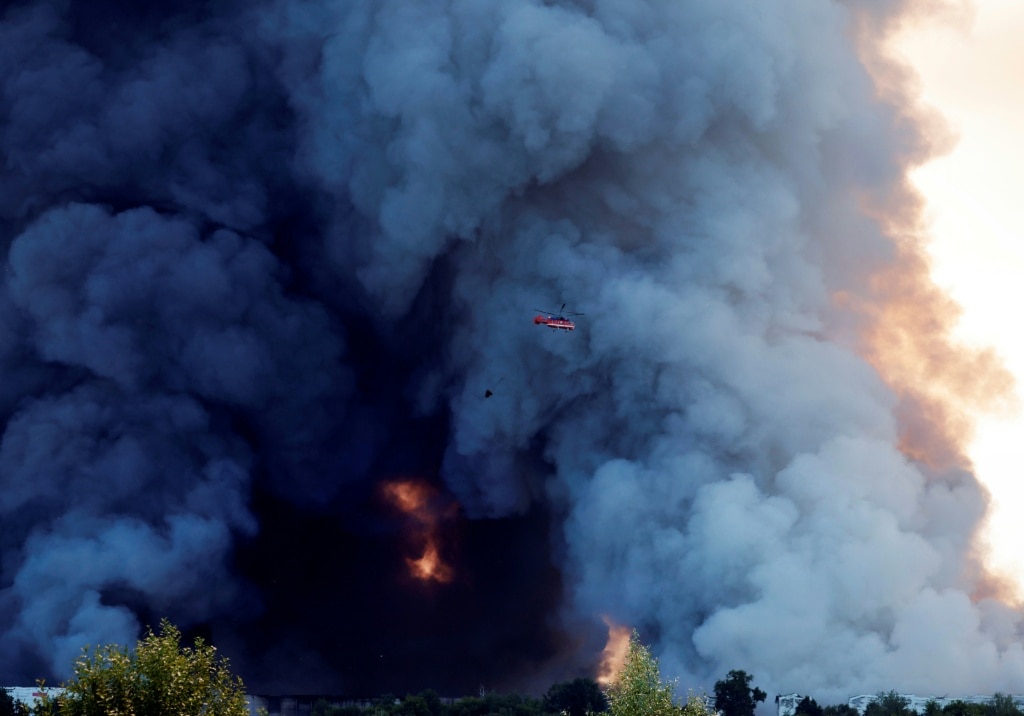
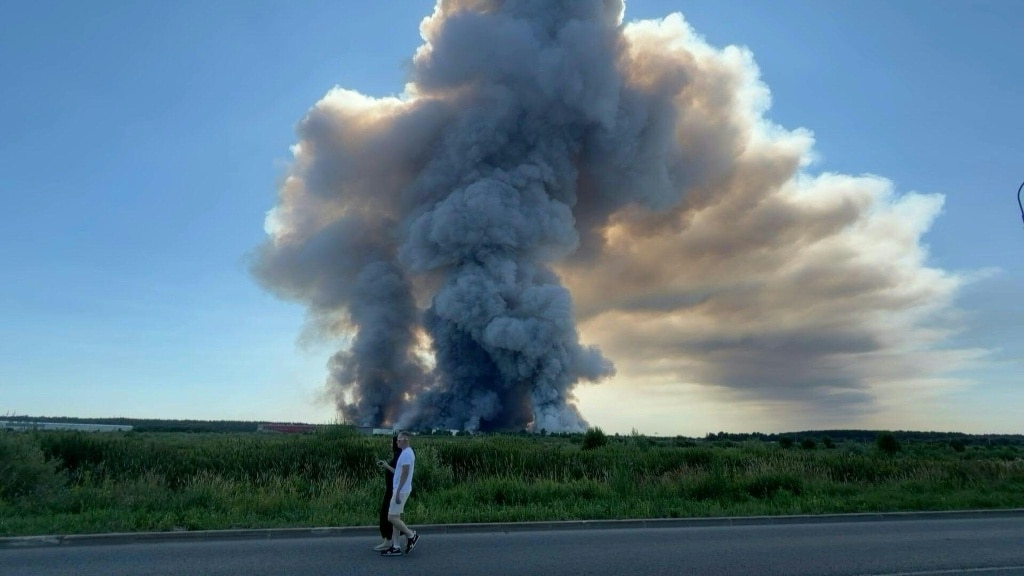
    In an escalation of cross-border military action, waves of Ukrainian explosive-laden drones targeted logistics facilities operated by Russia’s largest e-commerce retailer Wildberries in two Russian regions on Saturday, leaving eight people dead and nearly 90 others hospitalized. Large-scale fires sparked by the attacks filled the sky with thick black smoke that lingered for hours, marking one of the deadliest Ukrainian strikes on Russian civilian-linked infrastructure in recent months.

    The attack hit two separate Wildberries warehouses: one in the Tambov region, roughly 500 kilometers southeast of Moscow, and a second in Elektrostal, Moscow Oblast, where an oil depot and an empty kindergarten were also damaged. Seven night-shift workers were killed at the Tambov facility, regional governor Evgeny Pervyshov confirmed, while a eighth person died of injuries in a Moscow region hospital, according to Moscow Oblast governor Andrei Vorobyov. An empty kindergarten in Elektrostal was also struck, but no injuries were reported at that site. As of Saturday evening, firefighters were still working to fully contain the blaze at the Moscow Oblast warehouse, while the fire in Tambov had been fully extinguished.

    Wildberries CEO Tatiana Kim called the incident an unfathomable tragedy for the company and the country. “A terrible night, terrible events for our company and for our country. It is a pain that cannot be put into words,” Kim said in a statement. An AFP correspondent on the scene observed thick black smoke billowing over the Moscow region from early Saturday morning through late afternoon.

    The strike comes as part of Kyiv’s months-long intensification of long-range attacks on Russian territory, a campaign Ukrainian officials describe as “long-range sanctions” and retribution for more than four years of Russian bombardments on Ukrainian civilian and infrastructure targets. To date, this campaign has primarily targeted Russian oil infrastructure, contributing to widespread fuel shortages across nearly 90% of Russia’s regions since June — a disruption to daily life unprecedented since the full-scale invasion began. For Russian civilians, this has meant long daily lines at petrol stations, a sharp shift from years of abundant, low-cost fuel that remained cheaper than prices across Western Europe.

    Ukrainian President Volodymyr Zelensky explicitly claimed responsibility for the attack in a post on the social platform X, confirming the targeting of the two logistics facilities. Zelensky alleged the warehouses were being used to store sanctioned components for Russian drone production and military navigation equipment, framing the strike as a direct response to ongoing Russian attacks on Ukrainian civilian infrastructure.

    Concurrent with the strike on Russian territory, new Russian bombardments across southeastern Ukrainian regions killed five people and wounded nearly 20 others, according to local reports. The cross-border attacks come amid a broader stalemate on the main front line, where Ukraine has managed to slow Russia’s ongoing summer offensive but has not made significant territorial gains of its own.

    The incident also unfolds against a backdrop of growing domestic unrest in Ukraine, where thousands of protesters have gathered for three consecutive days in major Ukrainian cities to oppose the surprise dismissal of popular Defense Minister Mykhailo Fedorov. Zelensky’s sudden government reshuffle, which removed the young, tech-savvy minister who led many of Ukraine’s key military innovation projects, has triggered rare public dissent during wartime. Diploatic efforts led by the United States to negotiate a end to the conflict remain stalled, as Washington has shifted its foreign policy focus to escalating tensions with Iran in recent weeks.

    Russian officials have reported a sharp surge in drone attacks targeting Moscow in recent weeks. Moscow mayor Sergei Sobyanin confirmed that more than 370 drones were launched toward the Moscow region during Saturday’s overnight attack alone, adding that nearly 1,892 Ukrainian drones targeting the capital were intercepted between July 11 and July 18.
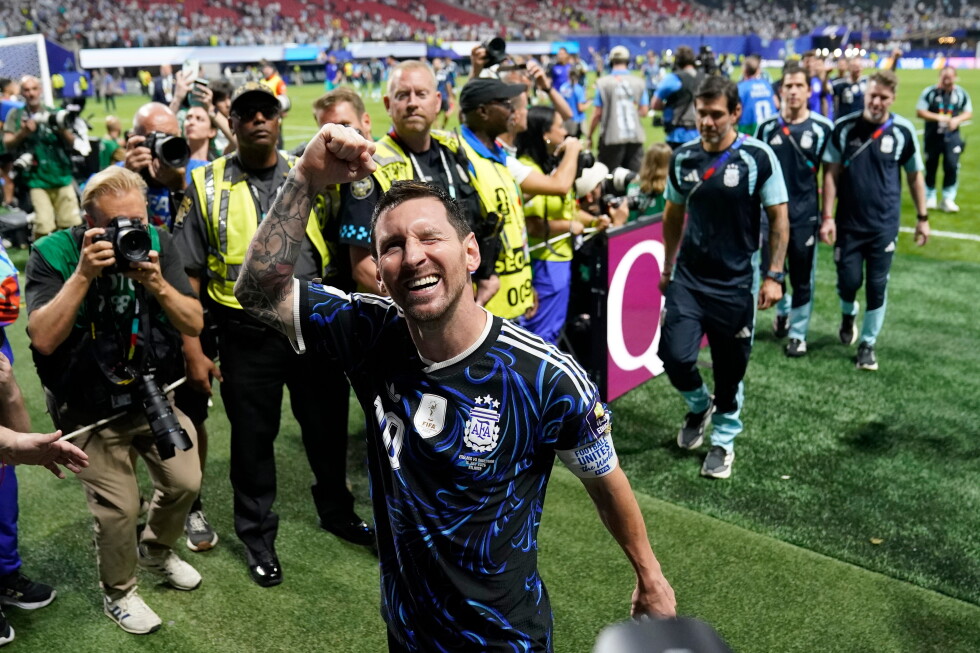
  • Spain vs. Argentina World Cup final a very high-priced ticket to watch Messi and Yamal

    Spain vs. Argentina World Cup final a very high-priced ticket to watch Messi and Yamal

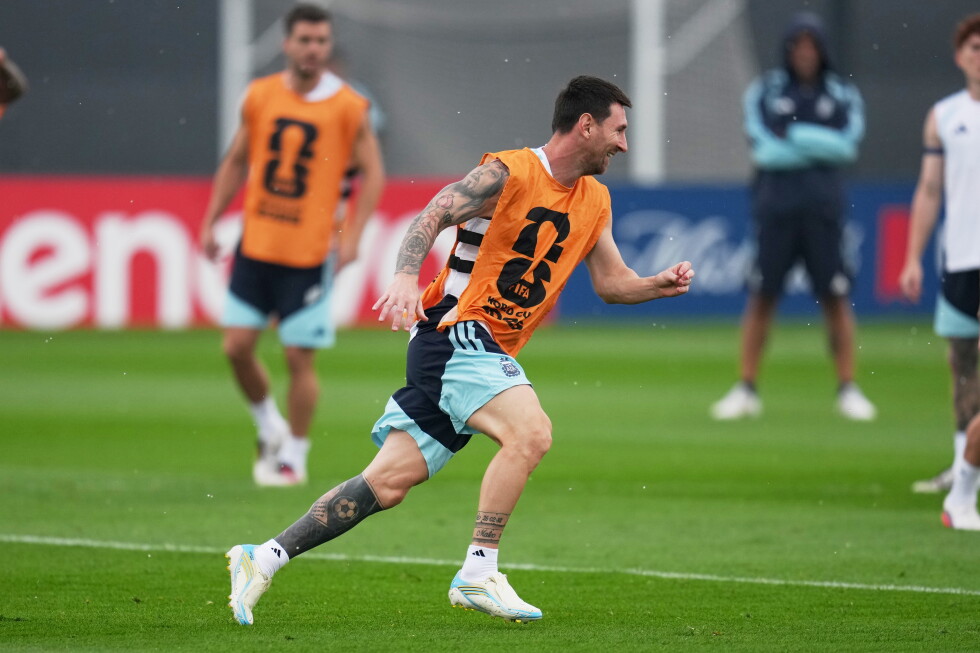
    Soccer fans hoping to catch a last-minute spot at one of the most anticipated World Cup finals in modern history are facing sticker shock of historic proportions, as resold tickets for the Sunday clash between Lionel Messi’s Argentina and Lamine Yamal’s Spain at East Rutherford, New Jersey have soared to five and even six-figure price points.

    By Saturday morning, just 24 hours before kickoff at the New Jersey venue, the least expensive entry listed on FIFA’s official secondary ticket marketplace was priced at $6,411.25 — for a mid-tier seat positioned behind one of the goals. Those budget-friendly (by resale standards) options were completely sold out by midday, leaving only far more premium listings up for grabs.

    Upper-deck seats located in the corner sections of the stadium were still listed for close to $10,000 apiece Saturday afternoon. Fans hoping for a closer view of the on-field action can expect to pay roughly $16,000 for lower-tier seating, with exclusive hospitality packages commanding asking prices that climb to nearly $60,000 per ticket.

    Major third-party ticketing platforms have followed a similar trend: SeatGeek and StubHub both list the cheapest available upper-deck entries starting around $10,000, with premium lower-bowl seats approaching $35,000 for the high-stakes final.

    For many die-hard soccer supporters, the exorbitant cost is seen as a justifiable expense to watch a once-in-a-generation matchup. Messi, widely regarded as the greatest men’s soccer player to ever step onto the pitch, is chasing unprecedented historical glory with Argentina, who are gunning for their fourth overall World Cup title and second consecutive tournament win. No men’s national team has claimed back-to-back World Cup crowns since Brazil achieved the feat back in 1958 and 1962. Standing in Argentina’s way is Spain, the 2010 World Cup champion, led by 16-year-old wunderkind Lamine Yamal, one of the sport’s most exciting and highly touted young rising stars.

  • The World Cup final awaits, with Messi and defending champion Argentina set to face Spain

    The World Cup final awaits, with Messi and defending champion Argentina set to face Spain

    The 48-nation expanded World Cup co-hosted across the United States, Canada and Mexico is set to conclude Sunday with a historic championship clash that lives up to the sport’s highest billing, pitting arguably the greatest player to ever touch a ball against the most dominant international team of the current era. For years, the narrative around global men’s soccer has held that Lionel Messi rarely tastes defeat, and Spain has been unbeatable — a trend that will collide on one of the sport’s biggest ever stages at New Jersey’s MetLife Stadium.

    Lionel Messi and defending champions Argentina enter the final against a Spanish side that has not lost a single match in 37 consecutive outings, a streak stretching back to the start of 2024. For Spain, a win would secure a second World Cup title 14 years after their 2010 triumph, and cement their status as the undisputed global powerhouse of men’s soccer. For Argentina, victory would make them the first men’s national team to win back-to-back World Cup titles since Pele led Brazil to back-to-back crowns in 1958 and 1962. For Messi himself, the match is a chance to cap off what he has signaled will be his final World Cup run with Argentina with the fairy-tale ending all fans of the sport are craving.

    Spain head coach Luis de la Fuente, who has led the side to an undefeated 28-0-9 record across their current unbeaten streak, framed the matchup as a collision of two elite squads built for the big stage. “On Sunday, we will watch a great show,” he said. “Two great national teams — two superteams, in my opinion — very similar in some aspects in terms of attitude, footballers’ talent. I think that it’s going to be an amazing final.” While the matchup is often framed simply as the world’s best individual against the world’s best collective team, the storylines run far deeper than that surface-level narrative.

    The rivalry between Messi and Spanish soccer carries decades of history. Though Messi was born in Argentina, he developed his game as a youth player and spent nearly all of his legendary club career in Spain. At multiple points, the Spanish national federation attempted to convince him to switch allegiances and represent La Roja, but Messi never wavered in his commitment to his home country. Sunday’s match will mark the first time Messi has taken the pitch against Spain since a 2010 friendly, when Argentina defeated the then-reigning world champions in a lopsided rout. When asked about the massive expectations around the match, Messi downplayed the hype, framing it as simply another chance to play the game he loves with his teammates — even with 80,000 fans in the stadium and an estimated 2 billion global viewers tuning in.

    One of the most surreal subplots of the final is the meeting between Messi and Spanish teenage star Lamine Yamal. Nearly 20 years ago, a toddler-aged Yamal was photographed with Messi during the Barcelona star’s early days at the club. Now, the young prodigy will share the same World Cup final pitch with the player he once posed for a photo with as an infant.

    Reflecting on the roots that brought him to this historic match, Messi spoke in his native Spanish about the joy that first drew him to the sport. “We grew up playing soccer with passion, eager to play,” he said. “We played everywhere. We played on the street. We played at school. We played with teams. We didn’t think about the pressure. It was just natural play.”

    Make no mistake, however: the pressure on Sunday will be unprecedented. For Argentina, the match is widely understood to mark the end of the Messi era for the national team, regardless of the final result. Argentina head coach Lionel Scaloni summed up the magnitude of Messi’s legacy for his nation and the sport, calling him “The best footballer that the world has seen.”

    This historic final run was almost derailed before it even began, after a high-profile retirement a decade ago. In 2016, a heartbroken Messi walked away from the national team after missing a decisive penalty in a Copa América final loss to Chile, leaving Argentina empty-handed in another major tournament. At 29, he had grown exhausted from falling short of the ultimate prize for his country, and his retirement only lasted a few weeks. In the years since, Argentina has claimed the 2021 Copa América, the 2022 World Cup, and a second Copa América title in 2024, cementing a dynastic run that no one could have predicted after that 2016 loss. What makes the moment even more poetic is that the 2016 final that prompted his retirement was held on the exact same pitch that will host Sunday’s World Cup final: MetLife Stadium.

    Messi never truly left the game, of course. He continued to dominate at the club level, starring for Barcelona, Paris Saint-Germain, and now Major League Soccer’s Inter Miami, where he has claimed back-to-back MLS MVP awards and led the club to a league title. Even at this stage of his legendary career, he remains capable of producing match-winning moments in the biggest games with almost effortless ease. Scaloni summed up his legacy simply: “He is pure history. History. A legend.”

    Spain is also chasing unprecedented history of its own at this World Cup. Entering Sunday’s match as pre-tournament favorites, La Roja have conceded only one single goal across their first seven matches of the tournament, and have not trailed for even one second of play across the entire tournament. By comparison, Argentina has spent more than 100 minutes of the tournament trailing, including stoppage time. Historic defensive performances of this caliber are almost unheard of at the World Cup. Only three previous World Cup-winning teams — the 1998 French squad, the 2006 Italian side, and Spain’s own 2010 champions — finished the tournament with just two goals conceded. This current Spanish squad is on track to beat that record by miles.

    Spain captain Rodri emphasized that his side is not overlooking Argentina’s strength beyond Messi, noting that the two finalists are the most cohesive collective teams in the tournament. “Argentina is far more than Messi,” he said. “They’ve proven that they’re a very complete team with top players. … We are the best two teams playing in a collective manner as a group. Of course, we need to be mindful of Leo, but many other players.”

    After a month of thrilling matches, the 104th and final match of the biggest World Cup in history comes down to this: the defending champions against the next generation of global soccer greats, the biggest star the sport has ever known against a squad of players who grew up idolizing him, now with a chance to end his reign on the biggest stage.

    This 2026 iteration of the World Cup was not without its share of controversies and challenges, echoing the geopolitical tensions that define the modern era. The tournament faced widespread criticism over multiple high-profile issues, including onerous travel restrictions imposed on the Iranian team amid ongoing geopolitical conflict between Iran and the United States, backlash against FIFA after the governing body lifted a red-card suspension for U.S. star Folarin Balogun following public pressure from former U.S. President Donald Trump — who will be in attendance Sunday to present the championship trophy — and calls for an investigation into Argentina’s squad from the British government after players posed with a banner claiming sovereignty over the Falkland Islands following their semifinal win over England.

    Regardless of off-field controversy, the World Cup will end as it always does: with one team lifting the trophy in celebration, and the other left to process heartbreak. Argentina goalkeeper Emiliano Martinez summed up the shared hope of players and fans alike ahead of kickoff: “They’ve got their strengths. So do we. I wish it will be a final that goes down in history.”

    AP Sports Writer Stephen Whyno in New York contributed to this report.

  • Spain, Argentina tune up for World Cup final in smoggy New Jersey

    Spain, Argentina tune up for World Cup final in smoggy New Jersey

    As the 2026 FIFA World Cup co-hosted by Canada, Mexico and the United States heads toward its historic conclusion, two of football’s strongest national sides Argentina and Spain are wrapping up final preparations for Sunday’s championship match at MetLife Stadium in East Rutherford, New Jersey — all while a thick, choking smog from Canadian wildfires hangs over much of the eastern U.S.

    With only two matches left on the 104-game schedule for this expanded 48-team tournament, Saturday will first see the third-place playoff between 2022 runners-up France and European powerhouse England in Miami. Sunday’s main event, however, carries historic stakes for both finalists. Lionel Messi’s Argentina are chasing an unprecedented back-to-back World Cup title: if they win, they will become the first men’s side to defend the crown since Brazil’s legendary 1962 squad. For Spain, the match offers a chance to claim a second World Cup trophy, a decade and a half after their maiden win in South Africa in 2010.

    The match is set to draw a high-profile crowd of over 80,000 spectators, including former U.S. President Donald Trump, who will attend his first World Cup match during the tournament. Mexican President Claudia Sheinbaum also confirmed she would attend the final after accepting an invitation from Trump. On Friday, Trump hosted a reception for FIFA President Gianni Infantino at Trump Tower in New York, where he praised the 2026 tournament as the most successful sporting event “maybe in the history of the world.”

    Infantino echoed the praise with equally enthusiastic remarks, saying the tournament has “exceeded all expectations.” “The American dream, Mr President, came to reality. We united the world,” Infantino proclaimed, going on to call the 2026 World Cup “the greatest human, social, and cultural event that mankind has ever witnessed.” He even joked that FIFA is “the official happiness provider to humanity,” to which Trump quipped back: “Unless your team loses.”

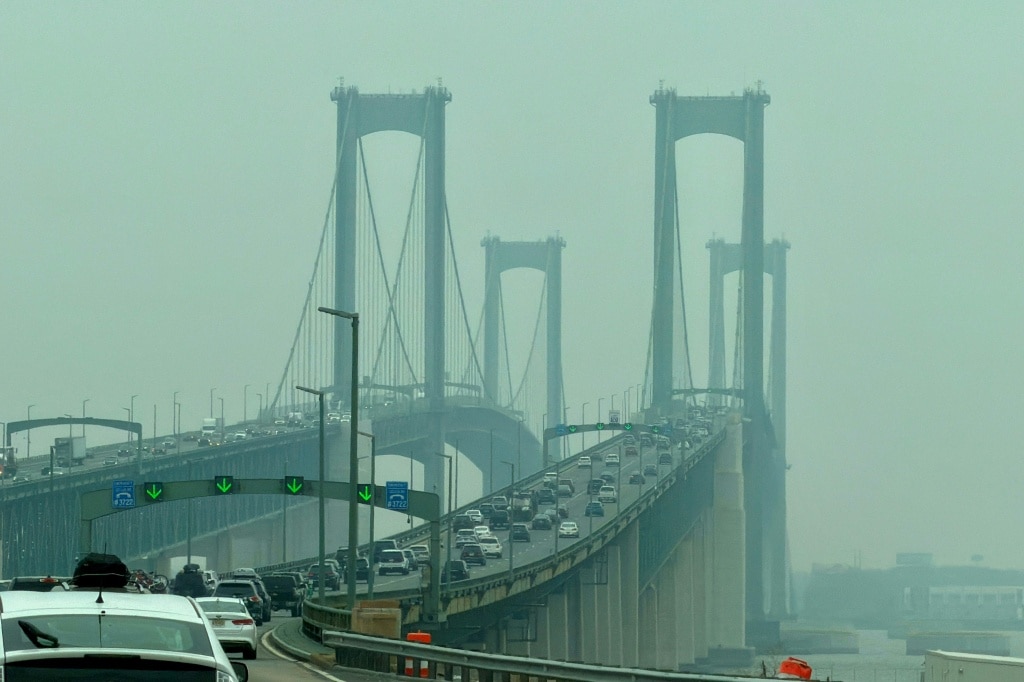
    The upbeat celebration, however, has been overshadowed by poor air quality across the Northeast U.S. Uncontrolled wildfires burning across Canada have sent thick, acrid smoke drifting south across the U.S.-Canada border, forcing residents in major cities from New York to Washington D.C. and across the Midwest to stay indoors due to unsafe air pollution levels. Air quality tracker IQAir reported that at one point Saturday, New York City ranked as the most polluted major city in the world, just ahead of Toronto and the U.S. capital.

    MetLife Stadium, located just across the Hudson River from New York in northern New Jersey, has not escaped the hazardous conditions. Early Saturday morning, New York’s iconic skyline was completely hidden by dense smog, with people venturing outdoors seen wearing protective face masks. Forecasters predict some relief may come via incoming heavy storms that could clear much of the smoke, but the weather system also carries risks of flash flooding and dangerous damaging winds.

    Beyond the unusual environmental conditions, Sunday’s final is widely expected to be the last World Cup appearance for Argentina’s captain Lionel Messi, the 39-year-old Inter Miami forward who is widely regarded as the greatest men’s footballer of all time. Heading into the match, Messi is tied with France’s Kylian Mbappé for the tournament’s Golden Boot lead, both having scored eight goals. Argentina head coach Lionel Scaloni urged fans to savor the chance to see Messi leading his side, calling him a legend who has already cemented his place in football history after leading Argentina to the 2022 Qatar World Cup title.

    Argentina, a three-time World Cup champion, has displayed a gritty never-say-die attitude throughout the 2026 tournament, highlighted by a dramatic late comeback win over England in the semi-finals that booked their place in the final. In contrast, Spain has delivered an almost perfect run to the championship: La Roja has conceded just one single goal in seven matches on their way to the final, after a dominant semi-final win over France.

    Spain captain Rodri said his side is preparing for a physical, hard-fought encounter with Argentina, and that the team has trained to adapt to whatever style of play Argentina brings. “It will be a more physical one, and we must be prepared,” he said. “But I believe that if we are known for something in this national team, it is that we know how to play different games based on the moment.”

    Sunday’s final will also make World Cup history with its entertainment lineup: it will host the first ever standalone halftime show in World Cup final history, with A-list performers Madonna and Shakira set to take the stage after the first half. Hollywood star Tom Cruise will perform during the pre-game closing ceremony ahead of kickoff.

    Looking ahead to Saturday’s third-place match, both beaten semi-finalists England and France are focused on ending their tournaments on a high note. England head coach Thomas Tuchel acknowledged that his side’s 2-1 last-minute semi-final defeat to Argentina left a lasting mark on the squad. “It is our scar that we carry now. It is a very painful defeat, and we have to live with this defeat,” he said. For France head coach Didier Deschamps, Saturday’s match will be his final game in charge of Les Bleus, and he pledged his side would play with pride, saying there would be no tears from his side ahead of the fixture.

  • US strikes leave 10,000 Iranians without water as Kuwait desalination plant burns

    US strikes leave 10,000 Iranians without water as Kuwait desalination plant burns

    The rapid escalation of direct military conflict between the United States and Iran has inflicted mounting damage on critical civilian infrastructure across the Persian Gulf region, triggering widespread disruption of basic services and raising alarms over the risk of a full-scale regional war. In the most recent civilian casualty of the escalating hostilities, Iranian officials confirmed that overnight US airstrikes destroyed a key coastal desalination plant that supplied drinking water to roughly 10,000 residents across 20 rural communities.

    Hamzeh Pour, chief executive of Hormozgan Province’s Water and Wastewater Company, told Iran’s state-run Tasnim News Agency that the strikes targeted desalination pumps and core electrical infrastructure in Bunji village, located in the coastal Jask district. “The supply of drinking water to 20 villages with a combined population of approximately 10,000 people has been completely disrupted,” Pour said. He labeled the attack on the civilian water facility “a series of crimes and terrorist acts,” noting that the facility’s seawater pumping station and main power transformer were “completely destroyed” and that the affected communities are now grappling with a severe drinking water shortage.

    The strike on the desalination plant came as part of the United States Central Command (Centcom)’s seventh consecutive round of overnight airstrikes targeting Iranian positions across the region. Centcom confirmed in a public statement that the latest wave of attacks focused on Iranian surveillance outposts, military logistics hubs, underground weapons storage facilities and maritime military assets. The operation drew on a full spectrum of US military capabilities, including fighter aircraft, attack drones, and naval warships, and unfolded as more than 50,000 US service members remain deployed across the Middle East to support ongoing operations against Iran.

    As hostilities spread across the Gulf, neighboring Kuwait reported its own critical infrastructure damage following Iranian retaliatory strikes. Kuwait’s Ministry of Electricity, Water and Renewable Energy announced that a fire broke out at a key component of one of the country’s integrated power generation and desalination plants after an Iranian attack. In response, authorities implemented precautionary safety measures, taking several power generating units offline to protect plant staff and preserve the stability of the national electrical grid. The ministry confirmed that emergency response plans have been activated to maintain uninterrupted power and water services, while technical teams continue round-the-clock monitoring of the situation. Kuwait also temporarily closed its airspace, suspended operations at Kuwait International Airport, and rescheduled nearly all commercial flights amid the wave of incoming missile and drone attacks.

    Iran’s Islamic Revolutionary Guard Corps (IRGC) has issued a stark warning to all nations hosting US military forces in the region, urging them to prepare for imminent retaliatory action. In an official statement, the IRGC called on host countries to “activate their civil defence units to protect their citizens and move them away from potential military targets,” accusing these states of allowing their territory to be used as “launchpads for aggression against Iran.” The IRGC confirmed it launched missile and drone strikes against multiple US-aligned military sites, including Camp Arifjan and Ali Al Salem Air Base in Kuwait, US naval facilities at Kuwait’s Mina al-Ahmadi port, and key military installations in Bahrain. Bahraini authorities activated air raid sirens across the country multiple times during the attacks, while Kuwaiti military forces confirmed they intercepted a number of incoming missiles and drones before impact.

    Iranian state media also reported new damage to two key bridges along the busy Bandar Abbas-Rudan highway, while provincial officials confirmed that at least eight civilians were killed in US strikes carried out in Hormozgan Province on Friday. Against this backdrop, a senior Iranian military official has announced a major shift in Tehran’s military posture, warning that Iran will abandon its long-held policy of restraint if US attacks continue. “Iran will no longer limit itself to retaliatory, like-for-like responses… and no political border will be safe,” Major-General Mohsen Rezaee told Iran’s state-run IRIB news agency. “Until now, we have not focused on expanding the war, nor on launching an invasion. Until now, the goal was deterrence, to put an end to the conflict,” he said, adding that “the policy of negotiating during war is over.”

    Beyond the immediate human and infrastructure damage, the latest round of cross-border attacks has disrupted one of the world’s most critical energy chokepoints. Data from ship-tracking platform MarineTraffic shows commercial vessel traffic through the Strait of Hormuz has fallen to its lowest level in three years, with only eight vessels transiting the strategic waterway on Thursday, down from 15 the previous day. Roughly 20% of the world’s daily oil supply passes through the strait, so any extended disruption to shipping there risks roiling global energy markets and driving up fuel prices worldwide.

  • Wildfire haze hangs over eastern US — and World Cup final

    Wildfire haze hangs over eastern US — and World Cup final

    A thick, acrid blanket of wildfire smoke drifted south from raging Canadian blazes to engulf much of the eastern United States on Saturday, creating dangerous air quality conditions across major population centers and casting uncertainty over the 2026 FIFA World Cup final scheduled for Sunday at an open-air New Jersey stadium located just across the Hudson River from New York City.

    As of Saturday morning, official data from the Canadian Wildland Fire Information System confirmed that more than 950 active wildfires were still burning uncontrolled across vast swathes of Canadian territory. The persistent wind patterns pushed plumes of toxic smoke across the U.S.-Canada border, triggering public health alerts from New England down to the Mid-Atlantic and into parts of the Midwest. By midday Saturday, global air quality tracker IQAir recorded that New York City had topped its list of the world’s most polluted major cities, with neighboring Toronto and Washington, D.C. ranking just behind the U.S. megacity.

    At MetLife Stadium, the venue for the highly anticipated final between Argentina and Spain, tournament officials confirmed they are closely monitoring the evolving air quality situation. Andrew Giuliani, executive director of the White House World Cup task force, shared the update during a press briefing Saturday. Across the river in New York City, the iconic skyline was completely obscured by dense grey haze, and most people venturing outdoors wore protective face masks to avoid inhaling the toxic fumes.

    Public officials across the region have issued urgent advisories urging residents to limit outdoor activity. New York City Mayor Zohran Mamdani called on locals to stay indoors and avoid unnecessary travel, warning that incoming weather systems bring both a potential end to the haze and new hazards. “Thunderstorms are expected to bring damaging winds strong enough to down trees and power lines, along with heavy rainfall that could cause flash flooding,” Mamdani posted on the social platform X. The U.S. National Weather Service echoed that warning, noting that the smoky conditions would persist across the region through Saturday afternoon, with the heavy storm system only expected to clear the area by evening.

    In Washington, D.C., the Department of Homeland Security and Emergency Management warned that air quality levels remained “unhealthy for at-risk groups” including children, the elderly and people with preexisting respiratory conditions, urging residents in the capital to cut down on extended time outdoors.

    Meteorologists noted that the incoming Saturday evening storms could deliver a partial reprieve: the heavy rainfall is expected to pull much of the suspended smoke particles out of the atmosphere, clearing the haze in time for Sunday’s match. But the same storm system carries significant risks of flash flooding and dangerous wind gusts that have already prompted flash flood warnings across the Northeast.

    The crisis has already sparked political controversy, with U.S. President Donald Trump placing full blame on Canadian authorities for the cross-border pollution. Trump accused Canada of “willful negligence” for “not properly maintaining” its forested lands, and threatened to impose new additional tariffs on Canadian imports in response to the crisis.

    Climate policy and public health advocates, however, have emphasized a broader root cause: repeated transboundary wildfire smoke events across North America are directly linked to human-caused climate change, which has created hotter, drier conditions across the Canadian boreal forest that increase the frequency and severity of extreme wildfire seasons.

  • Ukrainian strikes on Russian warehouses kill 8, shroud skies in smoke

    Ukrainian strikes on Russian warehouses kill 8, shroud skies in smoke

    In a sharp escalation of cross-border hostilities between Russia and Ukraine, waves of explosive-laden Ukrainian drones targeted key logistics facilities belonging to Russia’s largest e-commerce retailer Wildberries across the Moscow and Tambov regions on Saturday, leaving eight people dead and triggering massive infernos that filled the sky with thick, dark smoke for hours.

    The deadly attack marks a new phase in Ukraine’s months-long campaign of deep strikes into Russian territory, which Kyiv frames as justified retribution for more than four years of continuous Russian bombardment across Ukrainian soil. Dubbed “long-range sanctions” by Ukrainian officials, this campaign has previously focused heavily on Russia’s energy infrastructure, contributing to widespread fuel disruptions in one of the world’s top oil-producing nations.

    Saturday’s strikes specifically hit two core Wildberries warehouses, claiming the lives of eight night-shift workers and leaving both facilities nearly completely destroyed by fire. Wildberries CEO Tatiana Kim voiced profound grief over the incident, saying, “A terrible night, terrible events for our company and for our country. It is a pain that cannot be put into words.”

    An Agence France-Presse journalist on the ground observed dense black smoke billowing over the Moscow region from early Saturday morning, with the plume lingering until at least late afternoon. Evgeny Pervyshov, governor of the Tambov region located roughly 500 kilometers southeast of Moscow, confirmed seven night-shift employees were killed when an enemy drone struck the local Wildberries logistics center. In the Moscow region, where a second Wildberries warehouse and an adjacent oil depot were hit, regional governor Andrei Vorobyov announced one additional fatality after a wounded person died in hospital.

    As of Saturday evening, firefighters continued to battle the remaining blaze in Elektrostal, the Moscow town where the warehouse is located, while the fire in Tambov had already been fully extinguished. Vorobyov added that an empty kindergarten in Elektrostal was also damaged in the strike, though no additional casualties were reported at that site. Regional health officials confirmed that nearly 60 people sustained injuries in the coordinated attacks and were transported to local hospitals for treatment.

    Sergei Sobyanin, mayor of Moscow, released details of the unprecedented scale of the overnight drone assault, stating that more than 360 drones were launched toward the Moscow region alone. He added that between July 11 and July 18, Russian air defense systems intercepted nearly 1,900 Ukrainian drones bound for the capital.

    In a public post on X confirming the attack, Ukrainian President Volodymyr Zelenskyy framed the strike as a direct response to Russian attacks on Ukrainian civilian infrastructure. “In response to Russian strikes on our civilian infrastructure and on our cities and communities, two major logistics facilities were hit — in the Moscow and Tambov regions,” he wrote. Zelenskyy also alleged that the targeted warehouses were being used to store sanctioned components for Russian drone production and navigation equipment.

    The escalation comes amid a broader spike in cross-border hostilities: on the same day as the Wildberries strikes, Russian bombardment of the Ukrainian Black Sea port city of Odesa left one civilian dead and 13 others wounded, as Russian forces continue to ramp up attacks on key Ukrainian port infrastructure.

    Ukraine’s sustained campaign of strikes on Russian oil infrastructure has disrupted daily life across Russia more dramatically than at any previous point in the ongoing conflict. Data shows that fuel shortages have impacted nearly 90 percent of Russian regions since June, forcing long lines at petrol stations across the country — a marked shift from the pre-strike era, when fuel was consistently abundant and far cheaper in Russia than in most of Western Europe.

    Meanwhile, frontline fighting between the two sides remains largely deadlocked, with Ukrainian defenses slowing Russia’s planned summer offensive to a near standstill. Diplomatic efforts led by the United States to negotiate a end to the conflict remain stalled, as Washington has shifted its foreign policy focus to ongoing tensions with Iran.

  • German politician resigns over surrogacy child controversy

    German politician resigns over surrogacy child controversy

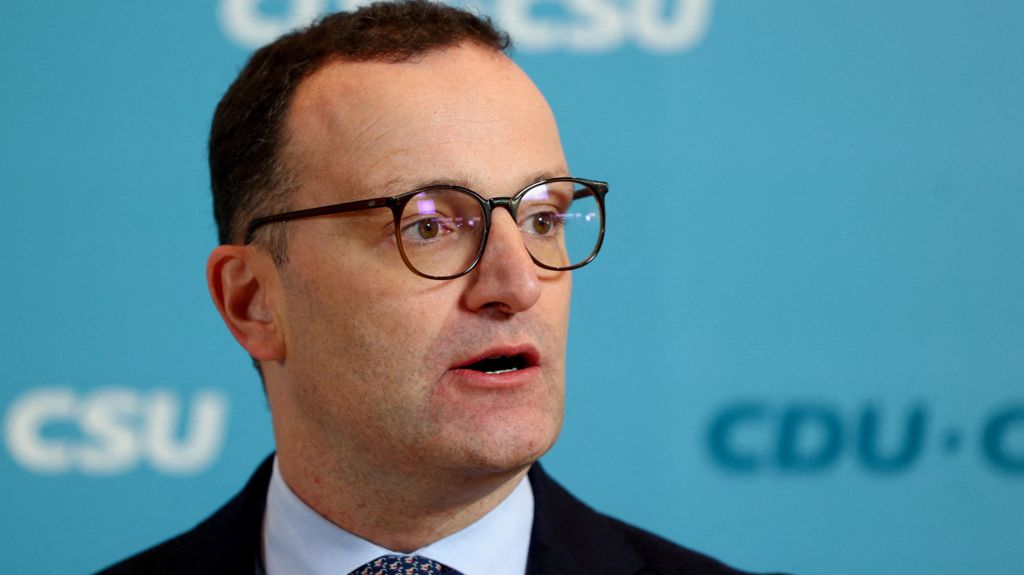
    A leading German center-right politician has stepped down from his top parliamentary role following widespread backlash over his use of an international surrogate to welcome a new child, a practice he and his party have long banned domestically.

    Forty-six-year-old Jens Spahn, a senior figure in the Christian Democratic Union (CDU) and former parliamentary group leader for Germany’s governing coalition, confirmed earlier this week that he and his husband Daniel Funke had become first-time parents via a surrogate based in the United States. The announcement immediately ignited fierce cross-party criticism, even from within Spahn’s own CDU, over accusations of blatant hypocrisy: surrogacy is strictly prohibited under Germany’s 1990 Embryo Protection Act, a policy that both the CDU and Spahn personally have repeatedly supported for decades.

    Under German law, anyone facilitating commercial surrogacy within the country faces up to three years of prison or substantial fines. While raising a child born via surrogacy abroad is not illegal in Germany, the CDU reaffirmed its unwavering support for the full domestic ban as recently as February 2025, arguing that the prohibition prevents the exploitation of women and stops surrogacy from being turned into a profit-driven commercial industry. Critics have also highlighted Spahn’s long public record of opposing surrogacy legalization: during his tenure as German Health Minister in 2020, he rejected calls from the liberal Free Democratic Party (FDP) to loosen the country’s surrogacy restrictions, and as early as 2015, he wrote publicly that “as a gay man and a Christian I find it personally very hard to warm to the idea of a rented womb”.

    In an official statement released Saturday, Spahn said he had concluded that his new personal happiness as a parent was fundamentally incompatible with his high-profile political position. “The balancing act between my private decision to have a child through surrogacy and the understandable expectations placed on me as Chairman of our parliamentary group has become greater than I anticipated,” he wrote. Spahn also called for more empathy in public discourse, noting that the “increasing relentlessness in public discourse” had forced him to reflect deeply on his position.

    CDU leader and German Chancellor Friedrich Merz publicly backed Spahn’s resignation, calling the decision “right” and “inevitable.” “Credibility is the highest asset in politics,” Merz posted on social media, confirming that the party would immediately launch the process of selecting a permanent replacement for Spahn’s role. Until a permanent successor is appointed, Alexander Hoffmann, leader of the CDU’s Bavarian sister party the Christian Social Union (CSU) parliamentary group, will take over Spahn’s duties on an interim basis. Hoffmann said that Spahn’s choice “deserves the utmost respect,” though many within the party have maintained that the resignation was unavoidable.

    Prior to Spahn’s announcement, senior CDU politician Daniel Peters from the state of Mecklenburg-Western Pomerania told German tabloid *Bild* that Spahn’s position had become “no longer tenable,” arguing that it was fundamentally wrong for a senior lawmaker to act one way privately while upholding a conflicting policy as an elected official.

    The controversy comes as European nations remain deeply divided over surrogacy policy. Like Germany, Italy, France and Spain all enforce domestic bans on commercial surrogacy. Just this month, France’s highest court, the Court of Cassation, ruled that children born to surrogates abroad must be legally recognized as the children of their intended parents. In contrast, Italy’s right-wing government led by Prime Minister Giorgia Meloni passed a law in 2024 that criminalizes Italian residents pursuing surrogacy even outside the country’s borders. For thousands of German couples, both same-sex and heterosexual, who cannot conceive children on their own, surrogacy abroad has become one of the only accessible paths to building a family.

  • Brazil’s top court denies request for Argentina’s Milei to visit Bolsonaro under house arrest

    Brazil’s top court denies request for Argentina’s Milei to visit Bolsonaro under house arrest

    BRASILIA, Brazil — In a high-stakes ruling that underscores deep political divides across South America, a Brazilian Supreme Court justice has formally blocked a planned visit by Argentine President Javier Milei to imprisoned former Brazilian President Jair Bolsonaro, who is currently serving a sentence for his role in a 2022 coup attempt.

    The request for the visit, which was scheduled to take place July 25 in Brazil’s capital Brasilia, was submitted by Bolsonaro’s legal team and rejected late Friday, according to official court documents. Justice Alexandre de Moraes, the judge overseeing the high-profile coup trial that resulted in Bolsonaro’s conviction and 27-plus year prison sentence, made clear in his ruling that the proposed meeting falls outside the parameters of allowed visits for the former leader.

    De Moraes emphasized that Bolsonaro has already been prohibited from receiving any visits that fall under a “political-electoral nature,” a restriction that applies to Milei’s planned trip. The Argentine president’s visit to Brazil was already tied to a key political event on the calendar: Milei is set to attend a national convention for Brazil’s right-wing Liberal Party in Sao Paulo, where the party is expected to formally confirm Sen. Flávio Bolsonaro — Jair Bolsonaro’s eldest son — as its presidential candidate challenging incumbent left-wing President Luiz Inácio Lula da Silva in next year’s election.

    The blocked visit also brings to the surface long-running tensions between Lula and Milei. Lula, a veteran left-wing leader, has maintained decades-long close alliances with Argentine politicians who are ideological opponents of Milei, including former Argentine Presidents Cristina Fernández de Kirchner and Alberto Fernández. The frosty dynamic between the two current heads of state has added another layer of political sensitivity to the proposed meeting.

    This ruling is not without precedent, either. Back in March, de Moraes issued an identical rejection to a visit request from Darren Beattie, a conservative U.S. State Department official who holds the post of undersecretary for public diplomacy and public affairs during the second Trump administration. Beattie had also sought to meet with Bolsonaro in prison, a request the justice turned down for similar reasons related to the former president’s political activity restrictions.

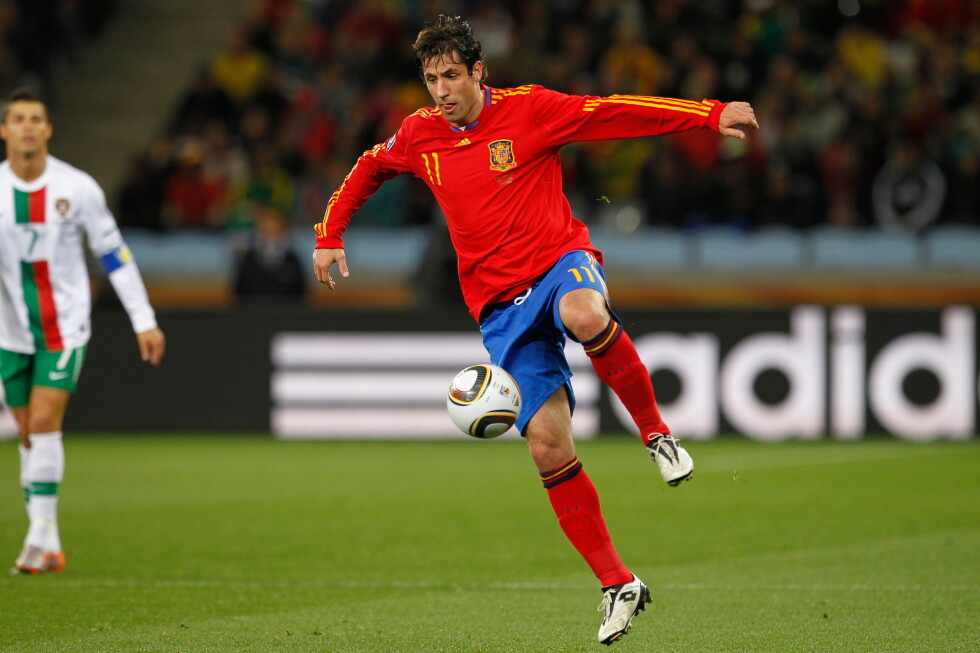
  • Former Spain defender Capdevila asks Trump for help getting into the US for the World Cup final

    Former Spain defender Capdevila asks Trump for help getting into the US for the World Cup final

    MADRID — A decorated Spanish football legend is making a public plea for help, scrambling to secure entry into the United States in time to watch his national team take on Argentina in Sunday’s highly anticipated World Cup final at New Jersey’s MetLife Stadium. Former Spain national team defender Joan Capdevila, who was a key part of Spain’s only men’s World Cup title win in 2010 and their 2008 European Championship triumph, has found himself locked out of the U.S. due to a long-standing travel restriction, stemming from a single exhibition match he played in Iran more than a decade ago.

    Capdevila took to the social platform X on Friday night to launch his public appeal, directly tagging former U.S. President Donald Trump, U.S. Secretary of State Marco Rubio, and Spain’s national ministry of sport in a bid to cut through red tape. “I NEED HELP @realDonaldTrump!” Capdevila wrote, confirming that his application for visa-free entry through the U.S. Electronic System for Travel Authorization, commonly known as ESTA, had been formally rejected.

    For 48-year-old Capdevila, being at Sunday’s final is far more than a casual spectator trip: he hopes to reunite with all of his 2010 World Cup-winning teammates in the stands to cheer on the current generation of La Roja as they chase the sport’s biggest global prize. The barrier to his entry traces back to 2010s, when Capdevila joined a squad of Spanish La Liga legends for an exhibition all-star match against a team of Iranian top players in Tehran.

    Under current U.S. visa waiver program rules, which allow pre-screened travelers from eligible countries to enter the U.S. without a full visa via ESTA, travelers who have visited Iran after March 1, 2011 are explicitly barred from ESTA eligibility. Any traveler in that category is required to apply for a formal visitor visa through U.S. consular offices before entering the country, a process that often takes weeks or months to complete — too slow for Capdevila to get approval in time for Sunday’s match. The U.S. Department of Homeland Security, which oversees both the visa waiver program and the ESTA system, has been contacted for comment on Capdevila’s case as of Friday.