A high-profile defamation case centered on Hollywood star Rebel Wilson has wrapped its closing arguments in an Australian court, with both sides trading starkly conflicting accounts of events that unfolded on Sydney’s Bondi Beach back in 2023. The lawsuit was filed by 2021 Western Australian acting academy graduate Charlotte MacInnes, a rising young performer who landed a lead role in Wilson’s directorial debut feature *The Deb*. MacInnes accuses Wilson of spreading false, reputation-ruining claims about her across two series of Instagram posts in 2024 and 2025, and is now seeking aggravated damages for the alleged harm. At the heart of the legal battle is a specific incident that took place in September 2023, when MacInnes joined *The Deb* producer Amanda Ghost for a daytime swim at the iconic coastal spot. Court testimony confirmed that Ghost suffered a sudden, severe allergic reaction to the cold ocean water, breaking out in painful red welts and experiencing uncontrollable shaking. To help her recover, the pair retreated to Ghost’s nearby luxury rental apartment to warm up. What followed is the subject of intense dispute: MacInnes ran a bath for the ailing producer, stepped into the tub herself to get warm while both women remained in their swimwear, and Ghost joined her shortly after. Ghost’s assistant even brought hot drinks to the pair and sat with them briefly, confirming no inappropriate behavior occurred in the moment, according to the plaintiff’s legal team. In a sworn affidavit, Wilson claimed that the day after the incident, MacInnes approached her saying Ghost had pressured her into joining the bath, which left her feeling sexually uncomfortable. Wilson stated that she was deeply troubled by the account and suspected a sexual advance had taken place. Two days later, Wilson followed up with MacInnes via phone, however a text message Wilson sent to Ghost immediately after that call, which was entered into court evidence, read: “Charlotte says all good. She just meant ‘it was a bizarre situation’ not that she felt personally uncomfortable x.” MacInnes’s legal team, led by senior barrister Sue Chrysanthou, has argued that Wilson’s entire narrative of the incident is a deliberate, malicious falsification. In closing statements, Chrysanthou slammed Wilson’s account as a “complete revision of history” that defies basic logic, pointing out that Ghost was experiencing a medical emergency at the time, making any coordinated sexual advance impossible. She went as far as labeling Wilson a “fantastical liar” who invented the “terrible” claims against MacInnes for personal gain during contract negotiations for *The Deb*, where Wilson was seeking a larger payout from producers. The plaintiff’s team also added accusations that Wilson engaged in a pattern of bullying against female crew and cast members on the set of the film, a claim Wilson has repeatedly dismissed as “absolute nonsense.” An additional allegation claims that Wilson commissioned a smear website to target Ghost, a charge she also firmly denies. On the defense side, Wilson’s lawyer Dauid Sibtain SC pushed back against MacInnes’s claims, arguing that the young actress has altered her account of the incident over time to secure professional benefits from the film’s production team. Sibtain told the court that MacInnes’s career has not suffered any harm from Wilson’s social media posts — in fact, he noted, her career has flourished in the years since the incident, with her landing a major record deal and multiple additional acting roles through connections to Ghost, as he alleged she was promised in exchange for retracting any claims of harassment. The case has now completed three weeks of testimony and closing submissions, with Justice Elizabeth Raper expected to reserve her decision on the case. This is not the only legal trouble Wilson is currently navigating: the actress is already facing two separate lawsuits from *The Deb* producers, including one filed in Australia and another in the United States, both originating from disputes tied to the production of the film.
博客
-

The death toll from an explosion at a fireworks plant in China rises to 37
BEIJING – In an updated official report released Friday by Chinese state media, the fatalities from a massive explosion at a central Chinese fireworks manufacturing facility earlier this week have climbed to 37. According to China’s national news agency Xinhua, local disaster response teams confirm one additional person is still unaccounted for following the blast, which took place Monday at a plant operated in Liuyang, a county-level city under the administration of Changsha, the capital of Hunan province.
Initial emergency assessments put the number of injured survivors at more than 60, though no updated injury count has been released publicly as of Friday. Investigations into the root cause of the explosion remain ongoing, authorities confirmed, and a temporary moratorium on all fireworks production operations has been imposed across the surrounding region to allow for safety inspections.
The affected facility is run by Huasheng Fireworks Manufacturing and Display Co., according to state-run newspaper China Daily. Liuyang, the location of the plant, is widely recognized as China’s leading fireworks production hub, with a centuries-long legacy tied to the industry. Historical records from Guinness World Records trace the earliest formally documented firework — the traditional Chinese firecracker — back to Li Tian, a Tang Dynasty (618–907 CE) monk who resided in the Liuyang area.
Friday’s updated death toll marks the latest major deadly incident involving fireworks in China this year. Back in February, two separate fatal explosions at fireworks retail outlets occurred during the lead-up to the Lunar New Year holiday, a period when demand for celebratory fireworks typically surges across the country.
-

Third British national has suspected hantavirus infection, government says
A major public health investigation is underway following an emerging hantavirus outbreak on the Dutch-operated expedition cruise ship MV Hondius, with British health authorities confirming a third UK national is now suspected to have contracted the virus. The newest suspected case remains on the remote South Atlantic island of Tristan da Cunha, where the vessel made a scheduled port stop in mid-April.
To date, five cases of hantavirus have been confirmed across passengers and crew on the ship, and one of those confirmed cases has resulted in death. Two British men have already received formal confirmed diagnoses: one, a retired 56-year-old British police officer and expedition guide named Martin Anstee, was medically evacuated to the Netherlands earlier this week alongside a Dutch crew member and a German passenger, and remains in stable condition. Speaking to the BBC after evacuation, Anstee reported that he is “fine”. The second confirmed British case, a 69-year-old man, was flown to South Africa for intensive care treatment at the end of April, and officials say his condition is improving.
The MV Hondius is on track to dock in the Canary Islands this weekend, where British authorities have arranged a chartered evacuation flight to repatriate all remaining British passengers and crew back to the United Kingdom. While none of the remaining British travelers currently show signs of hantavirus infection, UK public health officials have confirmed that all returnees will be required to isolate for a 45-day period upon arrival in the UK, to prevent potential secondary spread.
According to Oceanwide Expeditions, the operator of the MV Hondius, 30 passengers from 12 countries – including seven British citizens – disembarked the vessel at the South Atlantic island of St Helena on April 24, more than a week before the first confirmed case of hantavirus was reported on May 4. Two of the seven British travelers who disembarked at St Helena have already returned to the UK and are currently self-isolating voluntarily without exhibiting any symptoms. Four others remain on St Helena, where they are monitored regularly by local health authorities, with plans in place to send additional medical support to the remote island. As of Wednesday, UK Health Security Agency (UKHSA) officials confirmed the seventh British passenger who disembarked at St Helena has not yet been located for contact tracing.
Contact tracing operations are currently active in more than half a dozen countries, tracking down dozens of passengers who left the cruise ship before the outbreak was formally identified, including contacts in Switzerland and the Netherlands. The origin of the outbreak remains unknown, and public health teams have not yet confirmed whether any people outside of the cruise ship’s passenger and crew cohort have been infected.
World Health Organization Director-General Tedros Ghebreyesus noted in a recent press briefing that the first two confirmed cases had completed a bird-watching expedition through Argentina, Chile, and Uruguay before boarding the MV Hondiques, a trip that included visits to areas populated by rat species known to carry hantavirus. To date, three deaths have been linked to the outbreak: the one confirmed hantavirus death was a 69-year-old Dutch woman who disembarked at St Helena on April 24, traveled to South Africa, and died two days later. Two other people – the Dutch woman’s husband, who died on board the ship on April 11, and a German woman who also died while on the vessel – have not been confirmed to have died from hantavirus infection.
Hantavirus is most commonly transmitted to humans through contact with infected rodents such as mice and rats, but public health experts working on this outbreak suspect limited human-to-human transmission may have occurred among people in close, prolonged contact on the ship. UKHSA officials emphasized that the virus does not spread through casual everyday contact in public spaces, and person-to-person spread only occurs in rare cases involving extended close exposure. Common symptoms of hantavirus infection include fever, severe fatigue, abdominal pain, vomiting, and shortness of breath, which typically develop between two and four weeks after initial exposure.
In a statement, the World Health Organization categorized the outbreak as a “serious incident” but stressed that the overall risk to the general global public remains low, and the event is not comparable to the widespread, easily transmissible Covid-19 pandemic.
-

Japan’s Sony reports declining profit but expects a record for this year
TOKYO — Leading global electronics, entertainment and gaming conglomerate Sony Group Corporation has released its full fiscal year 2024 financial results, reporting a modest 3.4% decline in annual net profit while projecting a strong recovery to all-time record earnings for the ongoing 2025 fiscal year.
For the 12-month period ending in March 2024, the Tokyo-based firm posted net profit of 1.03 trillion Japanese yen, equivalent to roughly $6.6 billion. That figure marks a pullback from the 1.07 trillion yen net profit the company recorded in the prior fiscal year.
Two key headwinds dragged down the company’s bottom line over the past year, Sony executives confirmed: the termination of the joint electric vehicle development project with major Japanese automaker Honda Motor Co., and persistent elevated costs for semiconductors, a critical component for the company’s gaming, electronics and imaging product lines. Unlike many large technology and entertainment conglomerates, Sony operates a diversified business portfolio spanning film production, recorded music, video game development, consumer electronics and network services, meaning it faces overlapping cost pressures across multiple segments.
Despite the annual profit dip, Sony achieved solid top-line growth over the past fiscal year: total annual sales climbed 3.7% year-over-year to hit nearly 12.5 trillion yen, or approximately $80 billion. Strong revenue growth was driven by blockbuster film releases including the newest installment of the *Demon Slayer* animated franchise and the Japanese drama *Kokuho*, paired with steady consumer demand for the company’s video game offerings and subscription-based network services.
The company’s fourth-quarter results, however, showed a starker decline: net profit fell 63% to 83 billion yen ($529 million) compared to 224 billion yen in the same quarter last year. Quarterly sales still posted an 8% uptick to 3 trillion yen ($19 billion), with the company’s music segment, which represents top global artists including Bad Bunny and SZA, contributing consistent revenue to the quarter’s results.
Looking ahead to the current 2025 fiscal year, Sony is projecting net profit will jump 13% from the past year to reach 1.16 trillion yen ($7.4 billion) — which would mark the highest annual profit in the company’s 78-year history. The conglomerate is banking on upcoming high-profile theatrical releases, including *Spider-Man: Brand New Day* and *Jumanji: Open World*, to drive ticket and merchandise sales that will lift full-year earnings.
Alongside its financial projections, Sony announced Friday a major share repurchase program: the company will buy back up to 230 million of its outstanding shares, allocating up to 500 billion yen ($3.2 billion) for the initiative, a move designed to boost shareholder value. Following the announcement, Sony stock, which has traded around 3,000 yen ($19) per share in recent weeks, gained 1% on the Tokyo exchange Friday.
-

A year in, what’s on Pope Leo XIV’s to-do list? And what has he done so far?
VATICAN CITY – When Pope Francis took the helm of the global Catholic Church, he launched his pontificate with an immediate flurry of institutional reforms, leadership reshuffles, and new governing structures that upended longstanding norms. In contrast, Pope Leo XIV has adopted a far more deliberate, methodical approach to his early tenure, prioritizing steady foundational work over rapid change as he charts a path for his papacy.
As Leo settles into his role, he has already finalized several notable leadership and policy shifts, while a handful of high-stakes challenges loom on the horizon that will test his authority and vision for the church.
### Upcoming Key Appointments to Reshape Church Leadership
A series of impending leadership vacancies in the United States and the Vatican will give Leo a unique opportunity to mold the church’s global hierarchy and central governance to align with his priorities.In Chicago, one of the most prominent U.S. archdioceses, Cardinal Blase Cupich turned 77 in March – two years past the standard mandatory retirement age for Catholic bishops, leaving the door open for Leo to appoint a new leader to his home country’s major see. By the end of December, Los Angeles Archbishop José Gomez will reach the standard retirement age of 75, giving Leo the chance to name a new head of the largest archdiocese in the United States. He has already filled one top U.S. vacancy, appointing Archbishop Ronald Hicks to succeed retiring Cardinal Timothy Dolan of New York. According to Michael Moreland, a professor of law and religion at Villanova University – Leo’s alma mater – that appointment did not carry a strong ideological lean in either direction, reflecting the pope’s overall cautious, non-partisan approach to personnel decisions.
At the Vatican level, several senior leadership roles will soon open up. British Cardinal Arthur Roche, 76, leads the Vatican’s liturgy office, which oversaw Pope Francis’ highly controversial restrictions on the traditional Latin Mass. The selection of Roche’s eventual successor will be closely watched for clues about how Leo plans to address this deeply divisive issue within the church. American Cardinal Kevin Farrell, 78, who is well past retirement age, still heads the Vatican’s department for family and laity, and holds two other high-stakes posts: camerlengo, the official who oversaw the conclave that elected Leo, and chair of the Holy See’s most sensitive committees overseeing financial investments and the Vatican City State’s highest court of appeal. Canadian Cardinal Michael Czerny, head of the Vatican’s office for migrants, environment and development, will turn 80 in July. Once he turns 80, he will be ineligible to vote in future papal conclaves, dropping the total number of voting-age cardinals to 117 – below the traditional 120-person cap. That shift paves the way for Leo to announce his first slate of new cardinals within the next year, expanding the college of electors who will one day choose his successor.
### Policy Shifts: Rolling Back and Revising Francis-Era Initiatives
From the start of his pontificate, Francis encouraged young Catholics to disrupt diocesan institutions and “make a mess” to drive renewal. Leo has moved quickly to unwind and reorganize a number of these initiatives, addressing what he and other leaders see as unworkable structures born of Francis’ agenda.In April, the Vatican canceled the World Day of Children, a signature Francis initiative that had drawn ongoing questions about its core mission and purpose. The cancellation followed Leo’s formal disbanding of the ad hoc pontifical commission Francis created to organize the event in 2024. In December, Leo dissolved a Holy See fundraising commission that had been established under questionable circumstances in 2025, during the final weeks of Francis’ life when he was hospitalized. The commission was composed entirely of Italian members with no professional fundraising experience, and its president was a senior official from the Secretariat of State – the same Vatican department Francis stripped of asset management authority after it lost tens of millions of euros in the infamous London property investment scandal. After disbanding the flawed commission, Leo launched a new, reorganized committee to develop transparent, effective fundraising strategies and structures.
Ward Fitzgerald, president of The Papal Foundation, a U.S.-based group of wealthy donors that funds papal charity projects across the developing world, noted: “The Holy Father was clearly paying attention. He realized that it was not going to be highly functional.”
Beyond organizational overhauls, Leo has also revised Francis-era financial policy: he revoked a 2022 law that concentrated all Holy See financial power in the Vatican bank, issuing a new regulation that allows the Holy See’s investment committee to work with external banks when it delivers better financial outcomes. Leo has also broken new ground on the long-running clergy sexual abuse crisis, meeting with activist survivor groups who advocate for institutional reform. Survivors say the pope promised ongoing dialogue as they push the Vatican to adopt a binding global zero-tolerance policy for abuse. While Francis met regularly with individual abuse survivors, he largely kept organized activist advocacy groups at arm’s length.
### Private Audiences Reveal Openness to Diverse Perspectives
Pope Leo’s closed-door private meetings with a range of stakeholders have offered insight into his priorities, showing he is willing to engage with groups across ideological divides even as he keeps his own final positions closely held. In mid-March, he met with Gareth Gore, author of a controversial book alleging widespread abuses within the influential conservative Catholic movement Opus Dei. In February, he held a private audience with a delegation from Courage International, a church-affiliated organization that supports people with same-sex attraction seeking to live in accordance with Catholic teaching on chastity. While critics have labeled the group anti-gay and accused it of promoting conversion therapy, the organization denies those claims. Earlier in March, he met with the authors of a new book on traditional Latin Mass Catholics in the U.S., who presented findings from their large-scale survey of the community. Leo has made clear he is well aware of the deep divisions sparked by Francis’ Latin Mass restrictions, and has expressed a desire to hear directly from traditionalist Catholics to better understand their perspectives as he works to heal rifts over the traditional liturgy.### Two Major Looming Challenges
The ongoing dispute over the traditional Latin Mass is on track to reach a critical turning point on July 1, when four new traditionalist bishops are set to be consecrated without Pope Leo’s formal approval. The bishops belong to the Society of St. Pius X (SSPX), a breakaway traditionalist group, and an unsanctioned consecration would qualify as a schismatic act that automatically triggers excommunication for all involved. While the SSPX remains a fringe group within the broader traditionalist Catholic movement, traditionalists in full communion with the Holy See are closely watching how Leo responds to the provocation. On the opposite end of the ideological spectrum, the Vatican faces the threat of a major institutional split with the German Catholic Church over its years-long Synodal Path reform process. German leaders have proposed creating a permanent joint governing body made up of both bishops and lay Catholics to make collective decisions – a direct break from traditional Catholic ecclesiology, which reserves full governing authority for bishops. The Vatican has already publicly stated its opposition to this shared governance structure, and has also pushed back against German proposals to formalize public blessings for same-sex couples, a practice Francis only allowed on an informal, spontaneous basis. A direct confrontation is likely once the full German reform proposals are submitted to Rome for final approval.### The Upcoming Landmark Encyclical on Artificial Intelligence
While many outside observers frame the most pressing issue for Leo as his relationship with U.S. President Donald Trump and the prospect of a papal visit to the U.S. (currently, no visit is scheduled for 2025), the pope himself has signaled his top near-term priority is his first encyclical. The document, which is expected to be released in the coming weeks, focuses on artificial intelligence and broader questions of global peace and justice. Leo has already drawn a parallel between the AI revolution and the industrial upheaval of the late 19th century, which his namesake Pope Leo XIII addressed in his landmark 1891 encyclical *Rerum Novarum* on workers’ rights. “Like his namesake Leo XIII with the Industrial Revolution, Leo clearly sees the church as having something important to offer in an era of what may turn out to be epochal technological change,” said Dan Rober, associate professor of Catholic studies at Sacred Heart University.This reporting on religion was supported by a collaboration between the Associated Press and The Conversation US, with funding from Lilly Endowment Inc. The Associated Press holds sole editorial responsibility for this content.
-

Pope Leo XIV sought a pastoral role in his first year, but verbal sparring with Trump intervened
As Pope Leo XIV marked the first anniversary of his election to the papacy on Friday, the milestone was overshadowed by an escalating public feud with former president and current U.S. leader Donald Trump – a conflict that has dragged the soft-spoken, pastorally focused pontiff into the center of global geopolitical tensions.
When Leo took office one year ago, he framed his papacy as centered on walking alongside the global Catholic flock, prioritizing pastoral care over high-profile political confrontation. The 70-year-old pontiff, a former Midwestern U.S. missionary and Augustinian priest, has always been known for his reserved, mild-mannered demeanor: he prefers solitary tennis matches, can quote 5th-century St. Augustine from memory, and frames his calls for global peace as simple, faithful readings of Christian scripture, not political posturing.
But repeated public criticisms from Trump have forced Leo into the public fray, with the pontiff delivering increasingly sharp responses to the U.S. president’s attacks. The back-and-forth, which centers on competing stances on the ongoing Iran war, has strained diplomatic ties between the U.S. and the Holy See. On the eve of his anniversary, Leo hosted U.S. Secretary of State Marco Rubio, who traveled to Vatican City for a fence-mending meeting aimed at repairing bilateral relations. While both the Vatican and U.S. State Department reaffirmed their longstanding strong ties after the meeting, the conflict has nonetheless pushed Leo far outside his expected comfort zone on the global stage.
Most recently, after Trump misrepresented the pontiff’s positions, Leo hit back: “If someone wants to criticize me for announcing the Gospel, let him do it with the truth.”
Beyond the high-profile conflict with Trump, Leo’s first year in office has been defined by his promise to heal deep rifts within the Catholic Church and a polarized global community, a mission he has advanced steadily after 12 years of Pope Francis’ revolutionary, often divisive papacy. The pontiff has worked to calm tensions across the church, even amid rising threats of schism, as he navigates thorny challenges including friction between traditionalist and progressive factions, longstanding financial instability at the Holy See, and the geopolitical rift opened by his clashes with the Trump administration.
Cardinal Wilton Gregory, a retired Washington archbishop and fellow Chicago native, noted that social media has amplified existing divisions within the church, creating a unique test for any sitting pope. “He has to call us to our better angels,” Gregory said of Leo’s approach, which has focused on de-escalating tensions rather than leaning into partisan friction. This approach was on display during Leo’s recent trip to Africa, where he sought to downplay the feud with Trump, saying that entering a public debate with the U.S. president “is not in my interest at all.” “I primarily come to Africa as a pastor, as the head of the Catholic Church to be with, to celebrate with, to encourage and accompany all the Catholics throughout Africa,” he said, repeating his stance that the political trappings of his role as a head of state and global moral figure are not his primary focus.
For many observers, the novelty of having the first-ever U.S. pope, a development that breaks the longstanding unwritten norm that the papacy would not be held by a citizen of the world’s dominant superpower, has yet to fade. Unlike his predecessor Pope Francis, who frequently clashed with U.S. conservatives over his criticism of American-style capitalism and was often dismissed as out of touch with U.S. Catholic life, Leo speaks fluent English as a native speaker and has a deep, firsthand understanding of U.S. culture and institutions.
Anthea Butler, a senior fellow at the Koch Institute at the University of Oxford, noted that Leo’s criticism of current U.S. policy differs sharply from Francis’ confrontational style. “He’s doing it not coming full-on like Francis would,” Butler explained, “but approaching issues from the side. He’s not naming names, he’s merely preaching the Gospel.”
This approach has already yielded notable shifts in relations between the Holy See and U.S. Catholic institutions. During Francis’ papacy, tensions ran high between the Argentine pontiff and U.S. conservative Catholics, with unrelenting coverage of mismanagement and scandal at the Vatican leading many U.S. donors to stop contributing to the Holy See. Today, with a native-born U.S. leader in St. Peter’s, many U.S. Catholic leaders report newfound unity among American bishops, particularly around shared commitments to advocating for migrants and people living in poverty – a cohesion that leaders attribute in part to Leo’s unifying, accessible message.
“It’s very different when you are hearing the message without it being mediated through translation,” said Kerry Alys Robinson, chief executive of Catholic Charities USA. Robinson noted that U.S. Catholic bishops are more united today than they have been in decades, a shift she credits in part to Leo’s consistent call for collective action around issues of shared concern to the church.
Ward Fitzgerald, president of The Papal Foundation, which funds the pontiff’s global charity work, said the “Leo effect” has already translated to tangible growth in support from U.S. donors and new conversions to Catholicism across the U.S. and Europe. “I think there’s lots of reasons for it, but I certainly think that having a pope who speaks English helps young people understand the messages of the Holy Father,” Fitzgerald said. For U.S. donors, hearing the pontiff’s appeals directly in English resonates far more than translated remarks, Fitzgerald added, leading to increased giving. The Papal Foundation has already added 25 new donor families since Leo’s election – a significant gain, as membership requires a minimum pledge of $1.25 million.
Cardinal Timothy Dolan, the influential U.S. prelate who was a key power broker in the 2025 conclave that elected Leo and who has close ties to Trump, celebrated a special anniversary Mass for foundation donors last week in St. Peter’s Basilica. In his homily, Dolan compared Leo to St. Joseph, the patron saint of the universal church, describing the pope as matching St. Joseph’s quiet, steady character. “A man who exuded a sense of depth and substance,” Dolan said. “A man who is shy, all right, a man who is focused on his mission. A man, always attentive to God’s plan. I can think of no one who fits that description better than Pope Leo.”
-

The WW2 spy killed in mystery crash days after the war ended
Eighty years after the end of World War II, one of the conflict’s most decorated joint heroes of Wales and France remains at the center of an unresolved, little-known mystery: how exactly did Jacques Vaillant de Guélis meet his death just days after the guns fell silent in Europe?
Born in 1907 in central Cardiff to French parents who built their fortune exporting Welsh coal to Brittany, Vaillant de Guélis was a polyglot Oxford graduate with a thriving career in advertising when war broke out across Europe in 1939. Like many of his generation, he walked away from his comfortable civilian life to enlist in the British Army, and his unique background – a French-born upbringing paired with deep roots in the UK – quickly caught the eye of Britain’s most elite covert organization: the Special Operations Executive (SOE), the shadowy unit tasked with sabotage and resistance building behind enemy lines.
Vaillant de Guélis’s military career was defined by near-miraculous escapes and relentless courage from its earliest days. In 1939, he served as a liaison officer with the British Expeditionary Force, and after Germany’s invasion of France forced the Dunkirk evacuation, he immediately volunteered to return to occupied France in June 1940 to help evacuate thousands of stranded Allied soldiers. When he completed that mission, it was too late to escape across the English Channel, so he led a small group south through Marseille, crossed the Pyrenees into neutral Spain, where he was interned for months before British diplomatic efforts secured his release and a return to Scotland.
That bold exploit put him on the SOE’s radar in April 1941. Recruited by Major Lewis Gielgud (brother of legendary actor Sir John Gielgud) and even reportedly interviewed for the role personally by Prime Minister Winston Churchill, Vaillant de Guélis began his career as a covert operative. He completed four separate missions behind German lines over the course of the war. His first deployment, in August 1941, saw him parachute into Vichy France, where he supplied resistance fighters with forged documents, radio equipment, and critical military intelligence to coordinate attacks against Nazi forces. After successfully completing that mission, he extracted via a rough, makeshift airstrip picked up by the Royal Air Force.
By 1943, Vaillant de Guélis had joined General Charles de Gaulle’s Free French Army in North Africa, fighting through the North African campaign before joining the assault to liberate Corsica, where he saw brutal hand-to-hand combat to oust German forces from the island. After D-Day in 1944, he was once again dropped behind enemy lines, tasked with coordinating resistance cells to disrupt German retreats from the Allied advance. Author and World War II historian Greg Lewis, who has researched Vaillant de Guélis extensively, notes that deploying an operative of his seniority and knowledge of SOE networks directly into the field was extremely risky – but Vaillant de Guélis’s proven skill and local familiarity made him irreplaceable.
It was his final mission, however, that would end his life just days after the war in Europe officially ended. On May 16, 1945, just eight days after VE Day, Vaillant de Guélis was sent to the newly liberated Flossenbürg concentration camp near the modern-day Czech-German border to gather intelligence on captured SOE operatives who had been imprisoned and killed there. While he was standing just yards from the camp gates, he was struck by a car driven by a German soldier who had worked as a camp guard just days earlier. He was rushed to emergency care in Paris, then transferred to a military hospital in Staffordshire, England, where he died from his injuries three months later on August 7, 1945.
To this day, the circumstances of the crash remain unclear, fueling decades of speculation. Many have suggested that Vaillant de Guélis may have been deliberately targeted by a former Nazi camp guard who wanted to prevent evidence of war crimes from reaching Allied authorities – evidence that would later be used to prosecute Nazi leaders at the Nuremberg Trials. Lewis, who first became interested in Vaillant de Guélis while researching Cathays Cemetery in Cardiff, where the hero’s ashes are buried in a family plot, says there is no concrete evidence to support claims of an organized assassination. But the speed with which the case was closed – it was shut down almost immediately after it was opened – and the lack of surviving documentation has left critical questions unanswered. Lewis acknowledges that while chaos across post-war Germany makes an organized plot unlikely, a rogue former Nazi acting alone to silence Vaillant de Guélis cannot be ruled out.
Vaillant de Guélis was posthumously honored for his extraordinary bravery by both his home nations: he received the Member of the Order of the British Empire (MBE) from the United Kingdom and the Croix de Guerre with Palm, France’s highest award for gallantry, from the French government. Today, a blue plaque marks the Cardiff building where he was born, honoring his service. For Lewis, the tragedy of Vaillant de Guélis’s story extends beyond his early death: unlike many SOE operatives who survived the war and left firsthand recollections of their service, all that remains of his legacy is an official military file, with no personal memoir or firsthand account of his extraordinary exploits.
-

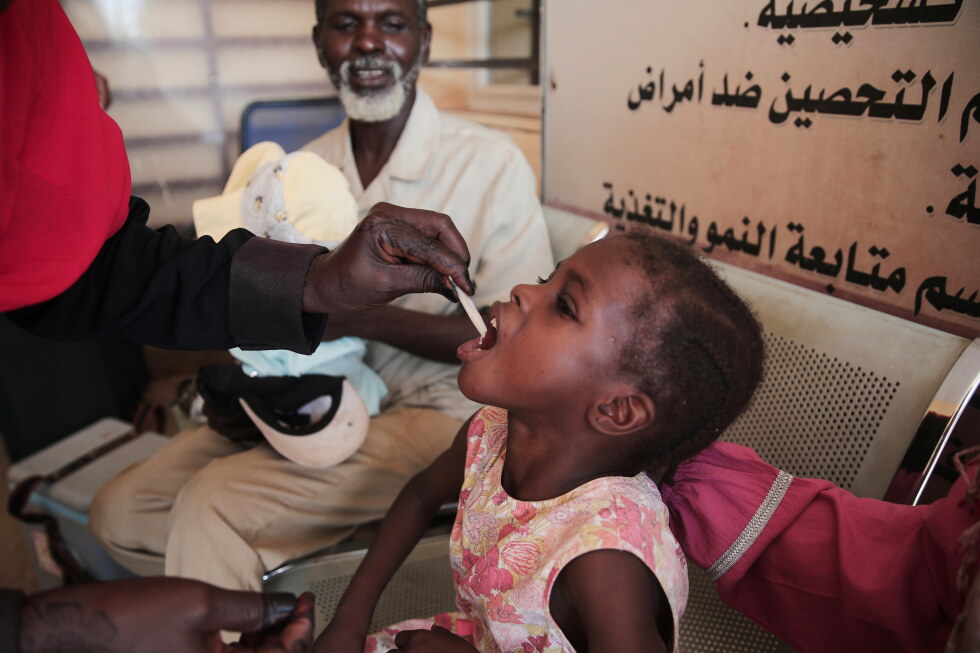
Sudan was already at war and hungry. Now its farmers are hit by another conflict
Two years after Sudan’s brutal civil war drove him from his small family farm, Omer al-Hassan finally made the journey back to his land in Omdurman, clearing weeds, plowing dry soil, and preparing to plant for the first time since he fled. But a new wave of unrest sweeping the Middle East has now derailed his hopes, sending critical agricultural input prices soaring and pushing him and millions of other Sudanese farmers further into financial ruin and food insecurity.
Al-Hassan and thousands of small-scale producers across Sudan are now bracing for one of the costliest planting seasons in recent memory. Many have already announced deep cuts to planned production, while some vulnerable smallholders have opted to skip planting entirely—a devastating development for a nation already grappling with three straight years of armed conflict that has left more than half its population facing acute hunger.
“The conflict linked to Iran has upended every part of our agricultural work,” al-Hassan told the Associated Press during an interview as he and his crew harvested onions from his recently cleared plot. After two months of backbreaking work to restore the overgrown land, he said, “We put our faith in God, but even after all that struggle, we still go without meals some days. We simply can’t keep up with the costs.”
Along with the 10 seasonal workers who help tend his farm, which also produces potatoes and tomatoes, al-Hassan says the group cannot cover operating costs without government financial support. That has already forced them to slash planted acreage and ration fertilizer use across the property. Another local farmer, Mohammed al-Badri, confirmed he can only afford to plant half of his arable land this season, leaving the rest uncultivated: “The other half is just wasted. We can’t do anything with it.”
The root of this new crisis lies in disruptions to global trade chokepoints tied to Middle East tensions. More than half of Sudan’s imported fertilizer arrives by sea through the Gulf region, where hundreds of commercial vessels have been stranded for weeks amid heightened tensions around the Strait of Hormuz. The resulting supply crunch has pushed up domestic fuel prices by roughly 30% nationwide, with fertilizer costs skyrocketing even faster.
Those increases have in turn driven sharp spikes in retail food prices across Sudan, hitting already cash-strapped households the hardest. The nation’s core staple crops—sorghum, millet, and sesame—are now at severe risk of production shortfalls this growing season. Farmers already reeling from the ongoing internal conflict between Sudan’s military and the paramilitary Rapid Support Forces now face cascading cost increases for fertilizer, gasoline for farm tractors, and diesel to power irrigation pumps.
Abdoun Berqawi, a farmer in Gezira, Sudan’s most productive agricultural heartland, described the situation as a “dangerous reality” that will collapse small-scale farming without urgent government intervention. He shared data showing the cost of a 50-kilogram bag of urea fertilizer has jumped from $11 a year ago to roughly $50 today, while tractor fuel has surged from $2.50 to $8 per gallon over the same period. Officials from Sudan’s Ministry of Agriculture have not yet responded to requests for comment on what steps the government is taking to address the emergency.
Melaku Yirga, regional vice president for the international aid organization Mercy Corps, who recently traveled to Sudan’s key agricultural states of Kassala and Gedaref, warned the timing of the crisis could not be worse. The Middle East tensions have triggered a “dangerous chain reaction” just as farmers begin preparing for planting, he explained. “People are already buying less food, cutting or skipping meals entirely, selling off critical household assets, and taking dangerous risks just to put food on the table,” Yirga said. “Mothers are forced to make impossible choices about which of their children get to eat the little food available, and some families are even eating wild leaves or animal feed to stay alive.”
For farmers who borrowed money from banks to cover planting costs, poor harvests this year could lead not just to bankruptcy but jail time for unpaid debts, said Merghany Omar, a farmer based in al-Matammah, River Nile province. He added that even onion farming, a reliable cash staple for smallholders in the area, no longer generates enough revenue to cover basic input costs.
Samy Guessabi, country director for Action Against Hunger in Sudan, noted this new crisis is layered on top of pre-existing systemic vulnerabilities, including dramatic currency depreciation that has already eroded purchasing power across the country. The hardest-hit communities are in remote agricultural regions including Kordofan, White Nile, Darfur, and Blue Nile, Guessabi said, where “farm zones are cut off from major markets and have very poor transport connections.”
Even in Sudan’s urban centers, retail prices for fresh vegetables and dairy products have risen by roughly 40% in recent weeks, driven directly by fuel price increases. Before the latest crisis sparked by Middle East tensions, the ongoing civil war had already pushed millions of Sudanese into hunger. The United Nations World Food Program currently estimates 19 million Sudanese face acute food insecurity, with millions more on the edge of famine. Famine was officially declared in two major regions, Darfur and Kordofan, last year.
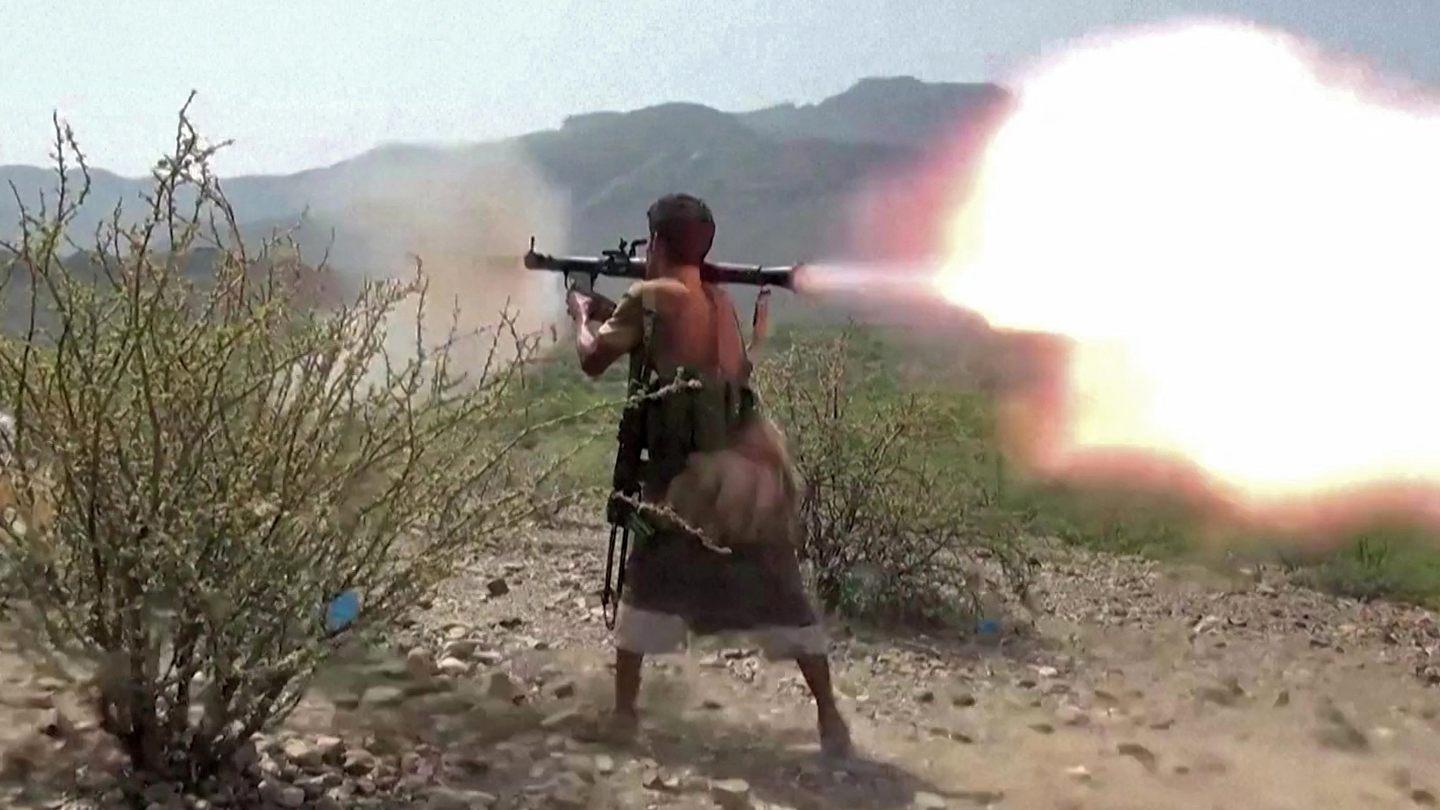
The emergency has also severely disrupted international humanitarian aid efforts already stretched thin by the conflict. WFP says food assistance shipments bound for Sudan are now forced to travel more than 5,500 additional miles to reach their destinations, adding massive extra costs and weeks of delays. That diversion is largely a result of commercial vessels avoiding the Bab el-Mandeb Strait at the southern end of the Red Sea, another critical global shipping chokepoint, where Iranian-backed Houthi rebels in Yemen have threatened commercial traffic.
Mubarak al-Nour, a veteran farmer and former parliamentarian in Gedaref, said even when farmers do manage to secure fertilizer, ongoing shipping delays mean many will miss the critical June-to-November planting window entirely. In response, some producers have already shifted away from high-value, fertilizer-intensive crops like corn and sesame, switching to lower-yield crops that require little to no chemical fertilizer.
Even if agricultural supplies do reach Sudan in time for planting, the challenges do not end there. Mathilde Vu, advocacy manager with the Norwegian Refugee Council, explained that fuel shortages in many parts of the country are also worsened by warring factions blocking supply routes, while local fuel markets have been heavily damaged by bombing in recent months amid a sharp escalation of drone attacks across the nation.
Reporting for this story was contributed by Khaled from Cairo. The Associated Press receives financial support for global health and development coverage in Africa from the Bill & Melinda Gates Foundation. The AP maintains full editorial independence over all content.
-

Partial results show losses for Starmer’s Labour and wins for Reform UK in local elections
LONDON – Early partial outcomes from England’s 2025 local elections have delivered a sharp early warning to Prime Minister Keir Starmer and his governing Labour Party, with the party facing significant electoral setbacks and the hard-right Reform UK party, under the leadership of veteran populist politician Nigel Farage, recording major vote gains.
Counting for the nationwide local contests, alongside separate elections for the devolved legislatures of Scotland and Wales, kicked off overnight Thursday, with results continuing to roll in across the full day of Friday. Early counts were concentrated in smaller regional authorities, with full results from major population centers including London, a long-time Labour stronghold, still pending by early Friday.
In the working-class regions of northern England that have historically leaned Labour, Reform UK’s early performance has shaken British political observers: the party has already secured hundreds of local council seats in constituencies including Hartlepool, a result that underscores its growing traction among disillusioned working voters. Farage’s party has positioned itself as a radical right alternative to both major parties in recent years, capitalizing on public frustration over post-Brexit economic stagnation and migration policy to build support.
Political analysts across the UK have framed these local elections as an informal midterm referendum on Starmer’s leadership, less than two years after he won the 2024 general election that brought Labour back to power after 14 years in opposition. Early signs of a heavy Labour defeat have already fueled speculation of internal unrest within the party, with restive backbench lawmakers reportedly preparing to push for a leadership challenge if the final overall result proves catastrophic for Labour.
Even if Starmer manages to fend off an immediate challenge to his leadership, multiple senior political analysts have cast serious doubt on whether he will remain in post to lead the party into the next required national general election, scheduled to take place no later than 2029. The growing speculation has prompted a public intervention from Starmer’s own deputy, Deputy Prime Minister David Lammy, who has urged party factions to stand behind the current leadership, warning that “you don’t change the pilot during the flight.”
As counting continues through Friday, political leaders and observers across the country are waiting to see whether the early grim trends for Labour hold in results from larger, more heavily populated areas, a final outcome that could reshape the trajectory of British politics for the rest of the decade.
-

Elaborately decorated skeletons in Catholic churches across Bavaria take some visitors by surprise
In the ornate Baroque Catholic monastery church of Banz, nestled near the Bavarian town of Bad Staffelstein in southern Germany, a striking, centuries-old exhibit continues to draw curiosity and quiet unease from visitors: four fully intact skeletons, draped in luxurious silk and brocade, embellished with gemstones, delicate filigree gold, silver and fine lace. These remains, known by the names Vincenzius, Valerius, Benedictus and Felix Benedictus, count among Europe’s little-known collection of catacomb saints, a set of religious relics with a unique history stretching back hundreds of years.
These holy skeletons were transported from Roman catacombs to the Benedictine monastery between the late 17th century and mid-18th century, a period when demand for early Christian martyr relics boomed across Catholic Europe. For many first-time visitors, the display is unsettling. “It’s actually a little creepy,” church custodian Anita Gottschlich shared quietly, standing before one skeleton whose hollow eye sockets seem to lock gaze with onlookers. Even so, Gottschlich notes the relics hold enduring cross-generational fascination: older guests who first saw the skeletons as children still make a point to seek out what locals call the Holy Bodies, their memories of the display undimmed after decades.
While catacomb saints may be unknown to many modern travelers, their decorated remains can still be found in dozens of Baroque churches and monasteries across Bavaria, as well as in neighboring Austria, Switzerland, Czechia and their native Italy. Most are permanently displayed in glass, coffin-style cabinets, keeping the long-dead relics accessible to visitors centuries after they arrived.
The story of catacomb saints begins in 16th century Rome, when excavators uncovered thousands of unmarked graves in the city’s ancient underground catacombs. Church leadership quickly classified all uncovered remains as early Christian martyrs, making them desirable relics for churches and monastic communities across the continent. “At the time, the church simply designated them all as saints,” explained Walter Ries, the Catholic priest who serves the Banz church congregation today. “And of course, in many countries, including Germany, people wanted to have such holy remains, such relics, simply because this enhanced the status of their own church or monastery and perhaps turned it into a place of pilgrimage.”
Banz Monastery itself has changed dramatically since the four skeletons arrived. Founded by Benedictine monks in 1070, the community flourished for more than 700 years before it was dissolved in 1803 during widespread German secularization. Today, only the church remains an active place of worship, housing a small congregation of just 211 people, while the former monastery buildings are occupied by a political foundation. “A great deal has changed over the course of the centuries,” Ries said. “Back then, these relics were very important, but today they really aren’t anymore.”
The surge in devotion to catacomb saints in the 17th and 18th centuries emerged from a period of profound crisis in central Europe. Just decades before the Banz skeletons arrived, the region was still recovering from the Thirty Years’ War, a brutal conflict that began as a religious struggle between Catholics and Protestants and killed an estimated 4 to 8 million people through combat, famine and widespread disease. “That was a terrible time,” Ries said. “And so people tried to open the gates of heaven through the Baroque. That’s why everything was designed so beautifully. It was an escape from the present, which was often so terrible. That’s also why these eerie skeletons were so beautifully draped and depicted as lifelike as possible.”
Abbots of Banz Monastery sent official delegations to Rome twice, first in 1680 and again in 1645, to secure the four relics. After their arrival, nuns from the nearby town of Bamberg spent hours carefully adorning the skeletons in the lavish textiles and finery they still wear today.
To this day, the Holy Bodies are only put on full public display for special religious occasions including All Saints’ Day. For most of the year, wooden panels painted with portraits of the saints cover the glass display cases, turning a rare viewing into a meaningful experience for faithful visitors. According to Günter Dippold, a historian who has spent years researching both catacomb saints and the history of Banz Monastery, the elaborate decoration of the skeletons serves a specific theological purpose that many modern visitors miss.
The adornment “is not meant to show the dead body of a saint, but rather to show his glorified body,” Dippold explained. “It is therefore intended to show the faithful who view it what we will look like after the resurrection, after being raised from the dead, when we no longer have our earthly bodies but rather glorified ones.”
—
This report is part of Associated Press religion coverage, supported through a collaboration with The Conversation US via funding from Lilly Endowment Inc. The AP holds sole responsibility for all content.