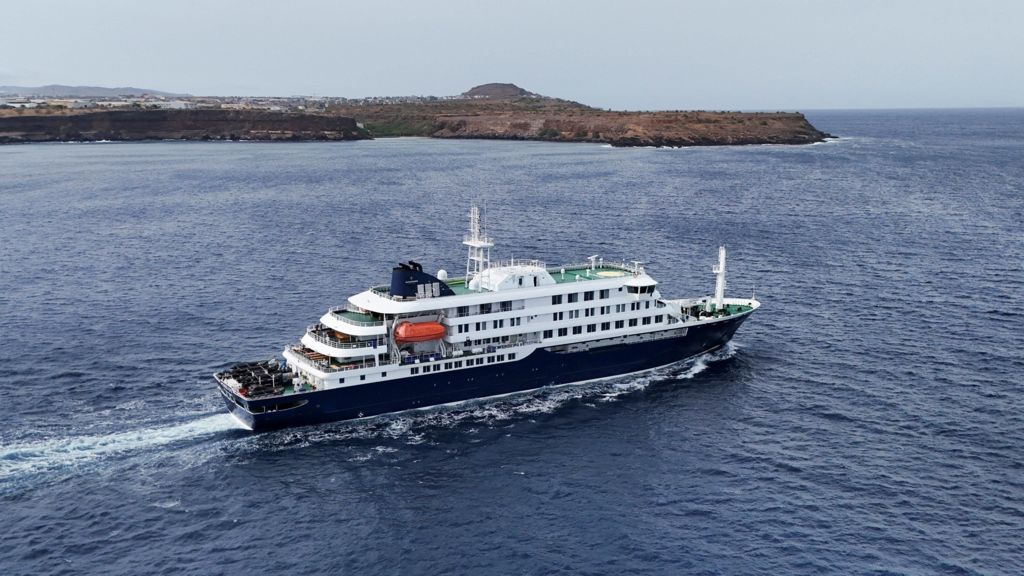
A major public health investigation is underway following an emerging hantavirus outbreak on the Dutch-operated expedition cruise ship MV Hondius, with British health authorities confirming a third UK national is now suspected to have contracted the virus. The newest suspected case remains on the remote South Atlantic island of Tristan da Cunha, where the vessel made a scheduled port stop in mid-April.
To date, five cases of hantavirus have been confirmed across passengers and crew on the ship, and one of those confirmed cases has resulted in death. Two British men have already received formal confirmed diagnoses: one, a retired 56-year-old British police officer and expedition guide named Martin Anstee, was medically evacuated to the Netherlands earlier this week alongside a Dutch crew member and a German passenger, and remains in stable condition. Speaking to the BBC after evacuation, Anstee reported that he is “fine”. The second confirmed British case, a 69-year-old man, was flown to South Africa for intensive care treatment at the end of April, and officials say his condition is improving.
The MV Hondius is on track to dock in the Canary Islands this weekend, where British authorities have arranged a chartered evacuation flight to repatriate all remaining British passengers and crew back to the United Kingdom. While none of the remaining British travelers currently show signs of hantavirus infection, UK public health officials have confirmed that all returnees will be required to isolate for a 45-day period upon arrival in the UK, to prevent potential secondary spread.
According to Oceanwide Expeditions, the operator of the MV Hondius, 30 passengers from 12 countries – including seven British citizens – disembarked the vessel at the South Atlantic island of St Helena on April 24, more than a week before the first confirmed case of hantavirus was reported on May 4. Two of the seven British travelers who disembarked at St Helena have already returned to the UK and are currently self-isolating voluntarily without exhibiting any symptoms. Four others remain on St Helena, where they are monitored regularly by local health authorities, with plans in place to send additional medical support to the remote island. As of Wednesday, UK Health Security Agency (UKHSA) officials confirmed the seventh British passenger who disembarked at St Helena has not yet been located for contact tracing.
Contact tracing operations are currently active in more than half a dozen countries, tracking down dozens of passengers who left the cruise ship before the outbreak was formally identified, including contacts in Switzerland and the Netherlands. The origin of the outbreak remains unknown, and public health teams have not yet confirmed whether any people outside of the cruise ship’s passenger and crew cohort have been infected.
World Health Organization Director-General Tedros Ghebreyesus noted in a recent press briefing that the first two confirmed cases had completed a bird-watching expedition through Argentina, Chile, and Uruguay before boarding the MV Hondiques, a trip that included visits to areas populated by rat species known to carry hantavirus. To date, three deaths have been linked to the outbreak: the one confirmed hantavirus death was a 69-year-old Dutch woman who disembarked at St Helena on April 24, traveled to South Africa, and died two days later. Two other people – the Dutch woman’s husband, who died on board the ship on April 11, and a German woman who also died while on the vessel – have not been confirmed to have died from hantavirus infection.
Hantavirus is most commonly transmitted to humans through contact with infected rodents such as mice and rats, but public health experts working on this outbreak suspect limited human-to-human transmission may have occurred among people in close, prolonged contact on the ship. UKHSA officials emphasized that the virus does not spread through casual everyday contact in public spaces, and person-to-person spread only occurs in rare cases involving extended close exposure. Common symptoms of hantavirus infection include fever, severe fatigue, abdominal pain, vomiting, and shortness of breath, which typically develop between two and four weeks after initial exposure.
In a statement, the World Health Organization categorized the outbreak as a “serious incident” but stressed that the overall risk to the general global public remains low, and the event is not comparable to the widespread, easily transmissible Covid-19 pandemic.