博客

  • China slaps export controls on 14 EU entities in retaliation for Russia-related sanctions

    China slaps export controls on 14 EU entities in retaliation for Russia-related sanctions

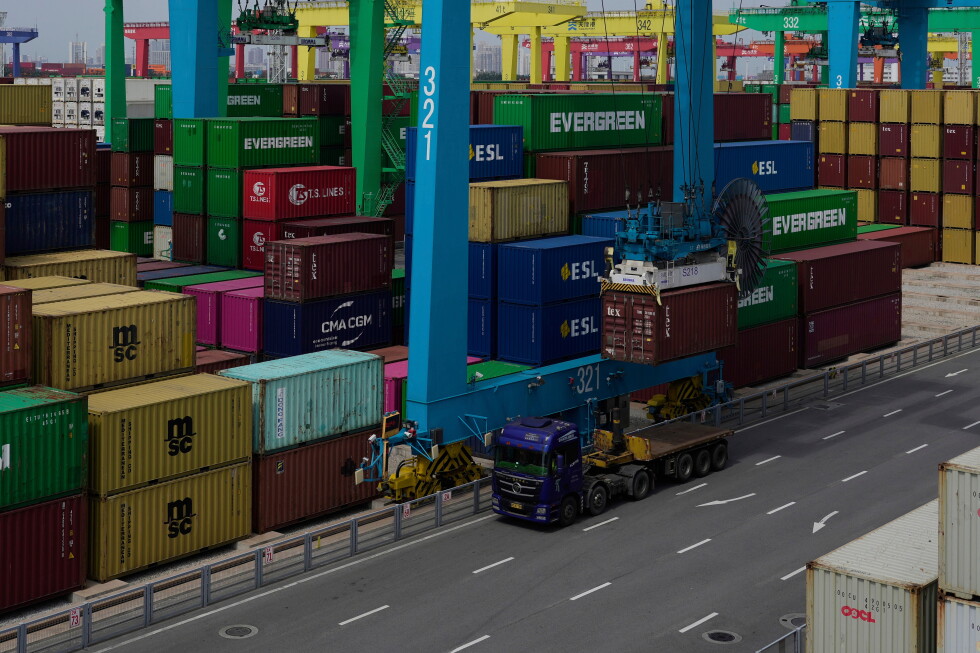
    BEIJING – In a tit-for-tat response to the European Union’s latest round of Ukraine-related sanctions targeting Chinese firms, China announced new export restrictions on 14 European entities this Friday. The country’s Ministry of Commerce confirmed in an official statement that all Chinese domestic enterprises will be prohibited from shipping dual-use goods – components and technologies that have both civilian and military applications – to the blacklisted European organizations. The restrictions also extend to foreign firms, which are banned from supplying China-manufactured dual-use items to the targeted entities.

    The affected European companies span multiple industrial sectors across the continent, including Tatra Trucks, a well-known Czech vehicle manufacturer; Lafert SpA, an Italian producer of electric motors; Sindlhauser Materials GmbH, a German manufacturing firm; and Cavok UAS, a French drone producer.

    A ministry spokesperson clarified that the countermeasures directly follow the EU’s decision one day prior, when the bloc added 14 Chinese enterprises from mainland China and Hong Kong to its latest round of sanctions targeting Russia over its ongoing military campaign in Ukraine. The EU’s 21st package of sanctions, adopted Thursday, broadens restrictions to cover Russian banks, cryptocurrency firms, military equipment producers, and entities from third countries that the bloc alleges are supplying dual-use goods and technology to Russia to support its war effort. Beyond Chinese firms, entities based in India and Turkey were also included in the latest round of penalties.

    The spokesperson emphasized that China’s newly announced measures are necessary to “safeguard national security and interests, and to fulfill international obligations such as non-proliferation,” in response to what the country calls the EU’s “egregious actions.” The development marks a sharp escalation of trade and diplomatic tensions between Beijing and Brussels, rooted in the EU’s approach to sanction enforcement amid the Ukraine war.

  • Deposed Turkish opposition leader forms ‘New Party’ to challenge Erdogan

    Deposed Turkish opposition leader forms ‘New Party’ to challenge Erdogan

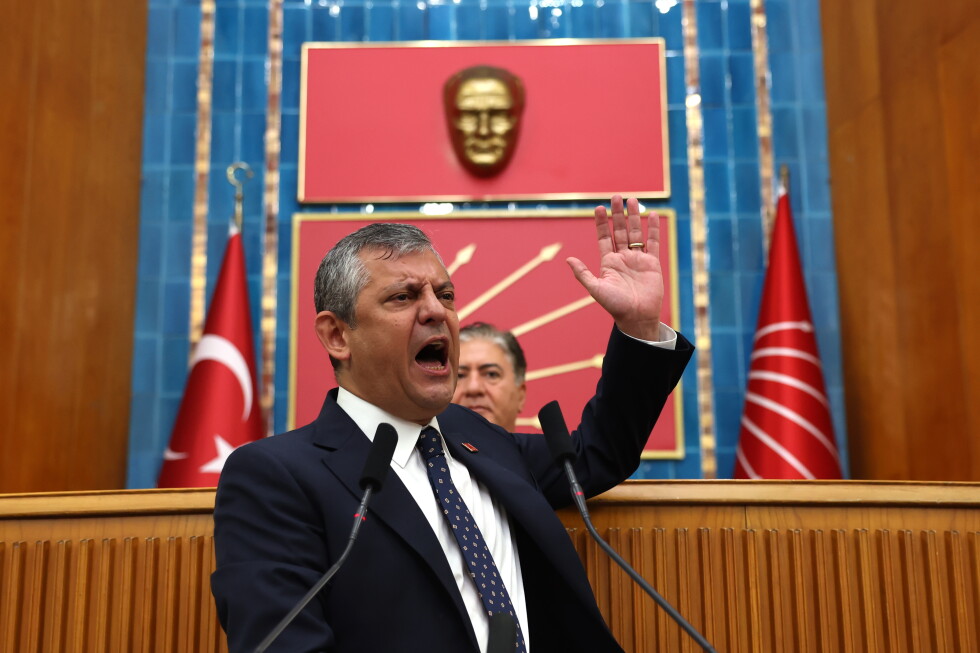
    In a major political shakeup rocking Turkey’s opposition landscape, former chair of Turkey’s main opposition Republican People’s Party (CHP) Ozgur Ozel formally launched a new political bloc Friday, officially registering the self-named “New Party” with Turkey’s Interior Ministry just moments after he and 90 fellow CHP legislators resigned from the decades-old party. The long-awaited formation of the new opposition force comes months after a court ruling removed Ozel from his CHP leadership post, a decision that has deepened divisions in Turkish politics and spurred mass protests in support of the ousted leader.

    The sequence of events that led to this split traces back to May 2024, when an appeals court annulled the results of a 2023 CHP party congress that had appointed Ozel as the party’s new chair. Citing unproven claims of voting irregularities, the court reinstated 77-year-old Kemal Kilicdaroglu, who led the CHP for 13 years. Many political analysts broadly characterize Kilicdaroglu’s tenure as marked by ineffective opposition to long-serving President Recep Tayyip Erdogan. Ozel’s removal from the CHP leadership sparked immediate widespread outrage among the party’s base, with supporters dismissing the court order as a politically motivated maneuver designed to weaken Turkey’s fragmented opposition ahead of key political contests.

    In a social media video posted to X following the formal registration, Ozel signed the document formalizing his exit from Turkey’s oldest established political party and offered a hopeful message for the new movement: “May it be auspicious for our homeland, our nation, and our party.”

    Supporters of Ozel frame his ouster as one piece of a broader two-year crackdown on CHP officials across the country. During that period, hundreds of elected mayors and municipal leaders from CHP-run local governments have been detained as part of criminal investigations, most centered on allegations of corruption. Among the most high-profile detentions is Ekrem Imamoglu, the popular former mayor of Istanbul who was widely viewed as the strongest single challenger to Erdogan. Imamoglu, who remains a CHP member, has been imprisoned since March 2023 and faces charges that could carry decades of prison time if he is convicted. As of Friday, there was no official confirmation on whether Imamoglu would leave the CHP to join Ozel’s new bloc.

    The Erdogan administration has repeatedly pushed back against claims of political interference in the justice system, insisting that Turkey’s courts operate independently and free from government pressure.

    Notably, Ozel led the CHP to one of its most significant electoral gains in recent years during the 2024 municipal elections, where the party delivered a major rebuke to Erdogan’s ruling Justice and Development Party (AKP). Despite that success, Ozel was unable to reverse the court’s annulment of his leadership win, and split from the party after Kilicdaroglu refused repeated calls to hold a new leadership vote to resolve the internal crisis.

    With 91 legislators holding seats in Turkey’s 600-seat national parliament, the New Party is on track to displace the CHP as Turkey’s official main opposition bloc. Following the mass defection, the remaining CHP caucus holds just 44 parliamentary seats. Erdogan’s AKP, an Islam-oriented conservative party that has held power for more than two decades, retains a 277-seat majority in the legislature.

  • Watch: Are Trump’s tariffs delivering on his objectives?

    Watch: Are Trump’s tariffs delivering on his objectives?

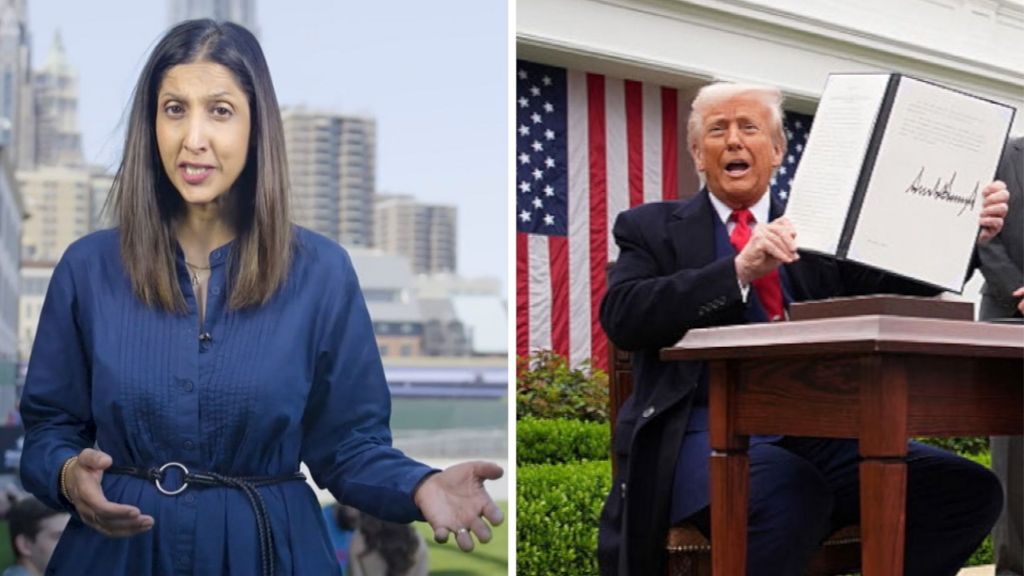
    When former U.S. President Donald Trump first implemented his signature broad-based tariffs, he framed the policy as a way to rebalance lopsided trade relationships, protect domestic manufacturing jobs, and strengthen America’s competitive position in the global economy. Years after the initial tariffs rolled out, a critical question remains: have these trade measures actually lived up to the lofty promises that were made when they were introduced?

    In a recent breakdown of the policy’s outcomes, BBC correspondent Samira Hussain has unpacked the complex, far-reaching consequences of the tariffs, mapping who ultimately bears the cost of these trade barriers and how they have shifted the trajectory of the United States’ domestic economy. What many proponents of the tariffs initially argued was that foreign exporters would foot the bill for the import taxes, with the U.S. government reaping billions in new revenue that could be funneled back into domestic programs. But Hussain’s analysis paints a far different picture of how the costs have been distributed across the economy.

    Instead of falling primarily on foreign trading partners, research and on-the-ground data show that the bulk of tariff costs have been passed down the supply chain to American consumers and domestic businesses. U.S. importers pay the tax at the border, and those extra costs are almost always passed on in the form of higher prices for everything from raw materials to finished consumer goods, from steel used in construction to clothing and electronics purchased by households across the country. Small domestic manufacturers that rely on imported inputs have been hit particularly hard, seeing their production costs jump and their ability to compete with larger firms erode, even as some protected domestic industries have seen a modest bump in demand for their goods.

    Hussain also explores the question of whether the tariffs have delivered on their core policy goals: creating and retaining manufacturing jobs, narrowing the U.S. trade deficit, and forcing major trading partners like China to renegotiate trade terms that are more favorable to the United States. While some protected sectors did see initial job gains, those gains were often offset by job losses in downstream industries that faced higher input costs, and many analysts have concluded that the net effect on U.S. employment has been negative overall. The trade deficit has also remained largely unchanged, and while new trade agreements did emerge in the wake of the tariffs, many of the core structural trade issues that Trump targeted remain unresolved.

    As trade policy continues to be a central point of debate in U.S. domestic politics, this analysis offers a clear, data-driven look at how one of the most high-profile trade policy shifts in recent decades has actually played out for the American economy and American households.

  • EU finds TikTok violates its digital rule book by failing to protect privacy of minors

    EU finds TikTok violates its digital rule book by failing to protect privacy of minors

    BRUSSELS – In another high-stakes regulatory move targeting major global social media platforms, the European Commission announced Friday that it has concluded TikTok failed to put sufficient safeguards in place to protect children’s privacy rights on its platform. Specifically, the Commission found that the platform’s existing settings allowed adult users to access the personal accounts of underage users without proper restrictions.

    This gap in privacy protections does not merely violate regional digital rules — it creates serious tangible risks for young users, EU regulators emphasized. The open accessibility of minor accounts exposes children to a range of harms, including cyberbullying, unsolicited contact from strangers, and potential predatory behavior.

    Friday’s announcement is the latest in a string of aggressive enforcement actions against large technology companies led by Brussels, which has emerged as a global trailblazer in strict oversight of tech industry giants. Over recent years, the EU has advanced sweeping regulatory actions against other major players including Meta and Apple, setting a benchmark for digital governance that many other regions have since followed.

    Under the EU’s regulatory process, TikTok now has the opportunity to mount a formal defense and submit a formal response to the Commission’s findings. If regulators remain unsatisfied with the Chinese-owned company’s corrective plans or response, they can issue a formal non-compliance ruling, which opens the door to financial penalties that could reach as high as 6% of TikTok’s total global annual revenue.

    This is not the first time the EU has ruled against TikTok this year. Back in February, the bloc’s regulators found that the platform violated another key provision of its digital rulebook by designing its user experience to encourage compulsive overuse. Features including infinite scroll and automatic content playback were flagged for their addictive design, which regulators concluded poses measurable risks to the physical and mental well-being of all users, with minors facing the greatest harm.

  • Watch: Wildfires rage across France and Spain

    Watch: Wildfires rage across France and Spain

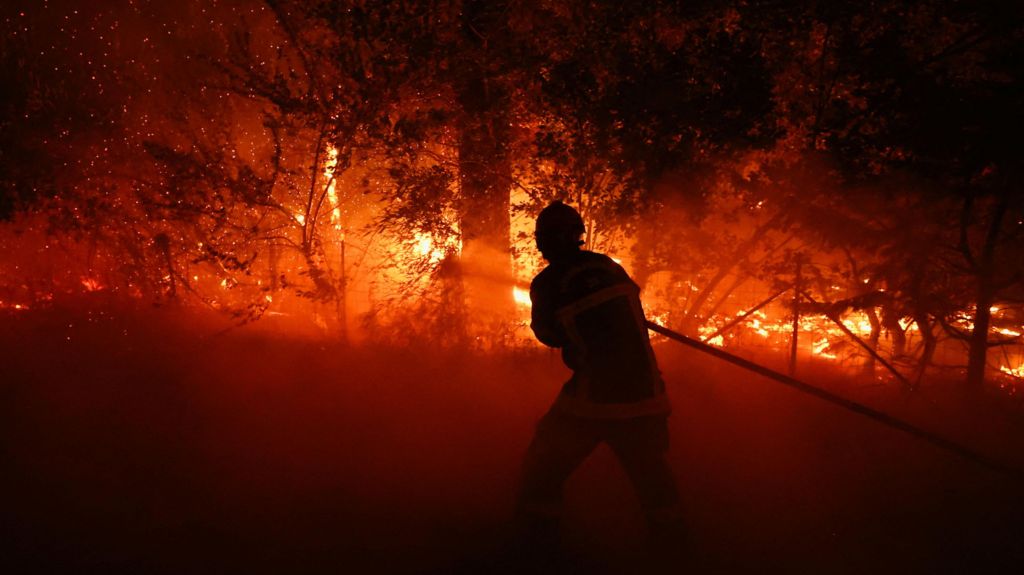
    Southern Europe is grappling with an escalating climate-driven disaster as intense, fast-spreading wildfires rage across large swathes of France and Spain, forcing mass evacuations of popular tourist destinations and pushing authorities to enact sweeping emergency measures. In France, the worst-hit regions have seen flames devour thousands of hectares of forest and brushland, pushing emergency responders to their limits. Local French officials have issued mandatory evacuation orders for communities in the country’s iconic Mediterranean coastal tourist hubs, areas that draw millions of visitors each summer. With dry, windy conditions amplifying the spread of the blazes, thousands of residents and vacationers have been forced to flee their accommodations and homes with little advance notice.

    Across the border in Spain, the scale of the wildfire crisis has prompted the national government to elevate the response to a full state of national emergency. The blazes, fanned by record-breaking heatwaves and prolonged drought that have parched vegetation across the Iberian Peninsula, have scorched vast areas of rural and protected natural land, destroyed critical infrastructure, and threatened populated regions. The declaration of national emergency unlocks additional federal resources, including additional firefighting personnel, military support, and emergency funding, to help local regions contain the outbreaks and support affected communities. Satellite imagery from recent days shows massive plumes of smoke drifting across the Mediterranean, a visible reminder of how widespread the disaster has become. Climate scientists have repeatedly warned that rising global temperatures are increasing the frequency and severity of extreme wildfire events across the Mediterranean basin, turning what was once a seasonal risk into a growing annual catastrophe for the region.

  • Guardiola turns down Italy manager job

    Guardiola turns down Italy manager job

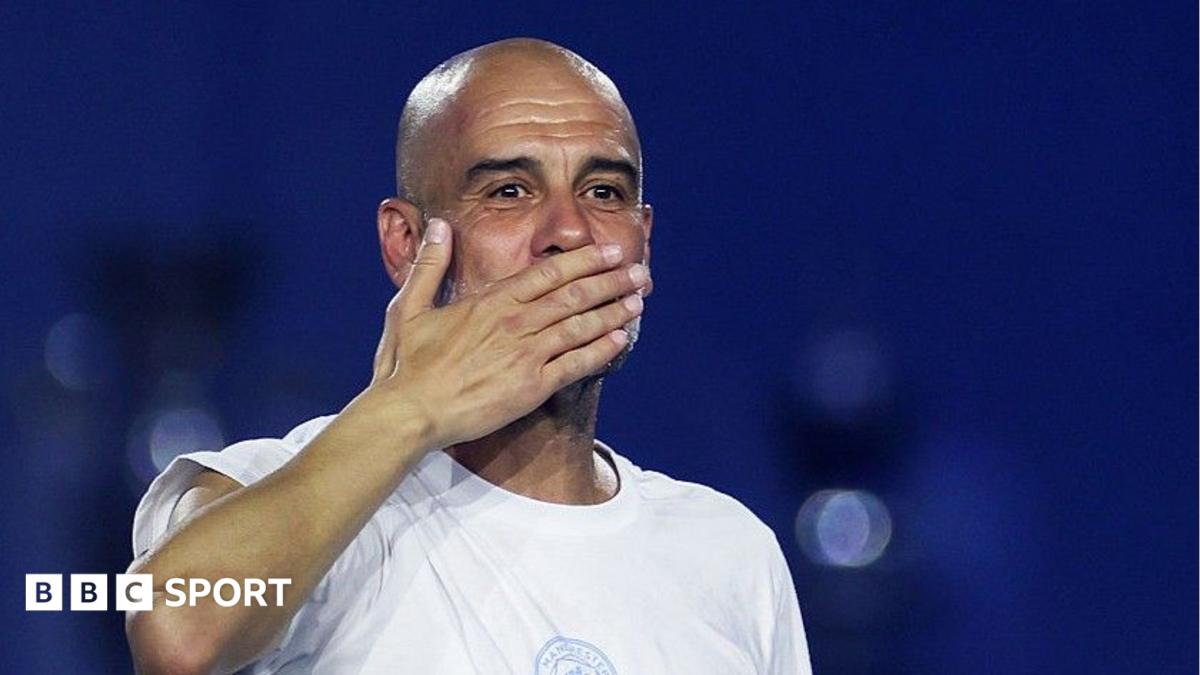
    One of the most decorated club football managers of the modern era, Pep Guardiola, has formally declined an offer to take the helm of the Italian men’s national football team, ending weeks of speculation surrounding his next career move following his departure from Manchester City this summer.

    Guardiola wrapped up a historic 10-year tenure with Manchester City in May, leaving the club after securing an unparalleled 17 major trophies during his time in charge. Since exiting the Premier League side, the Spanish coach has been open about his plan to step away from top-flight football to take an extended break, prioritizing rest, quality time with family, and travel.

    The Italian Football Federation (FIGC) nonetheless launched an aggressive pursuit to convince Guardiola to change his plans. Earlier this week, FIGC president Giovanni Malago confirmed that official talks had taken place with the recently departed City boss, revealing that the governing body was prepared to make extraordinary exceptions to its salary structure to accommodate his demands. According to people familiar with the negotiations, FIGC representatives also offered Guardiola full autonomy to structure the head coach role to his own specifications, a major concession designed to lure one of the game’s most successful tacticians.

    The pursuit of Guardiola came after the FIGC’s first target, legendary Italian former midfielder Carlo Ancelotti, turned down the opportunity. FIGC technical director Paolo Maldini confirmed Thursday that the federation first approached Ancelotti, who currently serves as head coach of the Brazil men’s national team. Ancelotti ultimately chose to remain in his current post with the Brazilian FA, opening the door for the FIGC to turn to Guardiola.

    Despite the generous terms and the high-profile vacancy, Guardiola opted to stick to his original plan for a career break, formally informing the FIGC of his decision to decline the offer this week. The Italian national team has faced significant struggles in recent major tournaments, having failed to qualify for three consecutive FIFA World Cups, leaving the federation eager to hire a top-tier manager to turn the program’s fortunes around.

    With Guardiola out of the running, former Italy international playmaker Andrea Pirlo has now emerged as the clear frontrunner for the role. Pirlo currently serves as head coach of Dubai-based United FC, and if appointed, he would immediately face a stiff test: guiding Italy through a tough Nations League group this autumn, where the side is matched against powerhouse opponents France, Belgium, and Turkey, before leading the team’s qualifying campaign for UEFA Euro 2028.

  • Le Clos would ‘love’ Commonwealth Games medal record

    Le Clos would ‘love’ Commonwealth Games medal record

    At 34, veteran South African swimmer Chad le Clos stands on the cusp of an unprecedented milestone in Commonwealth Games history, one that has weighed on his mind for nearly a decade. He currently shares the title of the most decorated male athlete in the event’s history, tied on 18 total medals with Australian shooter Phil Adams and English shooter Mick Gault. Now, as he prepares to compete in the men’s 50m and 100m butterfly events at the 2026 Glasgow Commonwealth Games, le Clos has made clear his ambition to claim the record outright.

    For eight years, the unclaimed record has felt like “a weird monkey on my back,” le Clos told BBC World Service’s Sportsworld programme. He came close to breaking the tie at the 2018 Gold Coast Games, and again at the 2022 Birmingham Games, where he secured a silver in the 200m butterfly to draw level with the existing record holders. What many did not know at the time was that le Clos’ preparations for Birmingham were severely disrupted by unmanaged mental health struggles that left him off his peak. He reflected that even with those setbacks, the 2022 Games guaranteed him a place in the record tie, but misfortune kept him from crossing the finish line to take sole ownership – including two fourth-place finishes and a missed relay final spot.

    This Games will mark le Clos’ fifth Commonwealth Games appearance, a milestone he never could have imagined when he made his debut as an 18-year-old high school student at the 2010 Delhi Games. Fresh off final exams, the young swimmer left Delhi with five medals, two of them gold, launching what would become one of the most decorated careers in international swimming. He went on to match Australian swimming legend Ian Thorpe’s record for the most medals won at a single Commonwealth Games in 2014, when he returned home with seven medals from the event that year, also held in Glasgow.

    Le Clos’ journey to Glasgow 2026 has not been smooth. After being eliminated in the heats of the 100m butterfly at the 2024 Paris Olympics, he struggled through a string of persistent injuries that threatened to end his run at the 2026 Games. He credits his father, Bert, with pushing him to take an unprecedented three-month break from all training – a choice that allowed his body to heal fully and reignite his passion for competition. “I was going to jump straight back into training in April, but my dad insisted I take 12 weeks off: no gym, no swimming, nothing, just enjoy myself,” le Clos explained. “I’ve never had that kind of break in my entire career. It was a full physical reset, and I’m just grateful I’m still able to compete at this level.”

    As the oldest competitor in his events by a full decade – with most rivals between 19 and 24 years old – le Clos has had to adapt to his new role as the sport’s elder statesman. He finds it surreal to note that when he made his debut in 2010, most of the athletes he will race against in Glasgow were still toddlers. But his age has not dimmed his competitive fire: he remains confident he still has a major role to play on the global swimming stage, and is in the best shape he could be heading into the Games.

    Beyond the medal chase, le Clos says the Commonwealth Games record will not define his already legendary legacy. With one Olympic gold (200m butterfly, London 2012), three Olympic silvers, and 16 world championship titles already to his name, the South African star’s legacy is already secure. Much of that newfound perspective comes from his post-competition project: a network of swimming academies across his home country that now counts 13 clubs and more than 3,000 young members, with plans to expand to 50 clubs over the next two years.

    “I’m not just swimming for myself, my family, or South Africa anymore – I’m swimming for the next generation of swimmers I mentor through the academy,” he said. Le Clos added that the academy has given him a new perspective on his career, and even transformed his relationship to competitive swimming. “That’s why I don’t have any immediate plans to retire. I’ve already set my next target: qualifying for my fifth Olympic Games at Los Angeles 2028. This academy honestly saved my career – I don’t need to be competing anymore, but I want to be. I’m hungrier than I’ve been in years.”

    The thrill of racing still drives le Clos, who describes competing under major event lights as an addiction he has never been able to shake. As long as he remains in contention for medals at the sport’s highest level, he says he has no plans to walk away from the pool he has dominated for nearly 16 years.
  • Klopp handed task of reviving Germany’s football fortunes

    Klopp handed task of reviving Germany’s football fortunes

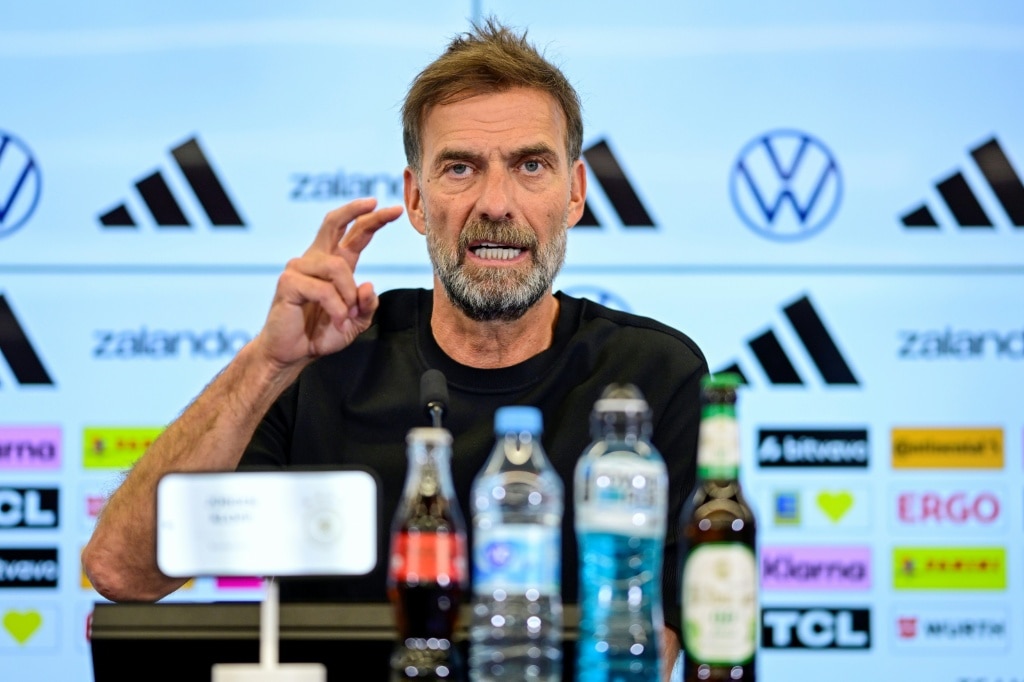
    In a long-awaited move that has sent shockwaves through international football, the German Football Association (DFB) announced Friday that legendary former Liverpool manager Jurgen Klopp will take the reins as the new head coach of Germany’s men’s national team, tasking the 59-year-old with reviving the once-dominant program’s fading fortunes. The appointment comes on the heels of yet another early World Cup exit, and Klopp’s contract will run through the 2030 FIFA World Cup, co-hosted by Spain, Portugal, and Morocco.

    Speculation around Klopp’s appointment had circulated for weeks, and the move gained momentum after former manager Julian Nagelsmann stepped down earlier this July. Nagelsmann resigned following a devastating round-of-32 penalty defeat to Paraguay at this summer’s tournament, marking Germany’s third consecutive early World Cup exit after the program’s 2014 title win. DFB sources confirmed that Klopp, who had publicly expressed interest in the role, was the federation’s top-choice candidate, and his willingness to accept the position accelerated Nagelsmann’s departure.

    Speaking at an official press conference in Frankfurt announcing his hiring, Klopp framed the national team role as the crowning achievement of his decades-long professional career. “It’s a great honour for me to be sitting here today,” he said. “This is ideally the high point of my career, of my life, my professional life. I will give it everything I have.”

    DFB President Bernd Neuendorf clarified that Klopp’s contract will officially begin on August 15, running through the summer of 2030. Prior to accepting the national team post, Klopp had been serving as Red Bull’s “Head of Global Soccer” since 2025, overseeing football strategy for the brand’s affiliated clubs across Europe and North America, including RB Leipzig, Red Bull Salzburg, and the New York Red Bulls. Neuendorf thanked Red Bull for agreeing to an early termination of Klopp’s contract, noting that the new Germany head coach will need to dedicate his full attention to reversing the team’s recent slump.

    Germany is one of the most decorated men’s football programs in history, with four World Cup titles — tied for the most among European nations — and three European Championship trophies. But despite that historic success, the team has struggled to compete at the highest level in major tournaments over the last decade. Since reaching the Euro 2016 semi-finals, Germany has won only a single knockout match across three World Cups and two European Championships, making this turnaround project one of the highest-stakes jobs in international football.

    Klopp brings a proven track record of success to the role, having built his reputation as one of the world’s top managers through stints at Bundesliga clubs Mainz and Borussia Dortmund before his trophy-laden nine-year spell at Liverpool. When he stepped down from Liverpool in 2024, he had led the club to every major trophy available, ending a 30-year league title drought by claiming the Premier League in 2020 and lifting the club’s sixth Champions League trophy in 2019. The DFB had courted Klopp for the national team role for years, with the federation consistently naming him as the ideal candidate to restore Germany’s standing among the world’s elite teams.

  • UNESCO adds West Bank site and Lebanese castles to World Heritage List despite Israeli objections

    UNESCO adds West Bank site and Lebanese castles to World Heritage List despite Israeli objections

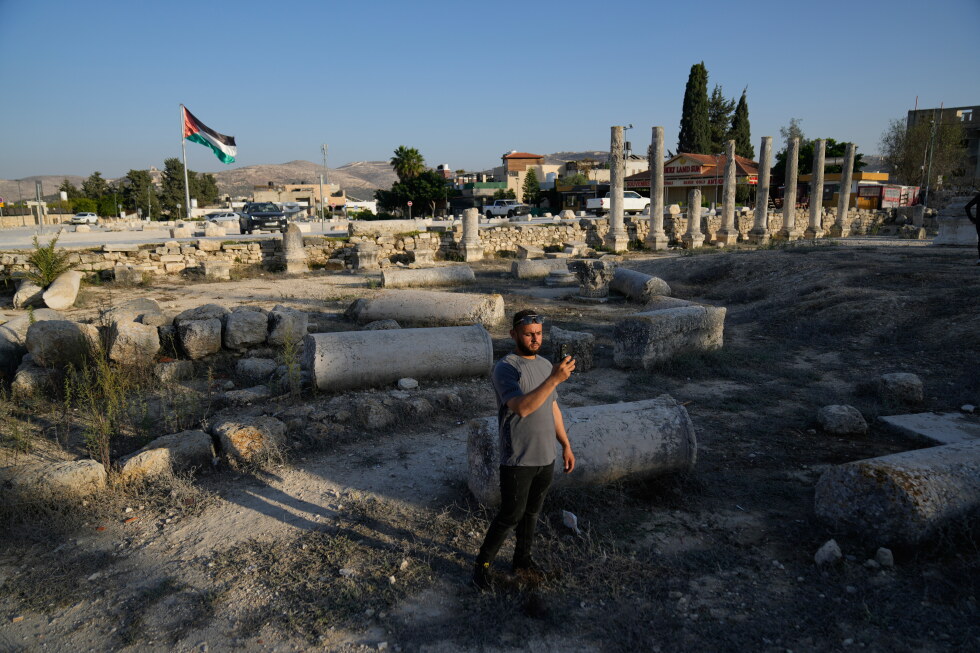
    At a UNESCO World Heritage Committee meeting hosted in Busan, South Korea, global cultural heritage officials have voted to approve two contested site nominations for World Heritage designation, marking a high-stakes decision that comes against fierce opposition from the Israeli government. The two sites in question are the ancient archaeological settlement of Sebastia in the Israeli-occupied West Bank, and a cluster of five medieval fortifications in Lebanon’s Mount Amel region. Both sites have simultaneously been added to the List of World Heritage in Danger following an emergency review pushed by their nominating parties.

    Sebastia, a hilltop outpost located roughly six miles northwest of the Palestinian city of Nablus, holds profound cross-cultural historical significance. Academic experts widely identify the site as the location of ancient Samaria, the original capital of the biblical Kingdom of Israel. Its layered archaeological ruins preserve evidence of continuous human settlement across the Iron Age, Roman, Byzantine, and Islamic eras, and shared Abrahamic tradition holds that John the Baptist is interred on the site, per UNESCO’s official background materials.

    The Palestinian Authority first submitted Sebastia for UNESCO consideration back in 2012. Its nomination argued that World Heritage status is critical to advancing long-term conservation of the site, noting that while Sebastia draws global tourism, much of the settlement remains unexcavated and under-resourced for preservation efforts under ongoing Israeli occupation. The designation comes at an especially tense moment: Israel does not recognize Palestinian statehood, and the Israeli government has recently moved forward with plans to expropriate large tracts of land surrounding the Sebastia site. The move also comes amid mounting international pressure on Israel to rein in escalating violent attacks by Israeli settlers against Palestinian communities in the occupied West Bank.

    For the Lebanese nomination, the five Mount Amel castles were recognized for their unique layered architectural legacy, which blends design elements from Crusader, Ayyubid, Mamluk, and local Levantine building traditions. The cluster documents nearly 900 years of evolution in fortified defensive architecture, making it a site of global cultural significance. This was the second Lebanese site added to UNESCO’s global heritage framework during the Busan meeting; just days earlier, the committee added the ancient Phoenician port city of Tyre in southern Lebanon to the List of World Heritage in Danger.

    Israel had mounted a fierce public campaign ahead of the vote to block both nominations. In a formal statement issued earlier that week, the Israeli Foreign Ministry accused the Palestinian delegation of carrying out a “hostile, one-sided campaign” at UNESCO, claiming the nomination falsely framed Sebastia as facing an imminent conservation emergency. Israeli officials argue the effort is a politically motivated attempt to “erase the site’s profound, well-documented Jewish and Christian history.”

    Israel also extended its opposition to the Lebanese castle nomination, specifically raising objections to the inclusion of Beaufort Castle, one of the five fortifications in the Mount Amel cluster. The Israeli Foreign Ministry claimed that the Iran-backed Lebanese militant group Hezbollah has repurposed the historic castle as a military outpost, constructing underground tunnels beneath the site and using the surrounding area to launch rocket attacks. Israeli officials accused UNESCO of ignoring these security and cultural preservation risks.

    Neither UNESCO leadership nor the Lebanese embassy in South Korea has issued a formal response to Israel’s claims regarding Hezbollah and Beaufort Castle. This conflict over the nominations is not an isolated diplomatic incident: Israel formally withdrew from UNESCO in 2019, citing longstanding claims that the organization is systemically biased against the country and downplays Jewish historical ties to the Holy Land. Ahead of Friday’s vote, Israel had called the nominations an example of “weaponization of cultural heritage” for political gain, framing the entire process as illegitimate.

  • A Russian ballistic strike kills 6 after Ukraine’s Zelenskyy hosts US company making Patriots

    A Russian ballistic strike kills 6 after Ukraine’s Zelenskyy hosts US company making Patriots

    Escalating cross-border attacks have sent new shockwaves through the ongoing Russia-Ukraine war, just days after high-stakes diplomatic and industrial talks opened a potential new path for Ukraine to bolster its air defense capabilities. On Friday afternoon, a Russian ballistic missile strike targeted a location in Ukraine’s Kyiv Oblast, leaving at least six civilians and defense sector personnel dead and dozens more injured, Ukrainian President Volodymyr Zelenskyy confirmed. The strike came only 24 hours after Zelenskyy held face-to-face talks in Kyiv with senior leaders from U.S. defense giant Raytheon, the manufacturer of the Patriot air defense systems that Kyiv has long prioritized to counter Russia’s relentless ballistic missile campaign.