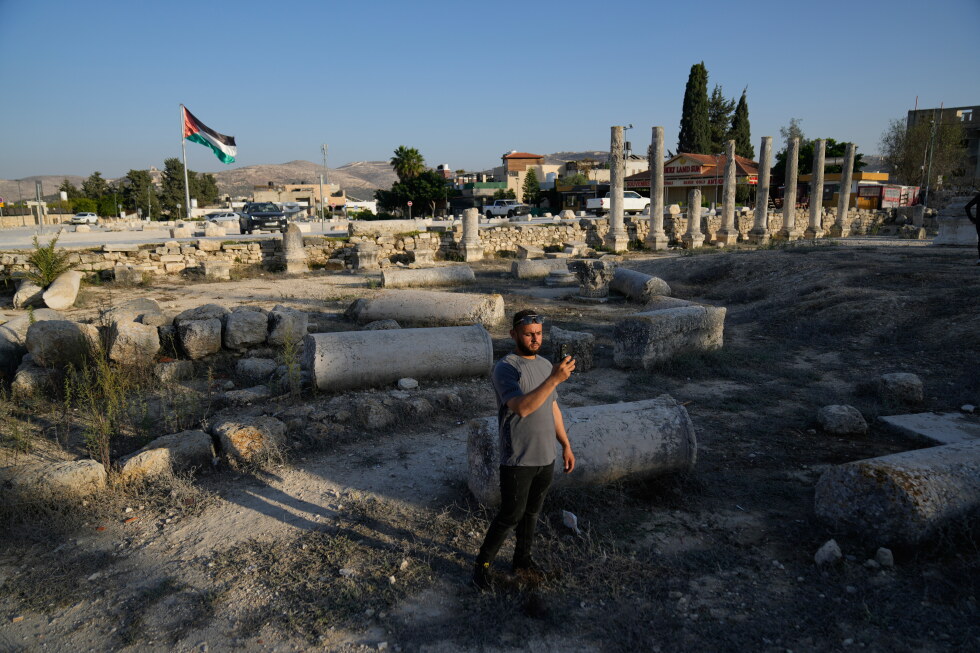
At a UNESCO World Heritage Committee meeting hosted in Busan, South Korea, global cultural heritage officials have voted to approve two contested site nominations for World Heritage designation, marking a high-stakes decision that comes against fierce opposition from the Israeli government. The two sites in question are the ancient archaeological settlement of Sebastia in the Israeli-occupied West Bank, and a cluster of five medieval fortifications in Lebanon’s Mount Amel region. Both sites have simultaneously been added to the List of World Heritage in Danger following an emergency review pushed by their nominating parties.
Sebastia, a hilltop outpost located roughly six miles northwest of the Palestinian city of Nablus, holds profound cross-cultural historical significance. Academic experts widely identify the site as the location of ancient Samaria, the original capital of the biblical Kingdom of Israel. Its layered archaeological ruins preserve evidence of continuous human settlement across the Iron Age, Roman, Byzantine, and Islamic eras, and shared Abrahamic tradition holds that John the Baptist is interred on the site, per UNESCO’s official background materials.
The Palestinian Authority first submitted Sebastia for UNESCO consideration back in 2012. Its nomination argued that World Heritage status is critical to advancing long-term conservation of the site, noting that while Sebastia draws global tourism, much of the settlement remains unexcavated and under-resourced for preservation efforts under ongoing Israeli occupation. The designation comes at an especially tense moment: Israel does not recognize Palestinian statehood, and the Israeli government has recently moved forward with plans to expropriate large tracts of land surrounding the Sebastia site. The move also comes amid mounting international pressure on Israel to rein in escalating violent attacks by Israeli settlers against Palestinian communities in the occupied West Bank.
For the Lebanese nomination, the five Mount Amel castles were recognized for their unique layered architectural legacy, which blends design elements from Crusader, Ayyubid, Mamluk, and local Levantine building traditions. The cluster documents nearly 900 years of evolution in fortified defensive architecture, making it a site of global cultural significance. This was the second Lebanese site added to UNESCO’s global heritage framework during the Busan meeting; just days earlier, the committee added the ancient Phoenician port city of Tyre in southern Lebanon to the List of World Heritage in Danger.
Israel had mounted a fierce public campaign ahead of the vote to block both nominations. In a formal statement issued earlier that week, the Israeli Foreign Ministry accused the Palestinian delegation of carrying out a “hostile, one-sided campaign” at UNESCO, claiming the nomination falsely framed Sebastia as facing an imminent conservation emergency. Israeli officials argue the effort is a politically motivated attempt to “erase the site’s profound, well-documented Jewish and Christian history.”
Israel also extended its opposition to the Lebanese castle nomination, specifically raising objections to the inclusion of Beaufort Castle, one of the five fortifications in the Mount Amel cluster. The Israeli Foreign Ministry claimed that the Iran-backed Lebanese militant group Hezbollah has repurposed the historic castle as a military outpost, constructing underground tunnels beneath the site and using the surrounding area to launch rocket attacks. Israeli officials accused UNESCO of ignoring these security and cultural preservation risks.
Neither UNESCO leadership nor the Lebanese embassy in South Korea has issued a formal response to Israel’s claims regarding Hezbollah and Beaufort Castle. This conflict over the nominations is not an isolated diplomatic incident: Israel formally withdrew from UNESCO in 2019, citing longstanding claims that the organization is systemically biased against the country and downplays Jewish historical ties to the Holy Land. Ahead of Friday’s vote, Israel had called the nominations an example of “weaponization of cultural heritage” for political gain, framing the entire process as illegitimate.