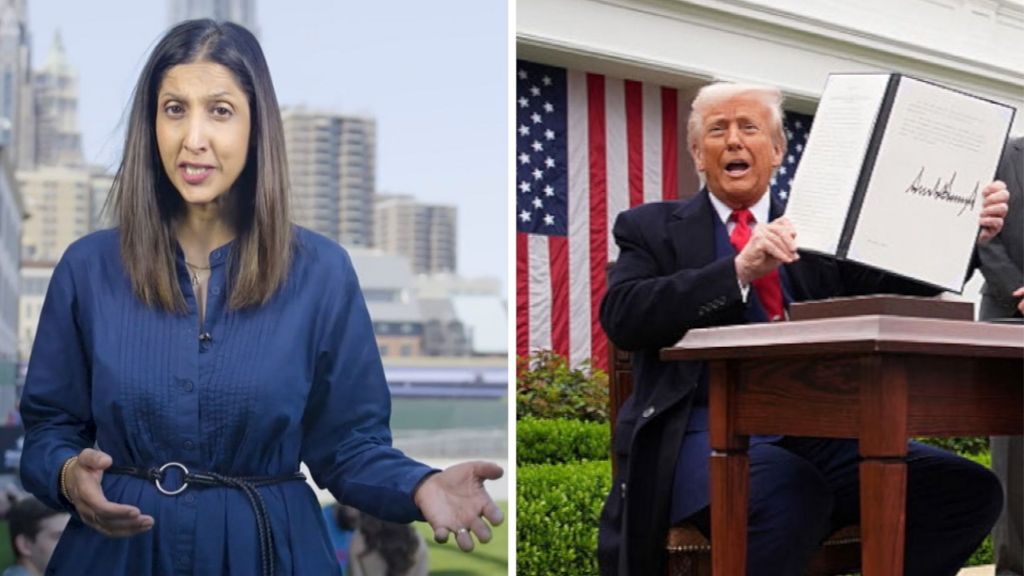
When former U.S. President Donald Trump first implemented his signature broad-based tariffs, he framed the policy as a way to rebalance lopsided trade relationships, protect domestic manufacturing jobs, and strengthen America’s competitive position in the global economy. Years after the initial tariffs rolled out, a critical question remains: have these trade measures actually lived up to the lofty promises that were made when they were introduced?
In a recent breakdown of the policy’s outcomes, BBC correspondent Samira Hussain has unpacked the complex, far-reaching consequences of the tariffs, mapping who ultimately bears the cost of these trade barriers and how they have shifted the trajectory of the United States’ domestic economy. What many proponents of the tariffs initially argued was that foreign exporters would foot the bill for the import taxes, with the U.S. government reaping billions in new revenue that could be funneled back into domestic programs. But Hussain’s analysis paints a far different picture of how the costs have been distributed across the economy.
Instead of falling primarily on foreign trading partners, research and on-the-ground data show that the bulk of tariff costs have been passed down the supply chain to American consumers and domestic businesses. U.S. importers pay the tax at the border, and those extra costs are almost always passed on in the form of higher prices for everything from raw materials to finished consumer goods, from steel used in construction to clothing and electronics purchased by households across the country. Small domestic manufacturers that rely on imported inputs have been hit particularly hard, seeing their production costs jump and their ability to compete with larger firms erode, even as some protected domestic industries have seen a modest bump in demand for their goods.
Hussain also explores the question of whether the tariffs have delivered on their core policy goals: creating and retaining manufacturing jobs, narrowing the U.S. trade deficit, and forcing major trading partners like China to renegotiate trade terms that are more favorable to the United States. While some protected sectors did see initial job gains, those gains were often offset by job losses in downstream industries that faced higher input costs, and many analysts have concluded that the net effect on U.S. employment has been negative overall. The trade deficit has also remained largely unchanged, and while new trade agreements did emerge in the wake of the tariffs, many of the core structural trade issues that Trump targeted remain unresolved.
As trade policy continues to be a central point of debate in U.S. domestic politics, this analysis offers a clear, data-driven look at how one of the most high-profile trade policy shifts in recent decades has actually played out for the American economy and American households.